Categories
Leaders

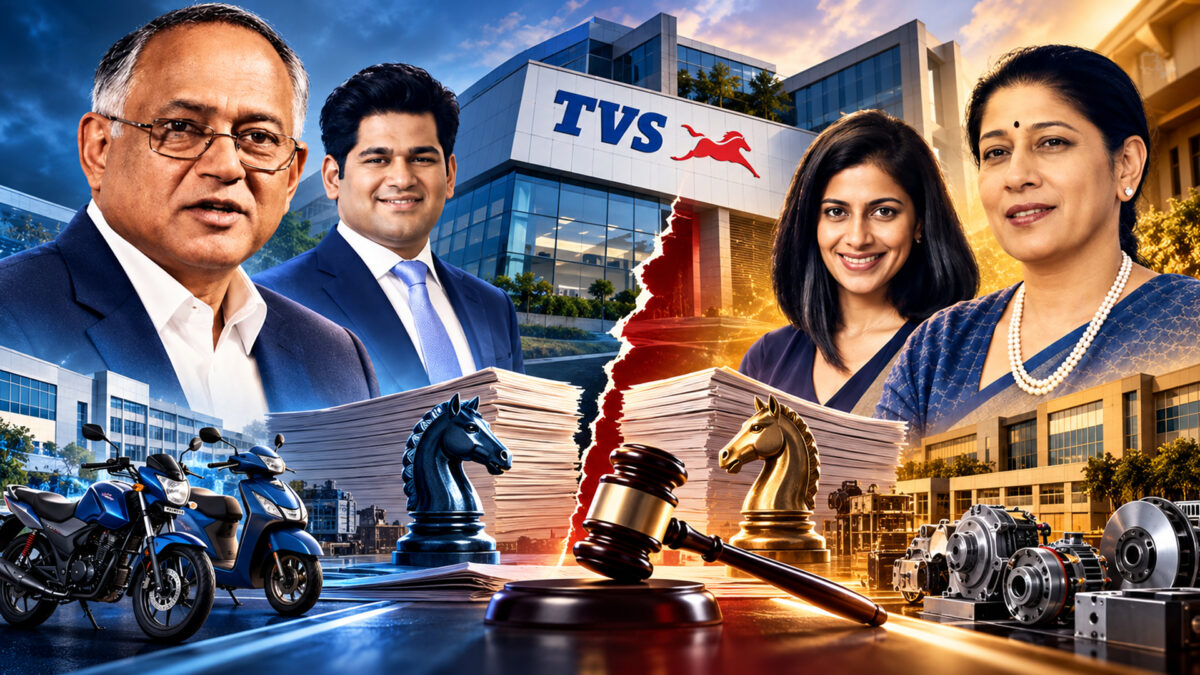
TVS family succession dispute moves closer to court

The long-running disagreement over the division of business interests within the TVS family has taken a legal turn, with members of the family filing caveats against one another in Chennai courts. The move signals that both sides are preparing for possible legal proceedings even as Venu Srinivasan’s wife, Mallika Srinivasan, and daughter, Lakshmi Venu, continue to call for an amicable settlement through discussions.

Venu Srinivasan, chairman emeritus of TVS Motor Company, and his son Sudarshan Venu are on one side of the dispute, while Mallika and Lakshmi are on the other. The disagreement centres on whether the family’s business interests and wealth have been divided fairly, rather than simply on who manages particular companies.

Eight caveats were filed on October 12 and 13 in Chennai’s City Civil Court and Commercial Court, according to people familiar with the matter. Four were filed in each court. Reports have also indicated steps to protect the parties’ positions in proceedings before other legal forums.

A caveat is a preventive legal filing that asks a court to give the person filing it an opportunity to be heard before passing an order that could affect their interests. It does not, by itself, mean that a lawsuit has been filed or that a court has ruled on the underlying dispute. However, the filings suggest that family members are taking precautions against possible applications seeking interim relief.

The latest development follows reports earlier this month that disagreements had emerged over the succession and economic division of the family’s business interests. The dispute has drawn attention because of the family’s longstanding presence in India’s automobile, engineering and manufacturing sectors.

At the heart of the disagreement is the interpretation of a memorandum of understanding (MoU) signed in March 2024. Venu and Sudarshan maintain that the agreement established a settlement between the family members. Mallika and Lakshmi, however, argue that the MoU did not amount to a comprehensive economic settlement of the family’s wealth.

In earlier joint statements, Mallika and Lakshmi said arrangements involving the use of brands, trademarks and non-compete obligations should not be treated as proof that the economic interests had been fairly divided. They have called for a process that recognises what they describe as rightful economic ownership.

Their position draws a distinction between management responsibilities and ownership rights. A family member being appointed to lead a company, they argue, does not automatically settle the question of how the underlying assets and financial interests should be distributed.

Venu’s side has maintained that the division was fair and transparent and followed consultations within the family. Reports on the dispute indicate that the allocation of businesses, ownership stakes and financial obligations forms part of the broader disagreement. The two sides have not publicly reached a common position on whether the 2024 arrangement resolves these issues.

Mallika and Lakshmi reiterated their preference for dialogue in a statement on October 27. A spokesperson said they continued to seek an amicable resolution through transparent discussions and dialogue. The statement indicates that, despite the legal precautions, the mother-daughter duo has not abandoned the possibility of settling the matter outside court.

The family members have significant roles in separate parts of the wider business landscape. Venu Srinivasan is associated with TVS Motor Company, where Sudarshan serves as chairman and managing director. Lakshmi Venu is vice-chair of Tractors and Farm Equipment Limited (TAFE) and managing director of Sundaram-Clayton. Mallika Srinivasan chairs and leads TAFE.

The businesses and their ownership structures should not be conflated. TAFE belongs to the separate Amalgamations Group, and Mallika has said it should not be treated as part of the economic settlement within the Venu Srinivasan family. The wider family business arrangements are therefore more complex than a straightforward division of company leadership positions.

The caveat filings come amid heightened scrutiny of succession planning in large Indian family-owned businesses, where ownership, control, valuation and inheritance can involve different legal and financial questions. Disagreements can become especially difficult when family members take different views of earlier agreements or the value of assets allocated to each side.

The immediate question is whether the parties can find common ground through negotiations or whether the dispute will move into more formal litigation. Mallika and Lakshmi have publicly favoured dialogue, while the caveats show that the family members are also preparing to protect their legal positions. The outcome could shape the future ownership arrangements of businesses linked to one of India’s prominent industrial families.
 

Categories
Beyond

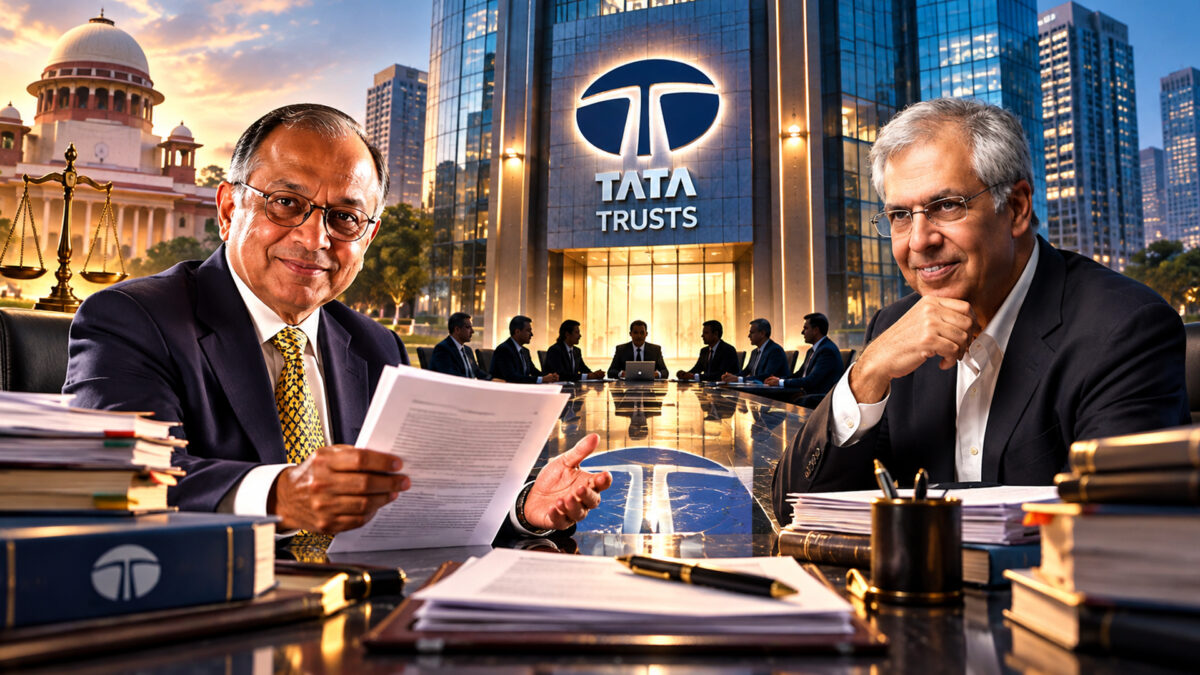
Venu Srinivasan seeks Tata Trusts probe

A fresh governance dispute has emerged within Tata Trusts, with trustee Venu Srinivasan seeking an inquiry into the administration of two key trusts and questioning the appointments and powers of chairman Noel Tata and his son Neville Tata.

Srinivasan, who is a trustee of the Sir Dorabji Tata Trust (SDTT) and Sir Ratan Tata Trust (SRTT), has approached the Maharashtra Charity Commissioner seeking an immediate inquiry into the governance of the trusts. His move adds another layer to the ongoing differences between Tata Trusts and the board of Tata Sons, the holding company of the Tata Group.

In his September 24 letter, Srinivasan questioned the basis on which Noel Tata became a perpetual trustee and subsequently chairman of Tata Trusts. He also raised objections over the appointment of Neville Tata as a trustee of SDTT and alleged that he was excluded from parts of the decision-making process surrounding the appointment.

Srinivasan has also asked the Charity Commissioner to examine the wider role played by the trusts in the commercial and strategic affairs of Tata Sons. His contention is that the charitable trusts have become increasingly involved in decisions concerning the commercial company, raising questions about the separation between their philanthropic objectives and Tata Sons’ business affairs.

Tata Trusts collectively own about 66% of Tata Sons, giving them significant influence over the holding company and, indirectly, the wider Tata Group. Tata Sons has interests across sectors including technology, automobiles, steel, aviation, consumer products and financial services.

The latest dispute is closely linked to the disagreement over the future governance and restructuring of Tata Sons. Srinivasan has supported the proposed listing of Tata Sons, while Tata Trusts have opposed aspects of the process and questioned decisions taken by the Tata Sons board.

A major flashpoint came on September 17, when the Tata Sons board backed the reappointment of N Chandrasekaran as chairman. Tata Trusts subsequently maintained that the resolution was legally invalid because both trust-nominated directors had not supported it. Noel Tata voted against the proposal, while Srinivasan voted in favour. The Trusts have maintained that their nominee directors’ support was necessary under Tata Sons’ Articles of Association.

Srinivasan has separately challenged an SDTT circular resolution that sought to restrict his participation in discussions and voting related to the proposed Tata Sons listing. He has argued that the move attempted to prevent him from exercising independent judgment as a nominee director.

The dispute highlights a complex governance structure in which Tata Trusts, despite being philanthropic organisations, have substantial shareholder rights in Tata Sons. Questions over how trustees should exercise those rights have become increasingly important as the group considers changes to its ownership and corporate structure.

Srinivasan has asked the Charity Commissioner to consider whether trustees should be suspended or removed if an inquiry establishes grounds for such action. He has also sought restrictions on certain decisions involving Noel Tata, including matters connected with Tata Sons. These are requests made by Srinivasan and do not represent findings by the regulator.

The controversy has also widened beyond Srinivasan. Tata Trusts vice-chairman Vijay Singh has approached the Maharashtra Charity Commissioner separately, seeking an inquiry into the trust’s involvement in Tata Sons and raising questions about recent governance decisions.

The Charity Commissioner’s office has been examining developments involving the trusts. The regulatory backdrop has become particularly important after the Sir Ratan Tata Trust faced a freeze earlier this year over issues connected with the Maharashtra Public Trusts Act. The freeze had consequences for Tata Sons, including delays involving its annual general meeting.

Tata Trusts have responded to the latest complaint by filing caveats with the Charity Commissioner’s office, seeking to ensure that they are heard before any order is passed. A caveat allows a party to request prior notice before a court or authority takes a decision affecting it.

Noel Tata became chairman of Tata Trusts in October 2024 following the death of Ratan Tata. The trustees had said at the time that his appointment was unanimously approved. In November 2025, SDTT announced Neville Tata’s induction as a trustee for a three-year term. Srinivasan was also appointed trustee and vice-chairman for three years.

The latest developments therefore involve both personalities and broader questions about corporate governance, trustee powers and shareholder rights. At the centre is the relationship between Tata Trusts and Tata Sons and how decisions affecting the wider Tata Group should be taken.