Categories
Beyond

$93 million US arms deal strengthens India’s defence

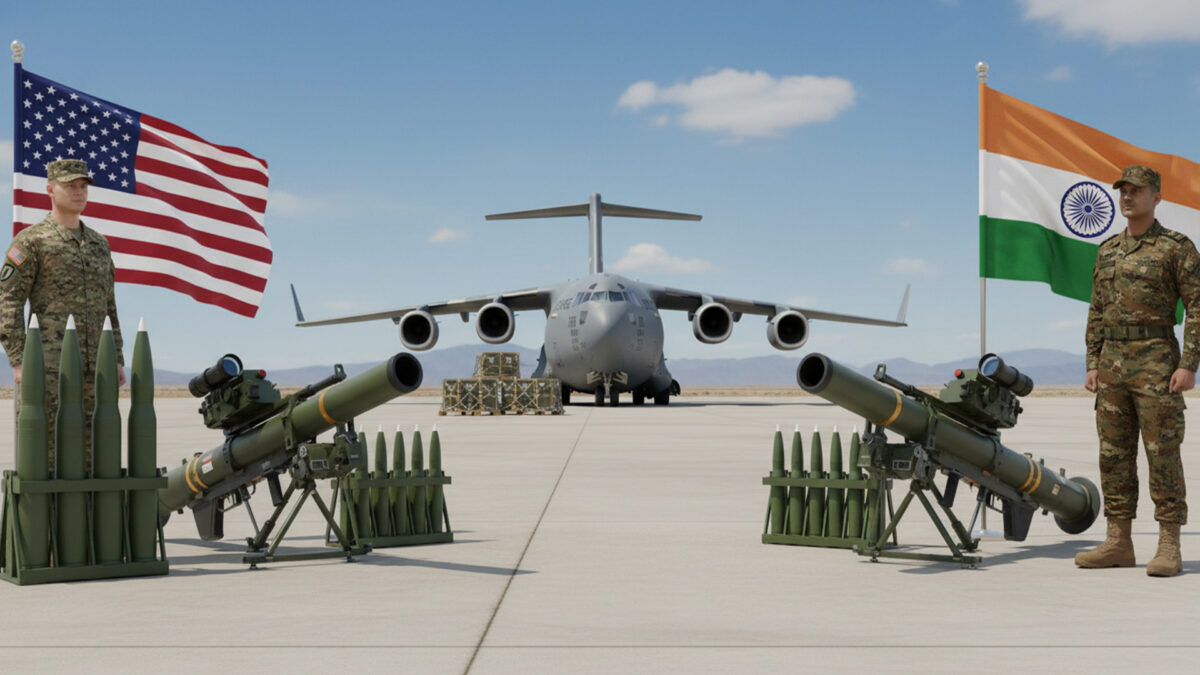
India is set to receive a $93 million military shipment from the United States, aimed at enhancing its defence capabilities and reinforcing strategic ties with Washington.

The package includes 100 Javelin anti-tank missiles, 25 launch units, and 216 Excalibur precision-guided artillery rounds, along with spare parts, operator training, fire control systems, and technical support for seamless integration into India’s armed forces.

The Javelin missiles are portable, fire-and-forget weapons designed to destroy armoured vehicles, making them highly effective in modern combat scenarios. The Excalibur rounds use GPS guidance to deliver precise long-range strikes, reducing collateral damage and improving operational accuracy.

According to US officials, the sale will enhance India’s ability to counter regional threats while maintaining the military balance in the region. The US Defense Security Cooperation Agency (DSCA) has formally notified Congress of the transaction.

The deal highlights the growing defence partnership between India and the US, supporting India’s ongoing military modernization. American defence companies Lockheed Martin and RTX Corporation will supply the weapons and associated equipment, ensuring that India can operate and maintain the systems efficiently.

The sale also includes comprehensive training and technical assistance, enabling Indian forces to maximize the operational impact of the new systems. Analysts say the weapons will significantly improve India’s artillery and anti-armour capabilities, strengthening its deterrence posture.

This part of a series of agreements between the two countries, following previous deals involving fighter jets, surveillance systems, and missile technologies. Observers note that these transactions reflect deepening strategic cooperation and a shared commitment to regional security, as India continues to modernize its armed forces and enhance its operational readiness.

Also Read: Adani’s new ad film turns airports into caring companions
Categories
Beyond

US, India ‘pretty near’ trade deal, tariffs could ease

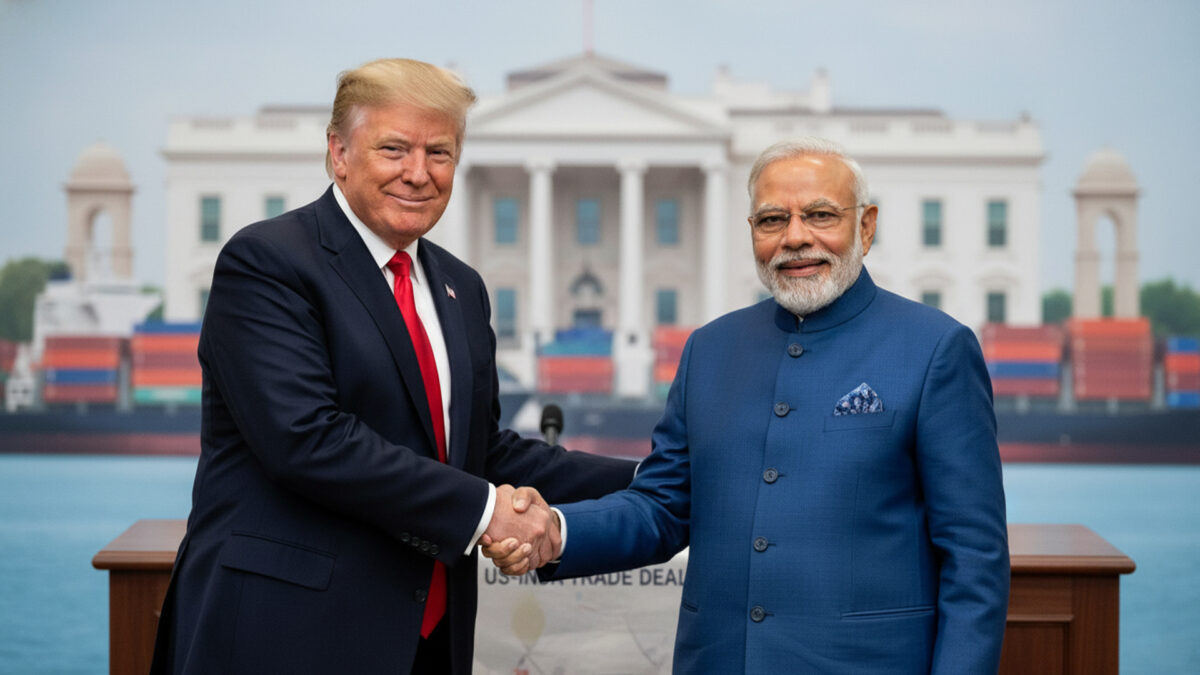
US President Donald Trump said the United States and India are “pretty close” to finalising a trade deal that would benefit both countries. He made the remarks at the swearing-in of Sergio Gor as the US Ambassador to India, highlighting Gor’s strong ties with Prime Minister Narendra Modi.

Trump noted that US tariffs on Indian goods are currently high, mainly due to India’s earlier purchases of Russian oil. With those purchases now reduced, he indicated tariffs could be lowered in the future.

India’s Commerce Minister Piyush Goyal said trade talks are progressing well but cautioned that several sensitive issues still need resolution.

The proposed agreement aims to more than double bilateral trade, from around $191 billion currently to $500 billion by 2030. Analysts say a deal could improve market access for goods on both sides, though details on tariff cuts and timelines are yet to be finalised.

Also Read: Goldman Sachs turns bullish on India

Categories
Beyond

H-1B hiring slows as US firms cut back

International students in the United States are finding it increasingly difficult to secure jobs as American employers pull back from sponsoring work visas.

The slowdown follows a series of policy changes introduced under President Donald Trump’s administration, including a new $100,000 fee for companies applying for H-1B visas.

The H-1B visa program, a key route for skilled foreign graduates to stay and work in the US, has seen a steep contraction in hiring. And, the technology sector seems to be hit the most with Tech giants such as Amazon, Microsoft and Meta being among those most affected.

Business groups, including the US Chamber of Commerce, have challenged the new rules in court, arguing they are unlawful and could damage industries dependent on global talent.

Although authorities clarified that recent graduates and current student visa holders will be exempt from the fee, the uncertainty surrounding implementation has prompted many firms to delay or cancel international hiring.

According to date from the US Citizenship and Immigration Services, Indian nationals made up over 70% of H-1B visa recipients in 2024, followed by applicants from China and the Philippines.

Also Read: HAL, GE ink $1 billion deal for 113 Tejas engines