Categories
Corporate

Tata Motors, Stellantis strengthen 20-year partnership

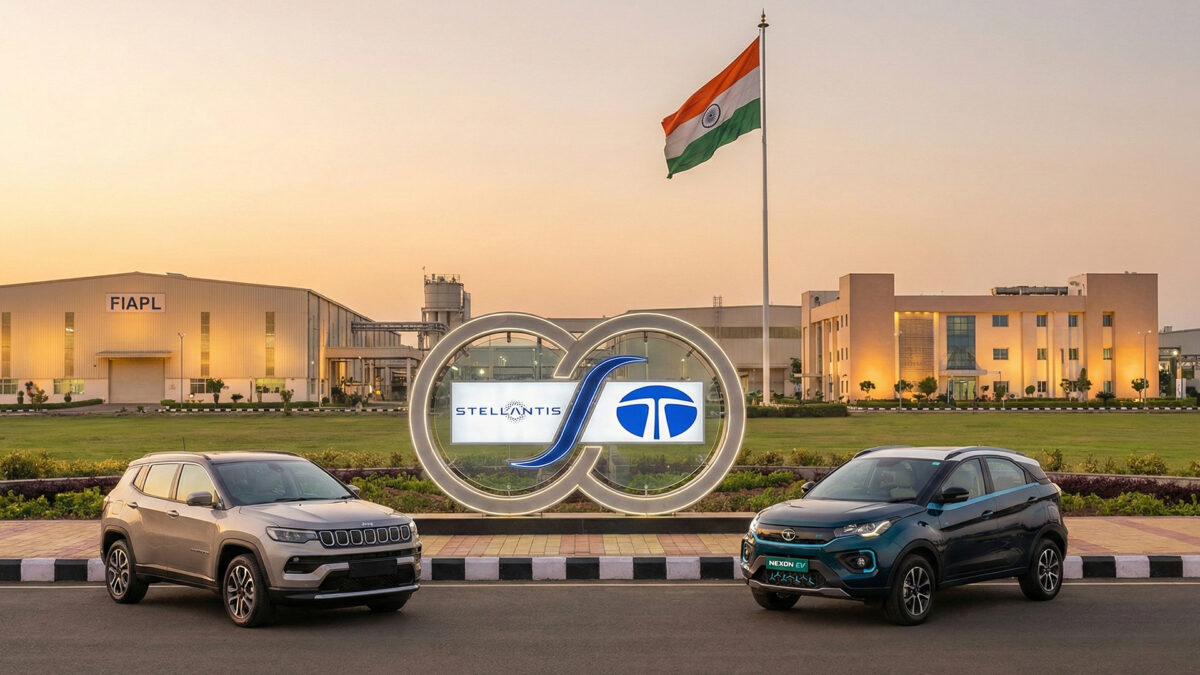
Tata Motors Passenger Vehicles (TMPV) and global auto major Stellantis have completed 20 years of their 50:50 joint venture and signed a fresh Memorandum of Understanding (MoU) to strengthen and expand their partnership.

The joint venture, Fiat India Automobiles Private Limited (FIAPL), was established in 2006 and operates an integrated manufacturing facility at Ranjangaon near Pune. Over the past two decades, the plant has produced more than 1.37 million vehicles. It currently has an annual production capacity of around 2.22 lakh units and employs nearly 5,000 people.

The Ranjangaon facility manufactures several models for both companies. For Stellantis, it produces vehicles such as the Jeep Compass and Meridian, along with CKD versions of the Jeep Grand Cherokee and Wrangler. For Tata Motors, models including the Nexon, Altroz and Curvv are built at the plant. The facility also manufactures engines, transmissions and traction motors, with some output exported to international markets including Japan and South Africa.

To mark the milestone, the two companies signed an MoU on February 10, 2026. Under the new agreement, Tata Motors and Stellantis will explore opportunities for future collaboration across manufacturing, engineering and supply chain operations in India as well as overseas. While specific projects were not detailed, the move signals intent to build on the long-standing industrial alliance.

Stellantis Asia Pacific COO Grégoire Olivier said the partnership demonstrates what two strong organisations can achieve together and will continue to focus on innovation and future-ready manufacturing. Tata Motors Passenger Vehicles MD and CEO Shailesh Chandra described the joint venture as a relationship built on trust and shared vision, adding that both companies remain committed to strengthening the alliance further.

Also Read: Akasa Air co-founder Praveen Iyer quits
Categories
Corporate

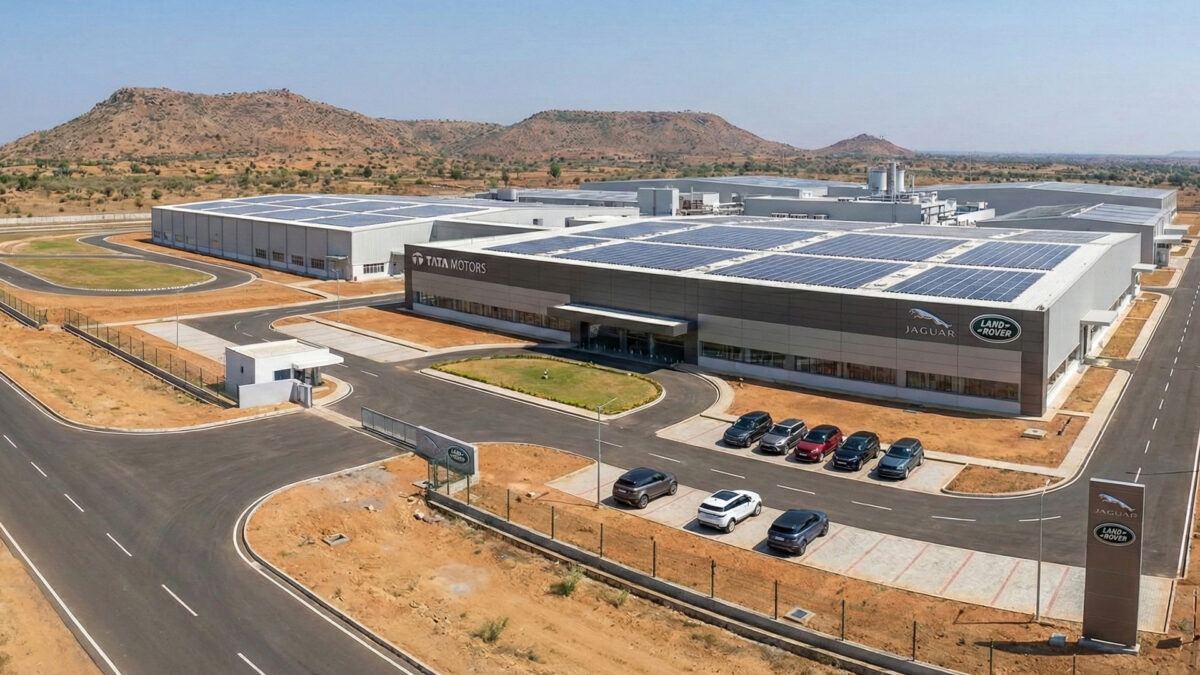
Tata Motors launches ₹9,000 cr JLR plant in Tamil Nadu

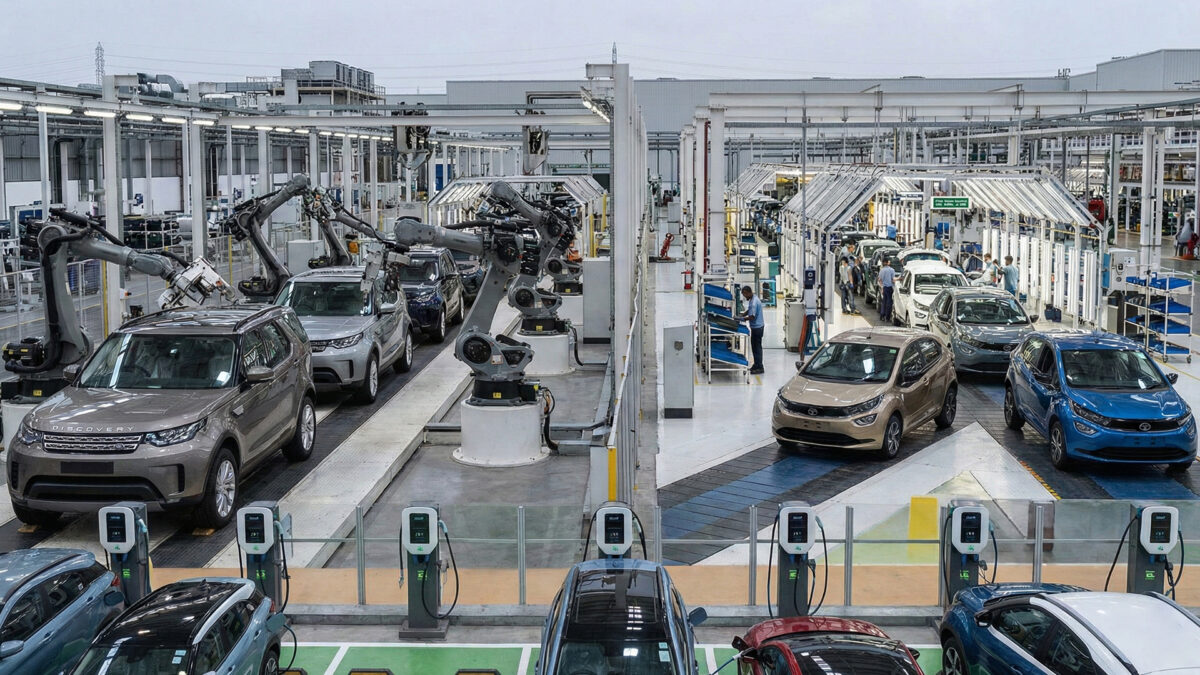
Tata Motors and its luxury arm, Jaguar Land Rover (JLR), have officially opened a new manufacturing plant in Panapakkam, Ranipet district, Tamil Nadu. The ₹9,000 crore facility is the company’s largest investment in India and will produce premium cars for both domestic and international markets.

The first vehicle to roll off the assembly line is the Range Rover Evoque, marking the start of local production of luxury SUVs. The launch was flagged off by Tamil Nadu Chief Minister M. K. Stalin alongside Tata Group Chairman N. Chandrasekaran.

Spread over a large area, the plant is designed to be sustainable, with renewable energy use and water-positive processes, reflecting Tata’s commitment to environmentally friendly operations.

Initially, the facility will focus on assembling the Range Rover Evoque, but it is expected to gradually expand to produce other Tata and JLR models, including future electric vehicles. The company aims to reach a production capacity of 2.5–3 lakh vehicles per year over the next few years.

The plant will also create more than 5,000 direct and indirect jobs, offering opportunities for local suppliers and boosting the region’s economy.

Tata Motors said the Panapakkam plant strengthens India’s position in JLR’s global manufacturing network, complementing existing facilities in the UK, China, and Brazil.

Also Read: Belagavi tech company in Karnataka sues Anthropic over name

Categories
Corporate

Tata Motors PV Q3 loss ₹3,486 crore

Tata Motors Passenger Vehicles Ltd (TMPVL) reported a consolidated loss of ₹3,486 crore for the third quarter of FY26, a sharp reversal from a profit of ₹5,406 crore in the same period last year. Revenue from operations fell 26% to ₹70,108 crore, reflecting pressure across its business segments.

The decline was mainly driven by Jaguar Land Rover (JLR), Tata Motors’ UK-based luxury car subsidiary. JLR faced a cybersecurity breach that disrupted production and distribution for several weeks, resulting in lost sales and a significant one-time charge. Weak global demand, higher US tariffs, and challenging conditions in China further impacted performance.

For JLR, revenue and profits tumbled, with its EBIT (earnings before interest and tax) turning negative, wiping out last year’s gains. Tata Motors expects JLR to recover gradually, but now anticipates a modest EBIT margin of 0–2% for the full year and continued free cash outflows. The British government has extended a £1.5 billion loan guarantee to support JLR’s operations and investment plans.

Despite international challenges, Tata Motors’ domestic passenger vehicle business performed well. Sales and exports in India rose 22% year-on-year, aided by lower GST rates, stronger market demand, and strategic incentives. This helped offset some losses from JLR and improved sequential performance quarter-on-quarter.

The company’s management said it expects production at JLR to normalise in the coming months, which should boost revenues and cash flows. Tata Motors is also focusing on new product launches, operational efficiency, and brand initiatives to strengthen both domestic and global segments.

Also Read: Anthropic’s AI Agents raise market concerns for Indian IT

Categories
Corporate

Tata Motors Q3 profit ₹705 cr, down 48%

Tata Motors’ consolidated net profit for the third quarter (October–December 2025) fell sharply by 48% year-on-year, coming in at ₹705 crore, compared with ₹1,355 crore in the same quarter last year. The decline was mainly due to one-time exceptional expenses, rather than a slowdown in the company’s core business operations.

Revenue from operations, however, showed strong growth, rising 16% to ₹21,847 crore, up from ₹18,819 crore in Q3 FY25. This reflects continued demand in the commercial vehicle segment and steady sales momentum across its businesses.

The quarter’s results were impacted by exceptional charges totaling around ₹1,600 crore, including ₹962 crore for stamp duty and other costs linked to the ongoing demerger process, ₹603 crore related to the implementation of the new labour code, and ₹82 crore for acquisition-related expenses.

Despite the one-off charges, Tata Motors’ underlying operations remained healthy. EBITDA margins improved, indicating effective cost management and operational efficiency.

Domestic commercial vehicle sales continued to perform well, supported by fleet replacement incentives and government tax benefits. Wholesales rose during the quarter, and the company’s market share in key commercial vehicle categories improved sequentially.

Management stated that although exceptional items affected net profit this quarter, the business fundamentals remain strong. Demand is expected to stay robust in the fourth quarter of FY26, backed by infrastructure spending and steady demand across sectors.

Also Read: Swiggy Q3 loss widens to ₹1,065 cr despite 54% revenue growth

Categories
Corporate

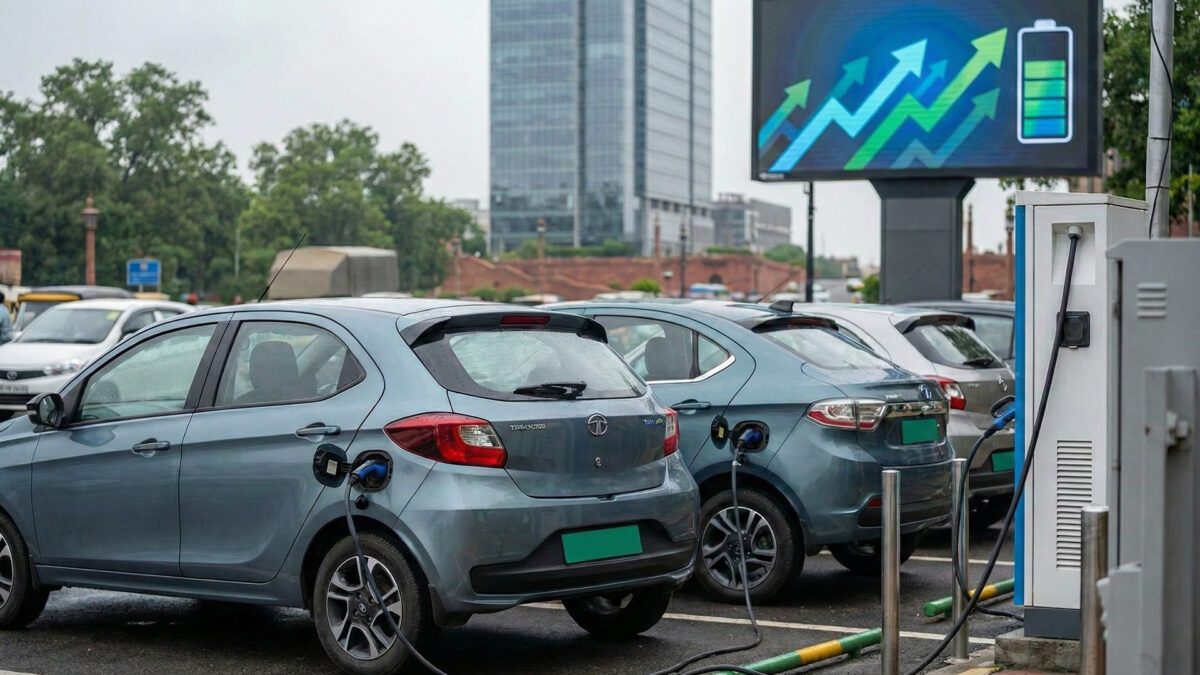
Tata Motors pushes for budget relief for entry-level EVs

Tata Motors has appealed to the Indian government to provide financial incentives for entry‑level electric vehicles (EVs) in the upcoming Union Budget 2026, citing rising costs that are making affordable EVs less competitive compared to petrol cars. The company’s Managing Director and CEO, Shailesh Chandra, highlighted that while recent reforms such as GST changes and lower interest rates have revived passenger car sales, entry‑level EVs continue to face cost pressures that could slow adoption.

Chandra explained that the recent reduction in GST for petrol cars has narrowed the price gap between conventional vehicles and electric models, putting entry‑level EVs at a disadvantage. He urged the government to consider targeted incentives to make these cars more affordable for the mass market.

In addition to entry‑level vehicles, Tata Motors is also seeking support for fleet EVs under the PM E‑DRIVE scheme. Currently, fleet electric cars—which make up around 7% of passenger vehicle sales but contribute one-third of total passenger kilometres travelled, are not covered under the scheme. Tata Motors argues that including fleet EVs would not only encourage adoption but also have a larger environmental impact, reducing emissions and dependence on imported fuel.

The company also flagged the impact of rising commodity prices and foreign exchange fluctuations, which have squeezed profit margins by an estimated 2%, largely absorbed by the company so far. Chandra indicated that Tata Motors may need to adjust vehicle prices in the coming months to manage costs, a trend reflected in recent price hikes by other automakers.

By seeking these measures, Tata Motors aims to ensure that electric vehicles remain competitive with petrol cars, particularly for price-sensitive buyers and fleet operators.

Also Read: Gold at ₹1,43,770, Silver slips below ₹2.95 lakh

Categories
Corporate

Tata Motors PV shares fall 7% despite profit surge

Shares of Tata Motors’ passenger-vehicle (PV) business fell around 7% even though the company reported a huge year-on-year profit increase of 2,110% for the September quarter.

The big profit came mostly from a one-time gain of about ₹82,616 crore. Without this, the PV business actually made a loss of around ₹6,368 crore. Revenue also fell by about 13% year-on-year.

Jaguar Land Rover (JLR), the luxury car arm, faced a cyber-attack that temporarily halted production and weak global demand. It posted a loss of £559 million and cut its margin forecast for FY26 to 0–2% from 5–7%. JLR also expects negative cash flow of up to £2.5 billion.

Analysts say the Indian PV business is stable and improving, but the problems at JLR are worrying investors. As a result, brokers have downgraded the PV business stock to “Reduce” or “Sell.”

Also Read: Sensex climbs 200 pts, Nifty tops 25,950

Categories
Corporate

Tata Motors commercial-vehicle unit debuts 28% higher

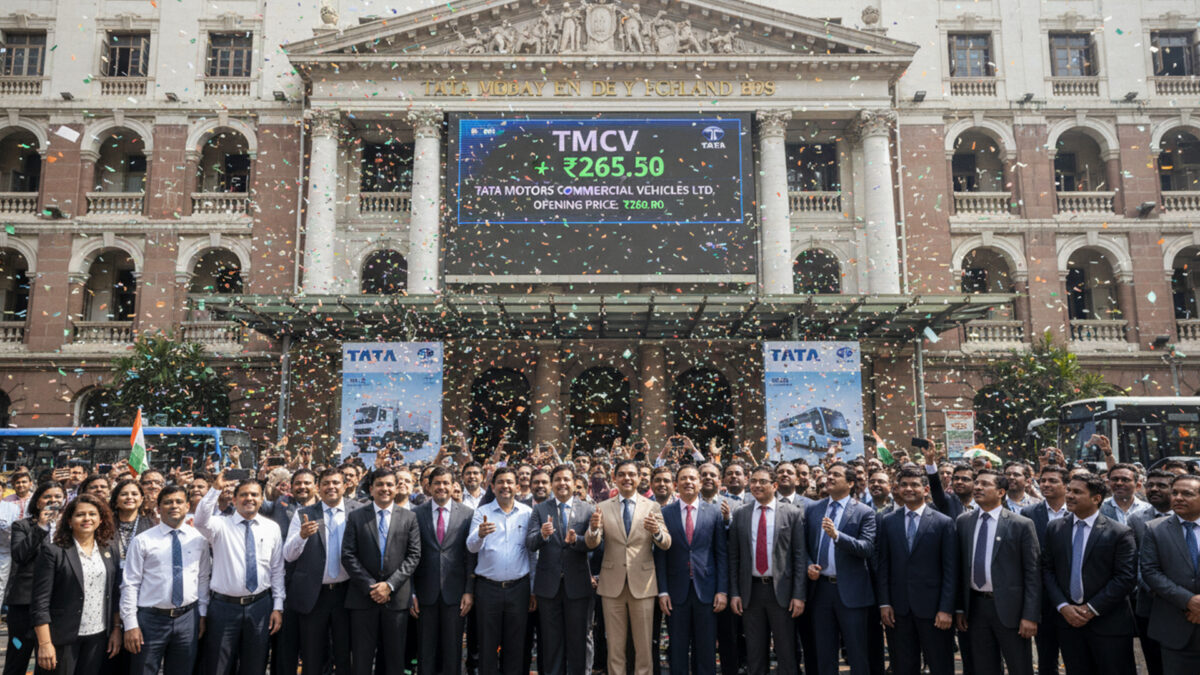
Tata Motors’ newly separated commercial-vehicles business made a strong market debut. The stock opened at around ₹335 per share, about 28% higher than its pre-listing implied value of ₹261. It later climbed to roughly ₹345, signaling strong investor interest.

The de-merger separates the passenger-vehicle and electric-vehicle business from the commercial-vehicle arm, allowing each to be valued independently. The commercial-vehicle business reported revenue of about ₹75,055 crore and an EBITDA of ₹8,856 crore, with margins around 11.8%.

The sector is supported by improving freight activity, infrastructure development, easing commodity costs, and a reduction in GST from 28% to 18%. Analysts estimate the unit’s fair value at about ₹310–₹320 per share.

Tata Motors is also planning to acquire Iveco’s commercial-vehicle operations, which could strengthen its global presence in medium and heavy vehicles, although benefits may take time to materialize.

Investors are advised to note that the commercial-vehicle sector is cyclical, and margins can fluctuate depending on economic conditions and demand. While the listing was strong, medium-term investors are likely to benefit most from the stock’s focused play on the commercial-vehicle market.

Also Read: Adani Enterprises raises ₹25,000 crore via rights issue

Categories
Corporate

Tata Motors’ truck and bus arm to list on Nov. 12

Tata Motors will list its commercial vehicle division on the stock market on November 12, 2025, completing its long-awaited restructuring. The move separates the company into two independent listed entities, Tata Motors Passenger Vehicles Ltd (TMPV), which includes its cars, electric vehicles, and Jaguar Land Rover business, and Tata Motors Commercial Vehicles Ltd (TMCV), which will handle trucks, buses, and light commercial vehicles.

The newly listed TMCV shares will trade on both the NSE and BSE under the symbol TMCV, with around 368 crore shares (face value ₹2 each) being admitted for trading. For the first ten trading sessions, the shares will be part of a trade-for-trade segment, meaning investors will have to take delivery of shares and can’t buy and sell them on the same day.

Shareholders of Tata Motors as of October 14, 2025, will automatically receive one TMCV share for every Tata Motors share they held. The demerger had received final approval from the National Company Law Tribunal (NCLT) earlier this year.

Tata Motors’ passenger vehicle arm was listed in October and opened around ₹400 per share. Analysts expect the new commercial vehicle stock to debut between ₹260 and ₹270 per share, based on Tata Motors’ pre-demerger value.

With this demerger, Tata Motors aims to give each business sharper focus and independent growth strategies, one leading India’s electric mobility and passenger car innovation, and the other strengthening its leadership in trucks and buses. The separation also helps investors value each segment more clearly, marking a major milestone in the automaker’s transformation journey.

Also Read: Adani Group enters battery storage with India’s largest project