Categories
Leaders

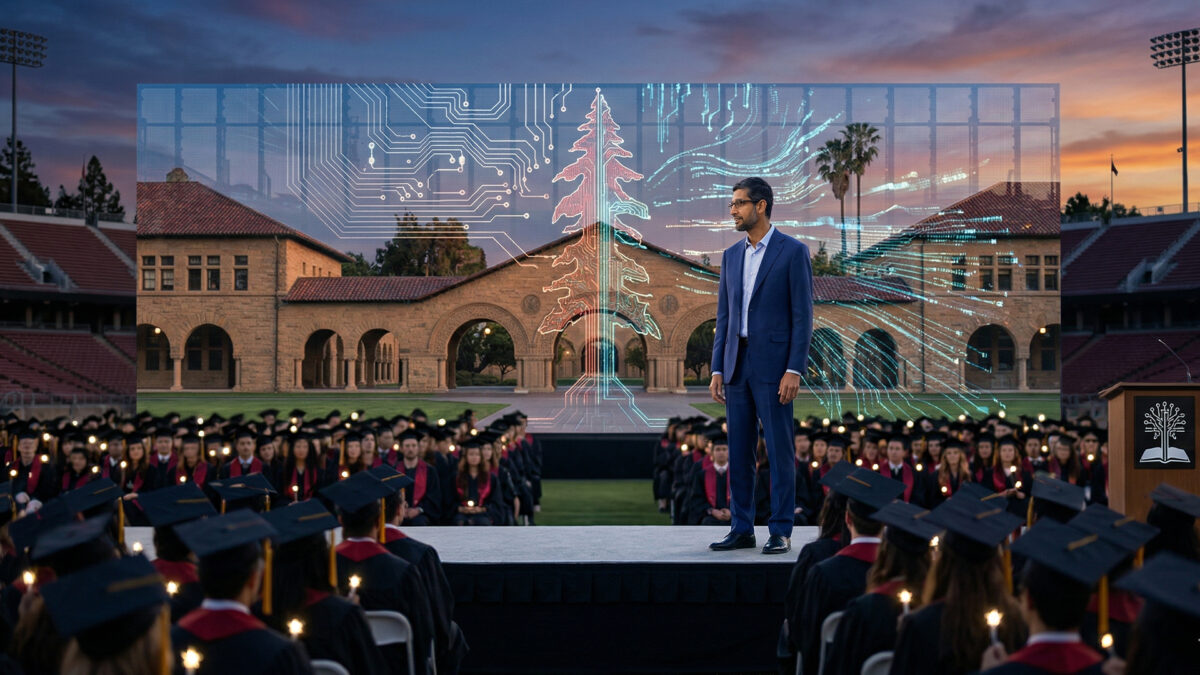
Sundar Pichai to address Stanford graduates

Stanford University has announced that Sundar Pichai, CEO of Google and Alphabet, will deliver the 135th Commencement address on June 14, 2026, at Stanford Stadium. A Stanford alumnus, Pichai earned his master’s degree in materials science and engineering in 1995 and described returning to his alma mater as a “privilege” and an honor.

This will be Pichai’s first in-person Stanford commencement speech. He previously addressed the Class of 2020 virtually amid the COVID-19 pandemic. Stanford praised him as a thoughtful leader whose career demonstrates how technology can improve lives and transform society.

Born and raised in Chennai, India, Pichai joined Google in 2004. He played a key role in the development of Google Chrome and other products before becoming CEO of Google in 2015 and CEO of Alphabet in 2019. Under his leadership, the company has expanded into artificial intelligence, cloud computing, and autonomous technology, solidifying its place as a global tech leader.

Stanford’s president and student leaders welcomed Pichai’s selection, highlighting his journey from graduate student to head of one of the world’s most influential tech companies as a powerful example for new graduates. His story underscores the impact of education, innovation, and perseverance, offering inspiration to those about to embark on their professional journeys.

The university also noted that Pichai’s return highlights the strong bond between Stanford and its alumni network, many of whom have become global leaders in technology, business, and research.

Also Read: FDA clears new daily weight-loss pill ‘Foundayo’

Categories
Leaders

Sundar Pichai’s pay package may reach $630 mn

Google CEO Sundar Pichai could earn as much as $692 million over the next three years after parent company Alphabet Inc. approved a new compensation package linked largely to company performance.

The pay package places Pichai among the highest-paid executives in the global technology industry. However, most of the amount is not a fixed salary. Instead, it comes in the form of stock awards that depend on how well the company performs in the coming years.

Pichai’s base salary will remain $2 million per year, which is relatively modest compared to the overall compensation. The bulk of the package will come through performance-based shares that could increase in value if Alphabet continues to grow.

Reports say the deal includes performance stock units worth around $126 million, which could rise to about $252 million if the company significantly outperforms other large firms in the S&P 100 index. In addition, he will receive restricted stock worth about $84 million, which will be granted gradually over three years as long as he remains with the company.

The company has also linked part of the incentives to the growth of some of its future-focused businesses. These include self-driving car project Waymo and drone delivery service Wing. If these businesses perform well, Pichai could receive additional stock rewards.

Alphabet’s board said the compensation structure is meant to reward long-term leadership and align the CEO’s pay with the company’s success. In other words, Pichai will benefit the most only if the company performs strongly in the coming years.

Pichai has led Google since 2015 and became CEO of Alphabet in 2019. Under his leadership, the company has expanded rapidly in areas such as cloud computing, artificial intelligence, hardware and digital services.

Also Read: Pakistan rejects JPMorgan bid for Roosevelt Hotel

Categories
Corporate

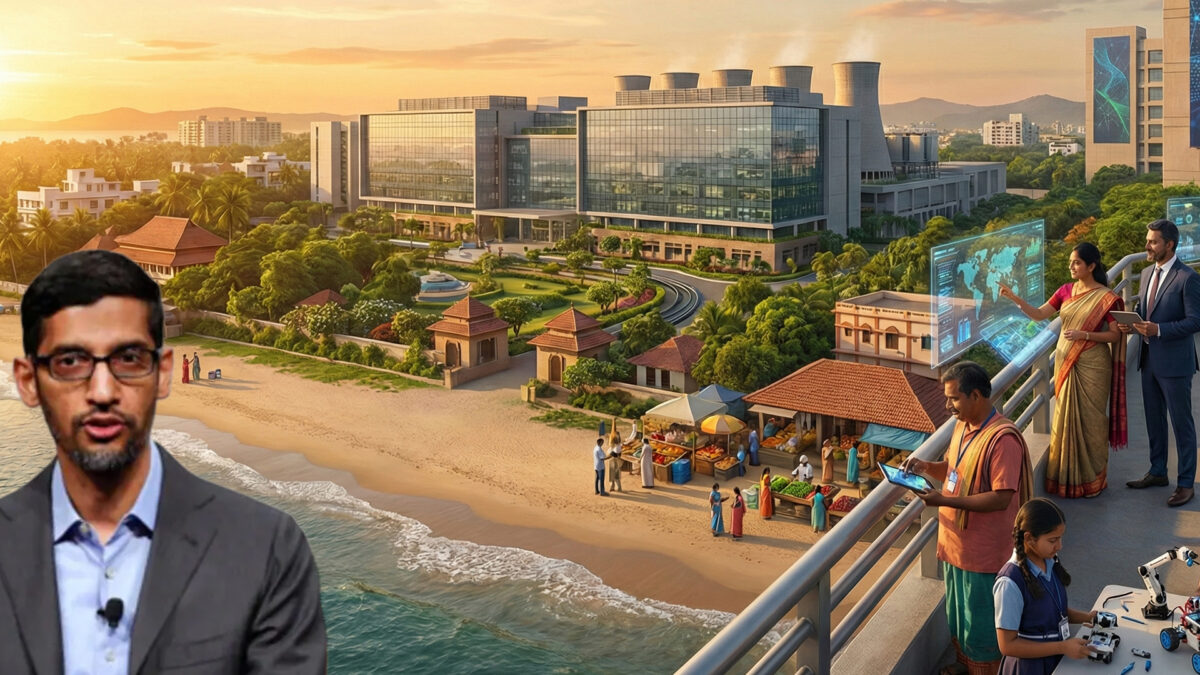
Sundar Pichai announces $15-bn AI investment for India

Google CEO Sundar Pichai on Friday announced a $15-billion investment to expand artificial intelligence infrastructure and capabilities in India, saying the country has the potential to become a major global hub for AI.

Speaking at the India AI Impact Summit, Pichai described AI as the most important technological shift of our time and said it can bring large-scale changes in sectors such as healthcare, education, agriculture and scientific research.

A major part of Google’s plan includes building strong digital infrastructure, improving compute capacity and supporting a full-stack AI ecosystem in the country. He also highlighted the need to train students, developers and professionals so that India’s workforce is ready for the AI era.

Pichai said India’s digital public platforms, large pool of tech talent and fast-growing startup ecosystem give it a unique advantage in the global AI race. He praised efforts to develop AI models that work in Indian languages and understand local needs, calling them essential for making the technology useful for millions of people.

At the same time, he cautioned that the benefits of AI will not come automatically. According to him, governments, companies and academic institutions must work together to ensure the technology is developed and used responsibly. He stressed that AI should reduce inequality, not increase it, and must be accessible and affordable to all.

Pichai also pointed to scientific breakthroughs powered by AI, such as AlphaFold, to show how the technology can help solve complex global challenges.

On the sidelines of the event, Pichai was seen tasting Indian GI-tagged coffee, reacting with a cheerful “wow”, a moment that quickly went viral on social media.

Also Read: AI key to India’s sovereignty, says Jeet Adani