Categories
Beyond

Gold falls to ₹1,44,650, Silver slips to ₹2,04,720

Gold and silver prices declined on Thursday amid selling pressure in domestic and international markets, as rising crude oil prices, currency movements and uncertainty over US interest rates weighed on investor sentiment. The fall in precious metal prices comes as investors assess inflation risks and the outlook for monetary policy.

The price of 24-karat gold dropped to ₹1,44,650 per 10 grams, while silver prices fell to ₹2,04,720 per kilogram. The decline could offer some relief to consumers planning jewellery purchases, although the final retail price may vary across cities and jewellers.

International gold prices also weakened during early trade. Spot gold declined around 0.43% to nearly $4,124 per ounce, while US gold futures fell around 0.42% to $4,132.40 per ounce. These international benchmarks differ from domestic retail prices because of currency movements, import costs and local market conditions.

One of the factors influencing domestic bullion prices is the movement of the Indian rupee against the US dollar. India imports a substantial share of its gold requirements, making currency movements an important part of domestic price calculations. A stronger rupee can reduce the cost of imported gold, all else being equal, although international bullion prices and other costs also affect the final rate.

Rising crude oil prices have also contributed to uncertainty in financial markets. Oil prices have climbed amid escalating geopolitical tensions in the Middle East, raising concerns about higher transportation costs and renewed inflationary pressure.

For precious metals, the impact of inflation can be complicated. Gold is traditionally viewed as a hedge against inflation and economic uncertainty. However, if rising oil prices keep inflation elevated, central banks may delay interest-rate cuts or maintain tighter monetary policies. Higher interest rates tend to reduce the appeal of gold because it does not generate interest income.

Investors are closely watching the US Federal Reserve’s upcoming policy decision for clues about the direction of interest rates. Expectations surrounding monetary policy influence the US dollar, bond yields and global investment flows, all of which can affect gold and silver prices.

A stronger dollar and rising bond yields generally make gold less attractive to investors, while expectations of lower interest rates can support demand for the metal. With uncertainty surrounding inflation and the timing of potential rate cuts, traders may remain cautious and adjust their positions in response to fresh economic data.

Silver has also faced pressure as investors assess both its role as a precious metal and its importance in industrial applications. Demand from sectors such as electronics and solar energy can influence silver prices, making the metal sensitive to changes in the global economic outlook.

The latest decline may encourage consumers who have postponed gold purchases because of elevated prices. However, a fall in benchmark gold rates does not necessarily translate into an equivalent reduction in the final jewellery bill.

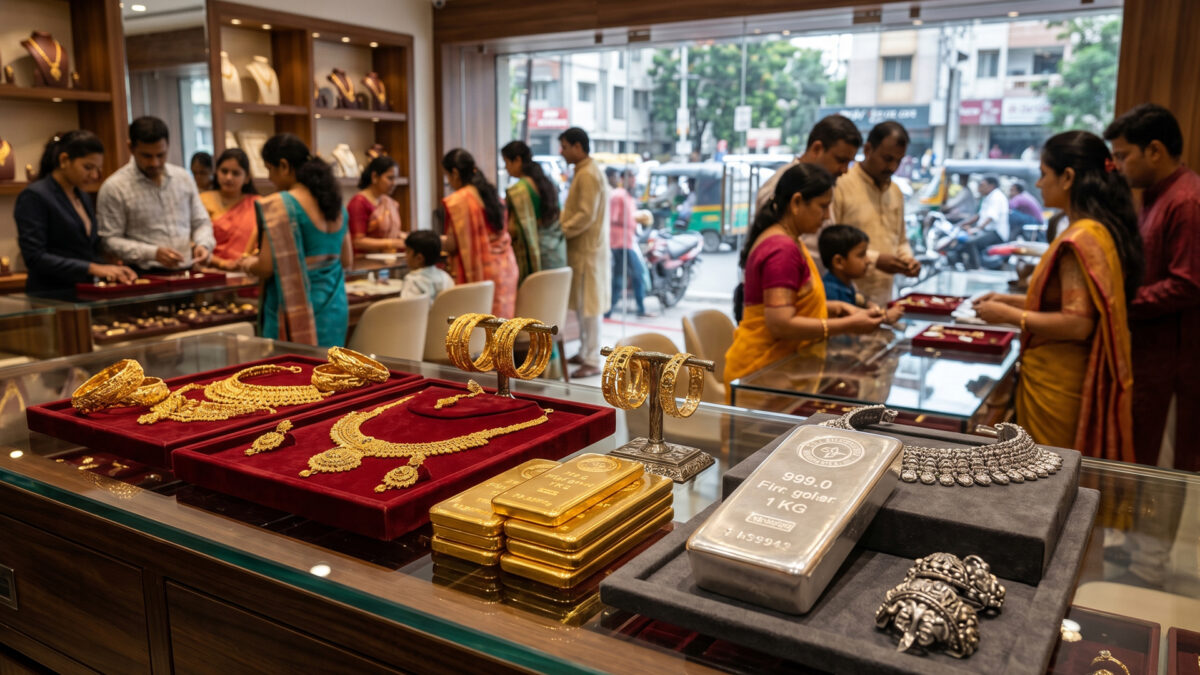
Consumers purchasing ornaments should check the latest 22-karat gold rate with local jewellers, as most traditional gold jewellery is made using this purity. Buyers should also verify the BIS hallmark and confirm the purity of the product before completing a purchase.

Making charges and applicable taxes add to the final cost. Prices may also differ between jewellers and cities, depending on local market conditions and pricing practices.

Silver buyers should similarly compare rates and check the purity and weight of jewellery, coins or other products. Retail prices can differ from exchange-traded futures quotations, which reflect contracts traded on commodity exchanges rather than the direct cost of buying physical metal.

For investors, the latest decline highlights the volatility that can emerge when currency movements, geopolitical developments and interest-rate expectations change simultaneously. A single day’s fall does not necessarily indicate a sustained downward trend, and prices can reverse quickly if market conditions change.

Gold and silver prices are likely to remain sensitive to crude oil movements, the US dollar, bond yields and developments surrounding the Federal Reserve’s policy decision. Any easing of geopolitical tensions or a shift towards lower interest rates could support bullion, while persistently high oil prices and expectations of tighter monetary policy could keep prices under pressure.

Domestic gold rates will also depend on the rupee’s movement against the dollar, international bullion prices and local demand. Consumers planning purchases should check updated rates before visiting jewellers, as prices can change throughout the trading session.

The fall in gold and silver prices offers buyers an opportunity to compare rates and evaluate their requirements. However, with several global factors influencing the market, both consumers and investors should remain alert to fresh developments rather than assume that the current decline will continue.
 

Categories
Beyond

Gold falls to ₹1,45,900, Silver drops to ₹2,09,400

Gold prices remained largely steady in India on Wednesday, October 21, while silver faced fresh selling pressure in domestic and international markets. Investors continued to assess rising crude oil prices, inflation risks and expectations surrounding the US Federal Reserve’s next interest rate decision.

The price of 24-carat gold remained close to ₹1.46 lakh per 10 grams in major Indian cities, while 22-carat gold traded around ₹1.34 lakh. Silver prices were near ₹2.10 lakh per kilogram, with rates varying across cities and jewellery retailers.

The precious metals market has been under pressure in recent sessions, with gold recording its fourth consecutive daily decline in international trading. Higher oil prices have increased concerns about inflation, prompting investors to reconsider their expectations for interest rate cuts.

According to market data reported on Wednesday morning, spot gold fell 0.2% to $4,118.18 per ounce, while US gold futures for December delivery declined 0.2% to $4,136.20. Spot silver dropped 0.9% to $57.44 per ounce.

In the domestic futures market, gold contracts on the Multi Commodity Exchange (MCX) were trading lower at around ₹1,45,939 per 10 grams, down 0.40% in the morning session. MCX silver futures fell around 0.94% to ₹2,09,494 per kilogram at approximately 9.40 am.

The latest movement offers some relief to buyers who have been waiting for gold prices to ease. However, the market remains sensitive to global developments, and further price changes are possible.

Gold rates in major Indian cities

Retail gold prices differ between cities because of local taxes, transportation costs and jewellers’ pricing policies. The rates below were reported on October 21 and are indicative.

In Delhi, 24-carat gold was priced at ₹1,45,740 per 10 grams, while 22-carat gold stood at ₹1,33,595. The price of 999-purity silver was ₹2,09,200 per kilogram.

In Mumbai, 24-carat gold was available at ₹1,46,120 per 10 grams, compared with ₹1,33,943 for 22-carat gold. Silver was priced at ₹2,09,850 per kilogram.

In Kolkata, 24-carat gold stood at ₹1,46,030 per 10 grams, while 22-carat gold was priced at ₹1,33,861. Silver traded at ₹2,09,910 per kilogram.

Chennai recorded one of the higher gold prices among the cities tracked. The rate of 24-carat gold was ₹1,46,660 per 10 grams, while 22-carat gold cost ₹1,34,438. Silver was priced at ₹2,10,550 per kilogram.

In Bengaluru, 24-carat gold stood at ₹1,46,340 per 10 grams and 22-carat gold at ₹1,34,145. Silver was quoted at ₹2,10,360 per kilogram.

These rates may change during the day. Buyers should confirm the final price with their jeweller before making a purchase, as jewellery bills also include applicable taxes and making charges.

Why are gold and silver prices under pressure?

One of the main factors influencing precious metal prices is the outlook for US interest rates. Investors are awaiting the Federal Reserve’s October 27–28 policy meeting for clearer signals on its next move.

Gold does not pay interest, unlike many fixed-income investments. When interest rates remain high or expectations of rate cuts weaken, holding gold becomes relatively less attractive. This can reduce investment demand and put pressure on prices.

Market participants are also monitoring US inflation data, including the Personal Consumption Expenditures price index, which is the Federal Reserve’s preferred inflation measure. The data could influence expectations about the direction of monetary policy.

The US dollar is another important factor. A stronger dollar generally makes gold more expensive for buyers using other currencies, potentially limiting demand. Movements in the rupee against the dollar can also affect domestic gold prices because India imports much of its gold.

Rising crude oil prices have added another layer of uncertainty. Higher energy costs can increase transportation and production expenses, raising inflation concerns. If inflation remains persistent, central banks may have less room to lower interest rates.

Silver is influenced by many of the same factors as gold, but its industrial uses also affect demand. The metal is widely used in electronics, solar panels and other manufacturing applications. As a result, concerns about economic growth and industrial demand can cause silver prices to fluctuate sharply.

What should buyers watch next?

Investors and jewellery buyers will closely follow international bullion prices, the dollar, crude oil movements and the Federal Reserve’s policy signals over the coming days.

Gold may find support if global uncertainty increases or expectations of lower interest rates strengthen. However, persistent inflation and elevated borrowing costs could limit a sustained recovery. Silver may remain volatile as investors weigh both investment demand and its industrial outlook.

For household buyers, a fall in international prices does not always translate immediately into a similar decline in local jewellery rates. City-level differences, taxes and jeweller margins also matter.

Those planning to buy gold or silver should compare current rates across trusted retailers and account for making charges before deciding. Investors, meanwhile, should avoid treating a single day’s price movement as a reliable signal of the market’s longer-term direction.

The immediate focus remains on the US Federal Reserve’s upcoming decision and the economic data preceding it. Until there is greater clarity on inflation and interest rates, gold and silver prices are likely to remain sensitive to global developments.


Categories
Beyond

Gold at ₹1.45 lakh, silver at ₹2.08 lakh

Gold and silver prices remain in focus as India enters the festive shopping season, with buyers weighing whether to purchase now or wait for a possible dip. While gold held steady in international trade on October 20, domestic futures came under pressure. Jewellers, meanwhile, expect the usual decline in prices after Navratri may not happen this year, raising the possibility of higher rates around Dhanteras and Diwali.

The latest gold price today, October 20, shows that the precious metal continues to trade at elevated levels despite recent fluctuations. Silver prices have also remained volatile, leaving consumers uncertain about the best time to make festive purchases.

According to market data, domestic spot gold closed at ₹1,45,353 per 10 grams on October 19, while spot silver settled at ₹2,08,380 per kilogram. On the Multi Commodity Exchange (MCX), December gold futures fell 0.42% to ₹1,47,300 per 10 grams. Silver futures closed at ₹2,09,825 per kilogram, largely unchanged from the previous session.

In Mumbai, the retail gold rate on October 20 stood at ₹1,44,910 per 10 grams for 24-carat gold and ₹1,32,740 for 22-carat gold. Silver was priced at ₹2,06,527 per kilogram. Rates can vary across cities and jewellery stores, depending on local taxes, demand and other charges.

The difference between gold’s purity levels matters for buyers. Twenty-four-carat gold is considered nearly pure and is commonly used for investment products such as coins and bars. Twenty-two-carat gold, which contains other metals to improve durability, is widely used to make jewellery.

The price movement comes against a changing festive-season pattern. Gold and silver prices have traditionally climbed around Navratri before easing by around 4% to 5% as Dhanteras and Diwali approach. However, jewellers believe the usual correction may be smaller or may not materialise this year.

Gold was priced at ₹1,50,700 per 10 grams over the weekend, while silver stood at ₹2,18,000 per kilogram, according to figures reported by market participants. The recent movement reflects the volatility that has marked the bullion market since July.

The year has already seen sharp swings. Gold began January at ₹1,37,120 per 10 grams and climbed to ₹1,67,275 in March. Silver also recorded a strong rally, reaching ₹2,95,000 per kilogram in March before retreating. Both metals have since moved through periods of gains and losses.

Jewellers attribute the outlook partly to global uncertainty and continued demand from central banks. Economic concerns, geopolitical tensions and changes in currency markets have encouraged investors to seek assets considered relatively safe during periods of uncertainty.

Central banks in several countries have increased their gold holdings as they diversify their reserves. Such purchases can support prices by adding to global demand. Concerns about economic growth, inflation and financial market volatility have also helped sustain interest in precious metals.

However, gold prices are not driven by demand alone. The strength of the US dollar, bond yields and expectations about interest rates can influence international bullion prices. Gold generally becomes less attractive when interest rates rise because it does not pay interest. Conversely, expectations of lower rates can support the metal.

Market participants are now watching the US Federal Reserve’s October-end policy decision for clues about the direction of gold and silver. Any change in expectations about interest rates could trigger further price movements. International gold was trading near $4,147 per ounce in early trade on October 20, while US gold futures edged higher.

A weaker rupee can make imported gold more expensive, even when international prices remain stable. This means domestic prices may not always move in line with global rates.

The outlook for Dhanteras remains uncertain. Some jewellers expect prices to rise again as festive demand strengthens, while others caution that short-term corrections remain possible. Forecasts of a fresh peak should therefore be treated as possibilities rather than certainties.

Consumers planning to buy gold jewellery can compare rates across stores, check the purity and hallmarking details, and account for making charges and applicable taxes. These additional costs can significantly affect the final bill. Buyers considering coins or bars should also compare premiums over the prevailing market rate.

Those purchasing silver should check the quoted price for the required purity and weight. Silver is widely used for coins, utensils, jewellery and gifts during the festive season, but its prices can fluctuate sharply as industrial demand and investor activity change.

With Dhanteras approaching, the decision to buy now or wait will depend on individual budgets and needs. Families purchasing jewellery for a wedding or festival may prefer to plan their spending rather than attempt to predict the market’s next move. Investors, meanwhile, should consider their risk tolerance and investment horizon before making fresh purchases.

The key takeaway is that gold and silver could remain volatile through the festive period. Strong central-bank demand and global uncertainty may provide support, but interest-rate expectations, currency movements and profit-taking can still push prices lower.


Categories
Beyond

Gold maintains ₹1,48,580, silver rises to ₹2,12,770

Gold and silver prices moved higher in India on Monday, October 19, as renewed concerns over tensions between the United States and Iran supported demand for precious metals. Gold futures on the Multi Commodity Exchange (MCX) rose to ₹1,48,580 per 10 grams, while silver futures climbed to ₹2,12,770 per kilogram in early trade.

The gains come amid uncertainty over developments in the Middle East and their possible impact on global financial markets. Investors often turn to gold during periods of geopolitical tension, viewing the metal as a safe-haven asset. Silver also benefited from the positive sentiment, although its prices are influenced by industrial demand as well as investment activity.

For Indian households planning jewellery purchases, the latest movement is worth tracking. Even a modest increase in gold prices can make a noticeable difference to the cost of ornaments, particularly during the festive and wedding seasons. Buyers should also remember that retail jewellery bills include additional costs beyond the quoted price of the metal.

Retail gold prices varied across major Indian cities on Monday. In Mumbai, 24-karat gold was priced at ₹1,48,370 per 10 grams, while 22-karat gold stood at ₹1,36,006.

In Delhi, 24-karat gold was available at ₹1,48,120 per 10 grams, compared with ₹1,35,777 for 22-karat gold. Bengaluru recorded a 24-karat gold rate of ₹1,48,490 and a 22-karat rate of ₹1,36,116 per 10 grams.

Chennai reported one of the highest gold prices among the cities covered, with 24-karat gold at ₹1,48,810 per 10 grams and 22-karat gold at ₹1,36,409. In Kolkata, 24-karat gold was priced at ₹1,48,180, while the 22-karat rate stood at ₹1,35,832.

Hyderabad recorded a 24-karat gold rate of ₹1,48,610 per 10 grams and a 22-karat rate of ₹1,36,226.

The difference between 24-karat and 22-karat gold comes down to purity. While 24-karat gold is nearly pure, 22-karat gold contains a higher proportion of other metals, making it more suitable for many types of jewellery.

Silver prices also advanced, with MCX silver futures reaching ₹2,12,770 per kilogram in early trade. Retail prices differed across cities, reflecting local market conditions and pricing practices.

Chennai recorded the highest silver rate among the six cities at ₹2,13,220 per kilogram. Hyderabad followed at ₹2,12,940, while Bengaluru reported ₹2,12,770.

In Mumbai, silver was priced at ₹2,12,610 per kilogram. The rate stood at ₹2,12,320 in Kolkata and ₹2,12,240 in Delhi.

Silver has a wider range of uses than jewellery alone. It is used in investment products, ornaments and household articles, as well as in industries such as electronics and solar energy. This combination means silver prices can respond to safe-haven demand and changes in industrial activity.

Geopolitical uncertainty remains an important factor influencing precious metal prices. Concerns over a possible escalation in tensions between the United States and Iran have encouraged investors to monitor gold and silver closely.

Gold prices are also sensitive to expectations about US interest rates and movements in the dollar. When investors expect interest rates to fall, gold can become more attractive because the opportunity cost of holding a non-interest-bearing asset declines. A stronger US dollar, however, can make gold more expensive for buyers using other currencies and weigh on international demand.

For India, the rupee-dollar exchange rate is particularly important. The country imports much of its gold, so a weaker rupee can increase domestic prices even when international bullion rates remain steady. Import costs, taxes and local demand can also influence retail rates.

Silver has additional price drivers because of its industrial applications. Changes in manufacturing activity and demand from sectors such as solar power and electronics can affect its market outlook.


Categories
Beyond

Gold at ₹1,47,970, silver at ₹2,12,370

Gold and silver prices edged higher across India on Friday, October 16, as renewed tensions between the United States and Iran kept investors cautious. The price of 24-carat gold stood at around ₹1.47 lakh per 10 grams in major cities, while silver traded above ₹2.11 lakh per kilogram. The gains were modest, but they reflected continued interest in bullion as investors assessed geopolitical risks and movements in international markets.

On the Multi Commodity Exchange (MCX), gold futures for December delivery were trading at ₹1,47,970 per 10 grams, up 0.11% in early trade. Silver futures rose 0.51% to ₹2,12,370 per kilogram.

Uncertainty over global economic conditions, inflation and US interest-rate expectations continued to influence the precious metals market, with investors closely tracking developments that could affect prices in the coming days.

Retail gold and silver prices can vary between cities and jewellers because of local charges, taxes and other costs. Prices may also change during the trading session, making it important for buyers to check the latest rates before purchasing.

Gold rates in Delhi, Mumbai, Chennai and other cities

In Delhi, 24-carat gold was priced at ₹1,47,450 per 10 grams, while 22-carat gold stood at ₹1,35,163. Silver was quoted at ₹2,11,620 per kilogram.

In Mumbai, the price of 24-carat gold was ₹1,47,590 per 10 grams, while 22-carat gold cost ₹1,35,291. Silver was priced at ₹2,11,650 per kilogram.

Bengaluru recorded a 24-carat gold price of ₹1,47,710 per 10 grams, with 22-carat gold at ₹1,35,401. Silver was quoted at ₹2,11,820 per kilogram.

In Kolkata, 24-carat gold was priced at ₹1,47,400 per 10 grams, while 22-carat gold stood at ₹1,35,117. Silver was available at around ₹2,11,370 per kilogram.

Hyderabad reported a 24-carat gold rate of ₹1,47,830 per 10 grams and a 22-carat rate of ₹1,35,511. Silver was priced at ₹2,11,990 per kilogram.

Chennai recorded a 24-carat gold price of ₹1,48,020 per 10 grams, while 22-carat gold stood at ₹1,35,685. Silver was quoted at ₹2,12,270 per kilogram.

These are indicative retail rates reported for October 16 and may differ from prices charged at individual jewellery stores. Making charges and applicable taxes can increase the final cost of gold jewellery, so buyers should confirm the amount payable before completing a purchase.

Why are gold and silver prices rising?

Geopolitical uncertainty remains one of the factors influencing precious metal prices. Renewed concerns over US-Iran relations have kept markets alert to the possibility of further instability in the Middle East.

Gold is traditionally regarded as a safe-haven asset because investors often turn to it during periods of political uncertainty and financial market volatility. Unlike shares, gold does not depend on the performance of a particular company, making it an option for investors seeking to diversify their holdings.

Silver can also benefit from investment demand, although its price is influenced by industrial activity as well. The metal is widely used in electronics, solar panels and other manufacturing applications. Its performance therefore depends on investor sentiment as well as expectations for industrial demand and global economic growth.

However, geopolitical developments are only one part of the picture. The US dollar, government bond yields, inflation expectations and interest-rate forecasts can also influence the direction of bullion prices.

US interest rates remain in focus

Investors are watching signals from the US Federal Reserve to assess the outlook for gold and silver. Interest rates are particularly important for gold because the metal does not provide regular interest income.

When markets expect interest rates to fall, the opportunity cost of holding gold can decline, potentially supporting demand. Higher bond yields or a stronger US dollar, however, can make bullion less attractive to some investors.

Inflation data and comments from US policymakers could therefore influence prices in the coming sessions. Any indication that inflation will remain elevated may change expectations about the timing and scale of future interest-rate cuts.

Currency movements also matter for Indian buyers. Since India imports much of its gold, a weaker rupee can increase domestic prices even when international gold rates remain unchanged.

What should buyers consider before purchasing?

People planning to buy gold jewellery should compare prices at trusted outlets and account for making charges and applicable taxes. Even a small movement in the price per gram can affect the final bill, particularly for larger purchases.

The difference between 24-carat and 22-carat gold is also important. Twenty-four-carat gold has a higher level of purity and is commonly used for investment products, while 22-carat gold is widely used for jewellery because the added metals improve its durability.

Silver buyers should confirm the purity and unit used in the quoted price. Retail silver rates may differ from MCX futures prices because they reflect different market conditions and additional costs.

Although gold and silver have gained ground, further price movements will depend on geopolitical developments, global inflation and the outlook for US monetary policy. Buyers and investors should consider their budgets and financial goals rather than base decisions solely on one day’s movement in bullion prices.


Categories
Beyond

Gold at ₹1.47 lakh, silver near ₹2.08 lakh

Gold and silver prices remained in focus on Thursday, October 15, as precious metals attempted to recover from the previous session’s losses. Gold prices rebounded in international markets, while domestic bullion rates remained sensitive to movements in the US dollar, inflation data and expectations around interest rates.

For Indian buyers, the latest movement comes after a period of sharp price fluctuations. Gold was trading around ₹1.47 lakh per 10 grams in domestic markets, while silver hovered near ₹2.08 lakh per kilogram. Although the recovery offered some relief, investors remained cautious about the possibility of further volatility.

International spot gold rose around 1% to $4,146.74 per ounce, recovering from a one-week low recorded on Wednesday. US gold futures for December delivery gained 1.5% to $4,167.30 per ounce. Silver also recovered, rising 0.7% to $56.01 per ounce.

The rebound followed selling triggered by stronger-than-expected US inflation data, which raised concerns that the Federal Reserve could keep interest rates elevated for longer. A weaker dollar on Thursday helped support gold by making it more affordable for buyers using other currencies.

Domestic bullion prices reflected the recovery in international markets, although rates varied across retail markets and futures trading. Gold was quoted at around ₹1,46,090 per 10 grams in early domestic market updates, while silver stood at approximately ₹2,08,340 per kilogram.

On the Multi Commodity Exchange (MCX), December gold futures settled at ₹1,45,848 per 10 grams on Wednesday, while December silver futures closed at ₹2,08,338 per kilogram. Gold futures recovered in early Thursday trade, with reports showing prices moving above ₹1.47 lakh per 10 grams. Silver futures also showed signs of improvement, although price movements remained uneven.

City-wise retail prices showed variations across the country. In Delhi, 24-carat gold was quoted at ₹1,47,220 per 10 grams, while 22-carat gold stood at ₹1,34,952. In Mumbai, 24-carat gold was priced at ₹1,47,480 and 22-carat gold at ₹1,35,190 per 10 grams.

In Bengaluru, 24-carat gold was quoted at ₹1,47,570 per 10 grams, while 22-carat gold stood at ₹1,35,273. Kolkata recorded rates of ₹1,47,250 for 24-carat gold and ₹1,34,979 for 22-carat gold. In Hyderabad, the corresponding prices were ₹1,47,680 and ₹1,35,373, while Chennai reported ₹1,47,880 for 24-carat gold and ₹1,35,557 for 22-carat gold.

These are indicative retail rates and may vary between jewellers and bullion trackers. The final cost of gold jewellery also depends on purity, making charges and applicable taxes. Buyers should check the latest local rates before making a purchase.

US inflation remains a key factor influencing precious metals. Consumer prices rose 3.7% year-on-year in September, compared with 3.4% in August. The increase raised concerns that the Federal Reserve could delay interest-rate cuts or consider tighter monetary policy.

Gold is often viewed as a safe-haven asset and a hedge against inflation. However, it does not pay interest. When investors expect interest rates to remain high, interest-bearing investments can become more attractive, putting pressure on gold prices. Currency movements also influence bullion, with a weaker US dollar generally supporting gold by reducing its cost for buyers using other currencies.

Silver has experienced sharper fluctuations than gold in recent sessions. The metal serves both as an investment asset and an industrial commodity, with applications in electronics and solar technology. Its price therefore responds to changes in investment demand as well as expectations for industrial activity.

Silver futures faced selling pressure on Wednesday amid concerns over inflation, crude oil prices and global economic uncertainty. Thursday’s recovery offered some relief, but the market remained vulnerable to sudden movements. Buyers should check the latest silver rate before making purchases, particularly during periods of heightened volatility.

The latest rebound does not guarantee a sustained recovery in gold and silver prices. US interest-rate expectations, the dollar, geopolitical developments and investor demand will continue to influence the market. Jewellery buyers should compare rates across trusted sellers and check purity, making charges and the final bill. Those considering gold or silver as investments should assess their financial goals and risk tolerance rather than making decisions based on a single day’s movement.


Categories
Beyond

Gold at ₹1.48 lakh, silver falls to ₹2.19 lakh

Gold and silver prices declined in domestic futures trading on Wednesday, October 14, as investors continued to assess global economic developments and the outlook for interest rates. While gold recorded a modest fall, silver futures came under greater pressure. Retail gold prices remained elevated across major Indian cities, keeping precious metals in focus as consumers prepare for the festive season.

MCX Gold futures for December 4 delivery stood at ₹1,48,086 per 10 grams, down nearly 0.25% during the session. MCX Silver futures for December 4 delivery declined 0.70% to ₹2,19,001 per kilogram around noon.

The movements came even as gold continued to attract interest from investors seeking protection against economic uncertainty. Market participants are closely tracking expectations of US Federal Reserve rate cuts, currency movements and geopolitical developments, all of which can influence demand for precious metals.

In the retail market, 24-carat gold was priced at ₹1,48,320 per 10 grams, while 22-carat gold stood at ₹1,35,960 per 10 grams, according to Indian Bullion Association data reported on Wednesday. Silver of 999 purity was quoted at ₹2,17,940 per kilogram.

Retail prices vary by city and may differ from futures prices because of differences in market conditions and pricing methods. Consumers should also account for applicable taxes, GST and jewellery-making charges when calculating the final purchase cost.

Mumbai recorded a 24-carat gold price of ₹1,48,060 per 10 grams, while 22-carat gold was priced at ₹1,35,722. Silver of 999 purity stood at ₹2,17,550 per kilogram.

In New Delhi, 24-carat gold was quoted at ₹1,47,800 per 10 grams and 22-carat gold at ₹1,35,483. Silver prices stood at ₹2,17,170 per kilogram.

Bengaluru reported 24-carat gold at ₹1,48,110 per 10 grams and 22-carat gold at ₹1,35,768. Silver was priced at ₹2,17,620 per kilogram.

In Kolkata, 24-carat gold stood at ₹1,47,800 per 10 grams, while 22-carat gold was quoted at ₹1,36,693. Silver prices were recorded at ₹2,17,160 per kilogram.

Hyderabad reported a 24-carat gold rate of ₹1,49,560 per 10 grams, while 22-carat gold stood at ₹1,35,483. Silver was priced at ₹2,25,870 per kilogram. In Chennai, 24-carat gold was quoted at ₹1,48,450 per 10 grams and 22-carat gold at ₹1,36,079, with silver at ₹2,18,330 per kilogram.

The variations highlight the importance of checking local bullion prices before making a purchase. Jewellery buyers should also distinguish between 24-carat and 22-carat gold. While 24-carat gold is considered nearly pure and is widely used as a benchmark for investment products, 22-carat gold contains other metals that improve its durability, making it suitable for jewellery.

Global developments continue to shape the outlook for gold and silver. Expectations of lower US interest rates can support gold prices because the metal does not offer interest income. When returns on interest-bearing assets decline, gold can become more attractive to investors. However, a stronger US dollar and rising bond yields can weigh on demand by making gold more expensive for holders of other currencies.

Safe-haven buying has remained an important source of support for gold amid economic uncertainty. According to market commentary cited in recent reports, expectations of Federal Reserve rate cuts, elevated US debt levels and institutional buying have helped sustain investor interest. Hopes for progress towards peace in the Russia-Ukraine conflict have also remained part of the broader market picture.

Silver, meanwhile, is influenced by both investment demand and industrial consumption. Its use in manufacturing and other industrial applications makes it sensitive to changes in economic activity, while currency movements and investor sentiment can add to short-term volatility. These factors can cause silver prices to fluctuate more sharply than gold.

For consumers planning festive purchases, the latest decline in futures prices does not necessarily mean an equivalent reduction in jewellery costs. Retail rates, purity, jeweller margins and additional charges all influence the final bill. Comparing prices across established jewellers and checking hallmarking details can help buyers make informed decisions.

With precious metal prices continuing to respond to global economic signals, investors and consumers will be watching currency movements, interest-rate expectations and local demand for further clues on the direction of gold and silver prices.


Categories
Beyond

Gold at ₹1.49 lakh, silver trades above ₹2.22 lakh

Gold and silver prices traded lower on Tuesday, October 13, as investors assessed global economic uncertainty, movements in crude oil prices and the outlook for US interest rates. While gold recovered from its early-session lows in international trade, domestic bullion prices remained under pressure, keeping buyers and investors alert to further fluctuations.

The focus has now shifted to upcoming US consumer price index (CPI) data, which could influence the Federal Reserve’s interest-rate outlook. Inflation figures are closely watched by precious metals traders because they can affect the dollar, bond yields and the attractiveness of gold as an investment.

According to market updates, international spot gold fell to around $4,121 per ounce during early trade before recovering to above $4,182. US gold futures edged up 0.29% to $4,202.80 per ounce in early trading. Silver, meanwhile, remained under pressure in international markets.

In the domestic market, spot gold closed Monday’s session at ₹1,47,681 per 10 grams, while silver settled at ₹2,20,717 per kilogram. On Tuesday morning, gold futures on the Multi Commodity Exchange (MCX) were trading around ₹1,49,525 per 10 grams, while silver futures declined 0.28% to ₹2,22,246 per kilogram.

The difference between spot prices and futures rates reflects variations in the contracts and trading sessions being compared. Retail prices also differ from exchange prices because of local market conditions, purity, taxes and jewellery-related charges.

In Mumbai, the reported retail price of 24-carat gold stood at ₹1,48,100 per 10 grams, while 22-carat gold was priced at ₹1,35,660. Silver was quoted at approximately ₹2,19,613 per kilogram. Rates can vary across cities, so buyers should check the latest local prices before making a purchase.

Gold prices have faced pressure from movements in the US dollar and changing expectations about the Federal Reserve’s monetary policy. A stronger dollar generally makes gold more expensive for buyers using other currencies, potentially limiting international demand. Expectations of higher interest rates can also weigh on bullion because gold does not pay interest or dividends.

The upcoming US inflation report is therefore a key event for the market. If inflation remains elevated, investors may expect interest rates to stay higher for longer. That could support the dollar and bond yields, creating additional headwinds for gold. Softer-than-expected inflation, on the other hand, could revive expectations of monetary easing and provide support to precious metals.

Geopolitical tensions in West Asia have added another layer of uncertainty. Gold is traditionally viewed as a safe-haven asset during periods of political and economic instability. However, its price does not always rise during geopolitical crises, particularly when higher energy costs raise inflation expectations and strengthen the case for tighter monetary policy.

Crude oil prices remain important to the bullion outlook. Any sustained rise in energy costs can push up transportation and production expenses and complicate the global inflation picture. For India, which imports a substantial share of its crude oil requirements, expensive energy can also put pressure on the rupee and increase imported inflation.

Silver faces a different set of influences because it serves both as a precious metal and an industrial commodity. Demand from solar energy, electronics and other industrial applications can affect its price alongside investment flows. This dual role can make silver more volatile than gold during periods of economic uncertainty.

For Indian households, daily changes in gold and silver prices are particularly relevant during the festive and wedding seasons, when jewellery purchases tend to attract greater attention. A fall in bullion prices may offer some relief to buyers, but a single session’s movement does not necessarily indicate a sustained downward trend.

Consumers should also remember that the final price of gold jewellery includes making charges and applicable taxes. The quoted market rate may therefore differ from the amount paid at a jewellery store. Comparing rates and understanding the purity of the metal can help buyers make more informed decisions.

Gold and silver are likely to remain sensitive to US inflation data, dollar movements, crude oil prices and geopolitical developments in the near term. While gold continues to attract interest as a store of value, silver’s industrial demand adds another variable to its price outlook. Investors and retail buyers will be watching these factors closely before deciding their next move.


Categories
Beyond

Gold rises to ₹1,50,990, silver climbs to ₹2,24,180

Gold and silver prices recovered on Friday, October 9, offering some relief to investors after recent volatility in the precious metals market. Gold futures on the Multi Commodity Exchange (MCX) rose to ₹1,50,990 per 10 grams, while silver futures climbed to ₹2,24,180 per kilogram during morning trade.

The recovery came as a weaker US dollar and easing US Treasury yields improved the appeal of precious metals. Developments surrounding the United States and Iran also influenced market sentiment, while investors turned their attention to upcoming US economic data and the Federal Reserve’s interest-rate outlook.

Despite the rebound, gold and silver prices remain sensitive to global economic developments, currency movements and expectations about interest rates. Buyers planning jewellery purchases or considering bullion as an investment may therefore want to track price movements closely.

Gold and silver prices today

According to the latest retail price data published on October 9, gold rates varied across major Indian cities, reflecting differences in local market conditions. The retail prices reported by Livemint placed 24-carat gold in Mumbai at ₹1,50,720 per 10 grams, while 22-carat gold was priced at ₹1,38,160.

In Delhi, 24-carat gold stood at ₹1,50,460 per 10 grams and 22-carat gold at ₹1,37,922. Kolkata recorded rates of ₹1,50,480 for 24-carat gold and ₹1,37,940 for 22-carat gold.

Chennai reported a higher 24-carat gold rate of ₹1,51,120 per 10 grams, while the 22-carat rate stood at ₹1,38,527. In Bengaluru, 24-carat gold was priced at ₹1,50,800 and 22-carat gold at ₹1,38,233 per 10 grams.

Silver prices also differed across cities. The retail rate for 999-purity silver was ₹2,23,390 per kilogram in Delhi, ₹2,23,770 in Mumbai and ₹2,23,460 in Kolkata. Chennai recorded a rate of ₹2,24,410 per kilogram, while Bengaluru stood at ₹2,23,930.

These figures represent retail market rates and may differ from MCX futures prices. Jewellery bills can also include GST, making charges and other applicable costs.

Why are gold and silver prices rising?

International gold prices strengthened as the US dollar weakened and Treasury yields eased. Spot gold rose more than 1% to trade above $4,178 per ounce during early trade, while US gold futures advanced to around $4,200 per ounce.

A weaker dollar generally makes gold more affordable for buyers holding other currencies, potentially supporting international demand. Lower bond yields can also make gold more attractive because the metal does not pay interest or dividends.

Market sentiment improved after US President Donald Trump indicated that the United States would not attack Iran before the November 3 midterm elections. His comments helped ease some immediate concerns about a further escalation in the conflict, contributing to a decline in crude oil prices.

However, geopolitical uncertainty has not disappeared. Investors continue to monitor developments in the Middle East, inflation risks and the possible impact of energy prices on the global economy.

Silver followed gold higher, supported by the broader recovery in precious metals. Unlike gold, silver has significant industrial applications, including electronics, solar energy equipment and other manufacturing activities. Its price is therefore influenced by both investment demand and expectations for industrial consumption.

Federal Reserve outlook remains crucial

Investors are also assessing the direction of US monetary policy. Upcoming US consumer price index (CPI) data are expected to provide important clues about inflation and the Federal Reserve’s next interest-rate decision.

Expectations of higher interest rates can weigh on gold because investors may prefer interest-bearing assets. Conversely, falling yields and expectations of easier monetary conditions can improve demand for bullion.

The possibility of another US rate increase later this year remains a concern for precious metals investors. Any unexpected rise in inflation could strengthen expectations of tighter monetary policy, potentially increasing volatility in gold and silver prices.

What should buyers watch?

Indian gold prices are influenced by international bullion rates, the rupee-dollar exchange rate, import costs and domestic demand. Silver prices similarly respond to global market movements, industrial demand and investor activity.

For jewellery buyers, the distinction between 24-carat and 22-carat gold is important. While 24-carat gold has the highest purity, 22-carat gold is commonly used for jewellery because its alloy composition provides greater durability.

Consumers should confirm the latest local rates before making a purchase, as prices can change during the day. They should also compare the final jewellery bill rather than relying solely on the quoted gold rate.

Friday’s recovery has brought gold and silver back into focus, but the outlook remains dependent on global economic data, interest-rate expectations and geopolitical developments. Investors should be prepared for continued price swings rather than assuming that a single session’s gains signal a sustained upward trend.


Categories
Beyond

Gold holds near ₹1.50 lakh, silver at ₹2.24 lakh

Gold and silver prices in India regained some ground on Thursday, October 8, after both precious metals came under pressure in the previous session. Gold moved closer to the ₹1.50 lakh mark per 10 grams, while silver remained above ₹2.23 lakh per kilogram, as investors tracked global economic signals, currency movements and geopolitical uncertainty.

The latest gold price showed a noticeable recovery from Wednesday’s levels. The 24-carat gold rate was around ₹1,49,813 per 10 grams, while 22-carat gold was around ₹1,37,228. Retail prices can vary slightly between cities and jewellery retailers because of local taxes, making charges and other costs.

Silver also remained expensive, with the price of 999-purity silver hovering around ₹2.23 lakh per kilogram. The precious metal has experienced sharp movements in recent sessions, reflecting changing investor expectations around global interest rates, the US dollar and economic growth.

The recovery in gold prices was also visible in international markets. Spot gold was trading more than 1% higher at above $4,140 an ounce, while US gold futures were also gaining. The move came as traders assessed the direction of US monetary policy and the latest signals from the Federal Reserve.

A softer US dollar provided another lift to bullion. Gold is generally priced in dollars globally, so a decline in the American currency can make the metal relatively cheaper for buyers holding other currencies. The dollar’s movement has therefore remained an important factor for Indian gold prices.

The Indian rupee, however, continues to remain under pressure. The currency closed near ₹96.78 against the US dollar on Wednesday, while crude oil prices climbed above $100 a barrel. A weaker rupee can make imported gold more expensive in India, even when international prices are relatively stable.

Gold’s appeal has also been supported by continuing global uncertainty. Investors often turn towards gold during periods of geopolitical tension, market volatility and concerns about inflation. The precious metal is widely viewed as a safe-haven asset, although its price can move sharply when interest-rate expectations change.

Recent price movements show just how volatile the bullion market has become. Gold prices had fallen sharply on October 7 before recovering on Thursday. The latest India rates indicate that 24K gold remains close to the psychologically important ₹1.50 lakh level.

Market watchers are paying particular attention to this level. According to market analysts, gold needs to regain and sustain ₹1.50 lakh per 10 grams to strengthen the recovery. A failure to hold recent support could bring renewed selling pressure.

Silver is facing a similar technical test. The metal needs to hold the ₹2.22 lakh-₹2.23 lakh region to maintain its recent stability. Any sustained move above higher resistance levels could encourage fresh buying, while a break below support could lead to another round of profit-taking.

City-wise prices continue to show small differences. In Mumbai, Delhi and other major markets, the retail gold rate varies depending on the purity and the jeweller. Chennai and Kolkata can also quote somewhat different prices because of local market conditions and taxes.

For jewellery buyers, the difference between 24K and 22K gold remains important. 24K gold has the highest purity and is generally preferred for investment products, while 22K gold is more commonly used for jewellery. Making charges, GST and other applicable costs are added to the basic gold rate when consumers purchase jewellery.

The festive season is another factor keeping gold demand in focus. With Dussehra and the broader wedding season approaching, physical demand for gold could remain significant. Indian households traditionally consider gold an important purchase during festivals and family occasions, although high prices can encourage consumers to buy smaller quantities.

Silver is also attracting attention beyond traditional jewellery demand. Its industrial applications, particularly in electronics, solar technology and other manufacturing segments, mean that its price is influenced by both investment demand and industrial consumption.

For investors, the immediate focus remains on the US dollar, Federal Reserve rate expectations, crude oil prices and movements in the Indian rupee. Global geopolitical developments could also trigger sudden shifts towards safe-haven assets.

Gold has therefore entered Thursday’s session with a familiar combination of support and uncertainty. After a sharp fall, the recovery towards ₹1.50 lakh suggests that buyers remain interested, but the market is still sensitive to every move in the dollar and global interest-rate expectations.