Categories
Corporate

Sensex slides over 300 points, Nifty below 22,650

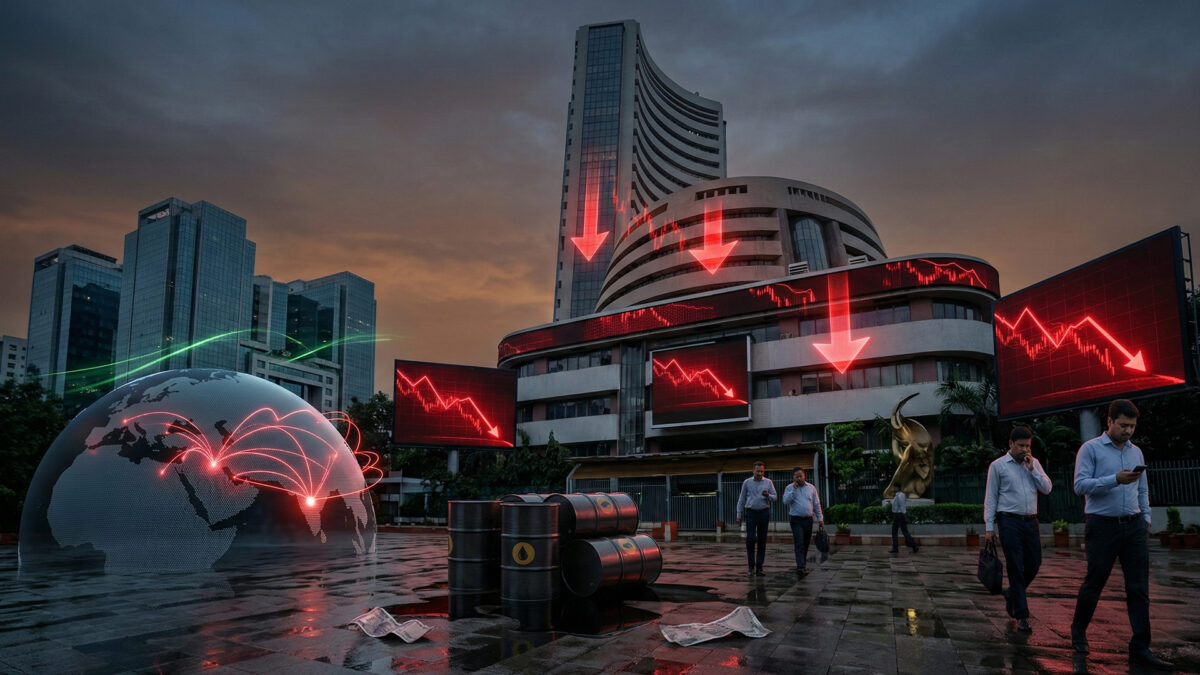
Indian stock markets started the week on a weak note on April 6, 2026, with both the Sensex and Nifty declining amid global uncertainty and rising crude oil prices. The Sensex fell over 300 points in early trade, while the Nifty50 slipped below the 22,650 mark, reflecting cautious sentiment among investors.

The main trigger behind the fall was the sharp rise in crude oil prices due to escalating tensions in the Middle East. For an oil-importing country like India, higher crude prices raise concerns about inflation and economic stability, leading many investors to reduce their exposure to equities.

Selling pressure was visible in sectors like oil & gas and pharma, which weighed on the broader market. On the other hand, there were pockets of strength. IT, metals, realty, and PSU banking stocks showed resilience, indicating that investors are still willing to bet on fundamentally strong sectors.

Among individual stocks, Trent emerged as a top gainer after strong business updates boosted investor confidence. Wipro also moved higher after announcing a major deal, lending support to the IT sector. TVS Motor shares gained following a positive brokerage outlook, adding to the list of notable performers.

In contrast, stocks in the oil & gas space came under pressure due to rising input costs linked to crude prices. Pharma stocks also witnessed selling, contributing to the market’s decline.

Experts believe the market could remain volatile in the near term, as global uncertainties and foreign investor outflows continue to weigh on sentiment. However, they also note that recent corrections may open up selective buying opportunities for investors with a long-term view.

The Indian rupee showed slight strength against the US dollar in early trade, offering some support. Still, its trajectory will depend largely on oil price movements and global capital flows.

Categories
Corporate

Sensex rockets 1,800 points, Nifty at 22,750

Indian equity markets bounced back strongly on April 1, 2026, with benchmark indices recovering after days of losses. The BSE Sensex jumped around 2,000 points to nearly 73,900, while the Nifty50 rose close to 600 points to hover above 22,900, marking one of the steepest single-day rallies in recent weeks.

The surge was fueled by signs of easing tensions in the Middle East, which eased fears of sharp crude price rises. Coupled with positive global market cues, Wall Street and Asian indices posted solid gains, the mood on Dalal Street turned optimistic.

Banking and financial stocks were the biggest beneficiaries, with Shriram Finance and HDFC Bank among the top gainers. Other heavyweights such as Reliance Industries, Larsen & Toubro, and GRSE also saw strong buying interest, reflecting confidence in cyclical sectors.

Metals, capital goods, and real estate shares joined the rally, benefiting from a global uptick and domestic bargain hunting after recent corrections. Analysts noted that investors were keen to pick up beaten-down stocks at attractive levels.

On the other hand, IT and telecom stocks underperformed. Infosys, HCL Tech, and Tech Mahindra lagged behind, as some investors booked profits in defensive sectors despite the broader market rally.

Categories
Corporate

Sensex drops over 1,000 points, Nifty slips below 22,500

The markets witnessed a sharp decline as it opened on Monday, with benchmark indices tumbling amid rising geopolitical tensions and a spike in crude oil prices. The Sensex plunged over 1,000 points, while the Nifty slipped below the 22,500 mark, reflecting broad-based selling across sectors.

The weak start was signaled earlier by GIFT Nifty, indicating negative investor sentiment. As trading progressed, losses deepened, driven by concerns over the escalating Iran conflict, which has pushed global oil prices close to $120 per barrel.

Among the worst-hit stocks were banking and IT heavyweights such as HDFC Bank, ICICI Bank, and Infosys. These stocks dragged the indices lower as investors worried about the impact of rising inflation and global uncertainty on earnings. Financial stocks faced pressure due to concerns over tighter liquidity, while IT companies saw selling amid fears of weaker global demand.

In contrast, oil and gas stocks emerged as key gainers. Shares of ONGC and Oil India rose as higher crude prices are expected to improve their profitability. Some metal stocks also showed resilience, supported by firm global commodity trends.

The surge in crude oil prices remains a major concern for India, given its heavy dependence on imports. Elevated prices could widen the current account deficit, fuel inflation, and weigh on corporate margins, particularly in sectors such as aviation, logistics, and manufacturing.

Global markets also reflected weak sentiment, with Asian indices trading lower and US futures pointing to continued volatility. The ongoing Iran conflict has heightened fears of supply disruptions and prolonged instability in the Middle East. Foreign institutional investors (FIIs) continued their selling spree, further pressuring domestic equities.

Categories
Corporate

Sensex falls over 1,050 points drops below 23,000

Indian equity markets tumbled sharply on Friday,  with the BSE Sensex falling 1,053 points to 59,182 and the Nifty50 slipping 325 points to 22,965. The decline came amid rising crude oil prices, a weakening rupee, and global geopolitical concerns, leaving investors cautious.

Key sectors such as oil & gas, infrastructure, and energy bore the brunt of the sell-off. Among notable losers, Chennai Petroleum, Sadbhav Engineering, Brigade Enterprises, and DCX Systems saw significant declines. On the brighter side, a few stocks bucked the trend, with LIC, Aequs, and Fino Payments Bank posting gains, supported by positive investor sentiment in select pockets.

Global cues played a major role in the market’s negative trend. Crude oil prices hit multi-week highs, stoking concerns about input costs and inflationary pressures. The Indian rupee weakened past ₹94 against the US dollar, amplifying concerns for import-dependent sectors. Meanwhile, foreign institutional investors continued to book profits, adding to the bearish momentum.

Trading opened on a weak note, with GIFT Nifty futures signaling a negative start. Analysts noted that despite recent rallies in banking, automobile, and consumer stocks, current market conditions favored caution.

Also Read: OpenAI shuts Sora, drops $1 bn Disney deal

Categories
Corporate

Sensex surges over 1,400 points, Nifty reclaims 23,300 levels

The stock markets staged a strong recovery on Wednesday, after days of volatility, with benchmark indices rising sharply in early trade. The BSE Sensex jumped over 800 points in morning trade, while the Nifty 50 climbed past the 23,000 mark, reflecting broad buying across sectors.

Investor sentiment was boosted by signs of easing global geopolitical tensions and a stabilizing trend in crude oil prices, which supported risk‑taking. Futures on GIFT Nifty indicated a positive start, while broader Asian markets also showed gains.

Top gainers included Shriram Finance, Trent Ltd, and Adani Ports & SEZ, all posting healthy gains. Grasim Industries and Adani Enterprises also saw strong buying interest, driving sectoral momentum in financials, industrials, and consumer segments.

On the other hand, some stocks underperformed. Tech Mahindra, Coal India, and Sun Pharma were notable laggards, highlighting selective weakness in IT, energy, and pharmaceutical sectors amid broader market gains.

Market participants remain cautious despite the rebound, as global macroeconomic factors, including monetary policy directions and geopolitical developments, continue to influence short-term trends.

Also Read: Adani to split Jaypee assets post-takeover

Categories
Corporate

Sensex surges 1,100 points, Nifty crosses 22,800

After a nerve-wracking Monday, Indian equity markets bounced back on Tuesday, 24 March 2026, with a broad-based rally lifting the BSE Sensex by over 1,100 points and pushing the Nifty50 past the 22,800 mark. Investor sentiment improved as geopolitical tensions eased and global markets offered supportive cues.

Monday had been a rough day for Dalal Street. Fears of conflict in the Middle East, surging crude prices, and foreign institutional selling drove the Sensex down nearly 1,837 points, while the Nifty dipped to around 22,500, wiping out significant wealth from investors’ portfolios.

Tuesday’s turnaround was led by standout performers across sectors. IndiGo and Asian Paints topped the gainers, each surging roughly 4%, while banking stocks regained strength. HDFC Bank ended its four-day losing streak with a gain of about 3%, buoyed by stabilizing news around leadership changes. Energy companies also benefited, with HPCL and BPCL rising as crude oil prices eased slightly from recent highs.

The relief rally was also fueled by news from the geopolitical front. Reports of the U.S. postponing planned strikes on Iran helped ease fears of a broader conflict, bringing a sigh of relief to investors wary of further market shocks. The positive sentiment was mirrored in Asian and global markets, which also traded higher.

However, not all stocks enjoyed the rally. Some financials and metal companies lagged behind, showing modest gains or trading flat, as investors cautiously evaluated the sustainability of the rebound. Analysts note that while the relief rally demonstrates renewed risk appetite, markets remain sensitive to geopolitical developments and crude oil movements.

For now, Indian markets have shaken off Monday’s jitters, offering a welcome breather to investors, but the coming days may still see volatility as the global situation evolves.

Also Read: PM Modi highlights India’s West Asia concerns

Categories
Corporate

Sensex slides nearly 1850 points, Nifty dips to 22,550

Markets plunged sharply on Monday, March 23, 2026, as global uncertainties and rising crude oil prices triggered widespread selling. The BSE Sensex closed at 72,696, down nearly 1,850 points, while the Nifty 50 fell to 22,512, a loss of around 600 points, wiping out about ₹14 lakh crore in market capitalization.

Despite the broad weakness, a few stocks bucked the trend. Vedanta, Tata Capital, Tata Motors, Godrej Properties, and Dr. Reddy’s attracted investor attention, posting modest gains due to company-specific developments and active trading interest.

Market breadth was weak, with realty, metals, banking, consumer durables, and telecom stocks bearing the brunt of the sell-off. Large-cap banks such as HDFC Bank and conglomerates like ITC retreated sharply. Mid- and small-cap stocks were even more affected, with several hitting 52-week lows as risk-off sentiment dominated trading.

Analysts said the downturn was driven by escalating geopolitical tensions in the Middle East, involving the US, Iran, and allied nations, which spurred fears of higher crude prices and energy inflation. The India VIX, a gauge of market volatility, surged, reflecting elevated uncertainty.

Foreign institutional investors continued net selling, while the Indian rupee weakened against the US dollar, adding to bearish sentiment. Rising crude oil prices and higher US bond yields further dampened risk appetite, prompting investors to prioritize capital preservation over fresh buying.

Also Read: Sensex tanks 1,500 points, Nifty below 23,000

Categories
Corporate

Sensex tanks 1,500 points, Nifty below 23,000

The sell-off was broad-based, with major sectors trading in the red. Banking and financial stocks were among the biggest losers. Shares of HDFC Bank, ICICI Bank, and State Bank of India declined significantly, dragging the indices lower.

Metal stocks also witnessed heavy selling pressure due to global growth concerns. Companies such as Tata Steel and JSW Steel were among the top laggards of the session.

In addition, oil-sensitive and infrastructure-linked stocks like Reliance Industries and Larsen & Toubro traded lower as rising crude prices raised cost concerns.

The market downturn was triggered by escalating geopolitical tensions in the Middle East, which pushed crude oil prices above $110 per barrel. This sparked fears of higher inflation and increased import costs for India, putting pressure on both equities and the currency.

Foreign institutional investors (FIIs) continued their selling streak, further weighing on market sentiment. The outflow of foreign funds has been a key factor behind the sustained weakness in Indian equities in recent sessions.

However, some defensive stocks managed to hold ground. FMCG and pharmaceutical companies showed relative resilience, with names like Hindustan Unilever and Sun Pharmaceutical Industries trading with mild gains or limited losses. These sectors typically perform better during uncertain market conditions.

Broader markets also mirrored the weakness, with mid-cap and small-cap stocks declining sharply, indicating widespread selling pressure across the board.

Categories
Corporate

Sensex gains 330 points, Nifty closes above 23,100

The BSE Sensex closed around 74,500, gaining roughly 0.5 percent, while the NSE Nifty50 settled near 23,100 with similar gains. However, the session remained volatile, with indices giving up a portion of early gains as investors stayed cautious.

The recovery was led by buying in information technology, metal stocks and public sector banks, which emerged as the top gainers of the day. Stocks in these sectors attracted investors looking to capitalise on recent corrections. On the other hand, weakness persisted in select financial stocks, with HDFC Bank continuing to remain under pressure following recent negative developments.

Friday’s gains come after markets witnessed a sharp sell-off on Thursday, when the Sensex plunged nearly 2,500 points in one of its worst single-day declines in recent years. The fall was triggered by escalating geopolitical tensions in West Asia, particularly involving Iran, which sparked fears of disruption in global crude oil supplies.

Although crude oil prices showed some easing on Friday, they remained elevated, keeping concerns around inflation and economic stability intact. Rising oil prices are seen as a key risk for India, which is heavily dependent on imports.

The Indian rupee also remained weak against the US dollar, adding to investor concerns over macroeconomic stability. Currency pressure, along with foreign investor outflows, continued to influence market sentiment.

Despite Friday’s rebound, overall sentiment remained cautious. Analysts noted that while valuations have become more attractive after the recent correction, uncertainty around global developments and domestic factors could keep markets volatile in the near term.

Also Read: India appoints Vikram Doraiswami as envoy to China

Categories
Corporate

Sensex drops 2,500 points, Nifty falls to 23,000

Markets faced a sharp sell‑off, with both the BSE Sensex and Nifty50 closing deep in the red. The Sensex plunged 2,497 points to 74,207, while the Nifty50 fell 776 points to 23,002, marking one of the steepest single‑day declines in recent years. Market breadth was weak, with significantly more declining stocks than advancing ones.

The key trigger behind the downturn was a spike in crude oil prices following renewed geopolitical tensions in the Middle East. Higher energy costs raised inflation concerns, weighing on investor sentiment. Foreign portfolio investors also reduced exposure amid risk‑off global cues, adding to the selling pressure.

Financial and banking stocks bore the brunt of the decline. Shriram Finance, Bajaj Finance, and Eternal Ltd emerged as the top losers on the Nifty50, while HDFC Bank and Mahindra & Mahindra also registered sharp losses. The sell‑off reflected heightened caution in rate‑sensitive and cyclical sectors.

In contrast, energy and oil stocks outperformed. ONGC and Oil India were notable gainers, benefiting from elevated crude prices. These selective winners highlighted the defensive appeal of commodity-linked names during periods of volatility.

The midcap and smallcap segments also suffered steep declines, and the Sensex volatility index surged as investors adjusted to the sharp market movements. Analysts said the correction was primarily driven by external factors, including global crude prices and US monetary policy concerns.

Also Read: Brent oil nears $120 due to Middle East crisis