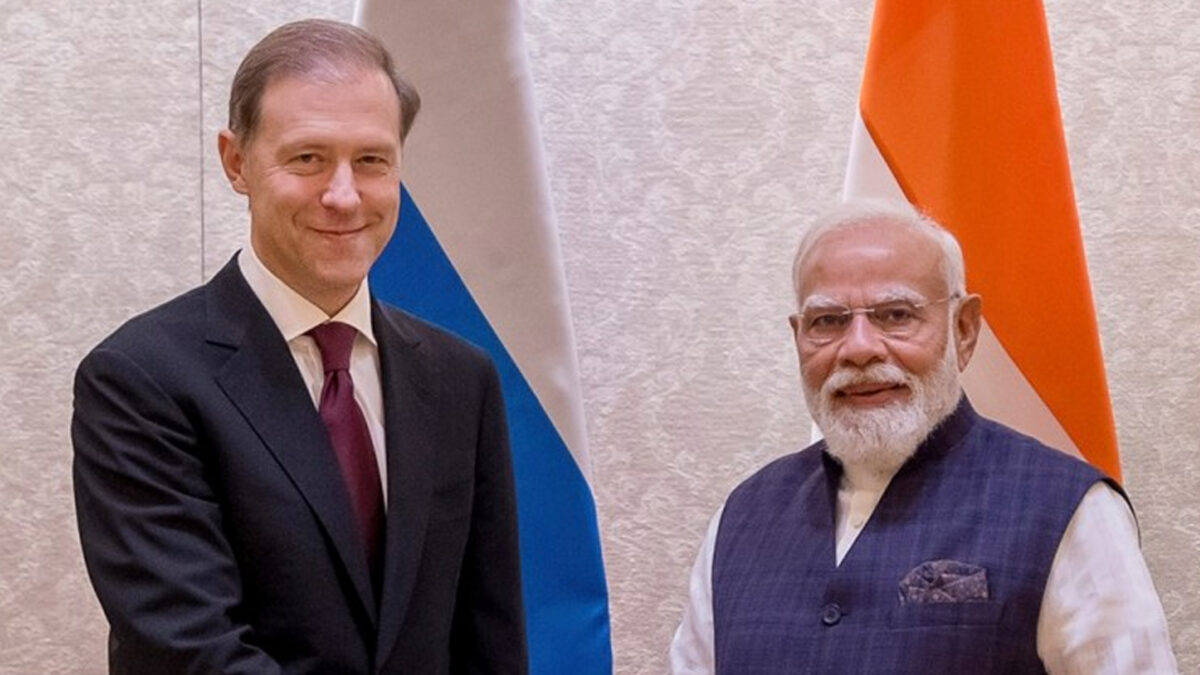
India and Russia have held high-level talks to strengthen their partnership, with a key focus on increasing the supply of oil and natural gas. The discussions took place in New Delhi between Russian Deputy Prime Minister Denis Manturov and Prime Minister Narendra Modi, along with other senior officials.
During the meeting, Russia предложed to expand its supply of crude oil and liquefied natural gas (LNG) to India. The move is aimed at supporting India’s growing energy demand at a time when global markets are facing uncertainty due to geopolitical tensions, particularly in West Asia.
India relies heavily on imports to meet its energy needs, making stable supply arrangements crucial. In recent years, Russia has emerged as one of India’s top suppliers of oil, and both countries are now looking to deepen this relationship further.
The talks were not limited to energy alone. Both sides discussed ways to improve cooperation in trade, fertilisers, and technology. Russia has been increasing its fertiliser exports to India and has expressed its willingness to continue meeting the country’s requirements.
Progress on ongoing nuclear energy projects, including the Kudankulam Nuclear Power Plant, was also reviewed. In addition, both nations explored opportunities for collaboration in areas such as innovation, critical minerals, and industrial development.
The discussions also covered broader economic ties and ways to expand bilateral trade. Leaders подчеркнули the importance of maintaining strong cooperation in a rapidly changing global environment.
Russia’s offer to supply more oil and gas is expected to help India secure its energy needs and manage price fluctuations. At the same time, it allows Russia to strengthen trade ties with one of its key partners.
Also Read: Google expands AI video tools