Categories
Beyond

RBI keeps repo rate at 5.25%, stance neutral

The Reserve Bank of India (RBI) on February 6, 2026, decided to keep the key policy repo rate unchanged at 5.25%, maintaining a cautious approach as inflation remains under control and economic growth stays steady. The decision was taken by the Monetary Policy Committee (MPC) at the end of its bi-monthly review meeting.

Along with the rate pause, the MPC also chose to retain its ‘neutral’ policy stance, signalling that future interest rate decisions will be guided by incoming economic data rather than a fixed bias towards tightening or easing. This means the RBI is keeping its options open amid both domestic stability and global uncertainties.

RBI Governor Sanjay Malhotra said inflation has eased significantly from earlier highs and is now comfortably within the central bank’s target range. Lower food prices, improved supply conditions, and softer global commodity prices have helped contain price pressures. However, the RBI cautioned that risks from unpredictable weather, global energy prices, and geopolitical tensions still remain.

On the growth front, the central bank expressed confidence in India’s economic momentum. It noted that domestic demand remains strong, supported by healthy consumption, rising investment activity, and robust performance in the services sector. Manufacturing activity has also shown signs of improvement, aided by government capital expenditure and stable financial conditions.

The RBI slightly upgraded its growth outlook, reflecting optimism about India’s medium-term prospects, even as global economic conditions remain uneven. At the same time, the MPC stressed the need for vigilance, especially as global financial markets continue to react to policy signals from major central banks.

Also Read: US drops 25% tariff on Indian goods
Categories
Corporate

RBI approves Blackstone’s 9.99% stake in Federal bank

The Reserve Bank of India (RBI) has approved global private equity major Blackstone to acquire up to a 9.99% stake in Federal Bank, paving the way for one of the largest foreign investments in an Indian mid-sized private bank.

Blackstone will invest around ₹6,196 crore through its Singapore-based arm, Asia II Topco XIII Pte Ltd. The investment will be made through a preferential allotment of convertible warrants, subject to shareholder approval and other statutory clearances.

As part of the transaction, Federal Bank will issue up to 27.29 crore warrants to Blackstone at an issue price of ₹227 per share, which includes a premium over the market price. Each warrant can be converted into one fully paid equity share. Once fully converted, Blackstone’s holding will stand just under the 10% regulatory threshold for promoter classification.

The deal had earlier received clearance from the Competition Commission of India (CCI), removing a key regulatory hurdle before the RBI’s final approval.

Under the agreement, Blackstone will also have the right to nominate one non-executive director to Federal Bank’s board, provided its shareholding remains at 5% or more. This gives the investor a limited but meaningful role in the bank’s governance while maintaining its status as a minority shareholder.

Federal Bank is a professionally managed private lender with no single promoter, and its shareholding is widely dispersed among institutional and public investors. Analysts say Blackstone’s entry highlights growing global confidence in India’s banking sector, especially in lenders with strong retail and digital growth potential.

The fresh capital is expected to strengthen Federal Bank’s balance sheet, support future expansion plans, and improve its ability to grow its loan book across retail, MSME, and digital banking segments.

Also Read: Walmart raises pharmacy pay, top roles hit $42 an hour

Categories
1 Minute-Read

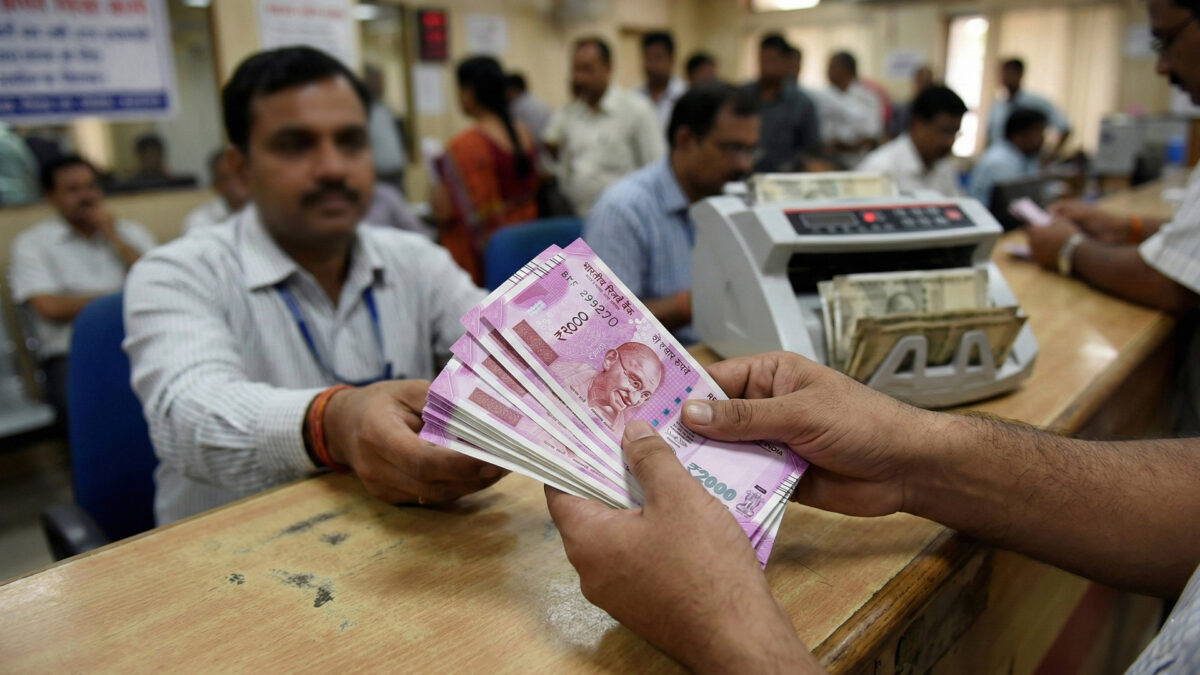
RBI says most ₹2,000 notes returned, still legal tender

The Reserve Bank of India has said that most ₹2,000 currency notes withdrawn from circulation have already come back to the banking system.

As per RBI’s latest update, over 98 per cent of these high-value notes have been deposited or exchanged, with only a small amount still held by the public. The central bank clarified that ₹2,000 notes continue to be legal tender and can still be deposited at RBI issue offices or sent through India Post.

The note was withdrawn in May 2023 to improve currency circulation, not due to demonetisation.

Categories
Beyond

RBI projects 4.2% inflation in FY27

India’s inflation is expected to gradually rise toward more normal levels over the next year, but without causing stress to the economy, according to the Reserve Bank of India (RBI). The central bank’s latest projections show that consumer price inflation is likely to hover around 4% in FY2026–27, a level the RBI considers ideal for sustainable growth.

Speaking after the Monetary Policy Committee’s recent review, RBI Governor Sanjay Malhotra said the modest rise in inflation reflects improving economic activity rather than runaway price pressures. For the current financial year, inflation is expected to remain low at about 2.1% on average, before inching up to around 3.2% in the final quarter as demand strengthens.

Looking ahead, the RBI expects inflation to average about 4.0% in the first quarter of FY27 and 4.2% in the second quarter. This upward revision, the central bank explained, is driven by normalisation in food prices, steady domestic demand, and global commodity trends. Importantly, inflation is still projected to stay well within the RBI’s comfort band of 2% to 6%.

Against this backdrop, the RBI chose to keep the repo rate unchanged at 5.25% and maintain a neutral policy stance. This decision is aimed at supporting economic growth while remaining alert to any risks to price stability. Stable interest rates help keep borrowing costs predictable for households and businesses.

For consumers, this means prices of everyday essentials are likely to rise slowly and steadily, rather than sharply. For businesses, steady inflation and unchanged rates provide confidence to plan investments, expand operations, and hire more people. Economists say this environment supports sustained growth without overheating the economy.

The RBI also said it will closely monitor food prices, global oil markets, precious metals, and geopolitical developments that could affect inflation going forward.

Also Read: Gold above ₹1.50 lakh, Silver dips to ₹2.35 lakh

Categories
Beyond

Rupee slides 1% to 91.6 per dollar

The Indian rupee fell sharply to a record low of 91.74 against the US dollar, before recovering slightly to 91.62 on January 22, 2026, highlighting ongoing volatility in the currency market. This marks a roughly 1% decline in a single session, underscoring sustained pressure on India’s external sector.

The fall is driven by strong demand for dollars, elevated crude oil prices, and continued foreign fund outflows from Indian equities. Geopolitical tensions and global trade uncertainties have also added to investor caution, weakening risk appetite for emerging markets like India. While a partial recovery occurred after positive international cues, analysts warn that the rupee remains vulnerable to renewed external shocks.

A depreciating rupee has immediate economic consequences. Importers face higher costs for crude oil, electronic goods, and other essential commodities, which could feed into inflation. Industries relying on imported raw materials will see rising input costs, potentially reducing margins or raising prices for consumers. Dollar-denominated payments, including overseas education, travel, and debt servicing, also become more expensive, squeezing household and corporate budgets.

The Reserve Bank of India may need to consider intervention strategies if the rupee’s slide persists, as prolonged weakness could impact foreign investment inflows, inflation targets, and broader economic growth. Businesses and consumers alike are expected to feel the impact as import costs rise and pricing pressures intensify across sectors.

Despite the slight intra-day recovery, market watchers caution that the rupee could remain under stress due to structural trade deficits and persistent capital outflows. The current scenario reinforces the interconnectedness of global and domestic economic factors, emphasizing the need for prudent fiscal and monetary management.

Also Read: India weighs joining Trump’s Gaza peace board

Categories
Beyond

RBI approves Japan’s SMBC India Bank subsidiary

The Reserve Bank of India (RBI) has given in-principle approval to Sumitomo Mitsui Banking Corporation (SMBC) of Japan to set up a wholly-owned subsidiary (WOS) in India. The move marks a significant expansion of SMBC’s footprint in the country and underlines India’s growing importance in global banking and finance.

At present, SMBC operates in India through branch offices in Mumbai, New Delhi, Chennai and Bengaluru. With the RBI’s approval, these branches will be converted into a locally incorporated subsidiary. Once the bank fulfils all regulatory conditions laid down by the central bank, it will receive a formal licence under the Banking Regulation Act, 1949 to begin operations as an Indian entity.

A wholly-owned subsidiary structure offers several advantages over the branch model. As a locally incorporated bank, SMBC will be able to expand its branch network more freely, offer a wider range of services and operate on terms similar to domestic banks. The subsidiary will have its own capital base and governance framework, with its finances ring-fenced from the parent bank in Japan. This structure also gives the RBI stronger regulatory oversight and helps enhance financial stability.

The approval is especially significant in the context of SMBC’s investment in Yes Bank. In 2025, the Japanese lender acquired about 24.22 per cent stake in Yes Bank, becoming its largest shareholder. While the new subsidiary will operate independently, the development is expected to strengthen SMBC’s ability to support Indian corporates, multinational companies and cross-border business, potentially benefiting partnerships and collaborations within the Indian banking system.

SMBC is one of Japan’s largest financial institutions and has been active in India for over a decade, focusing mainly on corporate banking, project finance and trade finance. The new subsidiary is expected to deepen its engagement with India’s fast-growing economy, particularly in infrastructure, manufacturing, clean energy and international trade.

The RBI’s decision reflects its broader policy of allowing foreign banks to choose between branch operations and wholly-owned subsidiaries, while ensuring strong regulation and local accountability. As India’s banking sector continues to expand, the move is likely to encourage more long-term foreign investment and competition, strengthening the overall financial ecosystem.

Also Read: Citigroup CEO Fraser signals more job cuts

Categories
1 Minute-Read

RBI flags rising bank competition

The Reserve Bank of India (RBI) warned that banks face increasing competition from equity markets and technology-driven solutions.

Its ‘Trend and Progress of Banking in India 2024‑25’ report noted that while traditional bank credit growth is moderating, corporate funding via equity and non-bank sources is rising. Digital transformation offers convenience but also exposes banks to cybersecurity and operational risks.

The RBI emphasized the importance of robust risk management, responsible technology adoption, and financial inclusion to stay competitive. Banks must adapt quickly to evolving customer expectations and emerging funding alternatives to maintain resilience.

Categories
Beyond

RBI delays Jan 3 faster cheque clearance

The Reserve Bank of India (RBI) has indefinitely postponed the January 3, 2026 launch of the second phase of its faster cheque clearance system, which was expected to allow cheques to clear within three hours. The central bank cited the need to give banks more time to prepare for the tighter timelines.

The faster clearing system, known as the Cheque Truncation System (CTS) with Continuous Clearing and Settlement (CCS), began its Phase 1 rollout in October 2025. This phase already allows banks to scan, exchange, and settle cheque images electronically, cutting the traditional one- to two-day clearing period to just a few hours.

Phase 2 was designed to speed this up even further. Under the new rules, banks would need to approve or reject cheques within three hours of receiving them. If a bank did not respond within this window, the system would automatically clear the cheque. The goal was to make funds available to account holders faster and more reliably, benefiting both individuals and businesses.

However, implementing such a system across all banks proved challenging. Many banks needed additional time to streamline processes and ensure smooth integration with the new timelines. The RBI, acknowledging these practical difficulties, chose to postpone the rollout until further notice.

Meanwhile, the timings for cheque processing have been slightly adjusted. The presentation window now runs from 9 a.m. to 3 p.m., while the confirmation window is from 9 a.m. to 7 p.m. This gives banks more flexibility to manage cheque settlements under the existing Phase 1 system.

For everyday customers and businesses, there is no immediate change to the current clearing speed. The improvements from Phase 1 remain in effect, while the more ambitious three-hour settlement plan will be implemented only once banks are fully ready.

The RBI’s move highlights the delicate balance between speed and operational readiness in banking, ensuring that customers can enjoy faster payments without risking errors or delays during the transition.

Also Read: Navi Mumbai Airport opens with first flights

Categories
Beyond

Rupee slips to ₹91 per dollar, stabilises after RBI action

The Indian rupee faced another bout of volatility on Wednesday, opening at a record low of ₹91.07 per US dollar before bouncing back later in the session. Early trading pressure pushed the currency to around ₹91.08, reflecting continued foreign fund outflows and repatriation of overseas corporate earnings.

Market watchers say the rupee’s weakness is part of a broader trend affecting emerging market currencies. Investors have been cautious amid global economic uncertainties and lingering concerns over trade negotiations with the United States.

The Reserve Bank of India (RBI) stepped in decisively to curb the slide. State-run banks, acting on the central bank’s guidance, sold dollars in the spot and forward markets, helping the rupee recover some ground. The currency strengthened to around ₹90.25 intraday and eventually settled near ₹90.28.

“The RBI’s timely action reassures the market that extreme volatility won’t persist,” said a currency strategist.Analysts noted that such intervention is part of the RBI’s strategy to prevent a one-sided depreciation, which could increase costs for importers and strain corporate treasuries.

Despite the rebound, traders remain cautious, noting that the rupee is likely to remain sensitive to foreign investment flows, global market moves, and domestic economic developments. With inflation and interest rate expectations in play, analysts expect short-term volatility to continue.

The rupee’s swings underline the delicate balancing act for the central bank: supporting the currency without disrupting economic growth. For businesses and investors, the message is clear, while short-term fluctuations are inevitable, RBI intervention can provide a stabilising influence when markets turn jittery.

Also Read: Gold steady at ₹13,385/gm, Silver nears ₹1.99 lakh/kg

Categories
1 Minute-Read

Bond market ignores RBI rate cut, PSUs pause

India’s bond market remained largely unresponsive to the Reserve Bank of India’s recent rate cut, keeping yields high and forcing public sector issuers to delay fundraisings.

Indian Railway Finance Corporation (IRFC) became the third PSU in a week to withdraw a bond issue due to weak investor appetite at expected pricing.

Earlier, Power Finance Corporation and SIDBI also shelved sales as bids came in higher than anticipated. Analysts say stress across the yield curve, global uncertainty, and subdued foreign inflows, rather than RBI easing, are driving the cautious market response.