Categories
Beyond

Tata Power chooses Odisha for solar plant

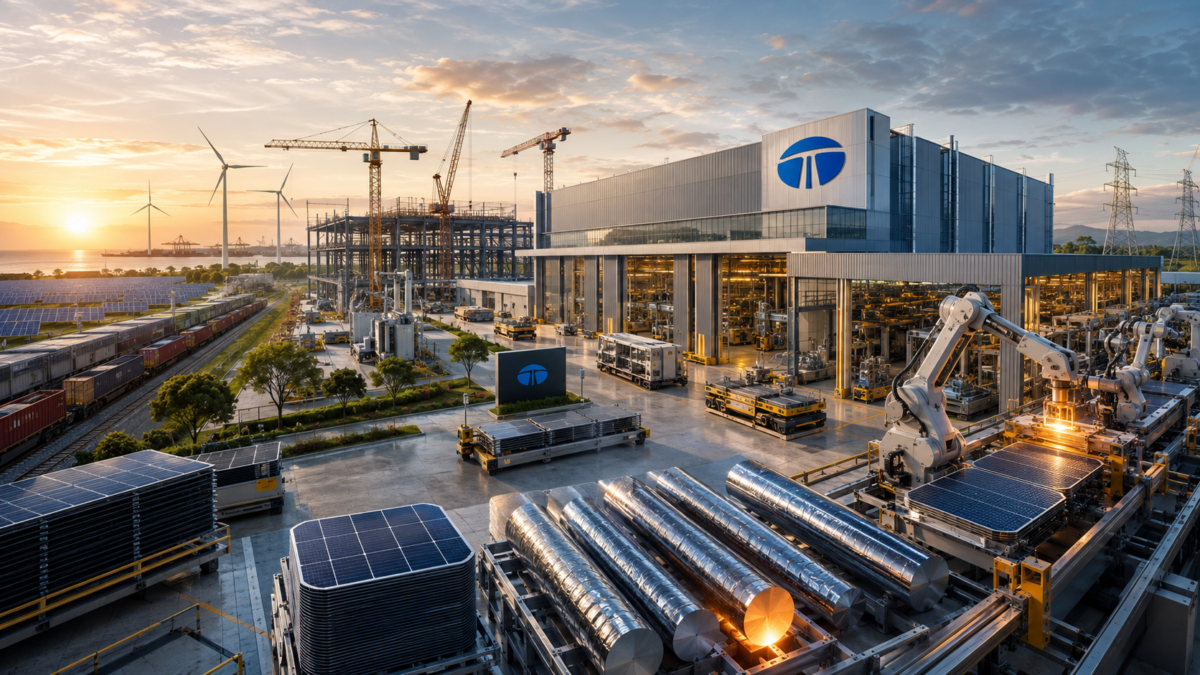
Tata Power has chosen Odisha over Andhra Pradesh for setting up one of India’s largest integrated solar manufacturing facilities, marking a major boost for the state’s clean energy ambitions. The company will invest around ₹25,000 crore to establish a 10 GW solar ingot and wafer manufacturing plant, a project expected to strengthen India’s domestic solar supply chain and reduce dependence on imports.

Construction of the ambitious project is expected to begin in October 2026, with commercial production likely to commence in phases over the next few years. The investment is being seen as a significant milestone in India’s push to become self-reliant in solar manufacturing while supporting its renewable energy targets.

The upcoming facility will manufacture solar ingots and wafers, two of the most critical components used in producing solar cells and photovoltaic (PV) modules. At present, India imports a large share of these components, particularly from China. The new plant is expected to help bridge this gap by creating a robust domestic manufacturing ecosystem.

According to Tata Power, Odisha emerged as the preferred location after an extensive evaluation of multiple states, including Andhra Pradesh. Factors such as land availability, infrastructure, logistics, government support and access to industrial resources played an important role in the final decision.

The integrated facility will have an annual production capacity of 10 gigawatts (GW), making it one of the largest investments in India’s renewable energy manufacturing sector. By producing ingots and wafers within the country, Tata Power aims to support India’s growing solar industry while ensuring greater supply chain resilience.

The project is expected to generate thousands of direct and indirect employment opportunities during both the construction and operational phases. Local businesses, transport providers, engineering firms and ancillary industries are also likely to benefit as the manufacturing ecosystem develops around the plant.

For Odisha, securing the Tata Power investment represents another major achievement in attracting large-scale industrial projects. The state has been actively positioning itself as a destination for investments in green energy, advanced manufacturing and clean technologies. Officials believe the project will further strengthen Odisha’s reputation as an emerging renewable energy hub.

The investment also aligns with the Central government’s vision of building a self-reliant clean energy ecosystem under initiatives such as ‘Make in India’ and the Production Linked Incentive (PLI) scheme. By expanding domestic manufacturing capacity, India hopes to reduce import dependence, improve energy security and create globally competitive manufacturing capabilities.

Demand for solar equipment is expected to rise sharply as India works towards achieving its ambitious renewable energy goals. The country has committed to rapidly expanding solar power generation over the coming decades to meet growing electricity demand while reducing carbon emissions. Domestic manufacturing of critical components will play an essential role in supporting this transition.

Industry experts believe projects like Tata Power’s integrated solar manufacturing facility will help India become a stronger player in the global renewable energy supply chain. Manufacturing ingots and wafers locally can lower production costs, improve availability of raw materials and encourage further investment across the solar value chain.

The project also reflects a broader trend among Indian companies to invest in upstream solar manufacturing rather than relying solely on imported components. Developing capabilities across the entire solar value chain—from ingots and wafers to cells and modules—is considered crucial for long-term competitiveness and energy independence.

Apart from strengthening manufacturing, the facility is expected to encourage research, innovation and skill development in advanced solar technologies. As production scales up, specialised jobs in engineering, automation, quality control and renewable energy manufacturing are likely to increase, creating new opportunities for the local workforce.

For Tata Power, the investment reinforces its long-term commitment to India’s clean energy transition. The company has been expanding its presence across renewable power generation, solar rooftop solutions, electric vehicle charging infrastructure and green energy technologies. The new manufacturing facility adds another important dimension to its renewable energy portfolio.

The decision to locate the project in Odisha also highlights the increasing competition among states to attract investments in future-ready industries. While Andhra Pradesh was also under consideration, Odisha‘s industrial ecosystem and policy support ultimately tipped the balance in its favour.

As construction begins later this year, the project is expected to become a cornerstone of India’s solar manufacturing ambitions. Beyond producing critical solar components, the facility will help create jobs, strengthen domestic supply chains and support the country’s goal of building a globally competitive renewable energy sector. With one of the largest solar wafer and ingot plants on the horizon, Tata Power’s investment signals growing confidence in India’s clean energy future.

Categories
Corporate

HCLTech announces ₹14,250 cr AI investment in Odisha

HCLTech has announced a massive investment of ₹14,257 crore to set up its first artificial intelligence (AI) data centre in Odisha, marking one of the biggest private sector investments in India’s AI infrastructure. The project, being developed in partnership with AI startup Sarvam and the Odisha government, is expected to strengthen India’s sovereign AI capabilities while positioning the state as a major technology and innovation hub.

The announcement was made during the Odisha AI Summit 2026, where HCLTech signed a memorandum of understanding (MoU) with the state government. The proposed AI data centre will be established at the upcoming Odisha Sovereign AI Park in Bhubaneswar, a dedicated technology ecosystem designed to support next-generation AI research, computing and innovation.

The investment is seen as a significant step towards building India’s own AI infrastructure at a time when governments and businesses are increasingly looking for secure, locally hosted computing facilities. The project also aligns with the Centre’s broader push for Digital India, AI innovation, and data sovereignty, reducing dependence on overseas infrastructure for critical AI workloads.

According to HCLTech, the ₹14,257-crore project includes support and incentives from the Odisha government. The company said the facility will provide advanced computing power required for training and deploying large AI models while enabling enterprises, startups and public institutions to build AI-powered applications within India.

Unlike conventional data centres that mainly provide cloud storage and computing services, the new AI data centre will be equipped with specialised high-performance computing systems capable of handling complex generative AI models and large-scale machine learning applications. These capabilities are becoming increasingly important as organisations adopt AI across sectors such as healthcare, banking, manufacturing, education, agriculture and governance.

The project will combine HCLTech’s expertise in enterprise technology services with Sarvam’s indigenous AI foundation models. Sarvam, one of India’s leading AI startups, has been working on developing multilingual large language models and AI systems tailored to Indian languages and local use cases.

Together, the two companies plan to create AI solutions that address the specific needs of Indian enterprises and government agencies. The focus will be on delivering secure AI services while ensuring that sensitive data remains within the country, an important requirement for sectors dealing with confidential public and financial information.

HCLTech Chairperson Roshni Nadar Malhotra described the investment as a landmark initiative that reflects the company’s commitment to India’s AI ambitions. She said HCLTech has played a key role in India’s technology journey over the years and now aims to contribute to the country’s emerging sovereign AI ecosystem through long-term investments and strategic partnerships.

She added that the collaboration with the Odisha government and Sarvam would help create an AI ecosystem that supports innovation while enabling India to develop world-class technology capabilities.

HCLTech CEO and Managing Director C. Vijayakumar said the project represents a major milestone in the company’s full-stack AI strategy. He noted that enterprises worldwide are rapidly increasing investments in artificial intelligence, creating strong demand for reliable AI infrastructure.

According to him, Odisha has emerged as an attractive destination for advanced technology investments because of its progressive industrial policies, skilled workforce and improving digital infrastructure. He said the company looks forward to building a robust AI ecosystem in the state that can support customers across India and global markets.

Sarvam Co-founder Vivek Raghavan said the partnership would help accelerate India’s journey towards becoming a global AI leader. He noted that access to domestic computing infrastructure is essential for developing AI models designed specifically for India’s languages, businesses and public services.

Industry experts believe the project will play a crucial role in reducing India’s dependence on foreign AI infrastructure. Most advanced AI models today rely on expensive computing facilities located outside the country. Building high-performance AI infrastructure within India is expected to improve data security, lower operational costs and encourage domestic AI innovation.

The Odisha government has also described the investment as a milestone in its efforts to transform the state into a major technology destination. Officials believe the AI data centre will attract additional investments in cloud computing, semiconductor technologies, AI research and digital services, creating a larger innovation ecosystem around Bhubaneswar.

Alongside the AI data centre, HCLTech has signed a separate agreement with the state government to establish a Global Technology Center in Bhubaneswar. The new campus will have the capacity to accommodate around 5,000 technology professionals and is expected to become operational by 2028.

The technology centre will support software engineering, AI development, cloud services and digital transformation projects while creating high-skilled employment opportunities for engineers and technology graduates from Odisha and neighbouring states.

The twin projects are expected to significantly boost the state’s digital economy while encouraging startups, research institutions and academic organisations to collaborate on AI innovation. Industry observers believe the presence of advanced computing infrastructure will make it easier for Indian startups to build and test AI products without relying heavily on overseas cloud providers.

The announcement also follows HCLTech’s recent strategic investment in Sarvam, reinforcing the company’s ambition to expand beyond traditional IT services into AI platforms, enterprise AI applications and next-generation digital infrastructure.

Also Read: India eases FDI rules for e-commerce exports

Categories
Corporate

L&T wins ₹5,000 crore Odisha coal project

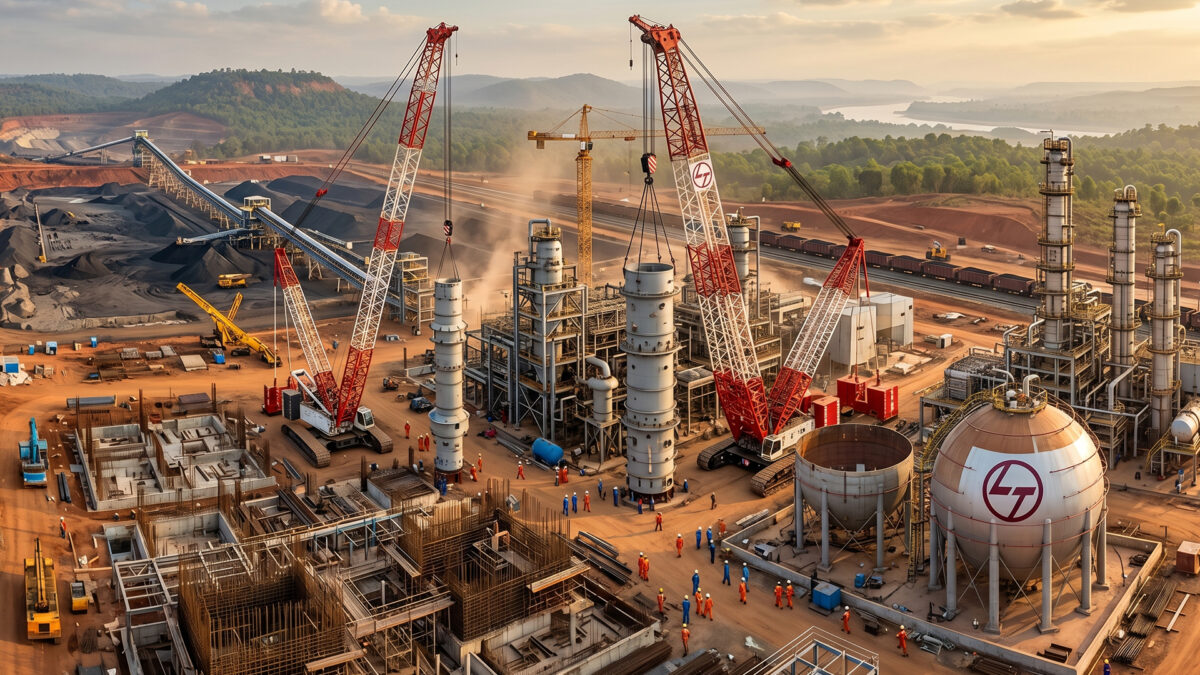
Larsen & Toubro (L&T) has secured a major engineering, procurement and construction (EPC) contract worth up to ₹5,000 crore to develop a coal-to-ammonium nitrate facility in Odisha.

The contract has been awarded by Bharat Coal Gasification and Chemicals Ltd (BCGCL), a joint venture between Coal India Ltd and Bharat Heavy Electricals Ltd (BHEL). The project involves setting up an integrated plant with a production capacity of around 2,000 tonnes per day of ammonium nitrate.

The facility will convert coal into ammonium nitrate, a key industrial chemical used in mining and infrastructure sectors. L&T will execute the project on a lump-sum turnkey basis, covering design, engineering, procurement, construction, commissioning, and performance testing.

The scope of work also includes allied facilities such as nitric acid production units, forming a part of the integrated chemical complex.

Officials said the project supports India’s broader coal gasification programme, aimed at reducing dependence on imported chemicals while utilising domestic coal resources more efficiently. The initiative is part of the government’s push to promote coal-to-chemicals conversion for industrial use.

Coal gasification projects are seen as strategic for India’s energy and industrial sectors, as they help produce value-added products like fertilisers and industrial inputs from domestic coal.

L&T said the order strengthens its position in large-scale industrial and energy infrastructure projects and highlights its capabilities in executing complex chemical plant developments.

Also Read: Reliance Jamnagar refinery units shut for upkeep