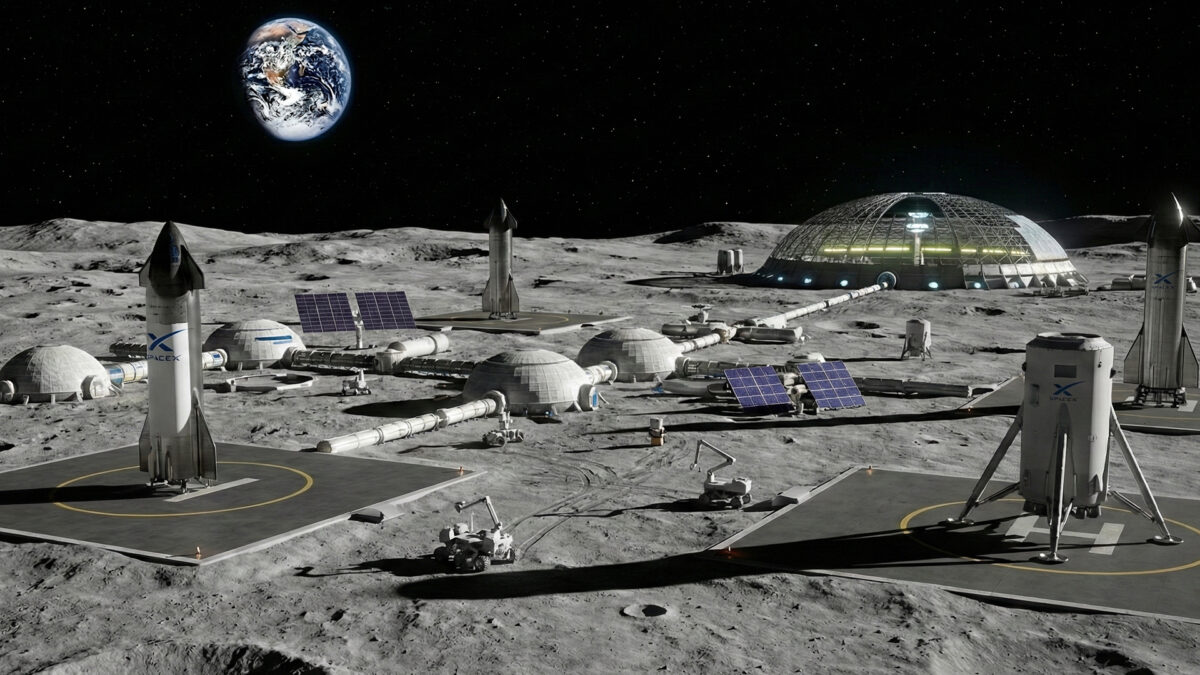
Elon Musk has once again reshaped the future of space travel, saying SpaceX will now focus on building a “self-growing city” on the Moon before sending humans to Mars. The decision marks a pause to Musk’s long-held dream of colonising the Red Planet.
In simple terms, Musk believes the Moon is the smarter place to start. It is closer to Earth, easier to reach, and allows SpaceX to move faster. A trip to the Moon takes just two days, and rockets can be launched every few weeks. Mars, on the other hand, is far away and only reachable during narrow windows that open once every 26 months. Each journey to Mars takes about six months, making mistakes costly and progress slow.
Musk says this difference matters. Being close to Earth means SpaceX can test new technology, fix problems quickly, and improve life-support systems through trial and error. That learning speed, he believes, could help build a sustainable lunar city within the next decade — a place that slowly grows as more people, machines and supplies arrive.
The idea of a “self-growing city” is not science fiction, Musk insists. He imagines small beginnings, basic shelters, power systems and supply chains, that expand over time. With frequent missions, the Moon could become a permanent home for humans, not just a research stop.
Importantly, Musk has made it clear that Mars is still the ultimate goal. He says serious work on a Martian city could begin in five to seven years. But first, SpaceX wants to reduce risks by learning how humans can live off Earth for long periods, starting closer to home.
The shift also fits well with global space plans. SpaceX is a key partner in NASA’s Artemis programme, which aims to return astronauts to the Moon later this decade. Starship, SpaceX’s next-generation rocket, is expected to carry people and cargo for these missions.
By learning to live there on the Moon , Musk believes humanity will be better prepared for the much harder journey to Mars. In his vision, the future of human life beyond Earth will begin not on a distant planet, but on the Moon just above us.
Also Read: Adani Energy wins Japanese funding for 6,000 MW link