
Categories
Corporate

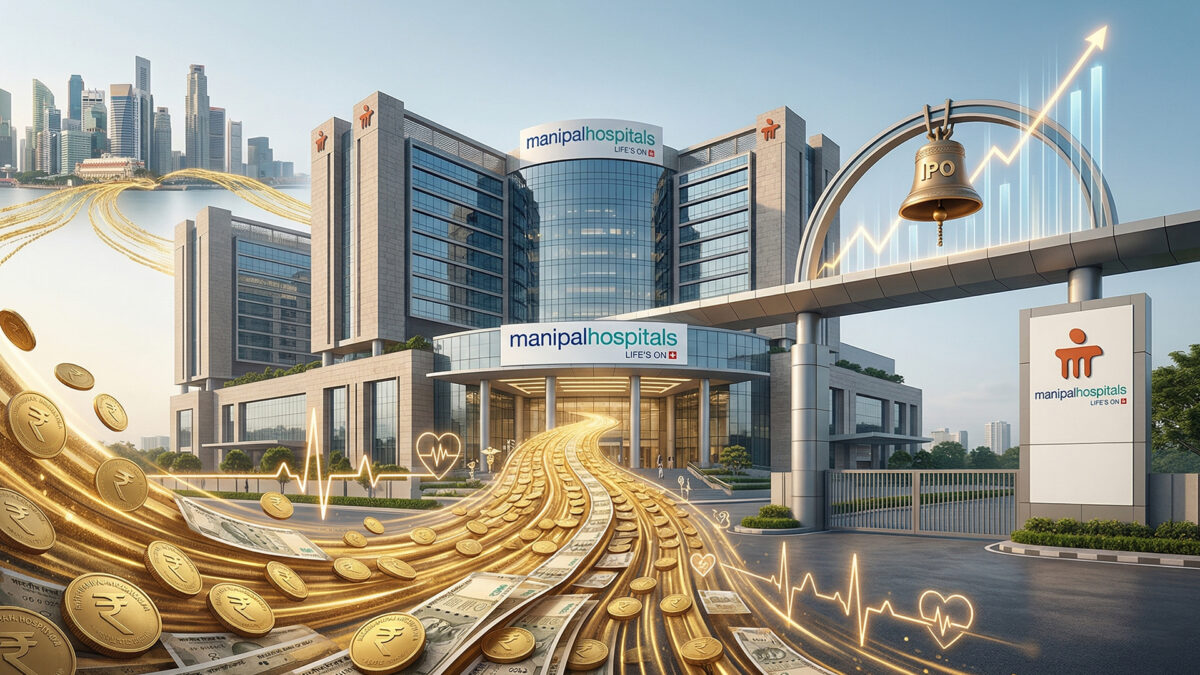
Manipal Health shares rise 11% in market debut

Manipal Health Enterprises made a positive debut on the Indian stock exchanges on Wednesday, with shares listing at a premium of around 11% over the initial public offering (IPO) price. The strong opening reflects investor interest in one of India’s largest private hospital networks, even as concerns remain about its rich valuation and debt levels.

The Manipal Health share price opened at ₹652 on the National Stock Exchange (NSE), a 10.5% premium to its issue price of ₹590. On the Bombay Stock Exchange (BSE), the stock began trading at ₹655, gaining 11.01%. The shares later touched ₹653.10 on the NSE, taking the company’s market value to about $9 billion.

The market debut came after Manipal Health raised ₹9,275.22 crore through its IPO, making it one of India’s biggest public offerings of 2026. The issue was the country’s second-largest IPO of the year, behind SBI Funds Management. The offering attracted strong institutional demand despite relatively cautious participation from retail investors.

The IPO was open for subscription between July 29 and July 31. It was subscribed 4.92 times overall, with investors bidding for more than 443 million shares against around 90 million shares available after adjustments for anchor investors. Qualified institutional buyers showed the strongest interest, with their portion subscribed 8.25 times. The non-institutional investor category was subscribed 1.02 times, while the retail portion was subscribed 0.93 times.

The difference between institutional and retail demand was partly linked to concerns over Manipal Health’s valuation. At the upper end of its IPO price band, the company was valued at about 84.65 times its projected fiscal 2026 earnings. That was higher than the valuations of major listed hospital companies such as Apollo Hospitals, Fortis Healthcare and Max Healthcare, which were trading at lower earnings multiples.

Still, investors appear willing to pay a premium for Manipal Health’s scale and long-term growth prospects. Backed by Singapore state investment firm Temasek, the company has built a large pan-India healthcare network. It operates 49 hospitals with more than 13,000 beds, making it India’s largest multispecialty hospital network by bed capacity.

The company’s growth has been driven by both expansion and acquisitions. Its network now covers a large part of India’s organised private healthcare market, giving it a presence across multiple cities and regions. This footprint could help Manipal Health benefit from rising demand for specialised medical services as India’s population ages and lifestyle-related and chronic diseases become more common.

The hospital sector has also been attracting increasing attention from global investors. Large investment firms have been putting money into India’s healthcare market, encouraged by rising healthcare spending, greater demand for quality treatment and opportunities to consolidate a fragmented hospital industry. Manipal Health’s listing therefore comes at a time when the broader Indian healthcare sector is attracting strong domestic and international interest.

However, the company’s rapid expansion has also resulted in significant borrowing. A major purpose of the IPO was to strengthen its balance sheet. Manipal Health plans to use a substantial portion of the funds raised to repay or prepay borrowings at its subsidiary, Manipal Hospitals.

The company also intends to use part of the IPO proceeds to acquire a minority stake in Sahyadri Hospitals. The move would strengthen its position in the Indian hospital market while supporting its strategy of expanding through acquisitions and increasing its presence in important healthcare markets.

Manipal Health is not stopping with its current network. The company plans to invest around ₹4,000 crore to expand its bed capacity by more than 18%. The expansion is expected to add about 2,400 beds over the next three to four years. If implemented as planned, the additional capacity could support revenue growth while allowing the hospital chain to serve more patients.

The company’s growth plans put it in direct competition with established listed hospital chains. Apollo Hospitals, Max Healthcare and Fortis Healthcare are among the key players investors will compare Manipal Health with after its listing. Apollo, for instance, currently has nearly 10,000 beds and has set its own target of reaching around 13,000 beds by fiscal 2030.

For investors, the key issue now is whether Manipal Health can maintain its earnings growth quickly enough to support its premium valuation. A strong listing provides an encouraging start, but the company will have to demonstrate that its expansion strategy can translate into sustainable profits, lower debt and stronger cash generation.

The company’s stock market debut nevertheless marks an important milestone for India’s healthcare industry. With more than 13,000 beds, a nationwide network and plans for further expansion, Manipal Health has entered the listed market with considerable scale.

The immediate 11% listing gain shows that investors are confident about the long-term healthcare opportunity in India. But sustaining that confidence will depend on execution. For Manipal Health, the next phase will be about balancing expansion with financial discipline and proving that its growing hospital network can deliver consistent returns to shareholders.

Categories
Corporate

Manipal Health launches ₹9,275 cr IPO next week

Manipal Health Enterprises has announced the price band for its highly anticipated ₹9,275 crore initial public offering (IPO) at ₹560-590 per share. The public issue will open for subscription on July 29 and close on July 31, making it one of the largest IPOs by an Indian healthcare company.

The Bengaluru-based hospital chain, which operates the Manipal Hospitals network, is looking to raise funds to strengthen its financial position and support future expansion. The IPO consists of a fresh issue of shares worth ₹8,000 crore, while the remaining amount will come through an offer for sale (OFS) by existing shareholders.

The bidding process for anchor investors is scheduled for July 28, a day ahead of the public issue. Following the subscription period and allotment process, the company’s shares are expected to be listed on both the BSE and NSE.

The fresh capital raised through the IPO will largely be used to repay debt, helping the company improve its balance sheet. Manipal Health has said reducing borrowings remains a key priority, and the fundraising is expected to significantly lower its debt levels after listing.

Apart from debt repayment, the hospital operator plans to accelerate its expansion plans. The company intends to invest nearly ₹4,000 crore over the next three to four years to add around 2,400 hospital beds across its network. At present, Manipal Health operates 49 hospitals with a combined capacity of more than 13,000 beds, making it one of India’s largest healthcare providers.

The IPO also offers an exit opportunity for some existing investors. Global investment firms Temasek and TPG-backed entities are among the shareholders that will partially dilute their stakes through the offer for sale.

Market participants are closely tracking the issue, with the IPO drawing attention even before subscriptions begin. Grey market trends currently suggest a positive listing premium, although analysts caution that such unofficial indicators should not be viewed as a guarantee of listing-day performance.

India’s healthcare sector has witnessed strong momentum in recent years, driven by increasing demand for quality medical services, rising health insurance coverage, higher healthcare spending and greater awareness among patients. Large hospital chains have also continued expanding into new cities to meet growing demand for advanced medical care.

Manipal Health has strengthened its position through both organic growth and strategic acquisitions over the years. The company now competes with major listed hospital operators such as Apollo Hospitals, Max Healthcare and Fortis Healthcare, making it one of the country’s leading integrated healthcare networks.

The IPO comes at a time when India’s primary market continues to witness healthy investor participation despite global economic uncertainties. Strong demand for recent public issues has encouraged several companies across sectors to tap the capital markets.

For investors, Manipal Health’s public issue represents an opportunity to participate in India’s expanding healthcare industry. However, experts recommend evaluating the company’s financial performance, future growth strategy, valuation and associated risks before investing, instead of relying only on grey market sentiment.

With an extensive hospital network, ambitious expansion plans and a clear focus on improving its financial strength, Manipal Health’s ₹9,275 crore IPO is expected to be one of the most closely watched public offerings in the Indian stock market this year.

Also Read: Fintechs oppose NPCI’s default UPI plan

Categories
Corporate

Temasek-backed Manipal health files for ₹8,000 cr IPO

Manipal Health Enterprises Ltd, the Bengaluru-based hospital chain backed by Singapore’s Temasek and other investors, is taking a big step toward going public. The company has filed its Draft Red Herring Prospectus (DRHP) with the Securities and Exchange Board of India (SEBI) to launch an IPO worth ₹8,000 crore.

The funds raised through the IPO will primarily be used to reduce debt at its major subsidiary, Manipal Hospitals Pvt Ltd, and to acquire a minority stake in its step-down unit, Sahyadri Hospitals Pvt Ltd. Remaining funds will support general corporate purposes, giving the company more flexibility to grow its operations.

Alongside the fresh issue, promoters and existing investors — including Imperius Healthcare Investments, TPG SG Magazine, and Novo Holdings Invest Asia, plan to sell about 43.2 million existing shares through an offer-for-sale. A pre-IPO placement of up to ₹1,600 crore may also take place, which could slightly reduce the fresh issue size.

The IPO will be listed on both the National Stock Exchange (NSE) and the Bombay Stock Exchange (BSE). Shares will be allocated with 50% for institutional investors, 35% for retail investors, and 15% for non-institutional buyers. Leading investment banks, including Kotak Mahindra Capital, Axis Capital, and Goldman Sachs, will manage the process, with KFin Technologies acting as the registrar.

Manipal Health operates a network of multi-specialty hospitals across India. As of late 2025, it had 38 hospitals with over 10,700 beds, expanding on a pro-forma basis to 48 hospitals and more than 12,300 beds across 14 states and Union Territories. The company aims to strengthen its balance sheet and support further expansion to meet growing healthcare demand.

By going public, Manipal Health hopes to attract more investors while accelerating its growth in India’s fast-growing healthcare sector, which is seeing rising demand for quality and accessible medical services.

Also Read: Meta brings in Dreamer team to build smarter AI agents