Categories
Beyond

Trump’s first Japanese investments under $550 bn trade pact

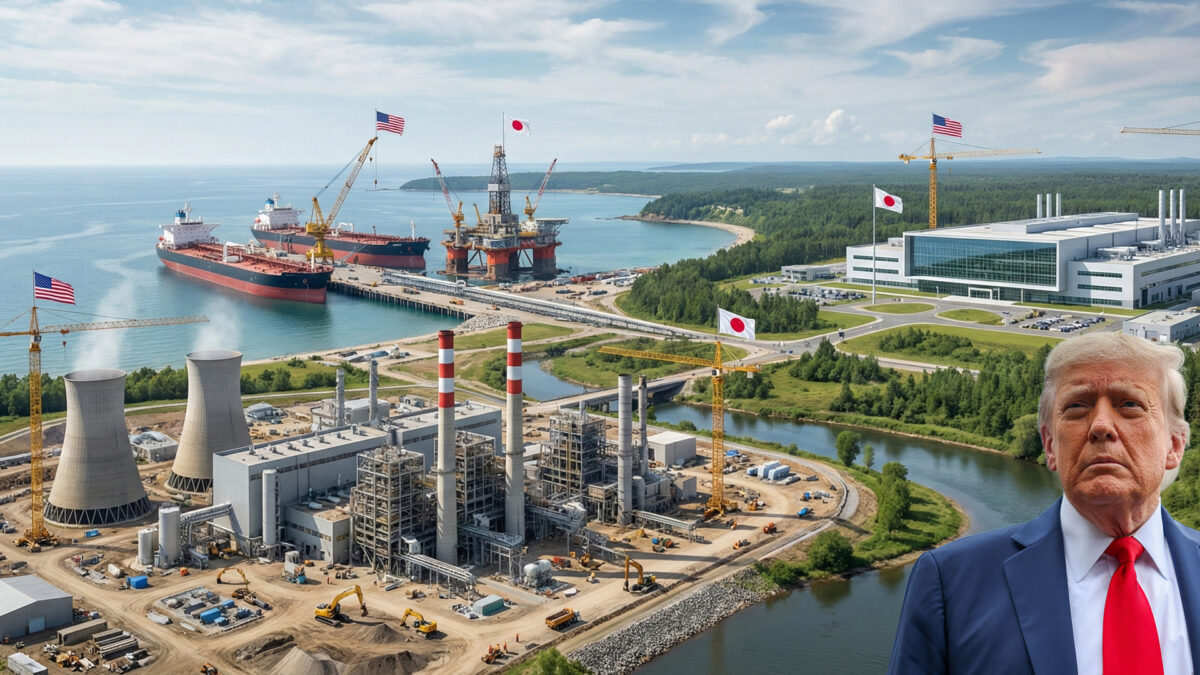
US President Donald Trump has unveiled the first set of Japanese investments in the United States under the recently signed bilateral trade pact, marking the operational rollout of Tokyo’s massive $550-billion financial commitment to the American economy.

The opening tranche, estimated at about $36 billion, is centred on energy, critical minerals and high-technology manufacturing—sectors that both countries consider crucial for economic security and resilient supply chains. The projects are expected to generate employment, strengthen industrial capacity and reduce dependence on imports in strategically important areas.

The largest investment is a $33-billion natural-gas-based power project in Ohio. The plant, to be developed by SB Energy, a unit backed by SoftBank Group, is designed to produce around 9.2 gigawatts of electricity. It is expected to support the fast-growing power demand from data centres and artificial-intelligence infrastructure in the United States.

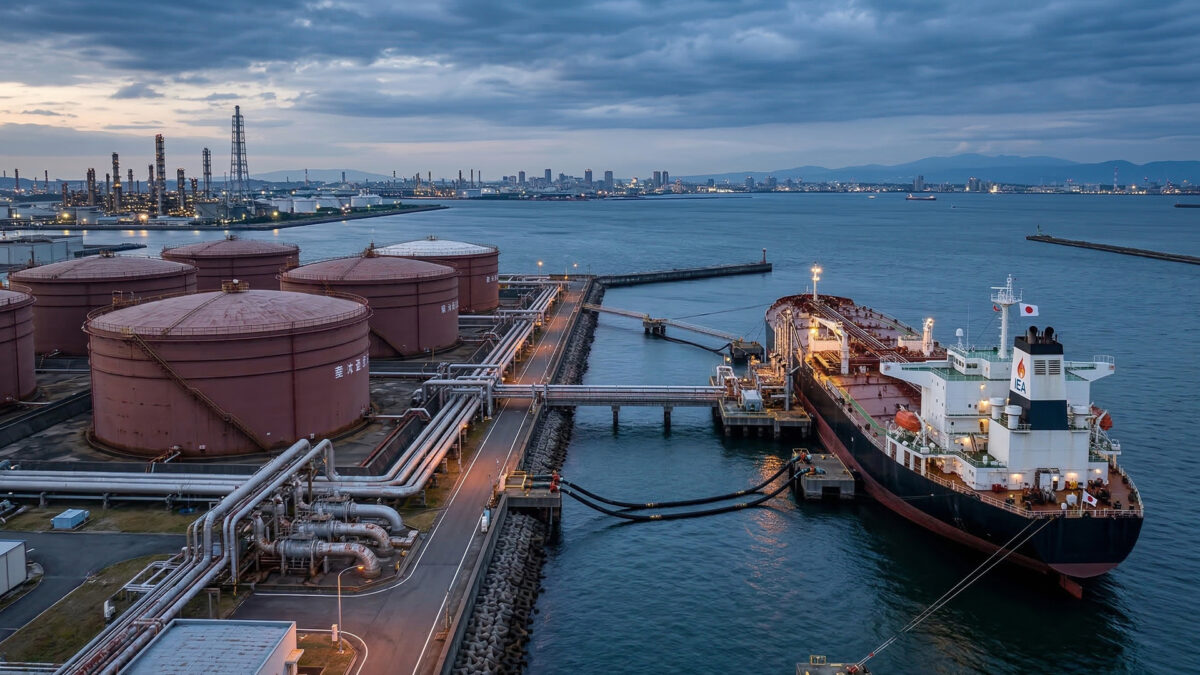
Another key project is a $2.1-billion deep-water oil export terminal off the coast of Texas, which will expand the country’s energy export capability. In addition, a $600-million synthetic industrial diamond manufacturing facility will be set up in Georgia. The unit will produce critical materials used in semiconductors and advanced electronics, helping to cut reliance on overseas supplies.

Under the broader agreement, Washington has agreed to reduce tariffs on Japanese imports, while Japan will fund industrial and infrastructure projects through a combination of equity investments, loans and financial guarantees. The initiative is also aimed at giving Japanese companies greater access to the US market while reinforcing the strategic alliance between the two nations.

Japanese Prime Minister Sanae Takaichi said the investments would deepen economic cooperation and enhance long-term security for both countries. More projects are expected to be announced in phases as the two sides move to implement the full investment framework.

Also Read: Sarvam Kaze, India’s multilingual answer to Meta ray-ban

Categories
Beyond

Japan approves $785 bn budget, pledges fiscal discipline

Japan’s cabinet, under Prime Minister Sanae Takaichi, has approved a record ¥122.3 trillion (approximately US$785 billion) budget for the fiscal year beginning April 2026, the largest in the country’s history. The decision reflects the government’s strategy to stimulate economic growth while maintaining fiscal responsibility amid ongoing domestic and global economic pressures.

The budget includes planned government bond issuance of ¥29.6 trillion, keeping it below the ¥30 trillion threshold and marking a debt dependence ratio of 24.2%, the lowest since 1998. This careful management of new debt aims to reassure markets while allowing room for strategic spending.

Tax revenues are projected to climb 7.6% to a record ¥83.7 trillion, driven by a robust economy and higher income and corporate taxes. Despite this, debt servicing costs, covering interest payments and redemption, are expected to rise 10.8% to ¥31.3 trillion, reflecting higher long-term interest rates, currently around 3.0%, the highest in nearly three decades.

Key allocations include social welfare programs to support an aging population and defense expenditures responding to regional security concerns. The budget also integrates measures to ease the impact of inflation and support households, complementing Japan’s broader economic strategy.

Officials stressed that the government is shifting from rigid annual balance targets to multi-year fiscal planning, providing flexibility while maintaining long-term consolidation goals. This approach is designed to strengthen investor confidence and stabilize markets amid rising yields and a weakening yen.

Analysts note that Japan’s debt remains among the highest in the developed world, exceeding twice its GDP, making careful fiscal planning critical. By combining historic spending with disciplined debt issuance, the government aims to balance economic support with fiscal sustainability, while signaling commitment to both growth and market stability.

The cabinet’s approval comes amid broader economic adjustments, including the Bank of Japan’s gradual exit from ultra-loose monetary policy and recent stimulus packages aimed at cushioning households from rising costs. This record budget underscores Japan’s dual focus on strategic investment and fiscal prudence, setting the tone for economic policy in 2026.

Also Read: North Korea reveals first nuclear submarine

Categories
Beyond

Japan restarts world’s largest nuclear plant

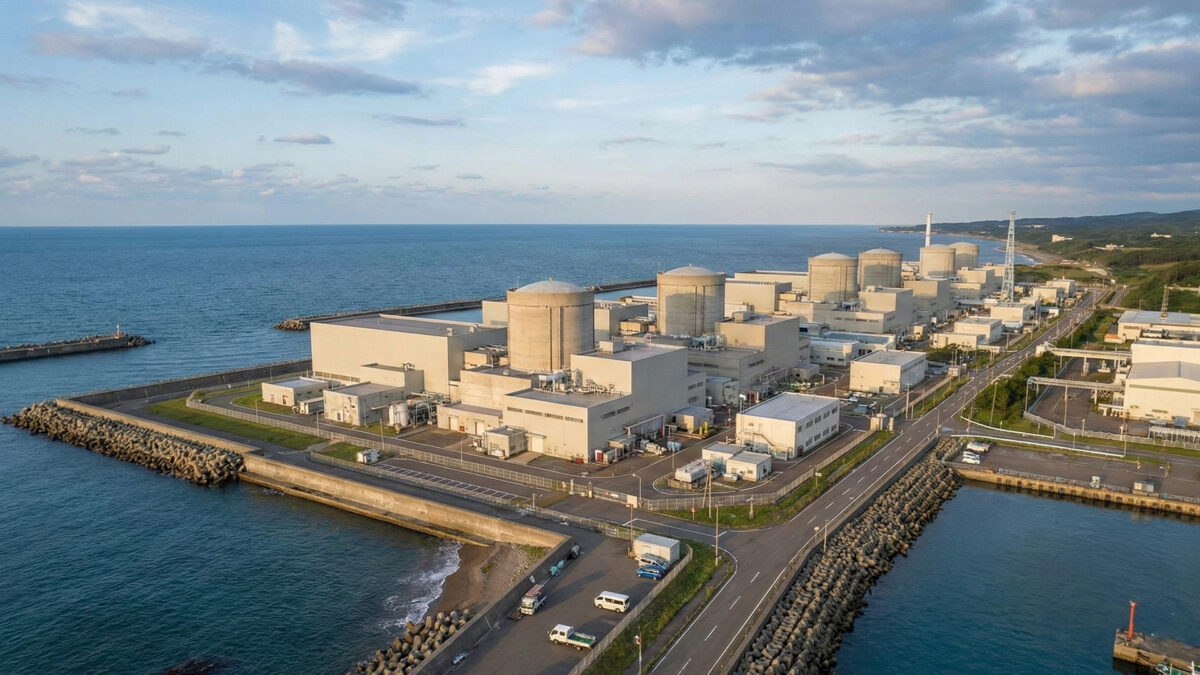
Japan has officially taken a major step toward restarting the Kashiwazaki-Kariwa nuclear power plant, the world’s largest in terms of electricity-generating capacity. The plant, located in Niigata Prefecture about 220 km northwest of Tokyo, has been idle since the 2011 Fukushima disaster, which led to the suspension of nearly all nuclear reactors in Japan.

On 22 December 2025, the Niigata Prefectural Assembly approved Governor Hideyo Hanazumi’s decision to allow the plant’s restart, effectively clearing the final local requirement needed for operations to resume. The decision enables Tokyo Electric Power Company (TEPCO), the plant’s operator, to move forward with safety inspections, operational checks, and preparation for restarting the reactors.

The facility has a total generating capacity of nearly 8,000 megawatts, making it a crucial source of electricity for Japan. TEPCO expects to bring at least one reactor online by early 2026, pending final regulatory and safety approvals. Restarting the plant could help the country reduce its reliance on imported fossil fuels and stabilize electricity costs, a pressing concern given Japan’s energy demands and global energy price volatility.

The restart comes amid Japan’s broader energy strategy, which aims to increase nuclear power’s share of electricity production to enhance energy security and meet climate goals. Since 2011, Japan has gradually restarted 14 of its 33 operable reactors under stringent safety protocols, but Kashiwazaki-Kariwa is the first major TEPCO plant to return to service.

Public opinion remains divided. Some residents and safety advocates continue to express concerns about nuclear risks, recalling the Fukushima accident’s devastating effects. Others, however, support the restart due to the potential economic and energy benefits, highlighting the importance of a reliable domestic power supply for households and industries.

In summary, the restart of Kashiwazaki-Kariwa represents both a milestone in Japan’s post-Fukushima nuclear journey and a critical step in its efforts to secure stable, sustainable energy. With local backing and careful planning, the plant is poised to play a central role in meeting the country’s future electricity needs while balancing public safety concerns.

Also Read: KSH International IPO lists 4% below issue price