Categories
Beyond

Gold falls to ₹151,610, silver slips to ₹230,670

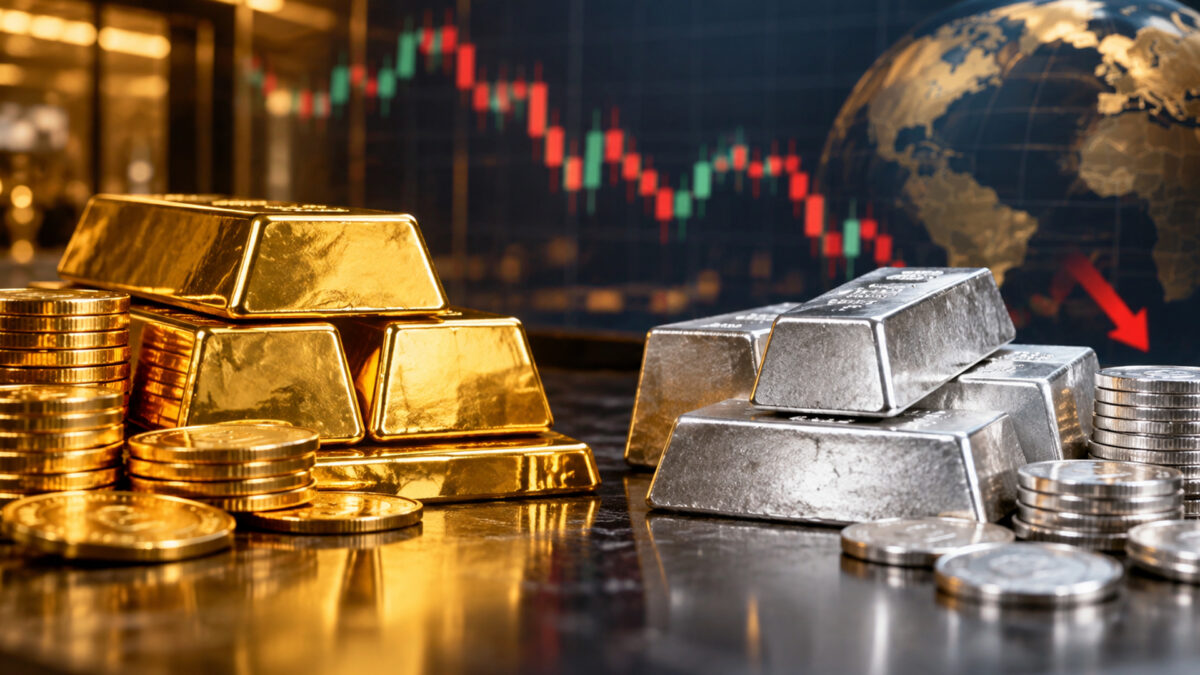
Gold and silver prices moved lower on Friday, September 11, as investors remained cautious ahead of key US economic data. Higher interest-rate expectations, movements in the US dollar and continued geopolitical tensions influenced trading in precious metals.

On the Multi Commodity Exchange (MCX), gold futures were trading at around ₹1,51,610 per 10 grams, lower than the previous levels. Silver futures also declined, with prices falling to around ₹2,30,670 per kg during the session.

The latest movement comes after a period of sharp swings in the precious metals market. Gold has remained at elevated levels, but investors have recently booked profits as expectations around US monetary policy changed.

International gold prices were also under pressure during the week. Spot gold remained around the $4,300-an-ounce level, while the metal was headed towards a weekly decline. Investors have been closely watching US inflation data for clues about the Federal Reserve’s next interest-rate decision.

A stronger-than-expected inflation reading could reduce expectations of quick rate cuts. That could support the US dollar and government bond yields, both of which can put pressure on gold because the metal does not offer regular interest income.

A softer inflation reading could have the opposite effect. Lower inflation may increase expectations of easier monetary policy, potentially supporting gold prices as investors look for assets that can protect wealth during uncertain periods.

Silver prices have seen wider swings than gold in recent sessions. The metal is influenced by both investment demand and industrial activity, making it sensitive to expectations about global economic growth.

MCX silver futures slipped to around ₹2,30,670 per kg on Friday. The decline came as investors remained cautious about the outlook for global markets and interest rates.

Silver is widely used in industries such as electronics, solar equipment and manufacturing. Any expectation of weaker industrial demand can therefore affect prices. At the same time, strong demand from investors can provide support when markets become uncertain.

Retail gold prices in India vary between cities because of local taxes, transportation costs, demand and other charges. The final price paid by a jewellery buyer can also be higher than the quoted bullion rate because of GST and making charges.

24-carat gold represents high-purity gold and is generally used as a benchmark for bullion prices. 22-carat gold is commonly preferred for jewellery because it contains other metals that make it harder and more suitable for everyday use.

Buyers should also check the purity marking before purchasing jewellery. The final bill can differ considerably from the basic gold rate once making charges, taxes and other costs are included.

The Indian rupee is another key factor influencing domestic gold prices. India imports most of its gold, meaning currency movements can have a direct impact on local prices.

A weaker rupee can make imported gold more expensive even when international gold prices remain unchanged or fall slightly. A stronger rupee can provide some relief to domestic buyers.

Geopolitical tensions continue to keep investors interested in gold as a safe-haven asset. Gold often attracts buying during periods of uncertainty because investors view it as a store of value when riskier assets become volatile.

However, safe-haven demand is currently competing with pressure from interest rates and the US dollar. This has created a volatile environment in which gold prices can move sharply in either direction.

Silver is facing a similar situation, although its strong industrial links make its price movements somewhat different from those of gold.

US inflation data will remain a major trigger for precious metals. Investors are looking for signs that could influence the Federal Reserve’s interest-rate path.

Any indication of easing inflation could increase expectations of lower US interest rates and support gold and silver. Strong inflation data could push bond yields and the dollar higher, creating fresh pressure on precious metals.

Domestic buyers will also need to watch the rupee and international bullion prices. A weaker rupee could limit any fall in Indian gold prices even if global rates decline.

The latest decline therefore does not necessarily signal a long-term change in the gold and silver market. Both metals remain sensitive to interest rates, currency movements, geopolitical developments and investor demand.

Gold is currently trading near ₹1.52 lakh per 10 grams, while silver is around ₹2.31 lakh per kg in the domestic futures market. The next major moves will depend largely on global economic data and developments in the geopolitical environment.
 

Categories
Beyond

Gold touches ₹1,54,240 low, Silver falls to ₹2,42,820

Gold and silver prices moved lower in India on Thursday as investors turned cautious ahead of key US inflation data that could influence the Federal Reserve’s next interest-rate decision. Gold prices remained near record-high levels, but the market lacked a clear direction as rising crude oil prices, geopolitical tensions and shifting expectations around US rates kept investors on edge.

On the Multi Commodity Exchange (MCX), gold futures were trading around ₹1,54,240 per 10 grams, down 0.03% in morning trade. Silver futures were also under pressure, falling around 0.49% to ₹2,42,820 per kg. The movement came as investors waited for fresh inflation signals from the US before taking larger positions in precious metals.

In the retail market, the latest gold rate today showed some variation across major cities. In Delhi, 24-carat gold was priced at ₹1,53,610 per 10 grams, while 22-carat gold stood at ₹1,40,809. In Mumbai, 24-carat gold was at ₹1,53,880 and 22-carat gold at ₹1,41,057 per 10 grams.

In Kolkata, the 24-carat gold price stood at ₹1,53,670 per 10 grams, while 22-carat gold was available at ₹1,40,864. Chennai recorded one of the higher rates, with 24-carat gold at ₹1,54,470 and 22-carat gold at ₹1,41,598 per 10 grams.

For silver price today, the 999-fine rate was around ₹2,41,860 per kg in Delhi and ₹2,42,280 in Mumbai. Kolkata’s rate stood at ₹2,41,960, while Chennai recorded ₹2,42,990 per kg. Rates can vary between cities depending on local taxes, dealer margins and other charges.

The precious metals market is being pulled in different directions. On one side, a weaker US dollar is supporting gold because dollar-denominated bullion becomes relatively cheaper for buyers holding other currencies. On the other, higher crude oil prices are raising concerns about inflation and could keep interest rates higher for longer.

Spot gold was around $4,396.69 per ounce in early Thursday trade, while US gold futures for December delivery were at about $4,440.80. The metal has remained sensitive to developments in the Middle East as investors continue to look for safety during periods of geopolitical uncertainty.

Gold is traditionally viewed as a safe-haven asset, meaning investors often turn to it when financial markets or the global economy become uncertain. However, gold does not generate interest income. That makes it less attractive when interest rates and bond yields rise, as investors can earn better returns from interest-bearing assets.

This has become particularly important because markets are reassessing the Federal Reserve’s policy outlook. Traders have been closely watching the possibility of a US rate hike even as economists surveyed by Reuters largely expect the Fed to keep rates steady at its September 15-16 meeting.

The next major trigger for gold and silver prices is likely to come from the US inflation data. Investors are awaiting the producer price index on Thursday, followed by consumer price inflation data on Friday.

The numbers could influence expectations about the Federal Reserve’s interest-rate path. If inflation comes in hotter than expected, markets could increase bets on higher interest rates, potentially putting pressure on gold. A softer inflation reading, meanwhile, could strengthen expectations of easier monetary policy and support bullion prices.

The dollar is another important factor. A weaker US currency has recently provided support to gold, while a stronger dollar could make bullion more expensive for buyers outside the US and limit demand.

The ongoing conflict involving the US and Iran has added another layer of uncertainty to the precious metals market. Rising tensions in the Middle East have pushed crude oil prices higher, with Brent crude moving above $100 a barrel.

That creates a complicated situation for gold. Geopolitical tensions can increase demand for safe-haven assets, supporting gold. At the same time, higher oil prices can fuel inflation and increase expectations that central banks will keep interest rates elevated, which can weigh on bullion.

This tug-of-war has kept gold price today movements volatile rather than allowing the metal to follow a clear trend.

Silver has also been volatile, but its price is influenced by both investment demand and industrial use. The metal is widely used in electronics, solar panels and several manufacturing applications, meaning its outlook is linked not only to inflation and interest rates but also to expectations for global economic activity.

On Wednesday, domestic silver prices had risen sharply, with the All India Sarafa Association reporting a ₹2,300 increase to ₹2,43,400 per kg. International spot silver also gained nearly 1% to around $66.25 an ounce. Thursday’s softer domestic futures therefore come after a recent rise rather than a prolonged one-way decline.

Investors and buyers are likely to remain cautious. The direction of the gold rate in India and silver prices over the next few sessions will depend heavily on US inflation figures, Federal Reserve expectations, the movement of the dollar and developments in the Middle East. With several of these factors moving at once, precious metals are likely to remain sensitive to every major global economic and geopolitical signal.


Categories
Beyond

Gold eases to ₹1,53,070, silver trades at ₹2,39,380

Gold and silver prices remained under pressure on Wednesday, September 9, as investors weighed renewed tensions between the US and Iran alongside expectations around the next move by the US Federal Reserve.

In the Indian market, gold prices eased after recent gains, while silver continued to trade at elevated levels. The latest rates show 24-carat gold at around ₹1,52,706 per 10 grams, while 22-carat gold was priced at nearly ₹1,39,878 per 10 grams. Silver was trading at about ₹2,39,513 per kg.

The movement has been anything but straightforward for bullion investors. Gold has been moving sharply in both directions in recent sessions as traders respond to developments in global markets. On Wednesday, prices came under pressure even as geopolitical uncertainty continued to support demand for safe-haven assets.

The latest weakness in gold comes against the backdrop of renewed military tensions involving the US and Iran. Reports of attacks involving oil tankers and vessels in and around the Gulf region have heightened concerns about the security of key shipping routes and the global energy supply.

Such developments normally provide support to gold because investors tend to move towards assets considered safer when geopolitical risks rise. However, gold is also being pulled in the opposite direction by expectations around US monetary policy, keeping the market volatile.

The dollar and US interest rates remain particularly important for the precious metal. Investors are waiting for upcoming US economic data for clues about inflation and the Federal Reserve’s interest-rate outlook. Any indication that US rates could remain higher for longer could weigh on gold, while expectations of monetary easing could give bullion another boost.

That push and pull has made the gold market difficult to predict in the short term.

Gold prices also vary across Indian cities because retail rates are influenced by local market conditions, taxes and other costs.

According to the latest retail data, rates in major cities such as Delhi, Mumbai, Kolkata, Chennai and Bengaluru remain close to each other, although Chennai has generally been among the more expensive markets.

In Kozhikode, the indicative rate for 24-carat gold stood at around ₹1,53,011 per 10 grams, while 22-carat gold was around ₹1,40,158 per 10 grams.

For consumers, the quoted gold rate is not necessarily the final price they will pay at a jewellery shop. Making charges, GST and the jeweller’s own pricing can push the final bill higher.

Silver has been holding at a much higher level compared with earlier periods. The latest indicative national rate puts silver at around ₹2,39,513 per kg, or approximately ₹2,395 per 10 grams.

Unlike gold, silver’s price is influenced by both investment demand and industrial consumption. The metal is widely used in electronics, solar equipment and other industrial applications, meaning changes in global manufacturing activity can also affect its price.

The recent strength in silver has therefore attracted attention from both investors and consumers, although the metal can be considerably more volatile than gold.

For Indian buyers, international gold prices are only one part of the equation. The rupee’s movement against the US dollar, import costs and global bullion prices all feed into domestic rates.

Recent market movements underline how quickly prices can change. On September 7, for example, IBJA-linked rates showed 24-carat gold at around ₹1,52,880 per 10 grams and 22-carat gold at ₹1,40,040, while silver was around ₹2,36,770 per kg.

The contrasting movements over the past few days highlight the uncertainty currently surrounding the precious-metals market.

Those planning to buy jewellery, particularly ahead of festive and wedding demand, the fluctuations could make timing an important consideration. However, a short-term fall does not necessarily mean prices will continue to decline.

The focus for investors remains firmly on the global picture. The US-Iran conflict, crude oil prices, movements in the dollar and upcoming US economic data are likely to determine where gold and silver head next.

Gold prices remain caught between safe-haven demand and pressure from interest-rate expectations, while silver continues to command a premium near the ₹2.40 lakh-per-kg mark. With several major global factors moving at the same time, further swings in gold and silver prices cannot be ruled out in the coming sessions.


Categories
Beyond

Gold holds at ₹1,53,500 as Silver hits ₹2,40,700

Gold and silver prices moved higher in parts of the domestic market on Tuesday, September 8, as renewed tensions in West Asia increased demand for safe-haven assets. Rising crude oil prices, uncertainty around the US Federal Reserve’s interest-rate outlook and movements in the rupee are also influencing the precious metals market.

In the retail market, 24-carat gold was around Rs 1,54,140 per 10 grams in major cities, while the rate in Delhi was slightly higher at Rs 1,54,290. The 22-carat gold price stood at about Rs 1,41,290 per 10 grams in Mumbai, Kolkata, Bengaluru, Hyderabad and Chennai, while Delhi recorded around Rs 1,41,440. Retail prices can vary between cities and jewellers because of local taxes, demand, logistics and other charges.

The latest movement comes as investors continue to track developments in West Asia. Renewed military activity involving the United States and Iran has raised concerns about possible disruptions to energy supplies, particularly through the Strait of Hormuz. With Brent crude moving close to the $100-a-barrel mark, investors have been looking towards gold as a store of value during periods of heightened geopolitical uncertainty.

International gold prices also strengthened during the session. Spot gold gained around 0.7% to trade near $4,435 an ounce, helped partly by a softer US dollar. A weaker dollar generally makes gold cheaper for buyers holding other currencies and can support international bullion demand. Spot silver also gained around 1%, trading near $66.78 an ounce.

Domestic futures showed a similar pattern, although different market snapshots recorded modest variations during the session. MCX gold was trading around Rs 1,52,750 per 10 grams in one update, while another market snapshot showed the October gold contract rising to around Rs 1,54,090. MCX silver was quoted between roughly Rs 2.39 lakh and Rs 2.42 lakh per kilogram during the session, reflecting continued volatility in the precious metals market.

Silver prices have remained particularly volatile in the domestic market. In Maharashtra, silver was quoted at Rs 2,65,900 per kilogram on September 8, unchanged from the previous day. The rate stood at Rs 26,590 for 100 grams. Within Maharashtra, prices were broadly similar across several cities, including Mumbai, Pune, Nagpur, Nashik and Kolhapur.

The broader state-level data also shows how sharply silver prices have moved in recent months. Maharashtra opened September at around Rs 2,59,900 per kilogram and touched Rs 2,66,100 during the month before settling at Rs 2,65,900 on September 8. That leaves silver higher than its opening level for the month, despite the day-to-day swings seen in the market.

Across major Indian markets, silver rates also differed by location. Business Today’s latest city data put silver at around Rs 2,66,900 per kilogram in Delhi, Rs 2,65,900 in Mumbai and Rs 2,61,900 in Kolkata. Chennai was quoted at about Rs 2,67,900. Such differences are normal because retail bullion prices incorporate local market conditions in addition to international prices and currency movements.

While 24-carat gold has the highest purity and is generally used for investment products such as bars and coins, 22-carat gold is more commonly used for jewellery because it is stronger and more durable. The final price paid by jewellery buyers can be higher than the quoted bullion rate after GST, making charges and other costs are added.

The next major trigger for gold and silver could come from the US economic data calendar. Producer Price Index and Consumer Price Index readings due this week will be closely watched for clues about inflation and the Federal Reserve’s next policy decision. Expectations around US interest rates have a direct bearing on the dollar and Treasury yields, both of which can influence gold prices.

Market participants are therefore watching several factors at once: geopolitical tensions, crude oil prices, the US dollar, interest-rate expectations and currency movements. If uncertainty persists, gold could continue to attract safe-haven demand. Silver, meanwhile, may remain more volatile because it is influenced not only by investment demand but also by its industrial uses.

The rupee is another important factor. A weaker rupee can make imported gold and silver more expensive even when international prices remain unchanged. With global markets facing multiple uncertainties, domestic bullion prices are likely to remain sensitive to both international developments and local currency movements.

The immediate picture remains one of elevated prices and sharp intraday movements. Gold continues to benefit from its traditional safe-haven appeal, while silver is holding firm despite its larger swings. For consumers considering purchases, comparing rates across cities and jewellers remains important, particularly because the final jewellery bill can differ significantly from the headline gold or silver rate.


Categories
Beyond

Gold slips to ₹1.52 lakh, silver at ₹2.36 lakh

Gold and silver prices eased in India on Monday, September 7, as precious metals came under pressure from stronger expectations of a US interest-rate hike. Investors are also keeping a close watch on geopolitical tensions and upcoming US inflation data, which could influence the Federal Reserve’s policy decision later this month.

In the domestic retail market, 24-carat gold in Delhi was priced at around Rs 1,52,370 per 10 grams, while 22-carat gold stood at Rs 1,39,673 per 10 grams. In Mumbai, 24-carat gold was available at around Rs 1,52,640 per 10 grams, while 22-carat gold was priced at Rs 1,39,920.

Kolkata recorded a 24-carat gold price of about Rs 1,52,420 per 10 grams, while 22-carat gold was around Rs 1,39,718.

The latest movement comes after a volatile week for the precious metals market. Gold prices have been supported for much of the year by demand for safe-haven assets, but the latest US economic data has shifted attention towards interest rates.

Internationally, spot gold was trading around $4,405 per ounce, down about 0.5 per cent in early trade. Gold futures also moved lower. The decline followed stronger-than-expected US employment data, which increased expectations that the Federal Reserve could raise interest rates this month.

The US economy added significantly more jobs than markets had expected in August, while unemployment remained at 4.1 per cent. The data prompted traders to increase their bets on a September rate hike.

For gold investors, interest rates matter because the metal does not generate interest income. When bond yields rise, gold can become relatively less attractive compared with interest-bearing assets. This has added some pressure to gold prices today, despite continued demand for the metal as a hedge against economic and geopolitical uncertainty.

Silver also moved lower in the domestic market but remained at elevated levels.

According to the latest retail rates, 999-purity silver in Delhi was priced at around Rs 2,36,000 per kg, while Mumbai recorded a rate of approximately Rs 2,36,410 per kg. In Kolkata, silver was priced at around Rs 2,35,830 per kg.

In Maharashtra, the silver rate was around Rs 2,65,900 per kg on September 7, down Rs 100 from Rs 2,66,000 per kg on the previous day. The state has nevertheless seen silver prices remain relatively strong through the opening week of September.

Silver prices are influenced by both investment demand and industrial consumption. The metal is widely used in electronics, solar panels and several other industrial applications, making its price sensitive to expectations about global economic activity.

International silver prices were trading around $66.81 per ounce, with the metal also facing pressure from the changing outlook for US monetary policy.

Gold prices continued to vary slightly between major Indian cities.

In Bengaluru, 24-carat gold was priced at around Rs 1,52,760 per 10 grams, while 22-carat gold stood at about Rs 1,40,030.

In Hyderabad, 24-carat gold was around Rs 1,52,860 per 10 grams, with 22-carat gold at approximately Rs 1,40,122.

Chennai recorded the highest 24-carat gold rate among the major cities listed, at around Rs 1,53,060 per 10 grams, while 22-carat gold was priced at approximately Rs 1,40,305.

These are indicative retail bullion rates and can vary between jewellers depending on local taxes, making charges, premiums and other costs. The final price paid by a jewellery buyer can therefore be higher than the quoted market rate.

Apart from US interest-rate expectations, the global gold market is also responding to geopolitical developments. Continued uncertainty surrounding the US-Iran conflict has kept investors interested in safe-haven assets, although expectations of tighter monetary policy are currently limiting gold’s gains.

The focus will now shift to key US inflation readings due later this week. The US Consumer Price Index and Producer Price Index could provide fresh clues about the Federal Reserve’s next move.

A softer inflation reading could reduce expectations of aggressive monetary tightening and potentially support gold prices. On the other hand, persistent inflation could strengthen the case for higher interest rates, keeping pressure on the yellow metal.

In India, currency movements will also remain important. A stronger rupee can reduce the cost of imported gold, while a weaker rupee tends to make the metal more expensive in the domestic market.

The latest gold rate today remains well above historical levels, making timing an important consideration. Investors, meanwhile, are likely to continue tracking global interest rates, the dollar, geopolitical tensions and central-bank buying before making fresh decisions.

Both gold and silver remain closely watched commodities. While gold prices have softened slightly, silver continues to trade at elevated levels, leaving investors and consumers alert to every major move in global markets.


Categories
Beyond

Gold at ₹1,55,610, Silver slips to ₹2,40,560

Gold and silver prices eased in domestic futures trading on Friday, September 4, after both precious metals gained sharply in the previous session. Investors are now closely watching key US employment data for fresh signals on the Federal Reserve’s interest-rate policy.

On the Multi Commodity Exchange (MCX), gold futures were trading 0.38% lower at ₹1,55,610 per 10 grams, while silver futures declined around 0.59% to ₹2,40,560 per kg during morning trade. The movement came as traders remained cautious ahead of the US non-farm payrolls and unemployment data due later in the day.

The latest figures are important because they could influence expectations about the Federal Reserve’s next policy decision. Investors are assessing whether the US economy is slowing enough for the central bank to keep interest rates steady or consider monetary easing.

Despite Friday’s decline, gold prices continue to trade close to historically high levels. The precious metal has received support from expectations of easier US monetary policy, a softer dollar and continued demand for safe-haven assets.

Gold does not generate interest income, so it typically becomes more attractive when interest rates or bond yields decline. Conversely, expectations of higher rates can put pressure on bullion as investors may prefer interest-bearing assets.

Silver has also seen strong buying interest. Unlike gold, silver has a significant industrial-use component, making its price sensitive to both investment demand and expectations about global economic activity.

Retail gold rates continued to differ across major Indian cities on Friday. The price variations can arise from local taxes, transportation costs, demand conditions and jewellers’ pricing.

In Delhi, 24-karat gold was quoted at around ₹1,54,880 per 10 grams, while 22-karat gold stood at approximately ₹1,41,973 per 10 grams.

In Mumbai, the 24K gold rate was around ₹1,55,150 per 10 grams and 22K gold was priced at about ₹1,42,221.

Bengaluru recorded a 24K gold price of nearly ₹1,55,270 per 10 grams, while 22K gold stood at around ₹1,42,331.

In Kolkata, 24K gold was available at approximately ₹1,54,940 per 10 grams and 22K gold at ₹1,42,028.

Hyderabad recorded 24K gold at around ₹1,55,390 per 10 grams and 22K gold at approximately ₹1,42,441.

Among the major cities covered, Chennai recorded a 24K gold price of about ₹1,55,600 per 10 grams, while 22K gold was around ₹1,41,387.

Silver 999 prices also remained elevated across the major markets, with rates varying between cities.

The US employment report is likely to determine the short-term direction of global gold prices.

A weaker-than-expected jobs report could strengthen expectations that the Federal Reserve will maintain or eventually lower interest rates. Such a scenario could provide additional support to gold and silver.

On the other hand, stronger employment numbers could reduce expectations of an imminent policy shift and potentially put pressure on bullion prices.

Federal Reserve Governor Christopher Waller has indicated that he could support keeping interest rates unchanged at the September meeting if incoming data continues to show moderating inflation. This has added to the focus on Friday’s economic numbers.

The US dollar is another important influence on gold prices. Since international bullion is traded largely in dollars, movements in the currency can affect demand from investors holding other currencies. Treasury yields and geopolitical uncertainty are also likely to remain important factors.

Friday’s decline does not necessarily signal a major change in the broader gold market. Prices remain significantly higher than their levels earlier in the year, and daily movements can be sharp.

People planning to buy jewellery should also remember that the quoted gold rate is not the final price they pay. GST, making charges and other costs are added to the base value of the metal.

Gold purity is another important consideration. 24-karat gold represents the highest commonly traded purity, while 22-karat gold is widely used for jewellery because it offers greater strength and durability.

Investors tracking gold price today, silver price today, MCX gold, MCX silver, 24K gold, 22K gold and silver 999 will be watching the US employment numbers for the next major signal.

With precious metals already trading at elevated levels, changes in interest-rate expectations could result in further volatility in gold and silver prices over the coming sessions.


Categories
Beyond

Gold reaches ₹1,53,700, silver trades at ₹2,32,500

Gold and silver prices recovered on Thursday, September 3, after suffering a sharp decline earlier this week. The rebound was supported by a weaker US dollar and lower US Treasury bond yields, while investors turned their attention to upcoming US employment data for clues about the Federal Reserve’s interest-rate policy.

On the Multi Commodity Exchange (MCX), gold futures were trading higher in morning deals, while silver also gained nearly 1%. Gold was around ₹1.54 lakh per 10 grams, while silver was trading close to ₹2.38 lakh per kg. The recovery came after both precious metals faced heavy selling pressure in the previous session.

The latest movement highlights how quickly sentiment has changed in the bullion market. Gold had fallen sharply at the beginning of September as the US dollar strengthened and Treasury yields climbed. Silver also witnessed a sizeable correction. However, the decline was followed by renewed buying as yields eased and the dollar lost some ground.

Over the past two sessions, gold has gained around ₹2,300 per 10 grams on MCX, while silver has recovered nearly ₹3,300 per kg. The gains have brought some relief to investors after the recent sell-off.

The US dollar is an important factor for international gold prices. Since gold is traded globally in dollars, a weaker US currency generally makes the metal more affordable for buyers using other currencies. This can increase demand and support prices.

Bond yields are also closely watched by bullion traders. Gold does not pay interest, unlike government bonds and other fixed-income investments. When bond yields rise, investors may prefer interest-generating assets. When yields fall, the opportunity cost of holding gold becomes lower, which can encourage buying.

The focus is now shifting to the US labour market. Investors are waiting for the country’s nonfarm payrolls report, one of the most important economic indicators for the Federal Reserve. The report could influence expectations about the central bank’s next interest-rate decision.

A weaker-than-expected jobs report could increase expectations that the Federal Reserve may adopt a softer approach to interest rates. Such a development could support gold and silver because lower interest rates generally reduce the attraction of yield-bearing investments.

On the other hand, stronger employment data could push Treasury yields and the dollar higher. That could put renewed pressure on gold prices and trigger another bout of volatility in the precious metals market.

Gold prices have also been affected by changing expectations around US monetary policy. Earlier this week, concerns about the possibility of higher rates contributed to a major sell-off. Gold dropped more than 2% on Tuesday and briefly fell below its 200-day moving average, adding to technical selling pressure.

The latest recovery suggests that buyers are returning at lower levels. International gold prices rose more than 1% on Thursday, while silver, platinum and palladium also moved higher. The gains indicate renewed interest in precious metals as investors assess the direction of the global economy.

Geopolitical uncertainty remains another factor supporting gold. Tensions in the Middle East and concerns surrounding the US-Iran situation continue to influence investor sentiment. Gold is traditionally considered a safe-haven asset, meaning demand can rise when investors are worried about political, economic or financial risks.

In India’s physical market, gold prices remain close to record-high levels despite the recent correction. The price difference between 24-carat and 22-carat gold continues to reflect the difference in purity. Retail prices can also vary from one city to another because of local taxes, transportation costs and other charges.

Silver prices have also remained elevated. Unlike gold, silver has both investment and industrial demand. It is widely used in areas such as electronics, solar equipment and other industrial applications. This gives silver an additional price driver beyond currency movements and interest rates.

However, silver is generally more volatile than gold. Its prices can move sharply in either direction depending on investor demand, industrial activity and global economic expectations. The recent recovery in silver therefore does not necessarily mean that the metal will continue to rise without interruptions.

For retail buyers, the latest increase is a reminder that precious metal prices can change rapidly. Those planning to purchase jewellery, coins or bars may want to keep track of daily rates rather than making decisions based on a single day’s movement. Jewellery prices will also be higher than the basic gold rate because of making charges, taxes and other costs.

Investors, meanwhile, are likely to remain cautious until the US jobs data provides clearer direction. The dollar, Treasury yields and Federal Reserve policy will continue to be the major factors influencing the gold price today and silver price today.

Analysts are also watching important technical levels. If gold manages to hold its recent support and move above key resistance levels, the recovery could strengthen. A renewed rise in the dollar and bond yields, however, could bring selling pressure back into the market.

The precious metals market remains caught between strong long-term demand and short-term uncertainty. Gold and silver have recovered after their recent losses, but investors should expect continued volatility as markets react to every major US economic signal.

The immediate trigger will be the US employment report. Its impact on Federal Reserve rate expectations could determine whether the current recovery in gold and silver develops into a stronger rally or turns out to be only a temporary bounce.


Categories
Beyond

Gold at ₹1,50,530, Silver slips to ₹2,31,830

Gold and silver prices came under pressure on Wednesday, September 2, with both precious metals declining in the domestic futures market. Rising crude oil prices, a stronger US dollar and renewed concerns over inflation and interest rates weighed on bullion prices as investors assessed the impact of escalating US-Iran tensions.

On the Multi Commodity Exchange (MCX), gold futures were trading at ₹1,50,530 per 10 grams, down around 1.07%, while silver futures declined about 1.26% to ₹2,31,830 per kg around 9:13 am. The fall came as investors reassessed the outlook for interest rates amid growing concerns that higher oil prices could fuel inflation.

The decline in domestic bullion prices followed weakness in international markets. Spot gold fell to its lowest level in more than three weeks on Wednesday, extending its losing streak to a fourth session. The metal remained below its closely watched 200-day moving average, signalling continued pressure in the global gold market.

The latest weakness in gold comes against the backdrop of heightened tensions in the Middle East. The United States launched fresh airstrikes against Iran, prompting retaliation from Tehran. The escalation pushed crude oil prices higher for a third consecutive session and raised concerns about possible disruption to oil supplies from the region.

For gold investors, the rise in crude prices has created an unusual challenge. Gold is traditionally considered a safe-haven asset during periods of geopolitical uncertainty. However, if higher oil prices lead to stronger inflation, central banks may be forced to maintain or raise interest rates. Higher interest rates can reduce the appeal of gold because the metal does not generate interest income.

The US dollar has also remained firm, adding to the pressure on bullion. Gold is traded internationally in dollars, so a stronger US currency generally makes the metal more expensive for buyers using other currencies. This can reduce demand and contribute to a decline in international gold prices.

Retail gold rates across major Indian cities also moved lower. In New Delhi, 24-karat gold was priced at ₹1,50,000 per 10 grams, while 22-karat gold stood at ₹1,37,500. Mumbai recorded a 24K gold rate of ₹1,50,250 and a 22K rate of ₹1,37,729.

In Bengaluru, 24K gold was available at ₹1,50,160 per 10 grams, while 22K gold stood at ₹1,37,647. Hyderabad recorded 24K gold at ₹1,50,280 and 22K gold at ₹1,37,757. In Kolkata, 24K gold was priced at ₹1,49,840 and 22K gold at ₹1,37,353.

Chennai continued to quote one of the highest retail gold prices among the major cities, with 24K gold at ₹1,50,480 per 10 grams and 22K gold at ₹1,37,940 for 22K gold.

Silver prices also declined across the domestic market. Retail silver was quoted at around ₹2.31 lakh per kg in several major cities, with rates varying slightly depending on the location. The weakness in silver has come alongside the broader decline in precious metals, although its industrial applications make its price movement somewhat different from gold.

Silver is widely used in electronics, solar panels and other industrial applications. As a result, expectations about global economic growth and manufacturing activity can have a significant impact on silver demand. A weaker economic outlook can therefore weigh on the metal even when investment demand remains firm.

The MCX price and retail jewellery rate should not be confused. The final price paid for gold jewellery can be considerably higher because of making charges, wastage, GST and other applicable costs. The purity of gold also determines its value.

While 24-karat gold is the purest form commonly traded, 22-karat gold is widely used in jewellery because it is more durable. Buyers should therefore check both the purity and the per-gram rate before making a purchase.

The latest price movement also highlights the sensitivity of precious metals to global economic developments. Investors are now watching crude oil prices, US Treasury yields, the dollar and expectations for Federal Reserve policy.

The possibility of higher US interest rates has become a key factor for bullion markets. Recent market expectations indicate that persistent inflation could make policymakers more cautious about cutting rates. Upcoming US employment and economic data could therefore play an important role in determining the next direction for gold and silver.

The currency movements will also remain important. A weaker rupee can make imported gold more expensive domestically, even when international prices decline. On the other hand, a stronger rupee can provide some relief to local bullion prices.

The near-term outlook for gold and silver remains uncertain. Any further escalation in the Middle East could increase volatility, while signs of easing tensions may reduce safe-haven demand and bring additional pressure on precious metals.

The domestic bullion market remains under pressure, with MCX gold at ₹1,50,530 per 10 grams and silver at ₹2,31,830 per kg. Investors and buyers will be watching global oil prices, US interest-rate expectations and geopolitical developments closely for the next major price move.


Categories
Beyond

Gold rises above ₹1.55 lakh, silver near ₹2.4 lakh

Gold and silver prices remained in focus on September 1 as investors weighed geopolitical tensions, changing expectations around US interest rates and a busy week of economic data. After a sharp correction in gold prices in the previous sessions, the precious metal showed signs of recovery in domestic trade, although prices continued to swing as investors remained cautious.

The MCX gold price recovered during early trading, with the October futures contract moving above the ₹1.55 lakh mark per 10 grams. Silver also remained elevated, reflecting continued interest in precious metals despite recent volatility. The moves come after gold had fallen sharply over the previous two trading sessions, prompting some investors to reassess their positions.

The latest movement in gold prices is being closely watched because the metal has been trading at historically high levels. Global developments, particularly tensions in the Middle East and uncertainty around energy supplies, continue to influence investor demand for safe-haven assets.

At the same time, expectations about the US Federal Reserve’s interest-rate policy have become an important factor for gold. Investors are awaiting a series of US employment indicators this week, including the ADP employment report and the non-farm payrolls and unemployment figures. These numbers could provide clues about the strength of the US economy and influence expectations for future interest-rate decisions.

Gold typically benefits when investors expect interest rates to fall because lower rates reduce the opportunity cost of holding an asset that does not pay interest. On the other hand, expectations of higher rates and rising bond yields can put pressure on gold.

That tension is clearly visible in the market at present. While geopolitical uncertainty is supporting demand for gold, expectations of a less accommodative US monetary policy are limiting gains.

International gold prices also remained volatile on Tuesday. Spot gold slipped during the session as traders assessed escalating tensions in the Middle East alongside the upcoming US jobs data. The metal had recently reached a three-month high before giving up some of those gains.

For Indian buyers, the movement in domestic gold prices is equally important. As of September 1, the 24-carat gold rate was around ₹15,484 per gram, while 22-carat gold was around ₹14,184 per gram on the latest quoted domestic rates. This puts the indicative 24K gold price at nearly ₹1.55 lakh for 10 grams.

City-wise prices can vary slightly. In Kolkata, for example, 24-carat gold was quoted at around ₹15,246 per gram, while 22-carat gold was priced at ₹14,520 per gram. That works out to ₹1,52,460 and ₹1,45,200 respectively for 10 grams.

The difference between 24K and 22K gold is particularly important for jewellery buyers. Pure 24K gold has a higher level of purity, while 22K gold is more commonly used for jewellery because it is mixed with other metals to improve strength and durability.

Silver prices are also being closely tracked. The precious metal has seen substantial gains over the past year and remains sensitive to both investment demand and industrial consumption. Domestic silver rates have also been moving sharply, with MCX silver trading around the ₹2.4 lakh-per-kg level during Tuesday’s session.

For consumers planning to buy jewellery, the quoted gold rate is only one part of the final bill. Making charges, GST and other applicable costs are added to the basic value of the metal. The actual price paid at a jewellery store can therefore be higher than the headline gold rate.

The recent price swings also highlight why buyers and investors are watching the market more closely. A sudden change in the US dollar, crude oil prices, interest-rate expectations or geopolitical tensions can quickly affect international bullion prices and, in turn, domestic gold and silver rates.

Gold’s long-term appeal as a store of value continues to keep it on investors’ radar, particularly when markets become uncertain. However, the sharp movements seen in recent sessions show that even traditionally defensive assets can experience significant corrections.

For consumers, the key numbers to track today are the gold price today, 24K gold rate, 22K gold price, silver price today, MCX gold price and MCX silver price. With US economic data due later this week and geopolitical risks still unresolved, gold and silver prices are likely to remain sensitive to fresh developments in the days ahead.

Categories
Beyond

Gold hits ₹1.54 lakh low, silver falls to ₹2.39 lakh

Gold and silver prices fell sharply on Monday, August 31, as precious metals remained under pressure amid changing expectations around US interest rates, a stronger dollar and renewed geopolitical uncertainty.

In the Indian retail market, 24-carat gold was trading at around ₹1,54,940 per 10 grams in early trade, down 1.22%. Silver of 999 purity also declined 1.37% to around ₹2,38,870 per kg. The fall came after a sharp sell-off in global bullion markets last week.

On the Multi Commodity Exchange (MCX), gold futures were trading about 1.14% lower at ₹1,54,496 per 10 grams around 9:10 am. MCX silver futures were also under pressure, falling 1.28% to ₹2,39,341 per kg. Later market data showed gold and silver continuing to trade lower, reflecting the cautious mood among commodity investors.

The latest decline has come after gold prices suffered a steep fall in the previous session. International gold prices had dropped more than 3% as markets reacted to comments from US Federal Reserve Chair Kevin Warsh, which strengthened expectations that US interest rates could remain higher for longer.

Higher interest rates generally weigh on gold because the precious metal does not generate interest income. When bond yields rise, investors may find interest-bearing assets more attractive, reducing demand for bullion. A stronger US dollar can also make gold more expensive for buyers holding other currencies.

Geopolitical developments added another layer of uncertainty. Renewed military action involving the US and Iran prompted investors to reassess the outlook for global markets and commodities. While geopolitical tensions have traditionally supported gold as a safe-haven asset, concerns about inflation, crude oil prices and interest rates can produce a more complicated reaction in bullion markets.

International spot gold was around $4,455 an ounce on Monday after falling sharply in the previous session. US gold futures for December delivery were also lower, while spot silver was around $66.34 an ounce.

The fall was visible across major cities in India. In New Delhi, 24-carat gold was priced at ₹1,54,350 per 10 grams, while 22-carat gold stood at ₹1,41,488. The 999-fine silver rate was ₹2,38,180 per kg.

In Mumbai, 24-carat gold was available at ₹1,54,610 per 10 grams and 22-carat gold at ₹1,41,726. Silver was quoted at ₹2,38,590 per kg.

Bengaluru recorded a 24-carat gold rate of ₹1,54,680 per 10 grams and a 22-carat rate of ₹1,41,790. Silver stood at ₹2,39,110 per kg. In Kolkata, 24-carat gold was priced at ₹1,54,350 and 22-carat gold at ₹1,41,488 per 10 grams, while silver was at ₹2,38,610 per kg.

Hyderabad saw 24-carat gold at ₹1,54,800 per 10 grams and 22-carat gold at ₹1,41,900, with silver at ₹2,39,300 per kg. Chennai, according to the latest listed rate, had 24-carat gold at ₹1,55,010 and 22-carat gold at ₹1,42,093 per 10 grams, while silver was ₹2,39,620 per kg.

Rates offered by jewellery retailers can differ from benchmark bullion prices. The final amount paid by customers can also include GST, making charges and other applicable costs.

The India Bullion and Jewellers Association’s August 28 physical market report showed 999-purity gold at ₹1,58,386 per 10 grams and 916-purity gold at ₹1,45,082. Silver of 999 purity was quoted at ₹2,39,500 per kg. These rates were exclusive of GST.

The near-term outlook for gold and silver remains volatile. Investors are now likely to watch upcoming US economic data, particularly employment figures, for clues about the Federal Reserve’s next interest-rate decision. Any shift in expectations for a September rate move could have a direct impact on bullion prices.

Despite the recent correction, the longer-term outlook remains relatively supportive for precious metals. Central-bank gold purchases, geopolitical risks and demand for portfolio diversification continue to provide structural support for gold. Silver also has an additional demand driver through its industrial uses in electronics, renewable energy and emerging technologies.

This latest decline could offer some relief to those planning jewellery purchases, but prices remain highly sensitive to global developments. Buyers should therefore check the prevailing local gold rate, purity, making charges and GST before making a purchase.

The sharp movement in gold and silver prices also highlights how quickly the domestic bullion market can respond to changes in global interest-rate expectations, currency movements and geopolitical developments. Investors and jewellery buyers will be watching closely to see whether the current correction deepens or prices stabilise in the coming sessions.