
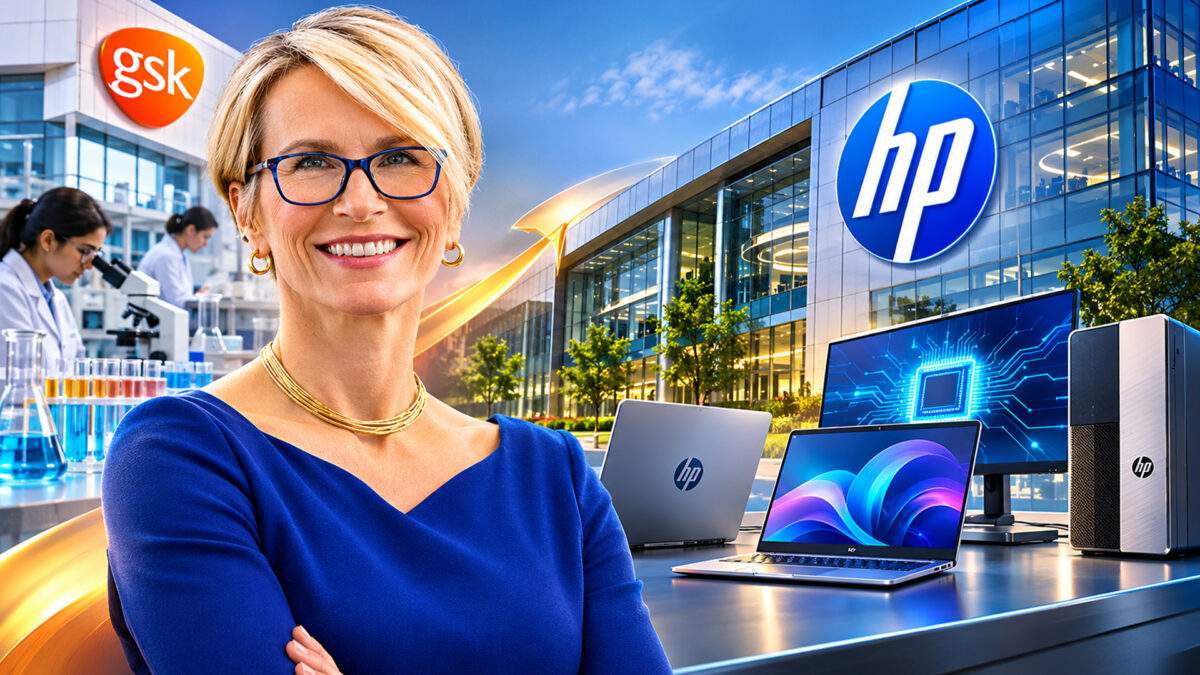
HP Inc. has appointed former GlaxoSmithKline (GSK) chief executive Emma Walmsley as its next CEO, bringing an experienced global business leader into the technology company as it prepares for a new phase of artificial intelligence-led growth. The appointment, announced on November 4, will take effect on January 4, 2027.
Walmsley will succeed Bruce Broussard, who has been serving as HP’s interim CEO since February 2026. Broussard will move to the position of Chair of the Board, replacing Chip Bergh, who has held the position since 2017.
The leadership change comes at an important time for HP as the company attempts to strengthen its position in the global personal computer (PC) market, expand its artificial intelligence portfolio and respond to rising component costs. The appointment also signals HP’s willingness to look beyond traditional technology industry leadership while preparing for changes in how businesses and consumers use computers.
Walmsley brings nearly nine years of experience leading GSK, one of the world’s major pharmaceutical companies. She served as its chief executive from April 2017 until December 2025, overseeing a significant transformation of the business.
During her tenure, she sharpened GSK’s focus on specialty medicines and vaccines, strengthened its research and development pipeline and worked towards improving the company’s financial position. One of the major developments under her leadership was the separation of its consumer healthcare business, which became Haleon in 2022.
The restructuring allowed GSK to concentrate more closely on its biopharmaceutical operations, particularly innovative medicines and vaccines. Walmsley also worked on strengthening the company’s leadership structure and improving its operational performance.
Before joining GSK in 2010, Walmsley spent 17 years at French cosmetics company L’Oréal. She held several senior management positions and gained experience in building and managing large international consumer businesses.
Her professional background is particularly interesting because she does not have direct experience running a computer hardware or technology manufacturing company. However, her experience in managing global businesses, handling organisational restructuring and identifying new growth opportunities appears to have influenced HP’s decision.
She has also served on Microsoft’s board of directors for seven years, giving her exposure to developments in the technology industry, including artificial intelligence and enterprise computing.
Artificial intelligence is expected to play a central role in Walmsley’s leadership at HP. The company is increasingly focusing on AI-powered personal computers, connected devices, workplace solutions and software services as businesses reconsider their technology requirements.
The growing adoption of generative AI has created demand for computers capable of handling more complex workloads. AI-enabled PCs, which offer dedicated processing capabilities for artificial intelligence applications, are emerging as an important growth opportunity for manufacturers.
HP is looking to benefit from this transition by expanding its portfolio of AI-powered devices and solutions. The company believes that artificial intelligence will change how people work, communicate and interact with technology.
In her statement following the appointment, Walmsley said she was excited to join HP and focus on harnessing the opportunities emerging from the AI era. She also highlighted the importance of innovation and finding new sources of growth while delivering long-term value to customers, shareholders and employees.
HP’s interim CEO Broussard said Walmsley had the leadership experience needed to bring together the company’s businesses, capabilities and workforce as artificial intelligence transforms the technology landscape.
Despite the opportunities presented by artificial intelligence, Walmsley will inherit several challenges, particularly in the global PC market.
A shortage of memory chips has increased component costs for computer manufacturers. The rapid expansion of AI data centres has absorbed a significant share of global memory chip production, leaving less supply available for traditional consumer electronics and computer manufacturers.
Companies such as Dell, Lenovo and Apple are also dealing with rising component costs and supply pressures.
The situation has affected HP’s business performance. During the company’s third quarter in August 2026, PC shipments declined 16% even as revenue from the personal systems division increased 18%. The improvement in revenue was supported by a shift towards more expensive, higher-margin products, including AI-enabled computers.
The broader computer market is also facing pressure. Global PC shipments declined 4.9% in the second quarter of 2026, according to industry estimates cited in recent reports. Higher component prices could further affect consumer purchasing decisions and delay computer replacement cycles.
HP has also indicated that it expects industry-wide PC unit volumes to decline by mid-single digits in fiscal 2027. The company has refrained from providing a financial outlook for the year, reflecting uncertainty surrounding demand and component availability.
This makes profitability an important priority for the incoming CEO. Walmsley will need to balance investments in AI technology with rising manufacturing costs and pressure on traditional PC sales.
HP’s announcement follows a global search for a permanent chief executive after former CEO Enrique Lores left the company in February 2026 to take over as CEO of PayPal.
Broussard stepped in as interim chief executive during the transition and will now become Chair of the Board when Walmsley takes charge in January.
The board has expressed confidence in Walmsley’s ability to guide the company through technological and organisational changes. Her experience at GSK and L’Oréal is expected to bring a different perspective to HP’s business strategy.
For investors, the appointment raises expectations that HP will identify new revenue opportunities beyond its traditional computer and printing businesses.
Walmsley’s biggest test will be translating her experience in corporate transformation into results in a highly competitive technology market. She will have to strengthen HP’s AI positioning, manage supply chain pressures and protect margins while maintaining demand for its existing products.
Her appointment marks a significant leadership change for HP as the company prepares for an increasingly AI-driven future. Whether her experience across pharmaceuticals, consumer businesses and corporate leadership can help revive growth in the PC market will become clearer after she assumes office in January 2027.