
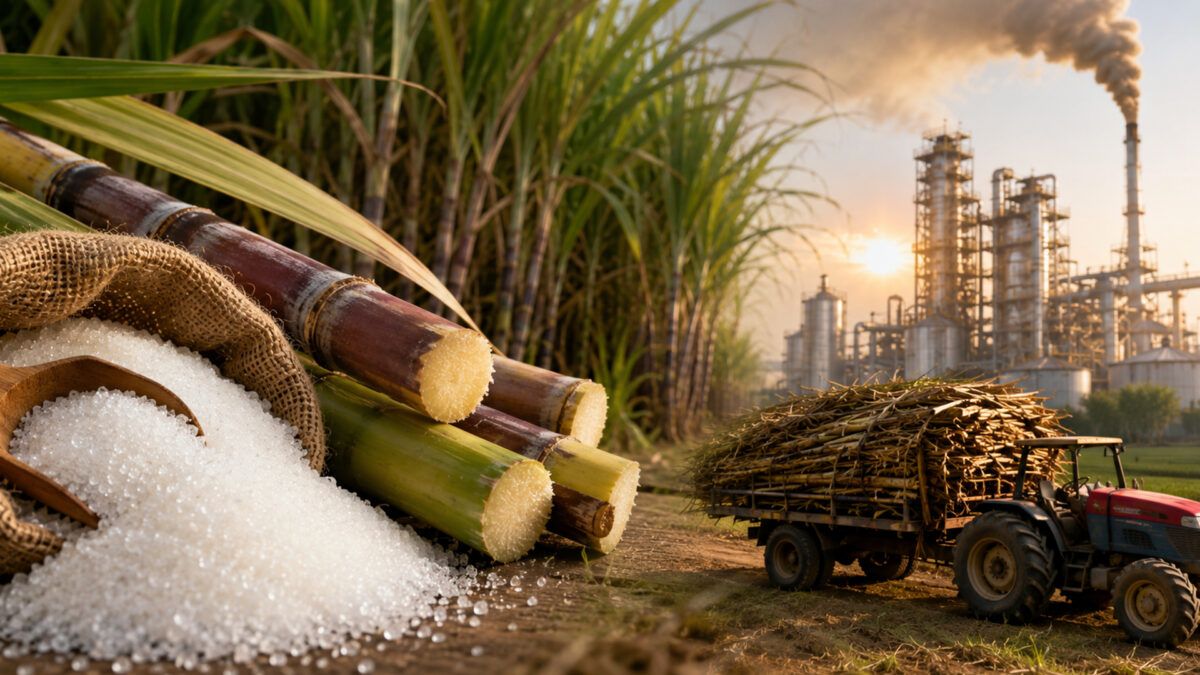
India is unlikely to return to the global sugar export market anytime soon, as worsening weather risks and rising ethanol production are expected to keep domestic sugar supplies under pressure for several years.
Industry officials, traders and analysts say the combination of a developing El Niño weather pattern and the government’s push for ethanol blending is reducing the amount of sugar available for export. The situation has triggered concerns across the sugar sector, with fears that India could even become a sugar importer within the next few years if production continues to lag demand.
India was once the world’s second-largest sugar exporter, shipping an average of 6.8 million tonnes annually in the five seasons leading up to 2022-23. However, exports have sharply declined. This season, shipments were limited to about 800,000 tonnes before restrictions were tightened to protect domestic supplies.
The biggest concern is the weather. A strengthening El Niño is threatening to weaken monsoon rainfall, delay sugarcane planting and reduce crop yields in key producing states. Lower cane availability could significantly affect sugar production over the next three seasons.
At the same time, a growing share of sugarcane is being diverted towards ethanol production as India pursues its clean-fuel and energy-security goals. While the ethanol programme helps reduce dependence on imported crude oil, it also leaves less cane available for sugar manufacturing.
Current estimates suggest India’s sugar output could fall to around 27.9 million tonnes, below annual domestic consumption of roughly 28.5 million tonnes. If this gap persists, inventories may drop to multi-year lows, leaving little room for exports and increasing the possibility of imports by 2027-28, something India has not needed in nearly a decade.
For consumers, there is no immediate cause for alarm, but the tightening supply outlook is being closely watched. For global markets, India’s reduced presence could keep sugar prices elevated, while farmers and millers brace for an uncertain period shaped by climate pressures and shifting energy priorities.