
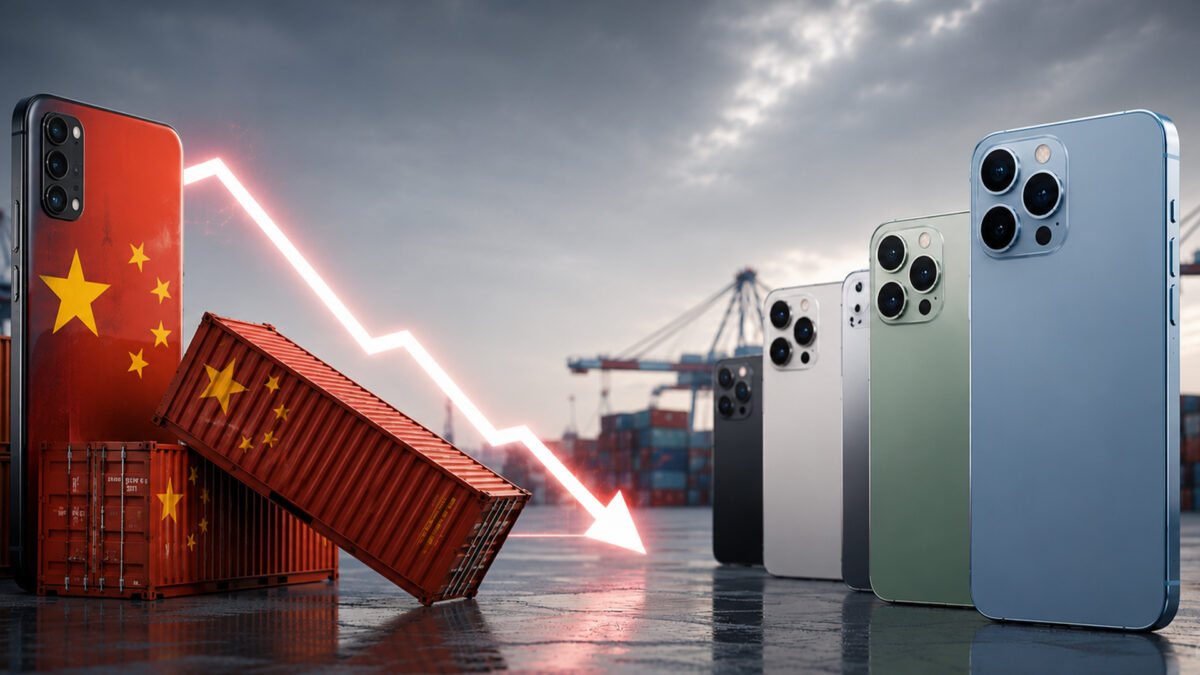
India’s smartphone market took a sharp hit in the April-June quarter of 2026 as a global memory chip shortage pushed up handset prices and weakened demand, particularly among budget-conscious consumers. Smartphone shipments in the country fell 11.1% year-on-year to 33.2 million units in the second quarter, according to the latest data from the International Data Corporation (IDC).
The downturn has been particularly painful for Chinese smartphone brands, which have traditionally relied on affordable and feature-rich devices to build a strong presence in India. Vivo, Oppo, Xiaomi and Realme all reported shipment declines during the quarter, while Samsung and Apple managed to hold their ground and increase their market shares.
The numbers show how quickly rising component costs are changing India’s smartphone market. IDC said the average selling price (ASP) of smartphones in India climbed 14.4% year-on-year to a record $315, or roughly ₹30,000, in Q2 2026. Higher memory costs have made it increasingly difficult for manufacturers to keep prices low while protecting their profit margins.
That pressure has been felt most strongly at the bottom end of the market. Smartphones priced below $100 saw shipments plunge 74.3% year-on-year, with their share of the overall market falling from 15.6% to just 4.5%. Manufacturers have reduced model launches and channel support in this segment as low prices have become harder to sustain amid expensive components.
For years, Chinese companies built their Indian businesses around precisely this part of the market. Their ability to offer large displays, better cameras and other features at competitive prices helped brands such as Vivo, Oppo, Xiaomi and Realme become household names. But the current memory shortage has weakened that advantage because the room to absorb higher costs or offer aggressive discounts has narrowed considerably.
Vivo remained India’s largest smartphone brand in Q2 with an 18.4% market share, down from 19% a year earlier. Its shipments declined by about 14% year-on-year. Oppo, which ranked third, recorded an 8.5% decline, while Xiaomi’s shipments dropped 10%. Realme suffered a larger 14.2% fall.
The sharper declines were visible among some Chinese sub-brands. Vivo’s iQOO recorded the steepest fall among the leading brands, with shipments dropping 61% year-on-year. Xiaomi’s Poco shipments fell 12.3%, while OnePlus recorded a smaller 2.5% decline. Motorola, which is not a Chinese brand, also saw shipments fall 8.9%.
Samsung, meanwhile, gained ground in a shrinking market. Its shipments grew 0.4%, but its market share increased from 14.5% in Q2 last year to 16.4% this year. Samsung’s broad portfolio and scale have helped it absorb some of the impact of rising component costs while continuing to serve different price segments.
Apple also strengthened its position. Its shipments increased about 0.7%, while its market share rose from 7.5% to 8.5%. The company remained constrained by supply shortages affecting the iPhone 15, iPhone 16 and iPhone 17 series, but demand for premium devices remained more resilient than demand at the entry level. The iPhone 17 was the highest-shipped smartphone model in India during the first half of 2026, according to IDC.
The shift suggests that India‘s smartphone consumers are gradually moving up the price ladder, even as overall volumes decline. The $400-$600 segment grew 60.3% year-on-year, with its market share almost doubling from 4.8% to 8.6%. Meanwhile, the $100-$200 mass-budget segment remained the largest category, accounting for 46.8% of the market and recording broadly flat shipments.
There was also an unusual revival in demand for 4G smartphones. As entry-level 5G devices became more expensive, some manufacturers brought back or extended 4G models to give consumers cheaper options. The share of 4G smartphones rose to 11.1%. IDC, however, expects this to be a temporary development as existing inventories run out and consumers are pushed towards more expensive 5G models.
The change in consumer behaviour is also visible in sales channels. Online smartphone shipments fell 19.8% year-on-year, with their share dropping from 46.4% to 41.9%. Online platforms traditionally depend heavily on discounts and promotional offers, but weaker discounts have made them less attractive to price-sensitive buyers. Offline shipments were comparatively resilient, declining only 3.6% as brands leaned more heavily on physical retail networks.
The weakness is not limited to one quarter. India’s smartphone shipments during the first six months of 2026 fell 7.9% year-on-year to 64.2 million units, the lowest first-half volume in five years. Interestingly, the market’s overall value still increased 3.6%, reflecting the rise in average selling prices and the growing contribution of premium smartphones, a shift that is also shaping India’s broader technology market.
The upcoming festive season could therefore be a crucial test for smartphone manufacturers. Traditionally, brands use festive discounts, exchange offers and financing schemes to encourage upgrades. This year, however, higher component costs are leaving manufacturers and retailers with less room for aggressive price cuts.