
Categories
Corporate

Tamil Nadu, KLA sign ₹3,600 cr R&D MoU in Chennai

The Tamil Nadu government has signed a Memorandum of Understanding (MoU) with US-based semiconductor equipment company KLA Corporation to set up a large research and development (R&D) and innovation campus in Chennai.

Under the agreement, KLA will invest up to $400 million (around ₹3,600 crore) over the next decade. The proposed campus will come up on about 12 acres and is planned to expand in phases, with the built-up area expected to eventually reach nearly 1.5 million square feet.

The MoU was signed in the presence of Chief Minister M. K. Stalin and Industries Minister T. R. B. Rajaa, along with senior government officials and representatives from KLA.

The upcoming facility is expected to generate up to 4,000 high-skilled jobs over the next 10 years. These roles will largely focus on advanced semiconductor research, software development, artificial intelligence (AI), high-performance computing, and engineering solutions that support chip manufacturing and process control.

Officials said the investment strengthens Tamil Nadu’s position in the global semiconductor value chain and reflects growing international confidence in the state’s industrial policies, infrastructure, and skilled talent pool. The government has been actively working to attract high-technology investments as part of its broader strategy to develop a strong electronics and semiconductor ecosystem.

KLA already has operations in Chennai, and the new campus will significantly expand its footprint in India. Company representatives said the proposed R&D and innovation centre will serve as a major hub for global engineering and AI-led semiconductor solutions, helping India play a larger role in advanced chip technologies.

The project is seen as a major step in boosting research-driven growth, high-value employment, and long-term technology development in the state.
Also Read: Reliance gets US permit to import Venezuelan oil

Categories
Leaders

Chennai teen builds voice-based Tool for Hardware

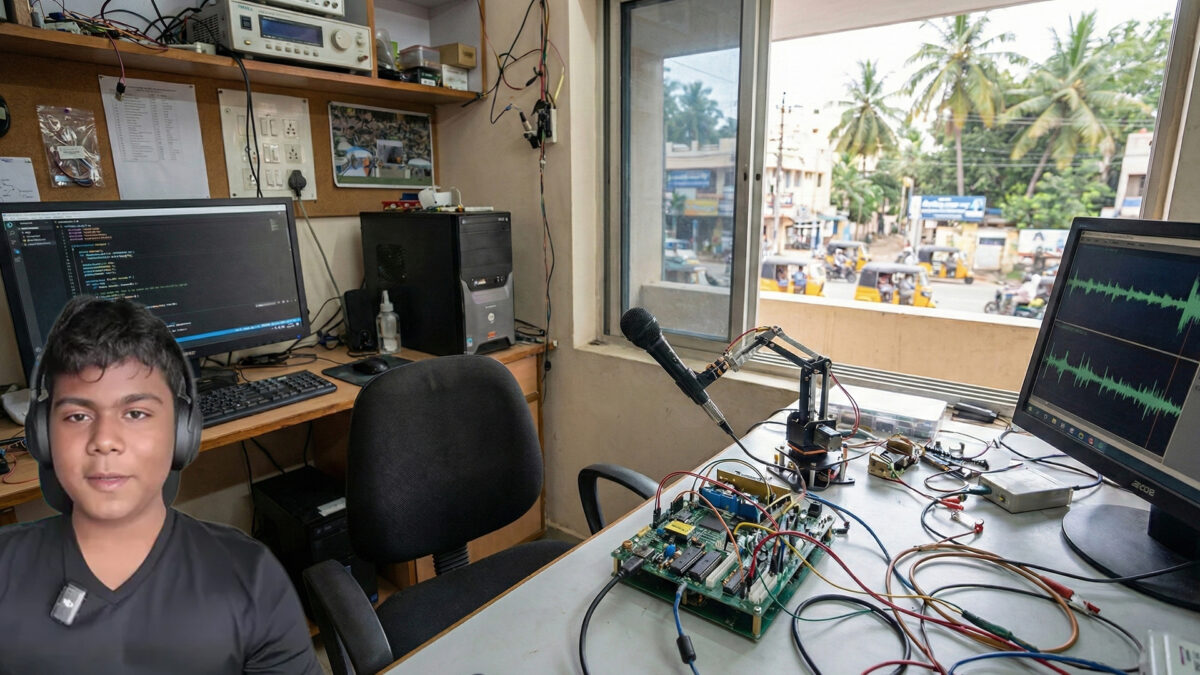
At an age when most teenagers are focused on exams and college choices, Harish Ashok, a 17-year-old from Chennai, is quietly rethinking how hardware is built. His innovation, a voice-based assistant called Zenith, aims to make hardware development as easy and intuitive as writing software, simply by speaking.

Hardware prototyping is often slow, technical, and intimidating. Developers must write firmware, install libraries, map pins, upload code, and debug errors manually. Harish experienced these hurdles first-hand while working on electronics projects. Instead of accepting them as inevitable, he decided to solve the problem.

Zenith works like a smart companion for hardware builders. Users can speak instructions such as changing a sensor, checking a datasheet, or generating code. The assistant then takes care of the background tasks, from writing and uploading firmware to managing serial communication, libraries, and documentation. The result is a smoother, faster journey from idea to working prototype.

In demonstrations shared online, Harish showed how Zenith could build a practical project: an OLED display that reads temperature and humidity when motion is detected. Tasks that would normally take hours of setup and troubleshooting were completed quickly, using simple voice commands. For makers, students, and robotics enthusiasts, this could be a game-changer.

Harish’s vision is clear,  to remove the friction that often discourages people from experimenting with hardware. By making the process conversational and accessible, he hopes more creators will feel confident turning ideas into real-world devices.

Zenith is not Harish’s first invention. Earlier, he worked on a smart home energy-saving platform that optimised electricity usage, as well as a colour-scanning device that converts real-world colours into hex codes for web designers. Each project reflects his interest in blending practical needs with clever technology.

The young innovator credits mentors, early supporters, and collaborative tech communities for helping him refine his ideas. He continues to invite feedback as Zenith evolves, signalling his openness to learning and improvement.

Also Read: Bharti, Warburg Pincus take 49% in Haier India