
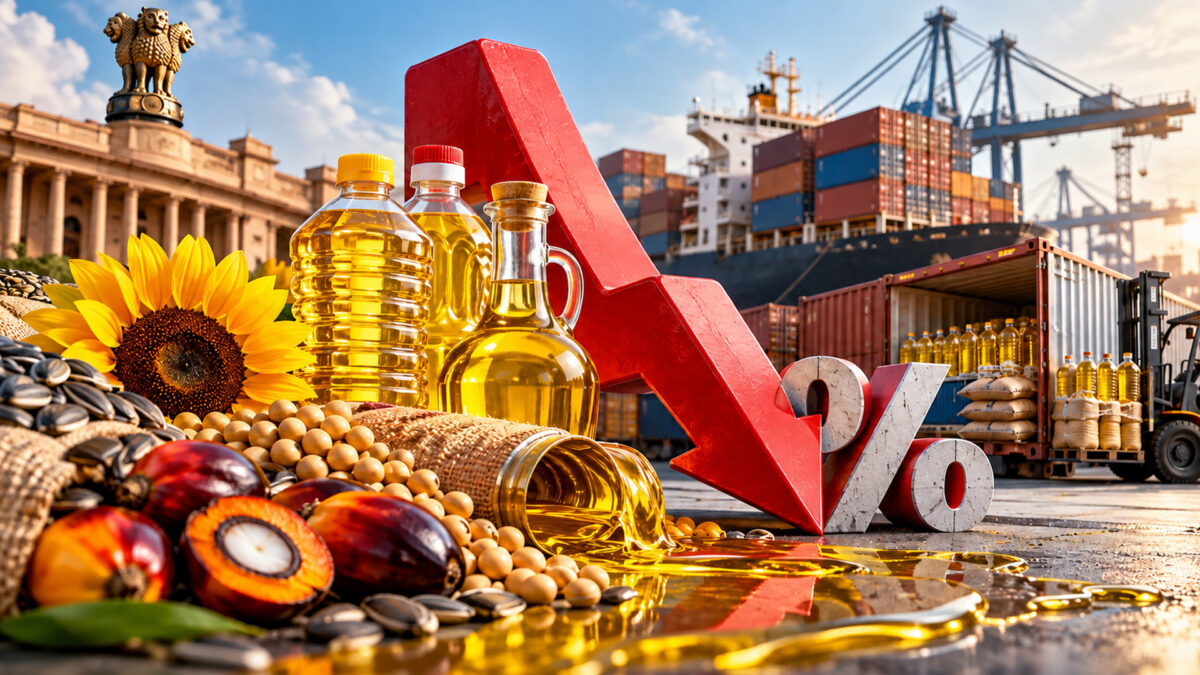
The Centre has cut import duties on major edible oils, including palm, soybean and sunflower oil, in a move aimed at easing cooking oil prices ahead of the festive season and containing food inflation.
The revised customs duties came into effect from September 24, with the government reducing the cost of importing both crude and refined edible oils. The move comes at a time when global vegetable oil prices and domestic retail rates have been rising, putting pressure on household budgets.
Under the new structure, the basic customs duty (BCD) on crude sunflower oil has been cut completely from 10% to nil. The BCD on crude palm oil and crude soybean oil has been halved from 10% to 5%.
The government has also reduced duties on refined oils. The BCD on refined palm and soybean oils has been lowered from 32.5% to 27.5%, while the duty on refined sunflower oil has been reduced to 22.5% from 32.5%.
The government said the reduction should lower the landed cost of imported edible oils and help pass on the benefit to consumers. It has also asked edible oil associations and companies to revise distributor prices and maximum retail prices in line with the lower import costs.
The timing is significant because edible oil demand typically rises during the festive months, when households buy more cooking oil for sweets, snacks and traditional food. Demand from restaurants, hotels, caterers and sweet manufacturers is also expected to increase during the Dussehra-Diwali period.
India is heavily dependent on imports to meet its edible oil requirement. More than 58% of the country’s annual consumption is met through imports, making domestic cooking oil prices particularly sensitive to international commodity prices, shipping costs and currency movements.
Palm, soybean and sunflower oils account for a large share of India’s edible oil imports. Recent increases in global prices, higher freight and insurance costs and a weaker rupee have pushed up the cost of bringing oil into the country.
Data from the Solvent Extractors’ Association of India showed that crude palm, soybean and sunflower oil landed at Mumbai ports on September 18 at about $1,265, $1,314 and $1,380 per tonne, respectively. Palm and soybean oil costs were around 11% higher than a year earlier, while sunflower oil was about 7% higher.
The increase in international prices has already reached Indian consumers. Government data showed average retail prices on September 23 at around ₹202.87 per kg for mustard oil, ₹166.87 for soybean oil and ₹153.89 for palm oil. These were higher than year-ago levels, with soybean and palm oil showing particularly sharp increases.
The latest duty cut is therefore expected to provide some relief to edible oil companies and consumers during a period of strong seasonal demand. However, the extent of the reduction in retail prices will depend on several factors beyond customs duties.
Global edible oil prices, freight rates, the rupee-dollar exchange rate, inventories and the availability of imported supplies will influence how much of the duty benefit reaches shoppers. Industry representatives have also cautioned that lower duties do not automatically translate into an equal reduction in retail prices.
The government has maintained a 19.25 percentage-point duty differential between crude and refined edible oils. This is intended to encourage domestic refining and discourage excessive imports of refined products. The policy allows domestic refiners to benefit from cheaper crude imports while continuing to add value within India.
The decision also comes against a backdrop of rising pressure on edible oil companies. Before the duty reduction, industry sources had indicated that companies were considering price increases of around 7-8% because of higher import costs. Retail prices had already risen in several categories over the past year.
The duty reduction could change that pricing outlook as the festive season approaches. Lower import costs may give companies room to absorb some of the pressure instead of passing the entire increase on to consumers.
There is also a longer-term policy consideration. While cheaper imports can help consumers in the short term, lower domestic prices can affect the economics of oilseed cultivation. Some industry observers have warned that sustained import dependence could influence farmers’ decisions on crops such as soybean and sunflower.
With festive demand expected to remain strong, the government is betting that cheaper imports and better transmission through the supply chain will help keep cooking oil prices under control.
The duty changes thus serve two objectives: providing near-term relief from elevated edible oil prices and managing inflationary pressure during a period when food consumption typically rises. How much consumers ultimately save will depend on global markets, currency movements and how quickly companies pass on the lower landed costs.