Categories
Corporate

Anthropic lets employees sell up to $6 bn in shares

AI company Anthropic has launched a major share sale for its employees and former staff, allowing them to sell up to $5–6 billion worth of company stock. The move lets workers access some of the value they have helped create without waiting for an IPO or company sale.

The share sale is based on a valuation of around $350 billion, close to the level from Anthropic’s recent $30 billion funding round, which valued the company at roughly $380 billion. This reflects strong investor confidence in the company’s AI technology and growth.

Only employees who have worked at Anthropic for at least a year can participate. The shares will be sold to outside investors, not the company itself, and the total amount sold will depend on how many staff choose to take part.

This type of secondary stock sale is increasingly common among high-value tech startups. It allows employees to cash out some of their equity while keeping the company private. Similar plans have been used by companies like Stripe, SpaceX, and OpenAI to reward employees and retain talent in competitive AI and tech markets.

Anthropic has grown rapidly, attracting major investments and expanding its AI products and customer base. By letting employees sell shares now, the company gives them an early opportunity to benefit financially from their work, something usually only possible after a public listing or company acquisition.

Company officials have not publicly commented on the details of the share sale, and the final terms may change as the process continues.

Also Read: Amazon opens second-largest Asia office in Bengaluru

Categories
1 Minute-Read

Anthropic launches Bengaluru office, expands India partnerships

Anthropic has officially opened its Bengaluru office, marking its second Asia-Pacific hub after Tokyo. India is now Claude.ai’s second-largest market, with usage spanning software development, enterprise solutions, and education.

The company is partnering with organizations like Air India, Razorpay, Pratham, and Central Square Foundation to apply AI in sectors such as aviation, fintech, education, agriculture, and legal access. Efforts also focus on improving AI fluency in 10 major Indian languages and creating open-source tools for developers.

The new office will hire local talent to support partnerships and scale Claude-powered solutions nationwide.

Categories
1 Minute-Read

Infosys climbs 3% after AI deal with Anthropic

Shares of Infosys advanced nearly 3% after the company unveiled a strategic partnership with Anthropic to deliver next-generation artificial intelligence solutions for global clients.

The collaboration will combine Anthropic’s Claude models with Infosys’ Topaz platform and establish a specialised Centre of Excellence to build sector-focused AI applications, initially targeting telecom and later expanding into other industries.

Chief executive Salil Parekh said the move will help enterprises modernise systems, automate complex processes and adopt responsible AI at scale. The announcement strengthened investor confidence and pushed the stock among the day’s key gainers in the IT pack.

Categories
Technology

AI safety expert quits Anthropic, warns world at risk

Mrinank Sharma, a senior AI safety researcher at US-based artificial intelligence company Anthropic, has resigned from his role, issuing a stark warning that the world is heading towards danger if powerful technologies continue to grow without strong ethical grounding.

In a widely shared resignation note posted online, Sharma said humanity is facing several interconnected crises at the same time, from environmental stress and social unrest to rapid technological change. Artificial intelligence, he warned, could intensify these challenges if its development is not guided by wisdom, restraint, and clear human values.

Sharma headed Anthropic’s safeguards research team, where he worked on reducing risks associated with advanced AI systems. His work included studying how AI could be misused, such as assisting harmful biological research or influencing human behaviour at scale. Despite these efforts, Sharma said it was often difficult to ensure that ethical principles consistently shaped real-world decisions in high-pressure technology environments.

Without directly accusing the company of wrongdoing, Sharma wrote that aligning actions with values is far harder in practice than it appears on paper. He suggested that the broader tech ecosystem tends to prioritise speed, competition, and capability over reflection and long-term responsibility.

His resignation has sparked fresh debate across the technology sector, where concerns are growing that AI development is moving faster than society’s ability to understand and manage its consequences. Sharma’s departure adds to a list of researchers and engineers who have raised alarms about whether current safeguards are enough.

The announcement surprised many in the tech community, Sharma where he is stepping away from AI research altogether and turning to poetry and creative writing. He said this shift would allow him to explore deeper questions about meaning, responsibility, and humanity’s future in a more honest and personal way.

Also Read: Belagavi tech company in Karnataka sues Anthropic over name

Categories
Corporate

Belagavi tech company in Karnataka sues Anthropic over name

An Indian software company based in Belagavi, Karnataka, has filed a lawsuit against US-based artificial intelligence company Anthropic, accusing it of using a name that the Indian firm says it has owned and operated under for years.

The company, Anthropic Software Private Limited, was founded in 2017 and provides technology solutions in areas such as education platforms, digital connectivity, and safety systems. It claims that it has been legally using the name “Anthropic” in India well before the US AI startup entered the Indian market.

According to the lawsuit, the Indian firm says the arrival of Anthropic PBC, the American company known globally for developing the AI model Claude, has led to serious confusion among customers, partners, and even government departments. The firm argues that people often assume both companies are linked, which it says has affected its reputation and business operations.

Anthropic Software has approached the Commercial Court in Belagavi seeking legal protection for its brand identity. It has asked the court to recognise its prior use of the name in India and to stop the US company from using “Anthropic” in a way that could mislead customers. The Indian firm is also seeking damages of ₹1 crore for the alleged loss and harm caused by brand dilution.

The company’s founder stated that attempts were made earlier to resolve the issue through the trademark process, but the matter remained unresolved, forcing the firm to take legal action.

The case comes at a time when Anthropic PBC is expanding its footprint in India, including plans to set up offices and hire talent as part of its global growth strategy. The US company is backed by major investors and is considered one of the leading players in the fast-growing AI sector.

The court has issued notices to the US firm and is expected to hear the matter later this month. No interim relief has been granted so far.

Also Read: China’s BYD challenges Trump’s tariffs at US court

Categories
Technology

Anthropic’s AI Agents raise market concerns for Indian IT

US AI startup Anthropic has introduced Claude Cowork, an advanced AI agent platform capable of automating complex business tasks. Using smart plugins, these AI agents can manage legal document review, data analysis, and marketing workflows, performing end-to-end processes that previously required human expertise and specialised software.

The launch has caused alarm among investors, raising fears of a significant disruption in the Software-as-a-Service (SaaS) sector — now being referred to as the “SaaSapocalypse.” Analysts are concerned that companies may increasingly bypass traditional software licences and human-driven IT services, potentially affecting revenues for major IT firms.

The market impact was immediate. Global software stocks experienced sharp declines following the announcement. In India, IT leaders such as TCS, Infosys, Wipro, HCLTech, and LTIMindtree saw significant share price drops, with the NIFTY IT index falling 6–7%, marking one of its steepest losses in recent years.

Experts warn that AI agents performing routine tasks could reduce demand for labour-intensive IT services, putting traditional revenue models based on headcount or SaaS subscriptions at risk. Software offerings may face pricing pressure or even obsolescence if companies rapidly adopt AI-driven alternatives.

Looking ahead, Indian IT companies are expected to pivot toward high-value, specialised services, including strategic advisory, complex system integration, and consulting projects where AI replacement is less immediate.

Also Read: BlackRock CEO says India should boost capital markets

Categories
Leaders

AI may replace engineers soon, says Anthropic CEO

At the World Economic Forum in Davos, Dario Amodei, CEO of AI firm Anthropic, warned that artificial intelligence could soon take over many tasks currently performed by software engineers. He said some engineers at his company no longer write code manually, instead relying on AI models to generate and refine it.

Amodei suggested that as AI systems improve, they could handle most coding tasks, including planning, debugging, and deployment, possibly within the next six to twelve months. However, he noted that certain areas, like hardware production and AI training infrastructure, still require human intervention.

His comments have sparked debate online, especially regarding H‑1B visa workers. Some observers suggested that if AI can automate coding, traditional tech roles, particularly for foreign workers, could be at risk. Others stressed that AI is not yet capable of fully replacing engineers, especially for complex problems and legacy systems that demand human insight.

 Amodei’s forecast highlights the fast pace of AI development and its potential to reshape the global workforce, prompting discussions among businesses, engineers, and policymakers about how to adapt to this new era.

Also Read: Andhra to start ArcelorMittal Nippon plant after Feb 15

Categories
Corporate

AI leader Anthropic prepares for possible IPO in 2026

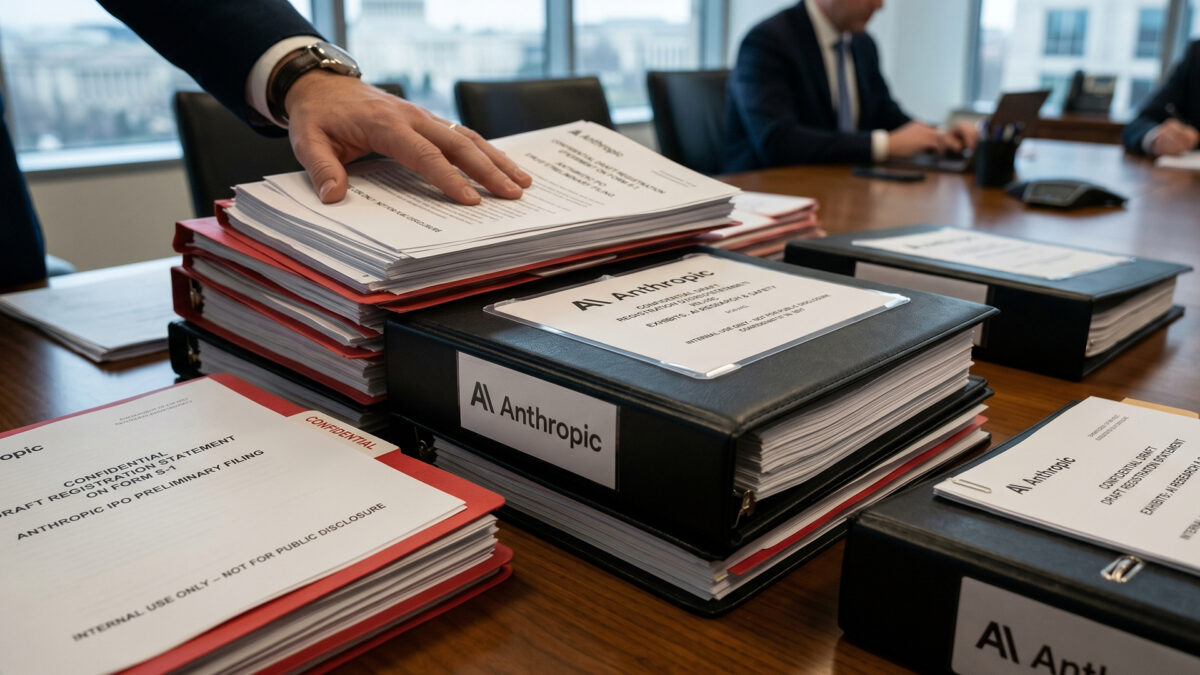
Anthropic, the artificial-intelligence company behind the Claude chatbot, is preparing for a potential initial public offering (IPO) that could take place as early as 2026. The company has begun formal groundwork by hiring a top US law firm to manage the regulatory and legal aspects of a future listing.

It has also held informal discussions with major global investment banks, signalling growing interest in tapping public markets. However, no underwriters have been finalised so far.

The stepcomes at a time when demand for advanced AI services is rising sharply across industries. An IPO would provide Anthropic with significant capital to accelerate expansion, fund large-scale infrastructure, and pursue strategic acquisitions. The company, founded in 2021, has grown rapidly and now counts more than 300,000 business and enterprise clients using its AI tools.

Anthropic is also negotiating a private funding round that could value the company at over $300 billion, reflecting strong investor confidence in its technology roadmap and enterprise adoption. Internally, the company expects its annualised revenue run rate to more than double next year, with projections indicating a possible jump to $26 billion. This places Anthropic among the fastest-scaling companies in the generative AI sector.

Despite these developments, the company has clarified that no final decision has been made about when or whether it will go public. Executives have indicated that the focus remains on strengthening core products, expanding in key global markets, and improving safety and reliability standards for AI deployment.

If Anthropic does pursue an IPO, it is likely to become one of the largest listings in the history of the AI industry, especially as competition intensifies among major players. The move would also offer the public markets a closer look at the financial performance and long-term business model of a leading AI developer at a time when the sector’s commercial potential is rapidly evolving.

Also Read: RBI’s monetary policy meeting begins, rate cut expected

Categories
Technology

Anthropic launches Claude Opus 4.5 with stronger coding

AI firm Anthropic has introduced Claude Opus 4.5, a new version of its flagship model designed to handle more complex coding, reasoning and autonomous-agent tasks. The update strengthens Claude’s ability to work like a “technical collaborator” rather than just a conversational assistant.

According to the company, Opus 4.5 brings a noticeable jump in programming performance, scoring higher on software-engineering benchmarks and solving tougher coding problems than earlier versions. It can write and debug multi-language code, refactor large codebases, and handle realistic developer workflows more reliably.

A key focus of this release is agentic behaviour—the model can now support AI agents that plan tasks, use tools, and execute multi-step workflows with minimal human input. This makes it suitable for work such as code generation, document creation, analysis, and other business-process tasks.

Anthropic also says the model has improved long-context memory, allowing it to process and retain more information during extended tasks. This benefits enterprise users who need AI to manage documents, datasets or multi-stage projects.

The company claims Opus 4.5 is more resistant to adversarial prompts and untrusted code, a key requirement as AI agents begin executing system-level tasks. However, it notes that human oversight remains essential when deploying autonomous agents in real-world environments.

With this release, Anthropic is positioning Claude as a stronger competitor in the fast-advancing AI-agent space, where major players are racing to build models capable of both reasoning and action.

Also Read: Bharti Airtel shares fall 3% after promoter sells ₹7,200 cr stake