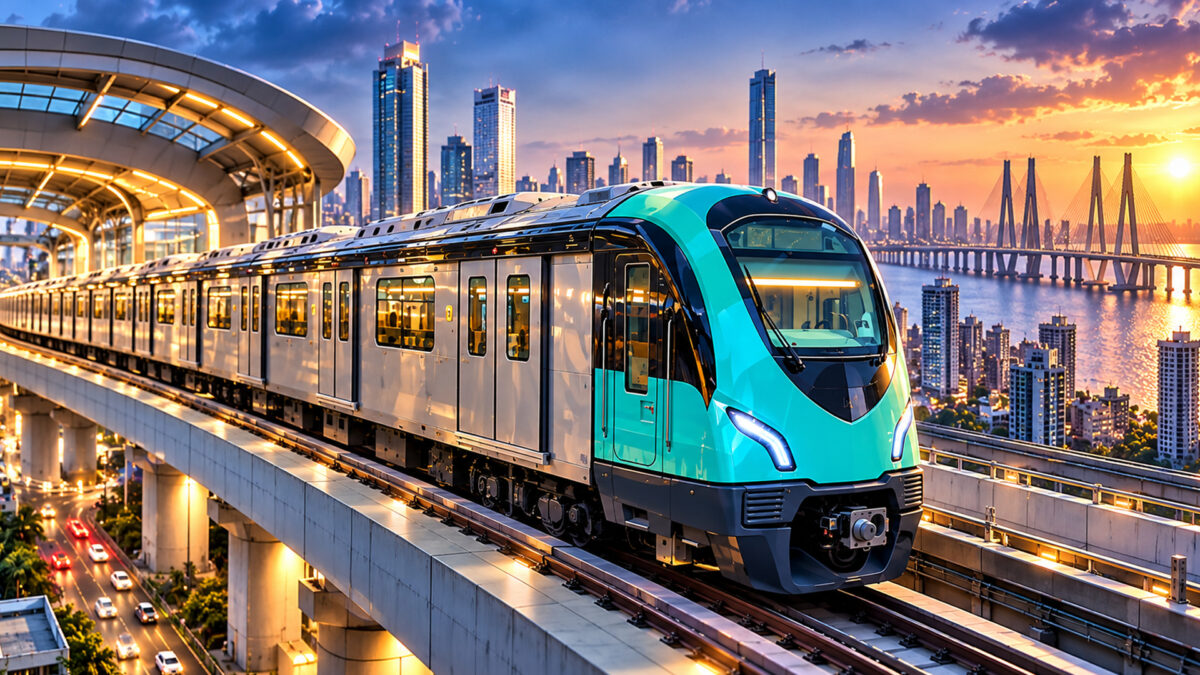
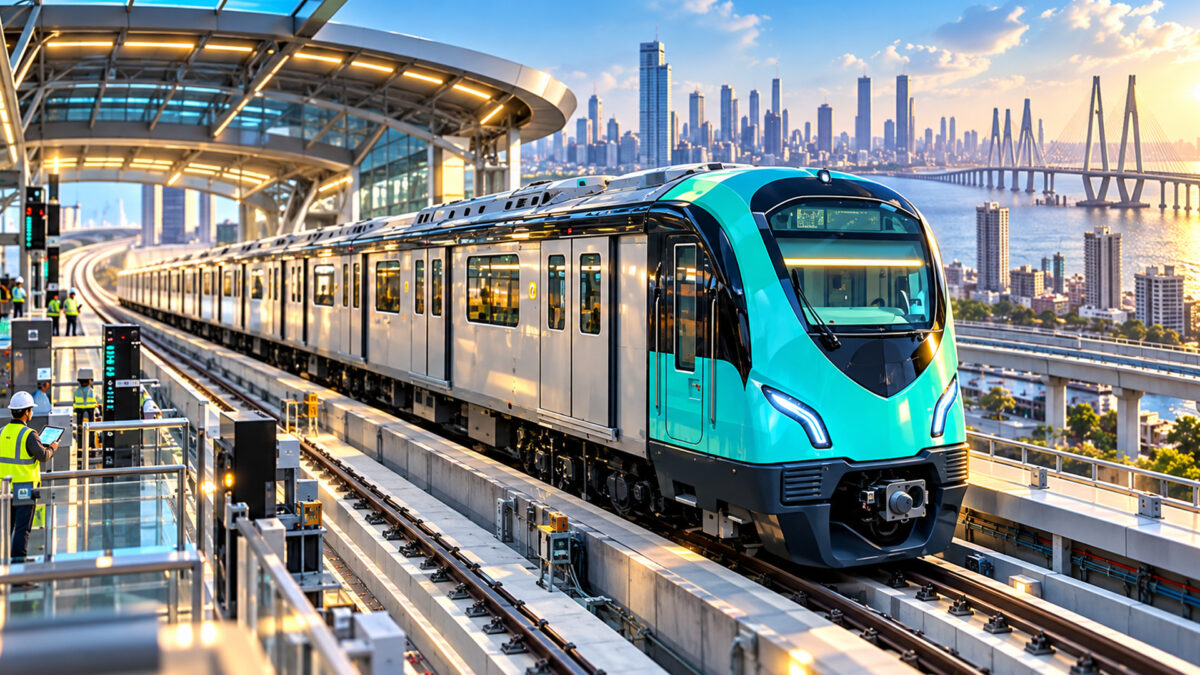
Mumbai’s expanding metro network has moved a step closer to introducing a new fleet of driverless trains, with Alstom unveiling the first trainset for Metro Lines 4 and 4A at its manufacturing facility in Sri City, Andhra Pradesh. The train was built in 14 months and is part of a project aimed at improving connectivity between Mumbai and neighbouring Thane.
The French railway equipment manufacturer unveiled the first Metropolis trainset on October 14 in the presence of officials from Larsen & Toubro (L&T), which is executing the integrated systems package for the corridors under a contract awarded by the Mumbai Metropolitan Region Development Authority (MMRDA).
Alstom expects to dispatch the first train by the end of November, with delivery to Mumbai likely in the first or second week of December. The train will then undergo mandatory testing and safety certification before it can carry passengers. The company is targeting August 2027 for passenger operations using its new trains.
The first trainset is part of an order for 39 driverless Metropolis trainsets, comprising 234 metro cars in six-car configurations. Alstom is responsible for supplying the trains, signalling systems and depot equipment, along with five years of maintenance. The project is expected to support the expansion of public transport in one of India’s busiest urban regions.
The first train was designed at Alstom’s engineering centre in Bengaluru and manufactured at Sri City. Its propulsion systems were sourced from Coimbatore, Tamil Nadu, while the bogies were manufactured at Savli, Gujarat. The multi-state production process reflects the company’s localisation strategy under the Make in India initiative and the broader push towards domestic manufacturing.
Alstom said the first trainset was completed in a record 14 months. The Sri City facility has an annual production capacity of 480 metro cars and has manufactured trains for several Indian and international projects.
The new trainsets have been designed for a maximum speed of 90 kmph, with an operational speed of 80 kmph. They will feature a distinctive green-and-blue exterior, airflow-based cooling, wheelchair accessibility and dedicated bicycle racks. The bicycle racks are a first for an Alstom train in India and are intended to encourage more sustainable travel and improve last-mile connectivity.
The trains have also been developed using the company’s eco-design approach, with materials selected with fire safety and environmental considerations in mind. These features are expected to improve passenger comfort and accessibility while supporting the wider goal of building a more efficient urban transport system.
Mumbai Metro Line 4, also known as the Green Line, is planned to connect Wadala in central Mumbai with Kasarvadavli in Thane. The elevated corridor will strengthen links with the Eastern Express Highway, the Monorail and other metro routes. The Line 4 and 4A network is intended to provide commuters with an alternative to road travel across a region frequently affected by congestion.
However, the introduction of the new trains will depend on the completion of testing and regulatory approvals. Alstom said train-level testing was nearly complete, while signalling integration and the remaining validation work were expected to take another three to four weeks before dispatch.
Once the train reaches Mumbai, it will undergo certification by the Research Designs and Standards Organisation (RDSO) and the Commissioner of Metro Railway Safety (CMRS). The process will include high-speed runs, braking tests, ride-index assessments and oscillation trials. Passenger services can begin only after the required tests are completed and the necessary speed certification is granted.
MMRDA is planning to initially use trains from Metro Lines 2 and 7 to begin operations on the new corridor, as civil construction work is ready. These trains are expected to be replaced by Alstom’s new fleet once the trains have completed testing and validation. The company has also said that arrangements for testing, stabling and maintenance have been worked out to address concerns surrounding the proposed car shed.
The project builds on Alstom’s existing role in Mumbai’s metro system. The company supplied trains and signalling solutions for the Aqua Line, which is already in commercial operation, and is providing signalling and telecommunications systems for other metro corridors in the city.
Alstom India Managing Director Olivier Loison said the project strengthened the company’s partnership with Mumbai’s metro network. L&T officials also highlighted the collaboration as part of efforts to develop a safe, efficient and sustainable public transport system for Greater Mumbai.
The unveiling marks a significant manufacturing milestone, but commuters will have to wait for the remaining delivery, testing and certification stages before the new trains enter service. Once operational, the expanded metro network is expected to improve connectivity between Mumbai and Thane and offer more commuters an alternative to congested roads.