
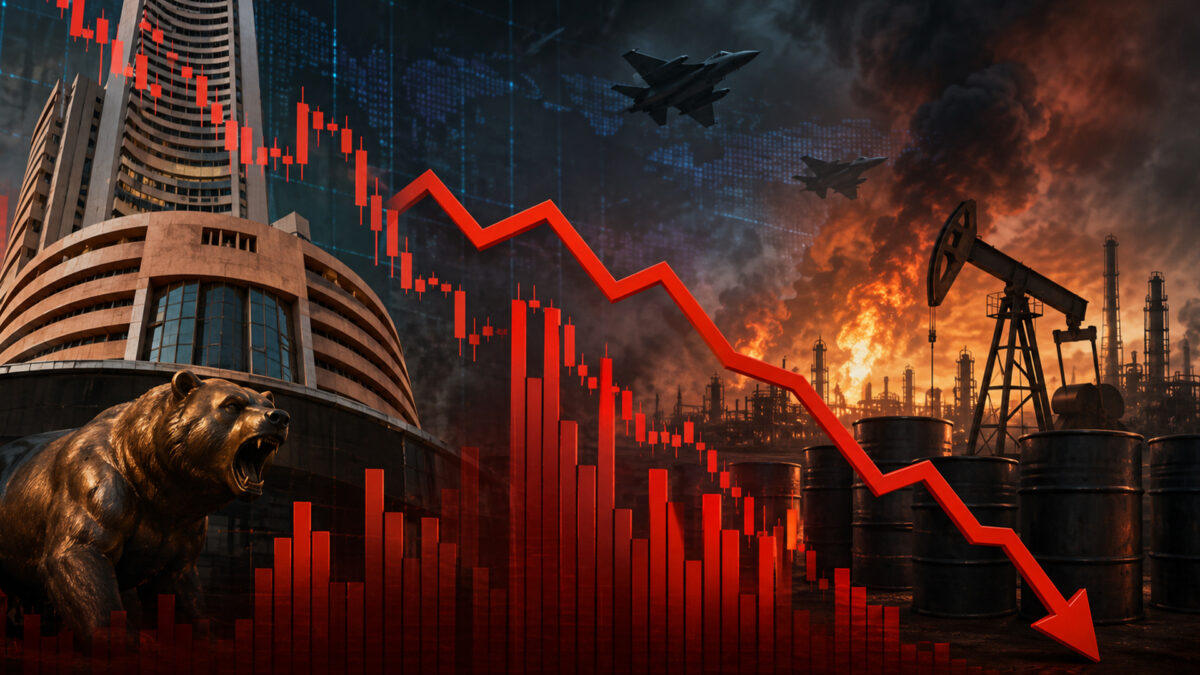
The Indian stock market witnessed a sharp reversal on Wednesday, October 21, as the Sensex and Nifty gave up their strong morning gains amid rising volatility and selling pressure in several sectors. The initial rally, supported by information technology (IT) stocks and hopes of progress in India-US trade talks, lost momentum as investors turned cautious.
The BSE Sensex had climbed more than 800 points in early trade, while the NSE Nifty 50 moved above 23,050. However, by around 12.25 pm, the Sensex had fallen to 73,418, down nearly 1,300 points from its intraday high of 74,682.19. The India VIX, which measures expected market volatility, jumped more than 9%, reflecting increased uncertainty among investors.
The Nifty also slipped into negative territory after opening above the 23,000 mark. The sharp turnaround highlighted the fragile sentiment in the domestic equity market, despite early buying interest in major stocks.
Infosys, Tata Consultancy Services (TCS) and UltraTech Cement were among the leading Sensex gainers during the morning rally. On the other hand, Raymond, Omaxe, Jindal Saw, Vakrangee and Delta Corp featured among the notable losers in the broader market. Bajaj Finance, Eternal and Axis Bank also weighed on the benchmark index as trading progressed.
IT stocks provide support
Information technology shares remained among the strongest performers even as the broader market weakened. The Nifty IT index gained more than 2%, bucking the downward trend across several other sectoral indices.
L&T Technology Services emerged as a major standout after reporting strong quarterly results. Its shares surged following the company’s September-quarter performance, while Infosys, TCS, HCLTech and Wipro also attracted buying interest.
Investors have been assessing whether IT companies can maintain growth amid concerns about artificial intelligence-related spending and changing technology demand. Better-than-expected earnings from select companies have helped improve sentiment towards the sector.
The strength in IT shares, however, was not enough to prevent the broader market from turning lower.
Auto, chemical and smaller stocks face selling
Automobile and chemical stocks came under significant pressure during the late-morning session. The Nifty Auto and Nifty Chemicals indices fell more than 2% each, emerging as the leading sectoral laggards.
Sona BLW Precision Forgings, Eicher Motors and TVS Motor Company were among the stocks weighing on the automobile index. Himadri Speciality Chemical, Deepak Fertilisers and Jubilant Ingrevia led losses in the chemical segment.
Financial services shares also weakened. Manappuram Finance, Yes Bank and Angel One were among the stocks declining by as much as 5% in the broader financial services segment.
The pressure extended beyond large-cap shares. Several broader market indices fell more than 1%, while the Nifty Microcap 50 and Nifty Smallcap 50 declined by as much as 2.5%. The widespread selling indicated that investors were reducing exposure to riskier stocks even as selected large-cap shares continued to attract buying.
Reliance shares rise as Jio IPO attracts demand
Reliance Industries remained in focus as its digital and telecom subsidiary, Jio Platforms, opened its much-anticipated initial public offering (IPO).
Reliance shares gained around 3% during the session, supported by interest surrounding the ₹30,213-crore public issue. The IPO was fully subscribed in less than an hour after opening, according to market updates.
Strong demand for the issue added to investor interest in Reliance, although the stock’s gains could not offset the weakness across other market segments.
The public issue is being closely watched because of its size and the importance of Jio Platforms to India’s telecom and digital services industries. Investors are also assessing the company’s growth prospects and valuation.
Crude oil and global developments remain key concerns
Elevated crude oil prices continued to pose a challenge for the Indian market. Brent crude traded above $110 a barrel amid concerns about geopolitical tensions and possible supply disruptions.
Higher oil prices are a concern for India because the country relies heavily on imports to meet its energy needs. A prolonged rise could increase the import bill, put pressure on inflation and affect the profitability of businesses with high fuel and transportation costs.
Currency movements also remained important. The rupee opened at around ₹94.78 against the US dollar, while recent trading saw it strengthen towards the ₹94.50 level. The currency’s recovery has received support from foreign inflows linked to the Jio Platforms IPO and measures by the Reserve Bank of India.
Investors were also monitoring expectations surrounding US interest rates and the minutes of the RBI’s latest monetary policy meeting.
The market’s sharp reversal showed that positive corporate developments and hopes of an India-US trade agreement were not enough to overcome concerns about oil prices, global uncertainty and broader selling pressure.
Investors are likely to watch quarterly earnings, crude oil movements, foreign fund flows and developments in trade negotiations for fresh direction. The rise in India VIX also signals that sharp price swings could continue, making the coming sessions important for determining whether the market can regain stability.