
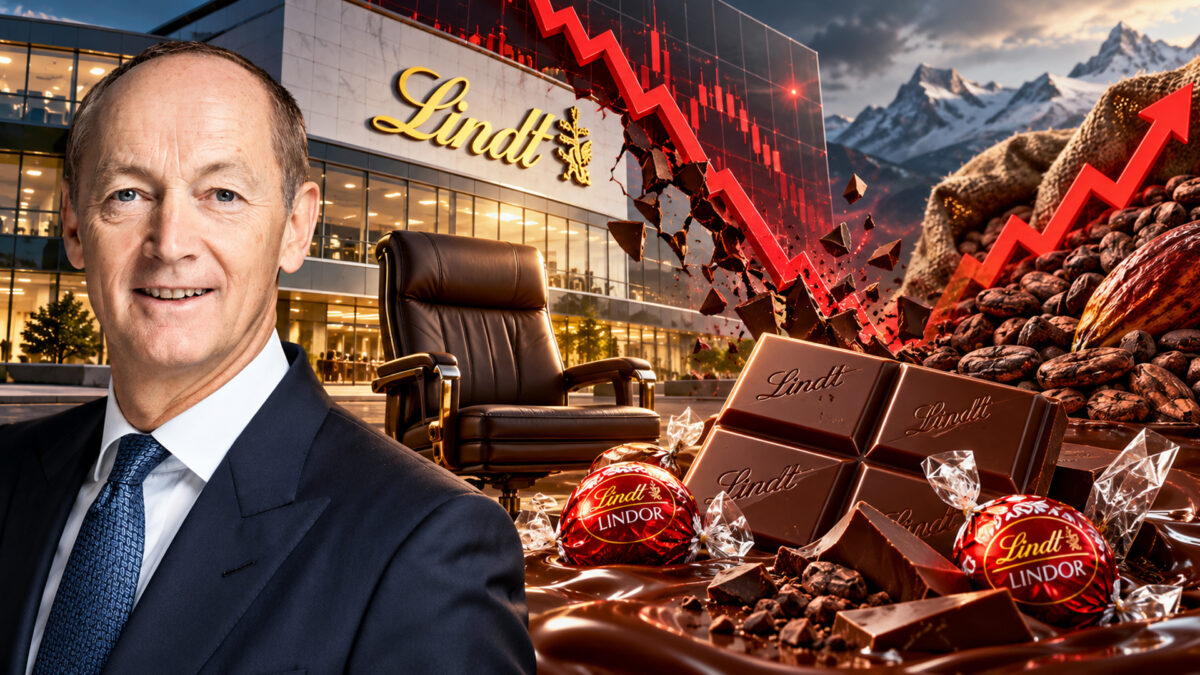
Swiss chocolate maker Lindt & Sprüngli has replaced chief executive Adalbert Lechner as it struggles with rising cocoa costs, weaker consumer demand and falling sales volumes in key European markets. Former CEO Dieter Weisskopf has taken charge as interim chief, with the company searching for a permanent successor to lead its next phase of growth.
The leadership change, announced on October 19, comes less than a month after Lindt lowered its 2026 sales growth forecast for the second time this year. The board said the company needed new operational leadership to restore consistent growth and make better use of opportunities across its global markets.
Lechner, who became CEO in October 2022, leaves after a 33-year career with the Swiss chocolatier. The company thanked him for his contribution to its growth but did not provide further details about the circumstances surrounding his departure.
Weisskopf, who previously led Lindt from 2016 to 2022 and currently serves as vice-chairman of the board, will take over immediately. The company expects to appoint a permanent chief executive in the second quarter of 2027.
Weisskopf faces the immediate task of rebuilding demand in Europe while protecting Lindt’s premium brand image. He said the company needed to win back customers who had become reluctant to buy its chocolates following substantial price increases. He also pledged to invest in the brand and improve profitability.
The management change reflects the pressure facing chocolate makers as the cost of cocoa rises and shoppers become more careful about spending. Lindt has traditionally positioned itself in the premium chocolate market, selling products such as Lindor truffles, pralines and seasonal gift boxes at higher prices than many competitors.
However, higher prices have made some of its products less affordable. Cocoa prices surged to record levels over the past few years after supply disruptions in major producing countries, particularly Ivory Coast and Ghana. Poor harvests, adverse weather and crop disease contributed to the shortage.
The sharp rise in raw material costs forced chocolate companies to increase prices. Lindt raised its prices by about 40% between 2022 and 2026, according to industry estimates reported by the Financial Times. Yet the increases have not translated into comparable growth in sales volumes, leaving the company exposed to consumers who are cutting back on premium purchases.
Cocoa prices have eased from their earlier peaks, but the impact of previous price increases continues to affect demand. Lindt raised prices by 11.8% year-on-year in the first half of 2026, adding to pressure on consumers.
The company cut its forecast for organic sales growth in September to between 0% and 2% for the full year, down from its earlier expectation of 4% to 6%. It had already lowered the outlook in March. The latest downgrade followed weaker-than-expected sales, particularly in Germany, Switzerland and Austria.
An unusually hot summer across Europe also affected chocolate consumption. Higher temperatures tend to reduce demand for chocolate, especially during the warmer months, while concerns about household budgets have made shoppers more cautious about discretionary purchases.
Lindt’s premium gift boxes and praline assortments have been among the products facing pressure. The company has indicated that smaller, more affordable packs could help encourage consumers to buy more frequently instead of making fewer expensive purchases.
The response marks a shift in strategy for a company whose reputation rests on premium ingredients and products. Lindt has maintained its focus on cocoa-based recipes rather than relying on cheaper substitutes, making pricing decisions particularly important to its margins and brand identity.
The company is also changing leadership in two important European markets. Michal Spiller, who headed its German business, is leaving the company. Ali Kulein, currently chief executive of Lindt’s Austrian operations, will succeed him in Germany, subject to formal approval. Fabian Reinhardt, head of global sales, will take over the Austrian business. Both changes are scheduled to take effect on October 26.
Germany is Lindt’s largest market, and weaker performance across German-speaking Europe has become a major concern. The company now needs to balance price reductions with the need to protect profitability and maintain the premium image that distinguishes its products from mass-market chocolate brands.
The leadership transition comes at a difficult time for investors as well. Lindt shares have lost roughly a quarter of their value this year amid concerns about slower growth, higher costs and repeated forecast reductions. The stock fell further following news of Lechner’s departure.
Despite the challenges, Lindt continues to see growth opportunities outside Europe. Weisskopf has identified North America and Asia-Pacific markets, including Australia, China and Japan, as areas where the company can build on its performance and market position.
The permanent CEO will inherit a business with established global brands but a clear need to restore momentum. The key challenge will be to bring customers back without undermining the premium positioning that has supported Lindt’s reputation and pricing power.