
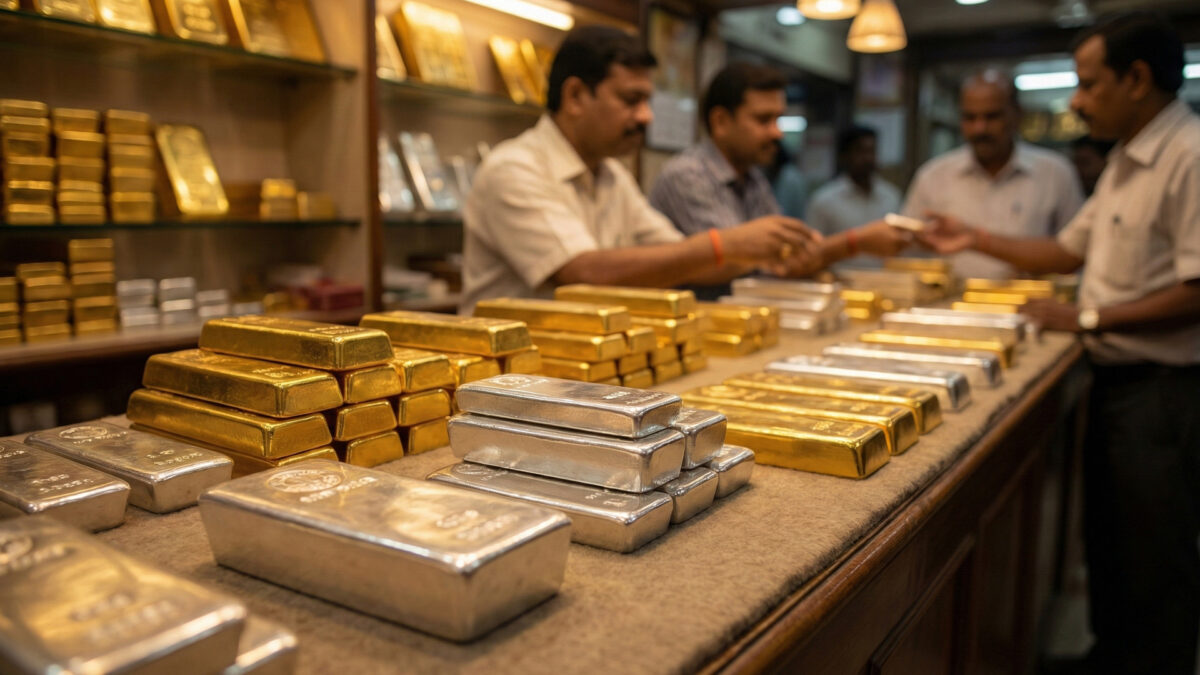
Gold and silver prices remained under pressure on Friday, October 30, as investors assessed the outlook for interest rates, movements in the currency market and uncertainty surrounding the global economy. The latest domestic rates placed 24-carat gold at ₹1,42,350 per 10 grams, while silver was quoted at ₹1,88,940 per kilogram. The declines extended the cautious mood across the precious metals market, where buyers have been weighing elevated prices against the possibility of further short-term volatility.
The latest figures underline the uneven movement in bullion after a period of sharp gains. Gold continues to attract interest as a store of value, but changing expectations around monetary policy and fluctuations in the rupee have influenced buying. Silver, used both as an investment asset and in industry, has also faced pressure as traders assess demand and global commodity markets.
Gold prices are closely linked to international market movements. Changes in expectations around interest rates can influence the appeal of the metal because gold does not provide regular interest income. When investors expect borrowing costs to remain high, interest-bearing assets may become more attractive. When expectations shift towards lower rates, gold can receive support as the opportunity cost of holding the metal falls. This relationship often leads to quick changes in prices as traders respond to economic data and central-bank commentary.
Currency movements are another important factor for Indian buyers. Gold is traded internationally, and changes in the rupee’s value can affect domestic prices even when overseas rates remain stable. A weaker rupee can make imported bullion more expensive, while a stronger rupee can soften the impact of international price increases. Local rates also reflect import costs, taxes, transportation expenses and jeweller-specific charges. The final consumer price may therefore differ from the indicative market rate.
Silver has its own set of demand drivers. Along with jewellery, coins and investment products, the metal is used in electronics, solar panels, electrical equipment and several industrial processes. Expectations of stronger industrial activity can support silver demand, while concerns about slower growth may weigh on prices. Its market is generally more volatile than gold because investment flows and industrial consumption both influence trading. This can produce sharper price movements over short periods.
For households planning to buy jewellery, the latest rates make it important to compare prices before placing an order. The quoted price of 24-carat gold is generally used as a reference for pure gold, while jewellery is commonly made using 22-carat gold or other alloys to improve durability. The price of 22-carat gold will be lower than that of 24-carat gold, but the final bill also includes making charges and applicable taxes. Consumers should check the purity hallmark, weight and rate applied by the jeweller before completing a purchase.
Silver buyers should also distinguish between the quoted bullion rate and the price of finished products. Coins, bars, utensils and ornaments can carry different premiums depending on purity, design, brand and retailer. Making charges and taxes may add to the final cost. Comparing rates across established sellers and checking the product’s purity certification can help buyers make a more informed decision.
Market participants are likely to track global economic signals, central-bank statements, currency movements and geopolitical developments for clues about bullion prices. Changes in interest-rate expectations can quickly influence investor demand. Uncertainty may encourage some investors to seek defensive assets, while improved confidence in financial markets can reduce the immediate appeal of safe-haven holdings.
The recent correction does not, by itself, establish a sustained downward trend. Precious metals can move in either direction as new information enters the market. Investors considering gold or silver should assess their financial goals, time horizon and ability to withstand price fluctuations rather than making decisions solely on a single day’s rate.
For jewellery buyers, timing may depend more on personal requirements than on attempts to predict the market. Those who are not in a hurry can compare rates over several days, while buyers with an immediate need can focus on transparent pricing and product quality. Investors should remember that physical bullion involves storage, purity and resale considerations, while financial products linked to gold and silver carry their own costs and risks.
With 24-carat gold quoted at ₹1,42,350 per 10 grams and silver at ₹1,88,940 per kilogram, the market remains on the watchlist of consumers and investors. The next moves will depend on international bullion trends, currency movements and expectations about interest rates. Until clearer signals emerge, buyers may continue to approach the market cautiously and compare prices before making fresh purchases.