
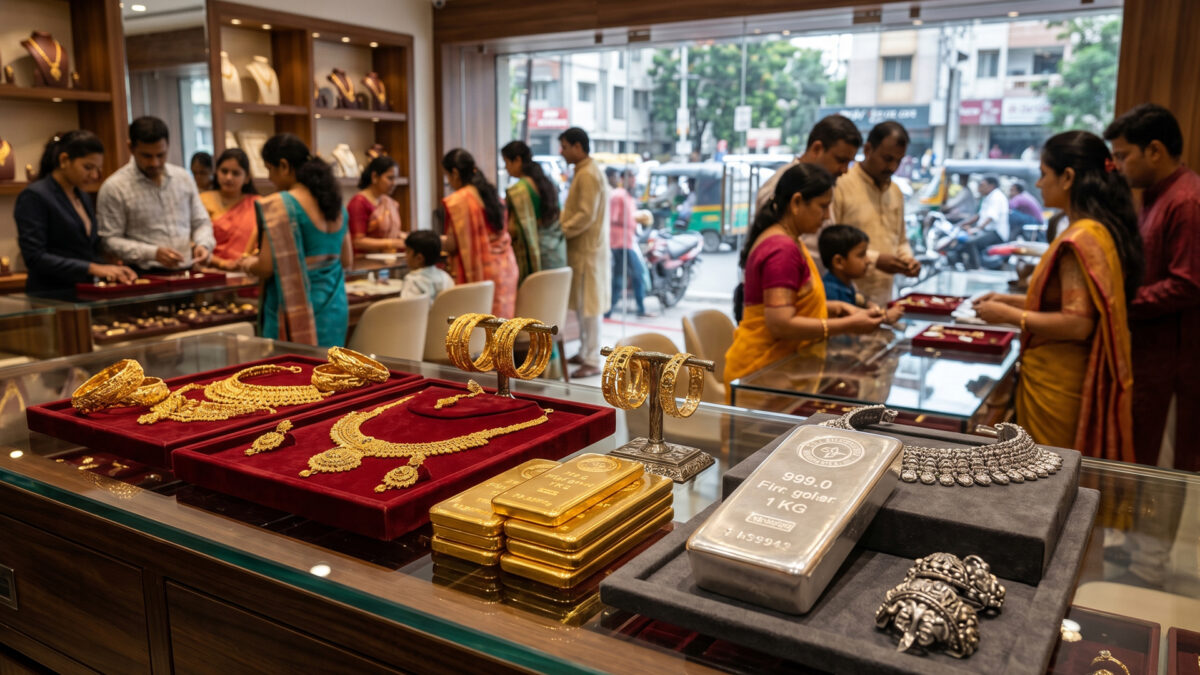
Gold and silver prices declined on Thursday amid selling pressure in domestic and international markets, as rising crude oil prices, currency movements and uncertainty over US interest rates weighed on investor sentiment. The fall in precious metal prices comes as investors assess inflation risks and the outlook for monetary policy.
The price of 24-karat gold dropped to ₹1,44,650 per 10 grams, while silver prices fell to ₹2,04,720 per kilogram. The decline could offer some relief to consumers planning jewellery purchases, although the final retail price may vary across cities and jewellers.
International gold prices also weakened during early trade. Spot gold declined around 0.43% to nearly $4,124 per ounce, while US gold futures fell around 0.42% to $4,132.40 per ounce. These international benchmarks differ from domestic retail prices because of currency movements, import costs and local market conditions.
One of the factors influencing domestic bullion prices is the movement of the Indian rupee against the US dollar. India imports a substantial share of its gold requirements, making currency movements an important part of domestic price calculations. A stronger rupee can reduce the cost of imported gold, all else being equal, although international bullion prices and other costs also affect the final rate.
Rising crude oil prices have also contributed to uncertainty in financial markets. Oil prices have climbed amid escalating geopolitical tensions in the Middle East, raising concerns about higher transportation costs and renewed inflationary pressure.
For precious metals, the impact of inflation can be complicated. Gold is traditionally viewed as a hedge against inflation and economic uncertainty. However, if rising oil prices keep inflation elevated, central banks may delay interest-rate cuts or maintain tighter monetary policies. Higher interest rates tend to reduce the appeal of gold because it does not generate interest income.
Investors are closely watching the US Federal Reserve’s upcoming policy decision for clues about the direction of interest rates. Expectations surrounding monetary policy influence the US dollar, bond yields and global investment flows, all of which can affect gold and silver prices.
A stronger dollar and rising bond yields generally make gold less attractive to investors, while expectations of lower interest rates can support demand for the metal. With uncertainty surrounding inflation and the timing of potential rate cuts, traders may remain cautious and adjust their positions in response to fresh economic data.
Silver has also faced pressure as investors assess both its role as a precious metal and its importance in industrial applications. Demand from sectors such as electronics and solar energy can influence silver prices, making the metal sensitive to changes in the global economic outlook.
The latest decline may encourage consumers who have postponed gold purchases because of elevated prices. However, a fall in benchmark gold rates does not necessarily translate into an equivalent reduction in the final jewellery bill.
Consumers purchasing ornaments should check the latest 22-karat gold rate with local jewellers, as most traditional gold jewellery is made using this purity. Buyers should also verify the BIS hallmark and confirm the purity of the product before completing a purchase.
Making charges and applicable taxes add to the final cost. Prices may also differ between jewellers and cities, depending on local market conditions and pricing practices.
Silver buyers should similarly compare rates and check the purity and weight of jewellery, coins or other products. Retail prices can differ from exchange-traded futures quotations, which reflect contracts traded on commodity exchanges rather than the direct cost of buying physical metal.
For investors, the latest decline highlights the volatility that can emerge when currency movements, geopolitical developments and interest-rate expectations change simultaneously. A single day’s fall does not necessarily indicate a sustained downward trend, and prices can reverse quickly if market conditions change.
Gold and silver prices are likely to remain sensitive to crude oil movements, the US dollar, bond yields and developments surrounding the Federal Reserve’s policy decision. Any easing of geopolitical tensions or a shift towards lower interest rates could support bullion, while persistently high oil prices and expectations of tighter monetary policy could keep prices under pressure.
Domestic gold rates will also depend on the rupee’s movement against the dollar, international bullion prices and local demand. Consumers planning purchases should check updated rates before visiting jewellers, as prices can change throughout the trading session.
The fall in gold and silver prices offers buyers an opportunity to compare rates and evaluate their requirements. However, with several global factors influencing the market, both consumers and investors should remain alert to fresh developments rather than assume that the current decline will continue.