
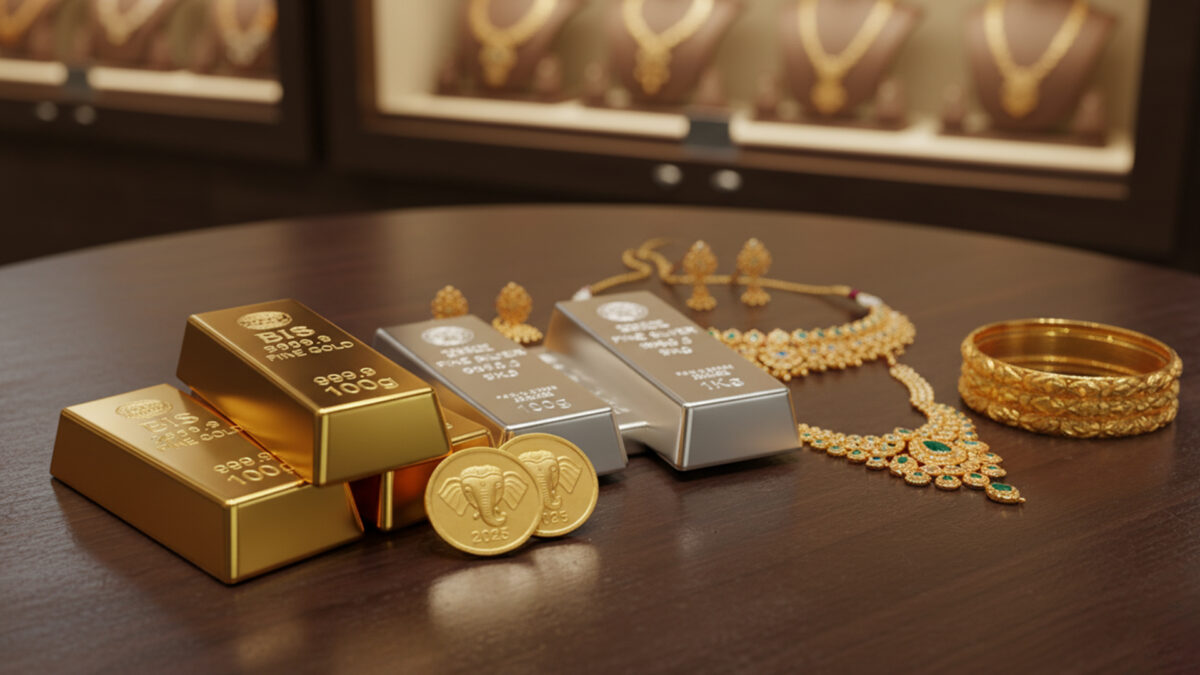
Gold and silver prices declined in India on Thursday, October 29, as investors assessed the outlook for US interest rates, inflation risks and global economic developments. The correction kept precious metals under pressure after recent volatility, with silver continuing to trade below the ₹2 lakh-per-kilogram mark. Gold prices also weakened across different purities, affecting buyers planning jewellery purchases and investors considering bullion as a store of value.
According to market rates reported on Thursday morning, the benchmark price of 24-carat gold stood at around ₹1,44,150 per 10 grams, while silver traded at approximately ₹1,93,800 per kilogram. On the Multi Commodity Exchange (MCX), gold futures were marginally higher at ₹1,43,752 per 10 grams, while silver futures declined around 0.55% to ₹1,93,264 per kilogram. Rates can vary by market, purity, location and time of reporting.
Gold is available in different purities, with 24-carat gold representing nearly pure gold and 22-carat gold commonly used for jewellery. The difference in purity affects the price, making it important for buyers to check the applicable rate before making a purchase.
In Delhi, the indicative retail price of 24-carat gold was around ₹1,43,570 per 10 grams, while 22-carat gold stood at approximately ₹1,31,606. In Mumbai, 24-carat gold was priced at around ₹1,43,820 per 10 grams, compared with ₹1,31,835 for 22-carat gold.
Bengaluru recorded a 24-carat gold price of approximately ₹1,43,940 per 10 grams, while the 22-carat rate stood at ₹1,31,945. In Kolkata, 24-carat gold was around ₹1,43,630 per 10 grams and 22-carat gold was approximately ₹1,31,661.
In Chennai, the indicative 24-carat rate stood at ₹1,44,240 per 10 grams, while 22-carat gold was priced at around ₹1,32,220. These figures represent reported city rates and may differ from the prices quoted by individual jewellers.
Silver prices continued to face pressure, with the metal trading below ₹2 lakh per kilogram. The reported benchmark price was around ₹1,93,800 per kilogram, although local rates differed across cities.
Indicative prices showed silver at approximately ₹1,93,120 per kilogram in Delhi, ₹1,93,450 in Mumbai, ₹1,93,610 in Bengaluru, ₹1,93,200 in Kolkata, ₹1,93,760 in Hyderabad and ₹1,94,020 in Chennai. These variations reflect differences in local pricing and market conditions.
The fall below ₹2 lakh is significant for buyers who had been tracking silver’s price movements after its recent gains. Silver serves both as an investment asset and an industrial metal, with demand influenced by jewellery, silverware, electronics and other applications.
The direction of US monetary policy remains a major influence on precious metals. The Federal Reserve kept interest rates unchanged, while investors continued to assess the implications for inflation, borrowing costs and future policy decisions.
Gold does not generate interest income, so elevated interest rates can make it less attractive compared with assets that offer returns. Higher bond yields and a stronger US dollar can also weigh on international bullion prices, although movements depend on the wider economic outlook.
Crude oil prices and geopolitical tensions remain additional factors. Higher energy costs can fuel inflation and influence expectations about how long central banks will maintain restrictive monetary policies. Meanwhile, changes in currency values affect the domestic cost of imported gold and silver.
Investors are therefore watching international bullion movements, the rupee, crude oil prices and fresh economic data to assess whether the recent correction will continue or prices will stabilise.
For consumers planning jewellery purchases, the quoted gold rate is only one part of the final bill. Making charges, applicable goods and services tax (GST) and other applicable costs can increase the amount payable. Buyers should compare the final price, confirm the purity and check hallmarking details before completing a transaction.
The 24-carat rate is more relevant to pure gold coins and bars, while 22-carat gold is commonly preferred for ornaments because its alloy content provides greater durability. Silver buyers should similarly check purity, weight and applicable charges.
Although lower prices may offer an opportunity for buyers who had postponed purchases, short-term movements remain difficult to predict. Investors should consider their financial goals and risk tolerance rather than relying solely on a single day’s price change.
Gold and silver prices are likely to remain sensitive to interest-rate expectations, inflation, currency movements and geopolitical developments. Buyers should check updated local rates before purchasing, as prices may change during the trading day.