
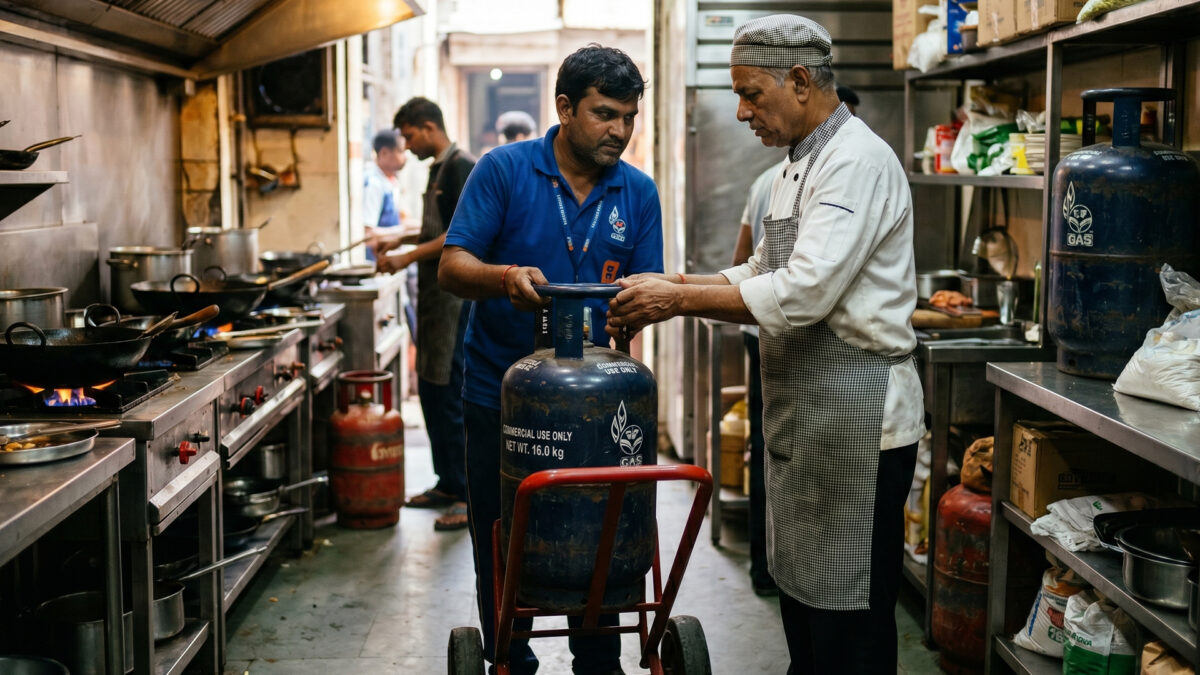
Commercial LPG cylinder prices have been reduced by up to ₹209 from August 1, providing relief to restaurants, hotels, caterers and other businesses that depend heavily on cooking gas. However, there is no change in the price of 14.2-kg domestic LPG cylinders, meaning household consumers will continue to pay the existing rates.
The latest revision applies to 19-kg commercial LPG cylinders. Prices have been reduced by ₹202 in Delhi and ₹209 in Kolkata. Rates have also been revised in other major cities, although the extent of the reduction varies across markets.
The cut is expected to benefit businesses that use commercial LPG regularly. Restaurants, hotels, bakeries, catering companies, roadside eateries and other food establishments are among the biggest users of 19-kg cylinders. For businesses that consume several cylinders every week, a reduction of more than ₹200 per cylinder can translate into noticeable savings over the course of a month.
The lower LPG prices could provide some relief to businesses that have been dealing with higher operating costs. Food ingredients, transportation, electricity, wages and rental expenses have all contributed to pressure on the hospitality and food-service sectors. Lower cooking gas costs could help businesses manage some of that burden.
The August 1 reduction is the second consecutive monthly cut in commercial LPG prices. Oil marketing companies had reduced commercial cylinder prices in July as well. The latest revision further reverses part of the steep increase recorded earlier this year.
Commercial LPG prices had risen sharply between March and June amid volatility in global energy markets. Geopolitical tensions in West Asia created concerns over energy supplies, shipping routes and import costs, putting additional pressure on LPG prices in India.
The increase had particularly affected restaurants and smaller food businesses, where fuel costs can account for a significant share of daily operating expenses. The reductions announced in July and August are therefore being viewed as a welcome development for commercial consumers, although prices remain higher than they were at the beginning of the year.
Household consumers, meanwhile, will not receive any direct benefit from the latest revision. The price of the 14.2-kg domestic LPG cylinder remains unchanged. Families using LPG for everyday cooking will continue to pay the existing price until the next revision affecting domestic cylinders.
The difference in pricing between commercial and domestic LPG means that a reduction in commercial cylinder rates does not automatically translate into cheaper cooking gas for households. The latest move is therefore mainly aimed at easing costs for businesses.
The lower commercial LPG rates could also have an indirect impact on consumers. Restaurants and food outlets may find it easier to absorb some of their operating costs instead of passing the entire increase on to customers. However, cheaper LPG alone is unlikely to result in an immediate reduction in food prices because businesses continue to face expenses related to ingredients, labour, rent, electricity and transportation.
The latest LPG price cut comes against the backdrop of continued uncertainty in international energy markets. Tensions in West Asia, including developments involving Iran, have affected global energy flows and raised concerns about the security of fuel supplies.
India imports a substantial share of its LPG requirements, making domestic prices sensitive to changes in international markets. Disruptions in supply routes or increases in global LPG prices can quickly affect procurement costs for Indian oil marketing companies.
The recent volatility has also highlighted the importance of diversifying India’s LPG import sources. Indian energy companies have been exploring alternative suppliers and routes to reduce dependence on particular regions and make the country’s LPG supply chain more resilient.
For commercial users, the latest reduction provides some breathing room after months of elevated prices. Businesses using multiple 19-kg cylinders could see their monthly fuel expenses fall, depending on their consumption.
For households, however, the situation remains unchanged. Domestic LPG prices have not been reduced, and families will continue to pay the existing rate for their 14.2-kg cylinders.
The latest revision therefore offers targeted relief to commercial LPG consumers rather than a broad reduction in cooking gas prices. Going forward, LPG rates will continue to depend on international energy prices, import costs, currency movements, supply conditions and geopolitical developments.
The reduction is also expected to ease some pressure on the hospitality and food-service sectors, which have faced rising input costs in recent months.
This latest revision gives businesses some cost relief, while household LPG users will have to wait for a separate price reduction.