Categories
Corporate

ONGC to Invest Rs 8,110 Crore in Andhra Pradesh

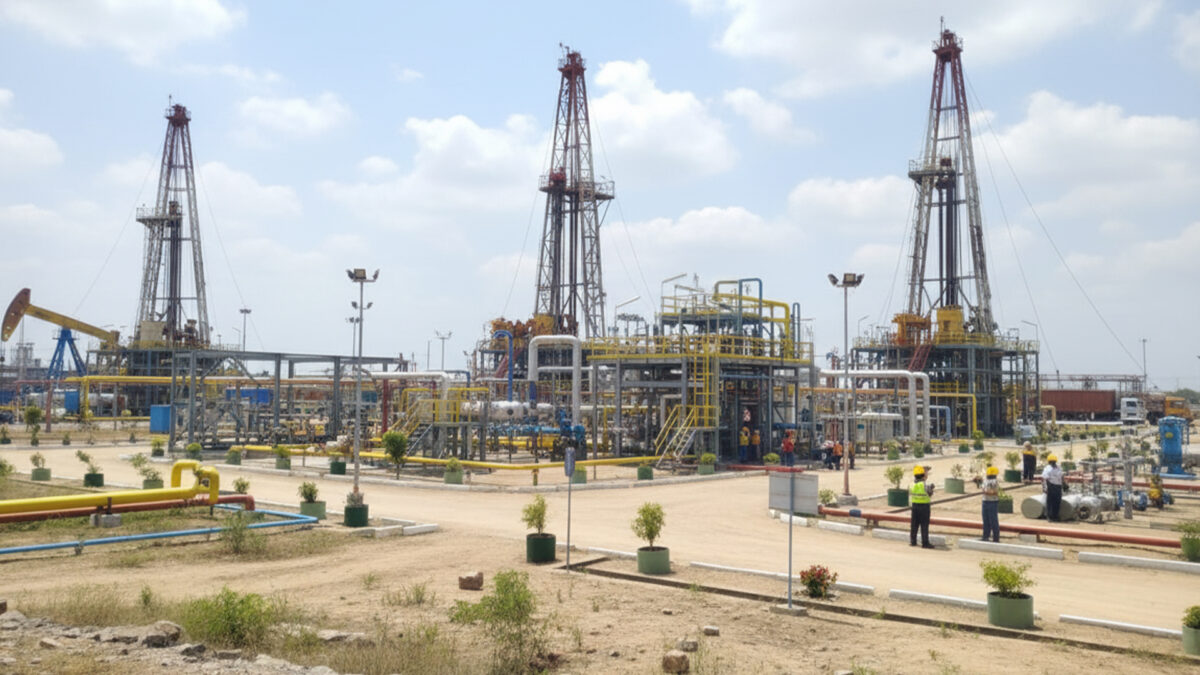
Oil and Natural Gas Corporation Limited (ONGC) is set to invest Rs 8,110 crore for the onshore development and production of oil and gas from 172 wells across eight Production Mining License (PML) blocks in Andhra Pradesh.

The investment is part of the company’s ongoing efforts to expand domestic hydrocarbon production and strengthen India’s energy security.

The PML blocks, spread across key oil- and gas-producing regions of the state, are expected to contribute significantly to ONGC’s output over the coming years.

This development will involve the drilling of new wells as well as the augmentation of existing infrastructure, with the company deploying advanced technologies aimed at enhancing extraction efficiency and optimizing production from mature fields.

Officials said the initiative is expected to generate substantial employment opportunities in Andhra Pradesh, both directly and indirectly. Ancillary industries supporting oil and gas operations, such as logistics, equipment manufacturing, and maintenance services, are likely to benefit from the large-scale development.

The move is also expected to provide a boost to the local economy in the areas surrounding the PML blocks.

ONGC has been steadily increasing its focus on onshore operations in Andhra Pradesh, building on its established presence in the Krishna-Godavari basin and other productive regions.

The company has previously invested in exploration, appraisal, and development projects in the state, with several wells already contributing to domestic oil and gas output. The latest investment marks one of the largest single-year onshore development initiatives by ONGC in the region.

This investment aligns with the central government’s broader strategy to encourage domestic oil and gas exploration, reduce import dependence, and achieve self-reliance in energy.

By intensifying production from onshore fields, ONGC aims to strengthen India’s energy portfolio while ensuring a steady supply of crude oil and natural gas to meet growing domestic demand.

Experts say such large-scale investments are crucial for sustaining long-term growth in the sector, particularly as global oil prices remain volatile and energy security becomes a strategic priority.

With the project set to roll out over the next few years, Andhra Pradesh is likely to emerge as an increasingly important hub for India’s oil and gas industry, supported by modern infrastructure and investment in technology-driven production.

Categories
Corporate

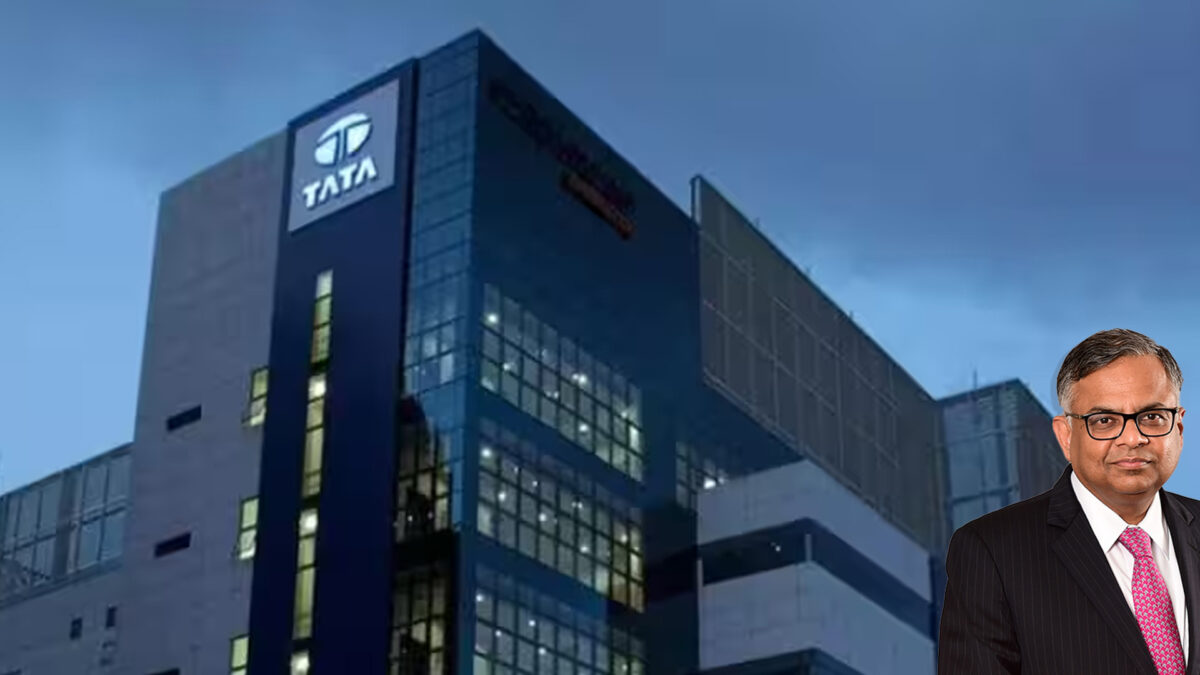
Centre to Intervene Amid Rising Tata Group Discord

The Centre is preparing to step in to address escalating tensions within the Tata Group, with senior government ministers scheduled to meet key executives from the conglomerate, The Economic Times reported on Monday. The intervention comes as internal disagreements at Tata Trusts—the principal shareholder of Tata Sons—threaten to affect the operations of India’s most valuable business house.

The discussions in New Delhi this week are expected to involve Noel Tata, Chairman of Tata Trusts; Venu Srinivasan, Vice-Chairman of Tata Trusts; N Chandrasekaran, Chairman of Tata Sons; and Darius Khambata, Trustee of Tata Trusts. According to ET, the meetings aim to evaluate recent developments that have caused widespread concern among stakeholders.

Central to the discussions are two pressing issues: resolving divisions among Tata Trusts’ trustees to avoid disruption at Tata Sons, and charting the way forward on the public listing of Tata Sons, a regulatory requirement under RBI norms issued three years ago.

The tensions reportedly trace back to a contentious Tata Trusts meeting on September 11, which exposed deep disagreements among trustees roughly a year after the passing of veteran industrialist Ratan Tata. Conflicts appear to revolve around control of Tata Sons, particularly concerning the appointment of nominee directors and the sharing of information on board proceedings.

The situation escalated after Vijay Singh, former Defence Secretary and Tata Sons nominee director, was removed—a decision opposed by Noel Tata and Venu Srinivasan.

Concurrently, a proposal to induct trustee Mehli Mistry to the Tata Sons board, supported by Pramit Jhaveri, Darius Khambata, and Jehangir Jehangir, intensified the rift, ET noted.

Reports suggest that an internal email from a trustee, seen as a veiled warning to remove Srinivasan in a manner similar to Singh, has heightened fears of a potential consolidation of control that could disrupt Tata Sons’ governance.

The upcoming meetings are intended to secure smoother operations within Tata Trusts and mitigate any ripple effects across the Tata Group. Officials said the unrest has gained attention across various group entities, particularly as board restructuring and trustee appointments remain uncertain.

The discussions also come at a crucial juncture for Tata Sons’ regulatory obligations. September 30 marked three years since the RBI designated it as an “upper-layer” NBFC, requiring mandatory public listing. Tata Sons had sought deregistration from the RBI in March 2024, requesting exemption from both listing and associated regulations, but a response is still pending, ET reported.

Meanwhile, the Shapoorji Pallonji Group, holding an 18.37% stake in Tata Sons and grappling with high debt, continues to advocate for listing to unlock liquidity. Government sources told ET that authorities are closely monitoring trustee demands for access to board agendas, prior approvals for key decisions, and challenges to independent director appointments, which have contributed to governance concerns.

The unrest has reportedly been growing over several months, with divisions becoming sharper as terms of key trustees near renewal, amid disputes over conflicts of interest and financial transparency, according to The Economic Times.

Also Read: Supreme Court Defers Vodafone Idea’s AGR Plea; Stock Falls Around 4%

Categories
Corporate

IT Sector Poised for Tepid Q2; Macro Woes, U.S. Visa Policy Shake Confidence

As the July-September quarter looms, India’s IT services firms are bracing for another muted financial performance, with growth expectations pinned down by weak demand, client budget constraints, and renewed uncertainty following changes to U.S. H-1B visa rules.

Once a strong period for the industry, Q2 is now expected to deliver only modest gains, if any, amid a cautious global environment.

Across the board, analysts foresee single-digit growth or flat sequential expansion in constant currency terms for large-cap Indian IT players.

The continuing pressure is attributed to macroeconomic headwinds coming out of developed economies, especially the United States.

Client organisations are holding back on discretionary spending and large-scale transformation projects, opting instead to prioritise cost optimization and bandwidth reduction. Many firms that had leveraged upticks earlier in the year say the momentum has dissipated. The sector’s reliance on the U.S. market only compounds the challenge. 

The newly imposed $100,000 one-time fee for H-1B visa applications has triggered renewed concerns. Indian IT companies, major deployers of H-1B professionals in the U.S., view the change as a potential disruptor to existing staffing and project continuity.

Industry bodies have warned that the policy could introduce significant operating cost pressures, especially for nearshore models that depend on moving talent across geographies. Though the U.S. has clarified that the fee applies only to new applications and not renewals or existing holdings, the shift raises questions about recruitment plans, visa dependency, and localization strategies. 

One of the sector’s largest names, TCS, is scheduled to kick off the earnings season under this cloud of uncertainty. The company is expected to report a slowdown in revenue growth in constant currency terms, as client hesitation and visa-related cost burdens weigh on margins and operating models. Firms are particularly under scrutiny for their staffing plans, offshore vs onshore balance, and ability to localize talent in the face of visa constraints. 

Margins may see some resilience through exchange rate tailwinds as the rupee depreciates, but that cushion is expected to be offset by wage inflation, pricing pressures, and rising cost of talent deployment. Most firms are believed to be operating at relatively high utilization levels, limiting further room for productivity gains through existing capacity.

Analysts expect that the near-term focus will remain on deal wins in infrastructure modernisation, cloud migration, and AI adoption, but conversion and execution timelines may stretch as clients remain cautious. 

Mid-tier and niche IT firms might outperform their larger peers slightly, as they are often more agile and able to pivot toward smaller, more modular engagements. Some of them have already been gaining traction in automation, AI, and digital engineering mandates. 

Looking ahead, meaningful recovery for the sector is seen by many as a possibility only in the next technology cycle, potentially 12 to 18 months out. For now, expectations are that the industry will tread carefully, lean on cost controls, and await clearer visibility in client pipelines and macro stability. The H-1B policy change, while disruptive, is also pushing companies to rework their global staffing models — an adjustment that could reshape future operating norms, even if it deepens the jitteriness of the current quarter. The coming weeks will be critical to see how firms manage to navigate these layered headwinds and whether they can deliver performance with limited tailwinds.


Categories
Corporate

Vedanta Posts Record Q2 Production; Aluminium, Alumina and Zinc Hit New Highs

Vedanta Ltd reported a string of operational highs in its second quarter for FY 2026, with key divisions such as aluminum, alumina, zinc and pig iron registering record outputs, even as other segments grappled with headwinds. The company’s performance underscores its push to scale capacity and improve productivity across its diversified metals and mining portfolio.

In the quarter ended September 30, 2025, Vedanta posted its highest ever aluminium output of 617 kt, while alumina production at its Lanjigarh refinery climbed to 653 kt — a sharp 31 percent year-on-year growth. These figures mark record quarterly and half-yearly highs for both aluminium and alumina, and reflect strong operational momentum in the upstream chain.

Alongside these gains, Vedanta’s zinc business also delivered standout results. Zinc India recorded its best ever mined metal production of 258 kt — up about 1 percent year-on-year — representing its most productive second quarter and first half. Zinc International fared even better, scaling mined metal output by nearly 38 percent to 60 kt, aided by higher milled tonnages and stronger lead grades.

In the iron and steel segment, the company achieved its highest quarterly pig iron production of 238 kt, an increase of 26 percent year-on-year, driven by successful debottlenecking efforts in its blast furnace operations. Billet production too rose steeply, climbing 43 percent to 232 kt.

However, not every division sustained the growth trajectory. Vedanta’s iron ore production fell by 19 percent to 1.1 million tonnes, a decline attributed to heavier rainfall and subdued demand in the construction sector. Oil and gas posted a 15 percent year-on-year dip, with average daily gross operated production falling to 89.3 kboepd, partly on account of softer output from the Rajasthan block. Steel finished product output also slipped about 8 percent, though its billet segment showed strength.

On the energy front, Vedanta reported its power sales fell 2 percent year-on-year to 4,331 million units, while in the metals basket, copper production saw a modest 3 percent decline, affected by raw material sourcing issues. Lead and silver production also lagged due to disruptions in pyro-plant availability and weaker feed grades.

Vedanta’s Q2 results highlight a deliberate strategy to lean into its most scalable, higher-margin segments even as its more volatile verticals face pressures. While the aluminium and zinc divisions are benefiting from robust global prices and improved efficiencies, sustaining output gains across iron ore, oil & gas and downstream metals will be the true test. The company also continues to pursue capacity expansions — notably in aluminum — backed by plans to invest heavily to scale to 3.1 million tonne capacity by FY28.

Market reaction to the production release was broadly positive. The strength in core metals helped buoy investor sentiment despite challenges in complementary areas. For Vedanta, the current performance underscores both the promise and the volatility of a multi-asset natural resources conglomerate: the ability to post fresh records in key verticals even as ancillary operations reset amid cyclical and structural shifts.

As the company heads into the second half of FY26, the emphasis will likely be on translating capacity gains into improved margins, and steering the weaker segments toward recovery, all while managing external risks such as input cost volatility, weather disruptions and demand fluctuations in global commodity markets.

Also Read: Moody’s Downgrades Tata Motors’ Outlook Amid JLR Cyberattack Fallout


Categories
Corporate

Moody’s Downgrades Tata Motors’ Outlook Amid JLR Cyberattack Fallout

Moody’s Investors Service has revised Tata Motors’ outlook to negative from positive, citing the severe impact of a cyberattack on its British subsidiary, Jaguar Land Rover (JLR).

While affirming the company’s Ba1 corporate family rating, Moody’s anticipates that recovery in Tata Motors’ credit metrics will take several months. The cyber incident, which led to a complete halt in JLR’s production operations, has raised concerns about the company’s financial stability and operational continuity.

The cyberattack, which occurred on August 31, 2025, disrupted manufacturing at JLR’s facilities in the UK, Slovakia, India, and Brazil. The shutdown affected approximately 33,000 employees and halted the production of around 1,000 vehicles daily. The incident has resulted in significant financial losses, with experts estimating up to £1.7 billion in lost revenues and a potential £2.6 billion cash burn over a 30-day period. Despite efforts to resume operations, full production may take weeks or even months to return to normal.

Moody’s projects that JLR’s production halt will reduce Tata Motors’ consolidated earnings before interest, tax, depreciation, and amortisation (EBITDA) to approximately $850 million for the fiscal year ending March 31, 2026, down from earlier forecasts of around $3 billion. Additionally, higher working capital requirements are expected to result in negative cash flow from operations during this period. The company continues to incur weekly cash outflows of around £500 million, driven by ongoing obligations such as supplier payments and employee wages.

In response to the crisis, the UK government has pledged a £1.5 billion loan guarantee to support JLR’s supply chain during the disruption. However, this intervention has sparked debates about “moral hazard,” with critics arguing that such support could reduce companies’ incentives to invest in cybersecurity or purchase cyber insurance.

The cyberattack has also drawn scrutiny towards Tata Consultancy Services (TCS), JLR’s IT service provider, which had a £800 million contract to bolster cybersecurity. Despite prior warnings about security vulnerabilities, protection investments were deprioritized, leading to questions about the adequacy of JLR’s cybersecurity measures.

Moody’s has indicated that an upgrade in Tata Motors’ rating is unlikely in the next 12 to 18 months. However, the outlook could be revised to stable if JLR’s situation improves and operations return to normal. Investors and stakeholders are advised to monitor developments closely, as the company’s recovery from this incident will significantly influence its financial performance in the coming months.

Also Read: US Senators Press TCS Over H-1B Hiring Amid Layoff Allegations

Categories
Corporate

RBI Proposes Easier Rules for External Commercial Borrowings

The Reserve Bank of India (RBI) has released draft regulations aimed at liberalizing the framework for External Commercial Borrowings (ECBs), marking a significant shift in the country’s approach to foreign capital inflows. The proposed changes are designed to enhance funding access for Indian companies, particularly in capital-intensive sectors, by aligning borrowing limits with financial strength and removing fixed interest rate caps.

Under the new proposal, companies would be permitted to raise ECBs up to the higher of $1 billion or 300% of their net worth, based on the latest audited balance sheet. This replaces the previous uniform cap of $750 million per financial year under the automatic route, which required specific approval for larger sums. Financial sector firms regulated by the RBI, Securities and Exchange Board of India (SEBI), Insurance Regulatory and Development Authority of India (IRDAI), or Pension Fund Regulatory and Development Authority (PFRDA) would not be subject to any borrowing limits under the proposed framework.

The draft regulations also suggest eliminating the all-in-cost ceiling, allowing ECBs to be raised at market-determined interest rates. However, for borrowings with a maturity of less than three years, costs would be capped in line with those applicable for trade credit. The Minimum Average Maturity Period (MAMP) requirement is proposed to be standardized at three years, with certain exceptions for specific sectors.

All India-incorporated entities, including those under financial restructuring or investigation, would be allowed to raise ECBs, subject to certain conditions. Companies undergoing restructuring would need approval under a resolution plan, while those under investigation must provide sufficient disclosures.

The RBI also aims to simplify end-use restrictions and reporting requirements to ease compliance burdens. ECB proceeds would be allowed for funding acquisitions, on-lending by regulated lenders, and investments in primary market instruments issued by non-financial entities, among other uses.

The central bank has invited public feedback on the draft regulations until October 24, 2025, before finalizing the framework. If implemented, these changes are expected to facilitate easier access to foreign capital for Indian companies, potentially reducing their reliance on domestic borrowing and enhancing their ability to finance growth and expansion initiatives.

Also Read: US Senators Press TCS Over H-1B Hiring Amid Layoff Allegations


Categories
Corporate

US Senators Press TCS Over H-1B Hiring Amid Layoff Allegations

A bipartisan pair of U.S. senators has issued a pointed demand for answers from Tata Consultancy Services (TCS), raising sharp questions about the Indian IT giant’s use of H-1B visa holders while laying off American employees.

In a letter dated September 24, Senate Judiciary Committee Chairman Chuck Grassley and ranking member Dick Durbin asked TCS CEO Krithi Krithivasan to provide details by October 10, 2025, about the company’s hiring and layoff practices, wage parity, and whether any displacement of U.S. workers has occurred.

The senators noted that TCS has reportedly initiated plans to cut over 12,000 jobs globally, with some of those layoffs affecting U.S. staff. In that context, they highlighted that in fiscal 2025 TCS obtained approval to recruit 5,505 new H-1B employees, making it the second-largest corporate recipient of such approvals in the United States. They challenged the company to explain how it justifies continued H-1B petitions even as it trims its American workforce.

The letter raised nine specific queries. Among them: whether TCS has directly replaced American employees with H-1B workers; whether job postings for H-1B roles are segregated from general recruitment ads; and whether foreign hires receive the same compensation, benefits and terms as U.S. staff with comparable credentials.

The senators also asked whether TCS uses subcontractors or staffing firms to place H-1B workers and, more broadly, whether it has demonstrated genuine recruitment efforts in the U.S. labor pool before resorting to visa-based hiring.

The inquiry additionally pointed out that TCS is under an ongoing Equal Employment Opportunity Commission (EEOC) probe over allegations that the company may have dismissed older American employees in favor of younger H-1B visa hires, raising concerns of age discrimination.

The senators suggested that the timing of layoffs coupled with visa filings during the investigation heightened the need for transparency.

Reports noted that TCS is the sole Indian company among a broader group of ten tech and corporate entities that received similar letters from Grassley and Durbin. Those other firms, including Amazon, Apple, Google, Microsoft and Cognizant, were asked to address parallel concerns about mass layoffs and H-1B hiring, according to a report by The Financial Express.

Observers say the senators’ inquiry reflects mounting political pressure on the H-1B system, particularly under an administration that has recently floated a $100,000 fee for new H-1B petitions and vowed tighter oversight of foreign worker programs.

Critics argue that while the H-1B visa is meant to fill genuine skill gaps, its misuse may displace U.S. talent—or at least cast doubt on established hiring practices. As TCS prepares to respond, the outcome could prove consequential not only for its reputation but also for broader debates over immigration, workforce fairness, and corporate accountability.

Also Read: Eyewear Retail Major Lenskart Secures SEBI Approval For IPO

Categories
Corporate

Tata Capital IPO Gathers Momentum with ₹4,600 Crore Anchor Investment


Tata Capital’s upcoming IPO is making waves, not just for its size, but for the confidence it has inspired among some of the world’s top investors. Ahead of the ₹15,500-crore public issue, Tata Capital lined up an impressive ₹4,642 crore from 135 anchor investors. LIC took the lead as the largest anchor, joined by global financial giants like Morgan Stanley, Goldman Sachs, and Nomura, underscoring the company’s broad appeal across continents.

Eighteen of India’s top mutual funds and several major insurance companies also jumped in, picking up over 5 crore shares between them, a testament to Tata Capital’s standing at home. This surge of institutional investor interest sent a strong signal to the market, just days before the IPO opens for subscription.

For Tata Capital, which started in 2007 and has since blossomed into India’s third-largest NBFC with a ₹2.33 lakh crore loan book, this IPO is a springboard for its next phase of growth. Most of the proceeds will be used to boost the company’s financial cushion, helping it lend more even as it keeps risks in check. Meanwhile, Tata Sons and IFC will partly cash out their stakes.

The response to the anchor book, subscribed to five times over, reflects a vote of confidence in Tata Capital’s focus on retail and SME lending, its robust asset quality, and the backing of the larger Tata brand. Riding a wave of momentum from the anchor round, the IPO will be open from October 6 to 8, with trading set to begin on October 13. The offering has already attracted a premium in the grey market, hinting at the anticipation surrounding one of the year’s most closely watched listings.

Categories
Corporate

Eyewear Retail Major Lenskart Secures SEBI Approval For IPO

India’s leading eyewear retailer, Lenskart, has secured regulatory approval from the Securities and Exchange Board of India (SEBI) to proceed with its initial public offering (IPO).

The approval relates to its draft red herring prospectus, which includes a fresh equity issue of ₹2,150 crore alongside an offer for sale (OFS) by promoters and early investors. According to sources, the OFS is expected to involve the sale of up to 132.3 million shares.

In terms of structuring, co-founder Peyush Bansal intends to offload around 20 million shares, while other founders such as Neha Bansal, Amit Chaudhary, and Sumeet Kapahi will each sell smaller stakes.

Institutional backers including SoftBank, Temasek, Kedaara Capital, Alpha Wave Ventures, Premji Invest, and others have also been named among prospective sellers in the OFS component.

Lenskart’s total IPO size is projected to be in the range of ₹7,500 crore to ₹8,000 crore, taking into account both the fresh issue and the OFS. After gaining SEBI’s nod, the company is expected to file an updated prospectus in the coming weeks and eye a mid-November listing.

The business has shown a strong financial rebound. In FY25, Lenskart turned profitable, posting a net profit of about ₹297.3 crore, compared to a net loss of around ₹10.2 crore in FY24. Its revenues increased by nearly 22–23 percent year-on-year to about ₹6,652.5 crore. The company has attributed margin improvements to operational efficiencies and scaling advantages.

Proceeds from the fresh issue are earmarked across multiple strategic investments. Around ₹272.6 crore will go into setting up new company-owned stores, ₹591.4 crore toward rent, lease, and license expenses for existing outlets, ₹213.4 crore for technology and cloud infrastructure, and ₹320 crore for brand marketing. The remainder will support acquisitions and general corporate needs.

Ahead of going public, founder Peyush Bansal acquired an additional 2.5 percent stake from existing investors for ₹222 crore, valuing the company at over ₹8,700 crore.

With SEBI’s clearance secured and the public debut timeline set, Lenskart joins a growing wave of Indian startup-era companies transitioning to public markets this year.

Also Read: Battle of AI Behemoths: xAI Sues OpenAI Over ‘Employee Poaching’


Categories
Corporate

Battle of AI Behemoths: xAI Sues OpenAI Over ‘Employee Poaching’

Elon Musk’s artificial intelligence startup xAI has filed a lawsuit against OpenAI, accusing it of orchestrating a systematic campaign to poach employees and steal proprietary technology related to xAI’s chatbot, Grok.

The lawsuit, filed in federal court in California, alleges that OpenAI targeted former xAI employees to gain access to confidential information, including source code and data center strategies.

“This case is clearly designed to generate publicity to bully and threaten those employees who exercised their right to leave and work elsewhere in the AI industry and to try to chill further flight from xAI,” the filing said, reported Bloomberg.

xAI claims that OpenAI used a recruiter, Tifa Chen, to contact former employees and entice them to join OpenAI under the pretext of offering lucrative positions. The lawsuit points to specific incidents involving former xAI engineers Xuechen Li and Jimmy Fraiture, who allegedly transferred confidential files to personal devices before leaving xAI.

The complaint also includes an email exchange suggesting a former employee violated confidentiality agreements, with a blunt response from the employee.

In response, OpenAI has filed a motion to dismiss the lawsuit, calling the claims baseless and part of Musk’s “ongoing harassment” of the company. OpenAI contends that employees have the right to change employers and that it can legally hire talent from competitors. The company further argues that xAI’s claims are a distraction from its own internal struggles, including a loss of personnel, reported news agency Reuters.

This legal dispute is part of a broader feud between Musk and OpenAI, which he co-founded. The rivalry has intensified as competition in the AI sector grows, with both companies vying for dominance in the rapidly evolving field.

The outcome of this lawsuit could have significant implications for the AI industry, particularly concerning the protection of trade secrets and the rights of employees to move between companies.

As of now, the case is ongoing, and a federal judge is expected to review OpenAI’s motion to dismiss in the coming weeks. The legal proceedings will likely continue to unfold, shedding light on the complex dynamics of competition and intellectual property in the artificial intelligence sector.

Also Read: Adani Green Energy Reaches 16,598.6 MW Operational Capacity