Categories
Corporate

Why Is WeWork India’s ₹3,000 Crore IPO Facing Scrutiny?

WeWork India Management Limited’s initial public offering (IPO), aiming to raise ₹3,000 crore, has garnered attention due to several concerns raised by governance advisory firms and market analysts.

The offering, which opened on October 3, 2025, and is set to close on October 7, is structured entirely as an Offer for Sale (OFS), meaning no new capital will be infused into the company. Instead, existing shareholders, primarily Embassy Buildcon LLP and 1 Ariel Way Tenant, a subsidiary of WeWork Global, are selling their stakes.

One of the primary concerns highlighted by InGovern Research Services is WeWork India’s financial health. Despite reporting a revenue of ₹2,024 crore and a net profit after tax of ₹128.19 crore for the fiscal year 2025, the company’s financials show signs of strain.

The company continues to report negative cash flows, with lease costs consuming over 43% of its revenues.

Additionally, the net profit was largely driven by a deferred tax credit, raising questions about the sustainability of its profitability

Another significant issue is the governance structure and promoter-related concerns. Over 53% of WeWork India’s pre-IPO shares held by Embassy Buildcon were previously pledged against approximately ₹2,065 crore of borrowings.

These pledges were temporarily released to facilitate the IPO, with an agreement that if the listing does not occur, the shares would need to be re-pledged within 45 days. This arrangement has raised concerns among potential investors about the stability and governance of the company.

The IPO’s subscription has been tepid, with the issue subscribed only 7% by the second day of bidding, up from 4% on the first day. The employee segment was the only category to show stronger interest, being oversubscribed at 1.2 times.

The muted response from institutional and retail investors may reflect the concerns raised by InGovern and other market participants.

WeWork India, a franchisee of the U.S.-based WeWork, operates 59 centers across major Indian cities, maintaining occupancy rates above 80%.

The company has reported steady revenue growth and profitability in recent years. However, the absence of new capital infusion through this IPO and the highlighted governance issues may impact investor confidence.

Also Read: AMD Shares Surge Following Major AI Chip Supply Deal with OpenAI

Categories
Corporate

AMD Shares Surge Following Major AI Chip Supply Deal with OpenAI

Advanced Micro Devices Inc. (AMD) experienced a significant surge in its stock price following the announcement of a multi-year agreement with OpenAI to supply artificial intelligence (AI) chips.

The deal, disclosed on October 6, 2025, led to a 34% increase in AMD’s share price, marking one of the company’s most substantial single-day gains in recent years. This partnership positions AMD as a key player in the rapidly expanding AI infrastructure sector.

Under the terms of the agreement, OpenAI will purchase AMD’s upcoming Instinct MI450 chips, with the initial deployment of one gigawatt of computing power scheduled for the second half of 2026.

The total commitment amounts to six gigawatts of computing capacity, equivalent to the energy consumption of approximately five million U.S. homes.

To facilitate this, OpenAI plans to construct a dedicated one-gigawatt facility utilizing AMD’s chips. The deal also includes a provision granting OpenAI the option to acquire up to 10% of AMD’s shares through warrants, contingent upon meeting specific performance milestones and stock price targets.

This partnership underscores OpenAI’s strategy to diversify its hardware suppliers beyond its existing relationships with Nvidia and Broadcom.

While Nvidia remains a dominant supplier of AI chips, the collaboration with AMD reflects the growing demand for computational power in AI development and the need for a more diversified supply chain.

Analysts view this move as indicative of the increasing competition in the AI hardware market.

From AMD’s perspective, the agreement represents a significant opportunity to expand its footprint in the AI sector. The company anticipates that this partnership could generate over $100 billion in new revenue over the next four years, driven by OpenAI and similar clients.

The deal also serves as a validation of AMD’s technological capabilities in high-performance computing.

The announcement has had a notable impact on the stock market. AMD’s share price closed at $203.71, up from $164.67 the previous day, adding approximately $80 billion to the company’s market capitalization.

In contrast, shares of Nvidia, which had previously announced a $100 billion deal with OpenAI, experienced a slight decline following the news. This shift highlights the dynamic nature of the AI hardware market and the competitive landscape among chipmakers.

OpenAI’s decision to enter into this agreement with AMD is part of its broader strategy to build a robust AI infrastructure capable of supporting advanced models and applications.

CEO Sam Altman emphasized the importance of this partnership in meeting the escalating demand for AI computing power. He noted that the collaboration with AMD complements OpenAI’s existing relationships with other hardware providers, ensuring a diversified and resilient infrastructure.

As the AI industry continues to evolve, partnerships like the one between AMD and OpenAI are likely to play a crucial role in shaping the future of AI development.

The increasing reliance on advanced computing resources underscores the importance of strategic collaborations in meeting the growing demands of AI technologies.

The AMD-OpenAI partnership marks a significant development in the AI hardware sector.

It not only enhances AMD’s position in the market but also reflects the broader trends of diversification and competition in AI infrastructure.

As both companies move forward with their plans, the success of this collaboration could have far-reaching implications for the future of AI development and deployment.

Also Read: Canara Robeco AMC IPO Targets ₹5,305 Crore Valuation

Categories
Corporate

IndusInd Bank Promoter Acquires Sterling Bank in the Bahamas

IndusInd International Holdings Ltd (IIHL), the promoter of IndusInd Bank, has finalized the acquisition of a 100% stake in Sterling Bank, a financial institution based in the Bahamas.

This move follows IIHL’s initial purchase of a 51% equity interest in Sterling Bank in September 2022 through its wholly owned subsidiary, IIHL (Capital), Mauritius. The remaining 49% was acquired in a subsequent transaction, culminating in full ownership.

In conjunction with the acquisition, Sterling Bank has been renamed IIHL Bank & Trust Limited. This rebranding aligns with IIHL’s strategic objective to establish a global financial presence, particularly in the Caribbean region.

The acquisition is expected to enhance IIHL’s footprint in international banking markets and diversify its portfolio within the Banking, Financial Services, Securities, and Insurance (BFSI) sectors.

As of August 31, 2025, IIHL reported a net worth of $1.26 billion. The entity serves over 42 million customers through a network exceeding 6,100 touchpoints, with a business size surpassing $86 billion.

The acquisition of Sterling Bank is part of IIHL’s broader strategy to expand its global operations and achieve a market capitalization target of $50 billion by 2030.

The transaction is anticipated to close by the end of October 2025, pending regulatory approvals.

This acquisition underscores IIHL’s commitment to leveraging international best practices and digital financial technologies to strengthen its position in the global financial services industry.

IndusInd Bank, headquartered in Mumbai, is India’s fifth-largest private sector lender, offering a range of banking services to a diverse customer base.

The completion of this acquisition marks a significant step in IIHL’s vision to build a global financial powerhouse, combining decades of experience with global best practices to deliver long-term value to shareholders and customers.

Also Read: Tata Capital IPO Sees Muted Start; Day 2 Could Hold Key Signals

Categories
Corporate

Tata Capital IPO Sees Muted Start; Day 2 Could Hold Key Signals

The initial public offering of Tata Capital Ltd opened on October 6 amid tempered investor response, and on the second day of bidding, subscription has reached roughly 46 percent so far.

The issue attracted bids for 15,27,94,428 shares against 33,34,36,996 shares on offer, according to data from the National Stock Exchange.

The Qualified Institutional Buyers (QIB) segment is 52 percent subscribed, the Retail Individual Investors (RII) category stands at 45 percent, non-institutional investors have covered 38 percent, and the employee quota is fully booked at 137 percent.

On Day 1, the IPO’s uptake was relatively muted. By market close, the overall subscription had reached around 39 percent, with QIBs showing strong interest (52 percent subscription), while retail and non-institutional categories lagged.

The employee portion had seen 1.10× oversubscription. Bids for 12,86,33,112 shares were received against the same issue base. The differential in subscription across categories suggested institutional faith, but cautious traction among retail investors.

A key indicator, the grey market premium (GMP), has remained subdued. As of October 7 morning, the GMP stood at around Rs 12.50, implying an expected listing price of about Rs 338.50, just 3.8 percent above the upper end of the issue price band of Rs 326.

The modest GMP reflects investor restraint on short-term gains, possibly because much of Tata Capital’s positive fundamentals and parentage are already priced in.

Analysts have pointed to a few contributing factors for the cautious start. The valuation at 4.2–4.3× post-issue book value may limit upside potential, leaving limited room for pop gains even if the business case is solid.

Some market participants noted that broader sentiment toward growth companies is wary, and that high valuation multiples may cap speculative interest.

As Day 2 unfolds, subscription trends in the retail and non-institutional segments will be closely watched. A stronger retail uptake could signal renewed confidence, while continued hesitancy might indicate that many participants are holding back pending clarity on listing prospects.

The movement of GMP will also be a key barometer: a pickup could reflect improving sentiment toward listing gains, whereas a flat or declining premium would underscore lingering caution.

Investors will also monitor sector and macro cues, including rate outlooks, liquidity conditions, and sentiment toward financials and NBFCs.

The smoking gun may well lie in how the IPO performs across investor segments today and whether that performance shifts GMP expectations ahead of the allotment and listing.

Also Read: Adani Energy Raises $250 Million Loan From International Lenders

Categories
Corporate

Adani Energy Raises $250 Million Loan From International Lenders

Adani Green Energy Ltd has signed an agreement to raise about $250 million from a group of international lenders, marking the renewable energy firm’s first foreign-currency loan since the United States Department of Justice unsealed an investigation that touched the wider Adani conglomerate.

The loan, arranged with four banks — DBS Bank Ltd, DZ Bank AG, Rabobank and Bank SinoPac Co— is intended to refinance existing debt and support working capital needs, according to market reports.

The facility is structured for roughly five years and carries an indicative interest rate near 8.2 percent, though final pricing and documentation remain subject to customary conditions precedent.

The lenders and Adani Green did not provide immediate public comment. Market observers said the deal is notable because several international banks had previously weighed pausing fresh credit to Adani businesses after the U.S. legal developments, and the agreement signals that some lenders remain prepared to provide offshore financing on commercially acceptable terms.

The loan follows a series of legal and reputational challenges for the broader Adani Group that began with allegations and a U.S. criminal indictment unsealed in November 2024 alleging bribery and related misconduct in connection with solar contracts.

U.S. prosecutors widened their review in 2024 to examine whether senior executives were involved in improper payments related to energy projects; the company has denied wrongdoing and said it would cooperate with legal processes.

The U.S. move drew criticism in some quarters for its potential diplomatic and economic consequences. Commentators in the American press argued the Department of Justice action risked undermining economic collaboration and trust at a sensitive geopolitical juncture.

Those views were reflected in opinion pieces and commentary, and at least one U.S. congressman publicly questioned the Justice Department’s approach, warning of possible harm to bilateral ties.

Analysts said the successful placement of the loan may indicate a selective reopening of offshore funding channels for parts of the Adani group where lenders can quantify and price legal and reputational risks.

When the U.S. charges were first announced, Adani Group companies experienced sharp share price falls and higher scrutiny from investors and counterparties, prompting several partners to reassess or pause arrangements pending clarity on the legal process.

The new facility therefore both responds to existing refinancing needs and tests market appetite for further international funding for the group.

Whether this transaction leads to a sustained return to offshore borrowing for Adani subsidiaries will depend on final documentation, evolving legal proceedings in the United States and the degree of commercial comfort among international banks.

Market participants said lenders would continue to monitor legal, regulatory and reputational developments closely before extending additional credit to borrowers associated with ongoing investigations.

Also Read: Canara Robeco AMC IPO Targets ₹5,305 Crore Valuation


Categories
Corporate

Canara Robeco AMC IPO Targets ₹5,305 Crore Valuation

Canara Robeco Asset Management Company Limited (CRAMC), a joint venture between India’s Canara Bank and Japan’s ORIX Corporation Europe, has announced the price band for its upcoming initial public offering (IPO) at ₹253 to ₹266 per share.

The IPO, scheduled to open on October 9, 2025, aims to raise approximately ₹1,326 crore through an offer-for-sale (OFS) of 4.98 crore equity shares, with no fresh issue component. At the upper end of the price band, the offering values the company at around ₹5,305 crore.

The offer will see Canara Bank and ORIX Corporation Europe divest portions of their stakes. Canara Bank plans to sell 25.92 million shares, reducing its holding by 13%, while ORIX will offload 23.93 million shares.

The IPO is structured with a 50% allocation for qualified institutional buyers (QIBs), 35% for retail investors, and 15% for non-institutional investors (NIIs). The minimum bid lot is set at 56 equity shares, translating to an investment of approximately ₹14,896.

CRAMC has demonstrated robust financial performance, with revenue from operations increasing from ₹164.22 crore in FY22 to ₹318.09 crore in FY24.

Profit after tax (PAT) also saw significant growth, rising from ₹60.16 crore in FY22 to ₹151 crore in FY24. The company’s assets under management (AUM) have grown substantially, reaching over ₹1 trillion, positioning it among India’s leading asset management firms.

The IPO is expected to list on both the Bombay Stock Exchange (BSE) and the National Stock Exchange (NSE) on October 16, 2025. This move comes amid a busy period for India’s primary market, with several significant IPOs anticipated in the October-December quarter.

Investors interested in participating can apply through the Application Supported by Blocked Amount (ASBA) process via banks or stockbrokers.

The allotment of shares is expected to be finalized on October 14, with refunds initiated on October 15 and shares credited to demat accounts on the same day.

As the IPO approaches, market participants are closely watching Canara Robeco’s performance and the broader market conditions to assess the offering’s potential.

Also Read: Vodafone Idea Appoints Tejas Mehta as New CFO

Categories
Corporate

Supreme Court Defers Vodafone Idea’s AGR Plea; Stock Falls Around 4%

The Supreme Court of India has once again postponed the hearing of Vodafone Idea’s plea seeking a waiver of interest, penalties, and interest on penalties related to its adjusted gross revenue (AGR) dues.

Originally scheduled for October 6, the hearing has now been deferred to October 13, 2025.

The delay follows a request from the government for additional time to prepare, which was not opposed by Vodafone Idea’s legal counsel. The court emphasized the need for a comprehensive examination of the matter, indicating no immediate relief for the telecom operator.

Vodafone Idea has challenged the Department of Telecommunications’ (DoT) fresh demand of ₹5,606 crore for the financial year 2016–17, arguing that these claims fall outside the scope of the Supreme Court’s earlier judgment on AGR liabilities.

The company contends that the dues were already addressed in previous proceedings, and the new demands are unjustified. The government’s request for more time suggests ongoing discussions, possibly aiming for a negotiated settlement.

The deferral of the hearing has had an immediate impact on Vodafone Idea’s stock performance. As of 1:25 PM IST on October 6, 2025, the company’s shares were trading at ₹8.35 on the Bombay Stock Exchange (BSE), marking a decline of over 5% from the previous close.

Earlier in the session, the stock touched an intraday low of ₹8.33, reflecting investor apprehension regarding the prolonged uncertainty surrounding the AGR dues.

This development adds to the financial strain on Vodafone Idea, which is already grappling with substantial debt and operational challenges.

The company’s total liabilities, including AGR dues and penalties, are estimated to exceed ₹2 lakh crore. The government’s 49% stake in the company, acquired through the conversion of dues into equity, underscores its significant interest in resolving the issue.

However, recent statements from government officials indicate that no further financial support will be extended to Vodafone Idea beyond the existing equity conversion.

The outcome of the Supreme Court’s hearing on October 13 will be crucial for Vodafone Idea’s financial stability and future operations.

A favorable ruling could alleviate some of the company’s financial burdens, while an unfavorable decision may exacerbate its challenges, potentially affecting its ability to compete in the highly competitive Indian telecom market.

Investors and industry stakeholders will be closely monitoring the proceedings, as the implications extend beyond Vodafone Idea to the broader telecom sector and its regulatory landscape.

Also Read: Canara Robeco AMC IPO Targets ₹5,305 Crore Valuation

Categories
Corporate

JSW One Platforms Secures Rs 575 Crore Funding from SBI

JSW One Platforms has raised Rs 575 crore in funding from the State Bank of India (SBI), reinforcing its commitment to support micro, small, and medium enterprises (MSMEs) through technology-driven financial solutions.

The partnership marks a significant step for the company’s non-banking financial company (NBFC) operations, aimed at bridging working capital gaps for small businesses across India.

Parth Jindal, Chairman of JSW One Platforms, said the collaboration with SBI represents a long-term alliance that will strengthen the company’s ability to deliver timely credit to MSMEs.

The funding infusion is expected to significantly enhance JSW One Platforms’ lending capacity, enabling it to extend working capital support to a broader range of MSMEs.

These enterprises, which form the backbone of India’s economy, often face challenges in accessing timely credit, particularly for scaling operations or managing day-to-day liquidity.

By leveraging technology, JSW One Platforms aims to simplify the loan process, reduce turnaround times, and provide data-driven financial products tailored to the unique needs of small businesses.

The partnership with SBI also reflects the bank’s increasing focus on supporting MSME financing through private sector collaborations. SBI, which has been actively expanding its MSME lending portfolio, brings both financial clout and credibility to the initiative, ensuring that smaller enterprises can access formal credit at competitive rates.

Industry experts say the collaboration could set a precedent for similar alliances, combining the reach and reliability of established banks with the agility and innovation of tech-driven NBFCs. As MSMEs recover and grow in the post-pandemic economic landscape, access to structured, tech-enabled financing has become critical for sustaining operations and driving expansion.

JSW One Platforms’ NBFC arm, which operates alongside its broader digital and industrial ecosystem, has been increasingly focused on creating end-to-end financial solutions for small businesses, from working capital loans to trade financing. With the new funding from SBI, the company is poised to expand its footprint, enhance its product offerings, and strengthen its support for the MSME sector, which contributes significantly to India’s employment and GDP growth.

The Rs 575 crore investment is expected to accelerate JSW One Platforms’ efforts to empower MSMEs with efficient, technology-backed financial solutions while deepening its strategic partnership with India’s largest public sector lender.

Also Read: Supreme Court Defers Vodafone Idea’s AGR Plea; Stock Falls Around 4%

Categories
Corporate

PVV Infra Subsidiaries Secure ₹799 Crore Solar Projects in Uttar Pradesh

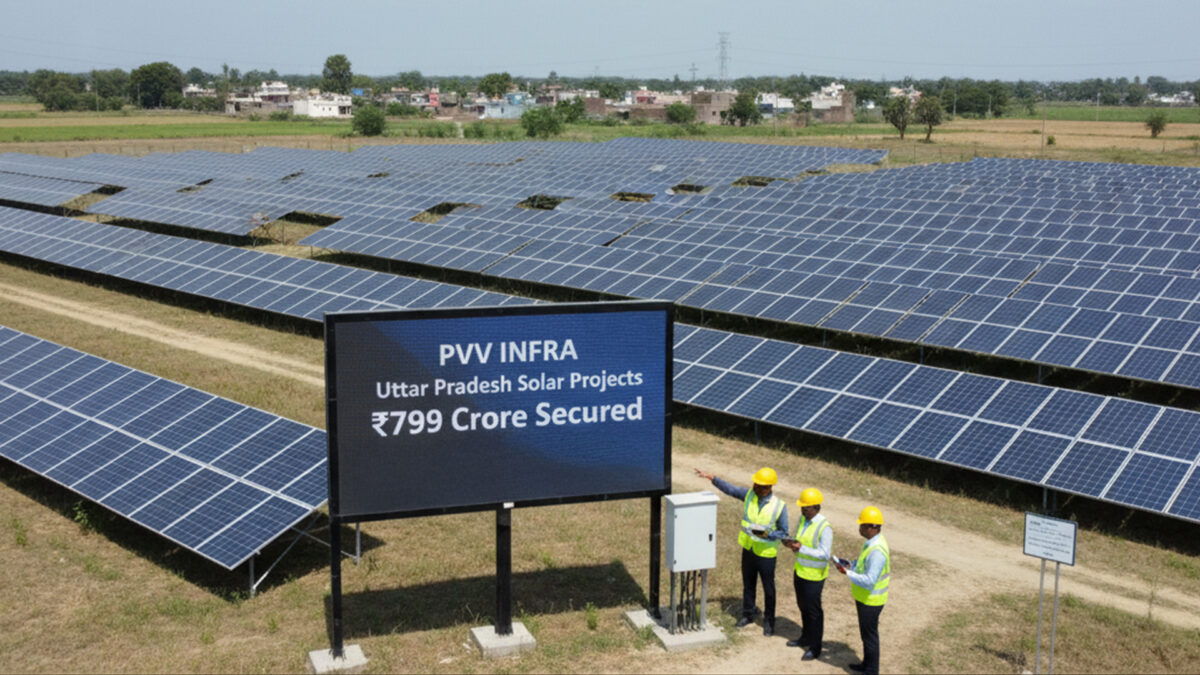
PVV Infra Ltd., a company primarily engaged in rooftop and ground-based solar power installations, has secured two significant solar power projects in Uttar Pradesh, collectively valued at ₹799 crore.

These projects are expected to bolster the company’s renewable energy portfolio and contribute to its long-term revenue streams.

The first project involves a 100 MW solar power initiative under a 25-year Power Purchase Agreement (PPA) with the Uttar Pradesh New and Renewable Energy Development Agency (UPNEDA). PVV EVTech Private Ltd., a subsidiary of PVV Infra, will undertake this project in collaboration with Nacof Oorja Pvt Ltd. The estimated project cost is approximately ₹384 crore, with an anticipated annual revenue of ₹53 crore over the contract’s duration.

The second project comprises a 109 MW solar power development for which PVV Housing Private Ltd., another subsidiary of PVV Infra, has secured an Engineering, Procurement, and Construction (EPC) contract. This project, also in partnership with Nacof Oorja Pvt Ltd, is valued at around ₹415 crore.

In addition to these projects, PVV Infra’s board has approved a strategic decision to expand its presence in the renewable energy sector through Special Purpose Vehicles (SPVs). This approach aims to enhance operational efficiency, mitigate risks, and allow for focused execution of projects by geography and business verticals, such as Power Development and EPC.

These developments underscore PVV Infra’s commitment to diversifying its energy portfolio and contributing to India’s renewable energy goals. The company’s strategic initiatives are poised to strengthen its position in the growing renewable energy market.

Also Read: Supreme Court Defers Vodafone Idea’s AGR Plea; Stock Falls Around 4%

Categories
Corporate

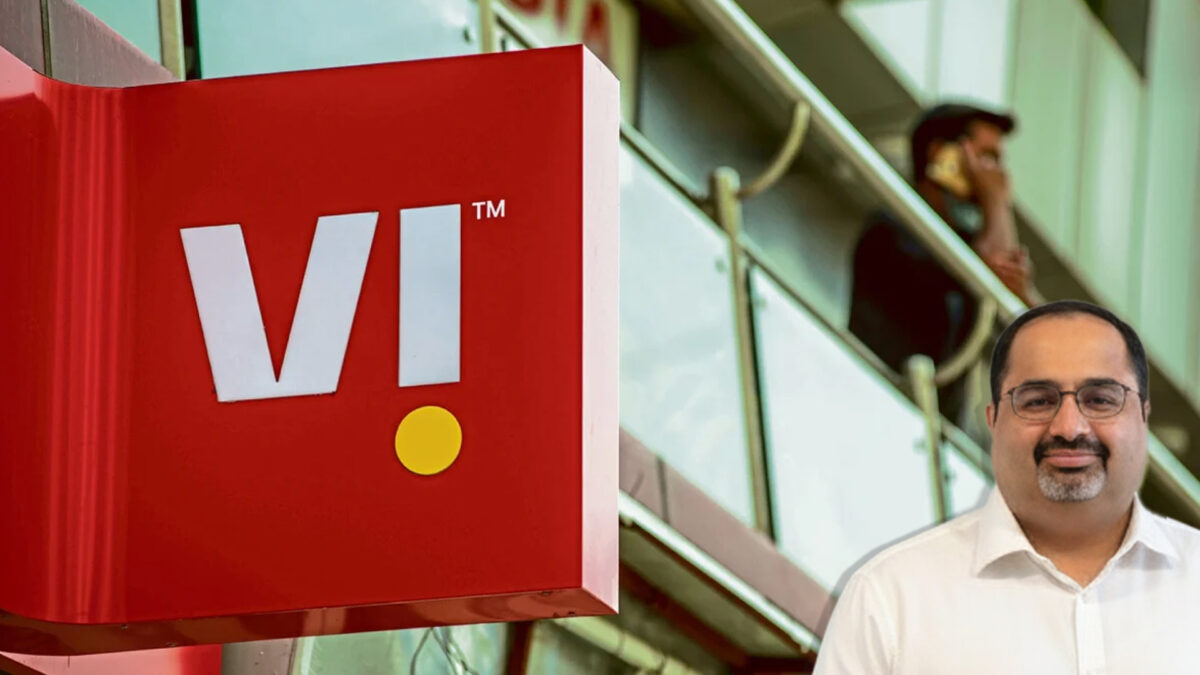
Vodafone Idea Appoints Tejas Mehta as New CFO

Vodafone Idea has appointed Tejas Mehta as its new Chief Financial Officer (CFO), effective October 6, 2025. Mehta succeeds Murthy Gvas, whose tenure concluded on October 5. This leadership change comes as the telecom company grapples with financial difficulties and seeks to strengthen its financial strategy.

Tejas Mehta, a Chartered Accountant, brings over 25 years of experience across India and international markets. He began his career at Marico Industries and later joined Mondelez India in 2002 as a Treasury Manager.

Over the years, he held several senior leadership roles, including Group Finance Controller in London, CFO for Thailand and Turkey, and Supply Chain Management head for Asia Pacific, Middle East, and Africa. In 2022, he returned to India to take on the CFO role at Mondelez India.

Vodafone Idea, India’s third-largest telecom operator, is backed by Aditya Birla Group and Vodafone Group. The company holds 5G spectrum in 17 circles and mmWave spectrum in 16 circles, offering services across 2G, 4G, and expanding 5G networks.

Despite these assets, the company faces significant financial challenges, including a net loss of ₹6,608.1 crore in Q1 FY26, up from ₹6,432.1 crore in Q1 FY25. Revenue from operations rose 4.9% year-on-year to ₹11,022.5 crore from ₹10,508.3 crore in Q1 FY25.

The appointment of Mehta is part of Vodafone Idea’s broader strategy to stabilize its financial position and expand its network services.

The company is working to secure additional debt funding to continue its 4G and 5G network expansion despite ongoing losses. This leadership change follows a recent transition within the company when Abhijit Kishore replaced Akshaya Moondra as CEO in August upon the conclusion of Moondra’s term.

Also Read: Vedanta Posts Record Q2 Production; Aluminium, Alumina and Zinc Hit New Highs