Categories
Corporate

Auto rally lifts Sensex 350 pts, Nifty crosses 26,250

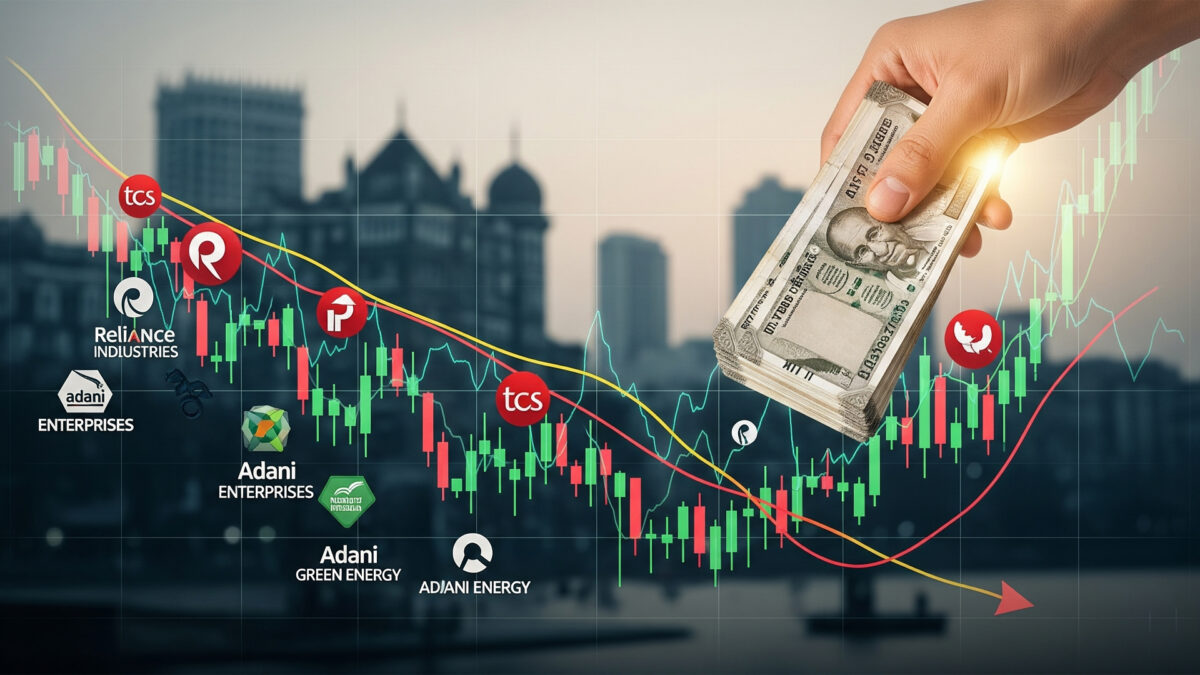
The equity markets extended gains on January 2, supported by strong buying in automobile and select banking stocks. The BSE Sensex rose around 350 points, while the Nifty 50 climbed above the 26,250 mark, reflecting cautious optimism among investors at the start of the New Year amid stock-specific action and limited broader participation.

Automobile stocks emerged as the clear outperformers after companies reported healthy December sales numbers. Hero MotoCorp and TVS Motor Company gained up to 3 per cent, benefiting from strong volume growth, while Maruti Suzuki also traded firmly, lending support to the benchmark indices. Other auto names such as Bosch and Motherson added to the momentum, pushing the Nifty Auto index higher.

The banking space also contributed to the upside, with PSU lenders showing buying interest. Shares of Punjab & Sind Bank and Indian Bank advanced, helping offset weakness in other pockets of the market. Investors remained selective, focusing on stocks with visible earnings momentum and positive business updates.

However, gains were capped by pressure in the FMCG sector. ITC declined close to 4 per cent, emerging as one of the top drags on the benchmarks amid concerns over higher taxes and near-term margin pressures. Other consumer stocks such as Godfrey Phillips, Zydus Wellness, and Parag Milk Foods also traded lower, keeping the Nifty FMCG index under pressure.

Shares of Hyundai Motor India slipped despite reporting year-on-year growth in sales, indicating cautious sentiment and some profit booking in the stock. Bajaj Auto traded marginally lower, reflecting mixed performance within the broader auto space despite overall sectoral strength.

Market participants also tracked global cues and commodity prices, while trading volumes remained relatively thin, a typical trend during the early days of the year. Analysts said investors are likely to remain stock-specific in the near term, with attention shifting gradually towards quarterly earnings announcements and macroeconomic data.

Overall, strength in auto and PSU bank stocks helped the Sensex and Nifty hold firm, even as FMCG and select consumer names limited the upside, underscoring a cautious but positive undertone in the market.

Also Read: Sensex ends flat, Nifty holds above 26,100

Categories
Corporate

Sensex ends flat, Nifty holds above 26,100

Markets ended largely unchanged on the first trading day of 2026, BSE Sensex closed almost flat at 85,188.60, while the Nifty 50 managed to stay above the 26,100 mark, finishing at 26,146.55.

The markets opened the year on a positive note, with early gains supported by IT and auto stocks, which benefitted from strong sector momentum and positive investor sentiment. However, these gains were largely offset by declines in FMCG and tobacco shares, dragged down by the government’s announcement of higher excise duties on cigarettes. ITC and its peers were among the most affected, putting pressure on the FMCG index.

Midcap stocks outperformed slightly, while smallcap shares showed mixed trends. Overall, sector performance was uneven, reflecting cautious positioning by investors amid limited fresh triggers.

Market participants also remained watchful of broader economic indicators and upcoming corporate earnings, which are expected to influence short-term trends. The rupee and commodities had little impact on the session, leaving domestic sentiment as the main driver of price movements.

Investors entered 2026 with selective optimism, favoring sectors with growth potential while avoiding areas exposed to new regulatory or tax developments. Analysts said the market is likely to remain range-bound in the near term until more clarity emerges on policy direction and corporate performance.

Also Read: Sensex up 100+ points, Nifty above 26,150

Categories
Corporate

IGL slashes domestic PNG prices in Delhi‑NCR

Indraprastha Gas Limited (IGL) on Thursday announced a reduction in domestic piped natural gas (PNG) prices for households in Delhi and the National Capital Region (NCR). Effective January 1, 2026, rates have been lowered by ₹0.70 per standard cubic metre (scm), easing monthly cooking gas bills for thousands of residents.

Under the new rates, Delhi households will pay ₹47.89 per scm, Gurugram ₹46.70, and Noida, Greater Noida, Ghaziabad ₹47.76 per scm.

The reduction comes after reforms by the Petroleum and Natural Gas Regulatory Board (PNGRB) simplified pipeline tariffs, introducing uniform lower charges for domestic PNG and CNG users. IGL said the move aligns with its commitment to providing cleaner energy at affordable rates.

Other city gas distributors are also passing on the benefits of the new tariff structure, providing households across major cities with relief from rising energy costs.

The PNG price cut is expected to offer modest savings to Delhi‑NCR residents, making the start of 2026 slightly lighter on household energy bills.

Also Read: OYO parent Prism files confidential IPO to raise Rs 6,650 cr

Categories
Corporate

Sensex up 100+ points, Nifty above 26,150

The New Year brought a smile in the markets as the BSE Sensex rose around 200 points in early trade, while the NSE Nifty 50 moved above the 26,150 level, supported by buying in auto, IT and select banking stocks.

Among the key gainers, auto stocks advanced on expectations of stable demand and improving margins. Information technology shares also edged higher, aided by bargain buying after recent corrections and hopes of steady global tech spending. Select private sector banks added to the upside, helping benchmarks maintain early gains.

However, the broader market showed mixed trends. FMCG stocks were among the top losers, facing selling pressure amid valuation concerns and muted near-term growth outlook. Metal stocks also traded lower after recent gains, as investors booked profits. Mid-cap and small-cap stocks showed a cautious trend, with limited participation.

Market sentiment remained subdued as most global markets were closed for New Year holidays, leading to lower trading volumes. Investors also remained watchful ahead of key global cues, including signals on US interest rates, geopolitical developments and updates on global economic growth.

Analysts said the positive opening was an extension of the recovery seen in the final sessions of 2025. However, they cautioned that markets may remain range-bound in the near term due to mixed global signals and stock-specific action.

The Indian rupee traded slightly weaker against the US dollar in early trade, adding to the cautious tone. Going ahead, investors are expected to focus on corporate earnings, macroeconomic data and global cues to assess market direction in the opening weeks of 2026.

Also Read: Sensex climbs 546 points, Nifty tops 26,100 in 2025 finale

Categories
Corporate

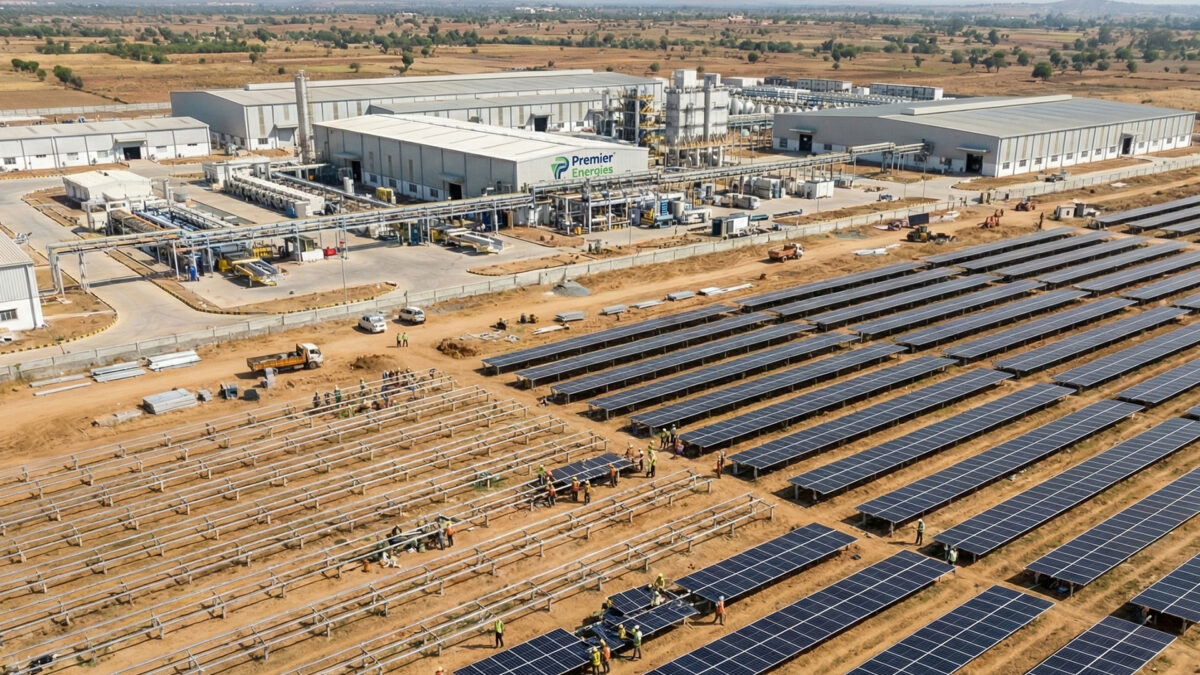
Premier Energies bags Rs 2,307 crore Solar orders

Premier Energies Ltd, a Hyderabad-based solar cell and module manufacturer, has won new orders worth Rs 2,307.30 crore in the third quarter (Q3) of FY26. These orders come from leading Indian power producers and other customers and are expected to be executed over the next two years, giving the company steady revenue visibility.

The company said the orders reflect strong customer trust in its product quality and execution capabilities. With India’s renewable energy market growing rapidly, Premier Energies is well-positioned to meet increasing demand for solar components.

The firm is also expanding its production capacity, planning to reach 10.6 gigawatts (GW) for solar cells and 11.1 GW for solar modules by September 2026. These new orders will support this growth and help the company strengthen its place in India’s domestic solar manufacturing sector.

Chiranjeev Saluja, MD and CEO, said the large order inflow shows confidence in Premier Energies’ technology and manufacturing. He added that as India accelerates renewable energy deployment, the company is focused on providing high-quality solar solutions while expanding backward integration across the value chain.

The announcement has caught the attention of investors, with analysts noting that the orders could boost the company’s stock performance. The size and timing of the contracts signal strong business momentum and future growth potential.

Overall, the new orders align with India’s focus on renewable energy and domestic manufacturing. They are expected to contribute significantly to Premier Energies’ growth over the next two years and reinforce its role in building India’s solar infrastructure.

Also Read: PM Modi to inaugurate India AI Impact Summit

Categories
Corporate

Bharat Forge secures record ₹1,662 cr small arms contract

Bharat Forge Limited has secured its largest-ever small arms contract with the Indian Ministry of Defence, valued at ₹1,661.9 crore. The deal, finalised on 30 December 2025, is for the supply of 255,128 Close Quarter Battle (CQB) carbines to the Indian Army over the next five years. The contract marks a major milestone for Bharat Forge in defence manufacturing and underlines the government’s focus on building self-reliance in critical defence equipment.

The 5.56 x 45 mm CQB Carbine is a compact, lightweight firearm designed for close-range operations, particularly in urban combat, counter-insurgency, and special operations. Its smaller size and enhanced manoeuvrability make it suitable for scenarios where traditional assault rifles may be less effective. The weapon has been jointly developed by the Defence Research and Development Organisation (DRDO) through the Armament Research & Development Establishment (ARDE) and Bharat Forge’s defence arm, Kalyani Strategic Systems Limited (KSSL).

As an indigenously designed, developed, and manufactured system, the CQB Carbine supports the Atmanirbhar Bharat initiative by reducing import dependence and strengthening India’s domestic defence industrial capacity. Bharat Forge has highlighted the “Made in India” nature of the programme, reaffirming its commitment to equipping the armed forces with advanced, locally produced weapons.

This contract is part of a broader modernisation push by the Ministry of Defence, which has recently approved procurement deals worth thousands of crores for carbines, artillery, and torpedoes for the Indian Army and Navy. The government aims to enhance operational readiness while fostering private sector participation in defence production.

The announcement was positively received by markets, with Bharat Forge’s shares rising to a 52-week high, reflecting investor confidence in the company’s expanding defence portfolio. Analysts see the order as a boost to Bharat Forge’s future defence opportunities and its growing role in India’s strategic defence ecosystem.

With this deal, Bharat Forge strengthens its position as a key domestic supplier of advanced small arms, enhancing infantry firepower while showcasing successful collaboration between government research institutions and private industry in delivering mission-critical defence equipment.

Also Read: India moves up to 4th spot in global economy rankings

Categories
Corporate

Sensex climbs 546 points, Nifty tops 26,100 in 2025 finale

Indian stock markets ended 2025 with a robust rally on Wednesday, as key indices recorded healthy gains in the year’s final trading session. The BSE Sensex jumped 546 points to close at 90,712, while the Nifty 50 crossed the 26,100 mark, driven by widespread buying across sectors.

Market sentiment was boosted by strong performances in metal, energy, and banking stocks, along with bargain hunting by investors. JSW Steel led the gains, rising nearly 5%, followed by Tata Steel (+2.4%), Kotak Mahindra Bank (+2.2%), and ONGC (+2%). Other notable gainers included SBI Life, Reliance Industries, and Titan Company.

On the downside, TCS fell about 1.3%, while Tech Mahindra, Grasim Industries, Wipro, Bajaj Finance, and Infosys saw modest losses. IT stocks underperformed, offsetting some of the broader market gains.

Sectoral trends showed metal, PSU banks, oil & gas, and banking indices leading the rally, while IT lagged. Broader markets also ended higher, with midcap and smallcap stocks outperforming, indicating widespread investor participation.

The Indian rupee closed slightly weaker at ₹89.87 against the US dollar, reflecting cautious foreign fund flows despite the positive market trend.

Also Read: Sensex gains 250 points, Nifty ends above 26000

Categories
Corporate

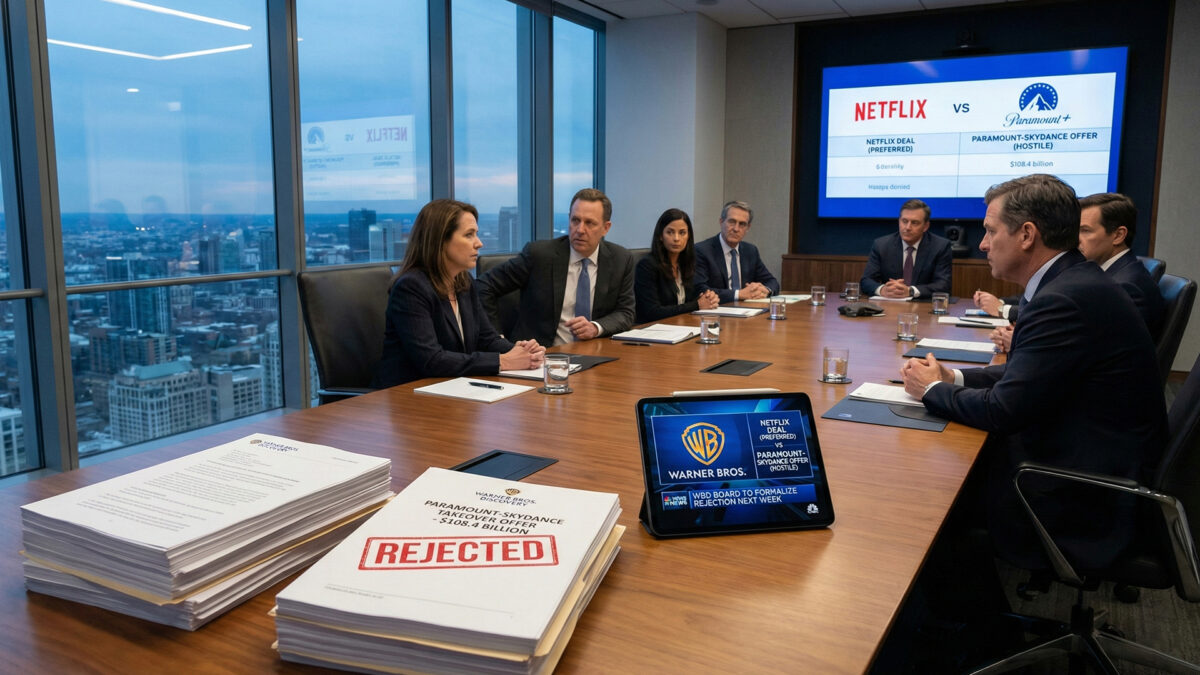
Warner Bros. Discovery set to reject Paramount’s $108bn bid

Warner Bros. Discovery is expected to turn down Paramount Skydance’s $108 billion takeover bid next week, according to sources. The board has repeatedly rejected Paramount’s offers, even after amendments intended to make the deal more attractive.

Paramount’s revised proposal included $30 per share in cash, backed by Oracle co‑founder Larry Ellison’s personal guarantee covering $40.4 billion of funding. The bid also increased the breakup fee to match terms of Warner Bros.’ existing Netflix agreement.

Despite these changes, Warner Bros. Discovery’s board believes the Netflix deal offers more certainty and better long-term conditions. Under that agreement, Netflix would acquire Warner Bros.’ studio and streaming assets for about $82.7 billion, while networks like CNN and TNT would be spun off into a separate company.

Insiders say the board has concerns about Paramount’s ability to handle Warner Bros.’ debt and complete the deal smoothly. Terminating the Netflix agreement would also incur a significant breakup fee.

If Warner Bros. formally rejects Paramount, the bidder may need to improve its offer or explore other options. For now, the board seems set on the Netflix path, prioritizing stability over a higher cash offer.

The upcoming decision will influence the future of Warner Bros. Discovery and Hollywood’s media landscape.

Also Read: SoftBank completes $40 bn investment in OpenAI

Categories
Corporate

SoftBank completes $40 bn investment in OpenAI

SoftBank has completed its $40 billion investment in OpenAI, making it one of the largest private tech deals in history. The Japanese conglomerate, led by CEO Masayoshi Son, finalized the last part of the investment in December, completing a multi-stage funding plan announced earlier in 2025.

The investment was made in phases. SoftBank first contributed about $7.5 billion in April through its Vision Fund 2. Later, it raised around $10 billion from co-investors. The final payment of roughly $22–22.5 billion now completes the deal, giving SoftBank an ownership of around 11 percent in OpenAI.

This $40 billion deal initially valued OpenAI at about $300 billion, although secondary transactions have increased its broader market value closer to $500 billion. SoftBank funded part of this investment by selling $5.8 billion in Nvidia shares to free up cash.

OpenAI, known for developing ChatGPT and other leading AI tools, has become a major focus for investors amid the global AI boom. SoftBank’s backing is expected to support the company’s expansion in AI research and infrastructure.

Some of the investment will fund a long-term project called “Stargate,” a partnership with Oracle and other stakeholders to build AI infrastructure and data centers. This will help OpenAI handle more advanced AI applications in the future.

SoftBank’s completed investment shows its strong commitment to AI and positions the company as a key player in the growing artificial intelligence sector. It also reflects the increasing interest from global investors in AI technologies and the infrastructure needed to support them.

With this deal, SoftBank is betting on AI as a strategic area for growth, signaling confidence in the future of the technology and its potential impact on businesses and society.

This investment highlights the rapid rise of AI and the large-scale funding that companies like OpenAI are attracting to drive innovation worldwide.

Also Read: India slaps 3 year safeguard duty on steel imports

Categories
Corporate

Sensex gains 250 points, Nifty ends above 26000

The markets opened for the final trading session of 2025 on a cautious but steady note, with the Sensex and Nifty 50 ending near flat after recovering from early losses. The benchmarks managed to snap a four-day losing streak, supported by selective buying in metal, PSU banking, and energy stocks, even as foreign fund outflows continued to cap gains.

Markets opened marginally higher, tracking positive cues from GIFT Nifty, but volatility persisted through the session as investors engaged in year-end portfolio adjustments. Buying interest was seen in metal stocks on hopes of stable global demand, while PSU banks gained on expectations of improved balance sheets and steady credit growth. FMCG and IT stocks, however, traded mixed, reflecting concerns over valuations and global growth uncertainty.

Broader markets showed mild strength, with midcap and smallcap stocks outperforming the frontline indices. Several individual stocks witnessed sharp moves on company-specific developments, indicating active participation despite thin year-end volumes.

On the commodities front, gold and silver, which delivered strong returns in 2025, saw some profit booking in the final session of the year. Crude oil prices remained range-bound, offering limited direction to energy stocks.

Market sentiment was also influenced by macro signals, including the Reserve Bank of India’s assessment pointing to improved asset quality and profitability in the banking sector. Analysts remain cautiously optimistic about 2026, citing expectations of stable earnings growth, policy support, and lower inflation, while flagging risks from global slowdown and continued FII selling.

Overall, the last trading day of 2025 reflects a market balancing caution with selective optimism as investors look ahead to key triggers in the new year.

Also Read: Sensex slips 20 points, Nifty ends below 25,950 on year-end caution