Categories
Corporate

Ola Electric expands into home energy storage with ‘Ola Shakti’

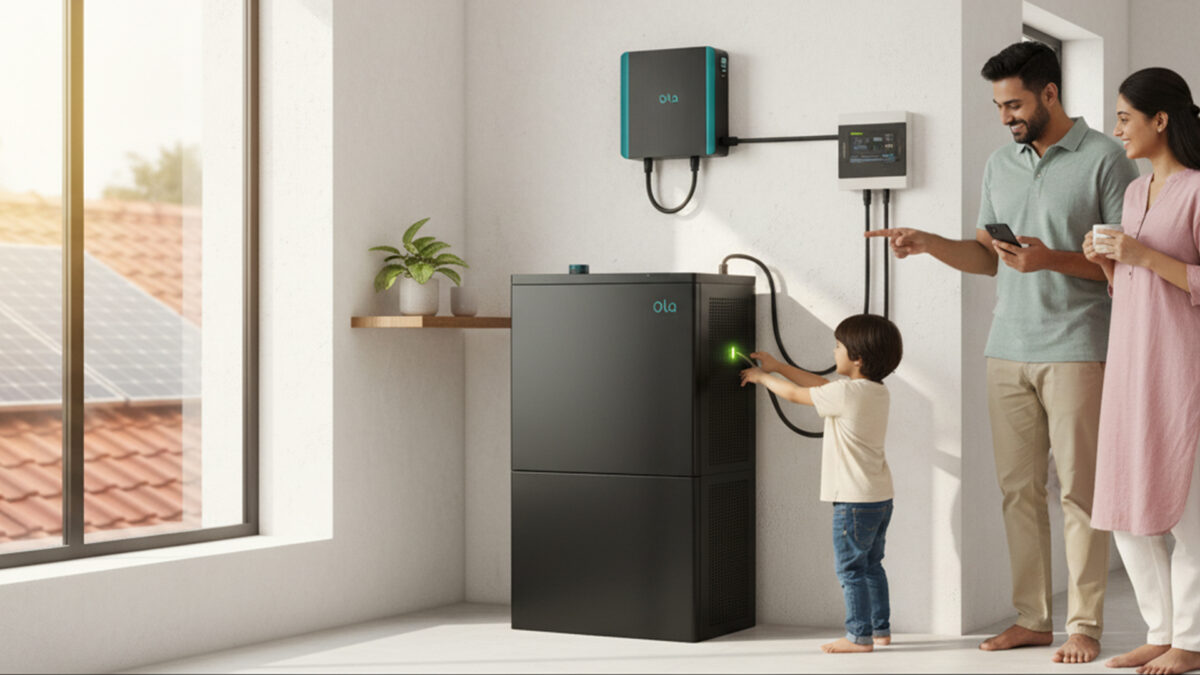
Ola Electric has expanded beyond electric two-wheelers with the launch of “Ola Shakti,” a battery energy storage system (BESS) aimed at residential and small commercial users, as India looks to scale up distributed energy solutions.

The product, unveiled this week by founder Bhavish Aggarwal, marks the company’s formal entry into the country’s growing energy-storage market and signals a strategic shift to become an integrated mobility and energy firm, according to reports.

The company describes Ola Shakti as a home-grown battery solution engineered to store power and keep homes and small businesses running during outages or when grid supply is constrained.

Ola’s product documentation indicates that the system is designed to operate both on-grid and off-grid, built using automotive-grade battery packs developed in-house.

The firm says it is leveraging its electric vehicle (EV) battery technology and manufacturing experience to produce a modular, scalable system suited for Indian conditions.

Ola also emphasized that the product is designed and manufactured domestically, aligning with the government’s “Make in India” and renewable energy targets.

Industry observers note that the timing of the launch coincides with a broader market opportunity.

India’s BESS market is expected to expand rapidly over the coming years as renewable power generation increases and storage solutions become essential to balance fluctuating supply and demand.

Analysts cited by business publications estimate that the sector could reach a valuation of several billion dollars by the end of the decade, driven by policy incentives and growing consumer adoption of solar and backup power systems.

Market reaction to the announcement was immediate. Ola Electric’s shares surged following the launch, with reports stating that the stock hit its upper circuit limit as investors welcomed the company’s diversification into energy infrastructure.

For Ola, this new venture could open revenue streams beyond electric vehicle sales and capture demand from homeowners, farms, and small enterprises seeking reliable power solutions amid rising electricity costs and intermittent grid reliability.

Company executives framed Ola Shakti as more than just a backup battery. It is positioned as part of a broader vision to integrate energy services and storage capabilities within Ola’s electric ecosystem.

By adapting proven EV battery technology for stationary applications, Ola aims to achieve economies of scale while reinforcing its identity as an indigenous clean energy innovator.

The company has already started taking early registrations and announced introductory pricing for the product, suggesting an aggressive rollout strategy to attract early adopters in regions with high solar potential or unreliable grid access.

Ola’s entry places it in direct competition with established energy-storage and inverter manufacturers, as well as newer EV and renewable energy startups targeting the same space.

Analysts say the product’s success will depend on factors such as pricing competitiveness, safety certifications, after-sales service, and integration with rooftop solar systems.

Still, Ola Shakti represents a major step in the company’s evolution from an electric mobility brand to a broader clean energy solutions provider — a move that could redefine how Indian households and small businesses generate, store, and use electricity in the years ahead.

Also Read: Zepto Set to Lock $500M Round, Eyes Valuation Above US$7B and IPO Relaunch

Categories
Corporate

Jio Financial’s Q2 Profit Nears ₹700 Crore as Operating Income Surges

Jio Financial Services reported a consolidated net profit of ₹695 crore for the quarter ended September 30, 2025, keeping the company firmly in focus among investors and analysts.

The financial arm of Reliance Industries saw strong growth across its lending, asset management, and payment businesses, which collectively pushed its operational performance to new highs.

While the year-on-year rise in consolidated profit was modest — up less than 1% from ₹689 crore in the same period last year — the company recorded a sharp surge in total income.

Jio Financial’s total revenue climbed to around ₹1,002 crore in Q2 FY26, representing a rise of nearly 44% compared to the previous year.

The strong increase in top-line numbers suggests that the company’s diversification strategy across multiple financial verticals is beginning to yield results, even as certain costs and provisions have tempered net profit growth.

According to company disclosures and financial filings, growth was led by the expansion of Jio Financial’s lending business, which saw robust traction in both personal and merchant loans.

Its asset management arm, Jio BlackRock AMC, also contributed meaningfully to income through successful early fund launches and growing investor participation.

Meanwhile, Jio Payments Bank continued to expand its network of business correspondents and customer base, supporting a rise in deposits and transaction volumes.

Jio Financial also achieved a multifold rise in income from its business operations during the quarter.

The company’s asset management business saw a rapid build-up in assets under management (AUM), while fee-based revenue streams gained strength.

Analysts pointed out that this diversification across lending, asset management, and payments is helping to establish a stable income base less reliant on any single vertical.

Market observers also noted that while operating income growth was robust, rising costs and provisioning slightly constrained the profit growth.

Still, the composition of earnings appears to be improving, with recurring fee income from the AMC business and interest income from the lending unit growing in tandem.

Following the results, Jio Financial’s stock was actively tracked on the exchanges, with traders reacting to the contrast between rapid operational expansion and a relatively flat profit line.

The stock experienced some intraday volatility as investors weighed the sustainability of the income surge and the potential for margin expansion in upcoming quarters.

Looking ahead, the company appears to be entering a scale-up phase, with management focused on strengthening distribution, launching new financial products, and deepening digital partnerships.

Analysts believe that continued growth in lending volumes, asset management inflows, and payment-bank monetisation will be key to converting strong income gains into higher profitability.

Jio Financial’s Q2 results signal that the company’s growth engines are firmly in motion. The coming quarters will determine whether this operational momentum translates into a consistent, high-margin financial story for one of India’s newest yet most closely watched financial institutions.

Also Read: Nestlé India Reports Q2 FY26: Revenue Growth Amid Profit Decline

Categories
Corporate

Nestlé India Reports Q2 FY26: Revenue Growth Amid Profit Decline

Nestlé India reported its Q2 FY26 results, revealing a 23.6% year-on-year decline in standalone net profit to ₹753.2 crore, despite a 10.6% increase in revenue from operations, which rose to ₹5,643.6 crore.

The company’s EBITDA margin stood at 22% of sales, reflecting strong operational efficiency. Earnings per share (EPS) for the quarter were ₹3.90, slightly higher than ₹3.88 in the same period last year, excluding a one-time income of ₹290.8 crore from a divestiture recorded previously.

Domestic sales reached ₹5,411 crore, marking the highest-ever quarterly tally for Nestlé India.

This performance was driven by volume-led growth across key product segments, including Maggi noodles, Nescafé coffee, and chocolates like Munch and Milkybar. Exports also recorded high double-digit growth, supported by strong demand across product groups.

Analysts had estimated a net profit of ₹729 crore and revenue of ₹5,307 crore for the quarter. The actual results surpassed these expectations, indicating robust sales performance despite profit pressures.

In response to the results, Nestlé India’s Managing Director, Manish Tiwary, emphasized the company’s commitment to expanding its presence across channels through an omni-channel approach, with e-commerce maintaining strong momentum.

The company added a new MAGGI noodles production line at its Sanand factory in Gujarat and plans to accelerate brand and manufacturing investments. Nestlé India expects milk prices to soften after the festive season and coffee prices to stabilize, while edible oil prices may stay firm globally.

Despite the profit decline, Nestlé India’s shares rose by over 4% to ₹1,270.50 on October 16, reflecting investor optimism driven by strong volume-led sales growth and a better-than-expected performance on profitability.

Overall, while Nestlé India’s Q2 FY26 results showed a decline in profit, the company’s strong revenue growth and strategic investments position it well for continued success in the competitive FMCG sector.

Also Read: Microsoft, AWS, and Google to Shift Production Out of China?

Categories
Corporate

Zepto Set to Lock $500M Round, Eyes Valuation Above US$7B and IPO Relaunch

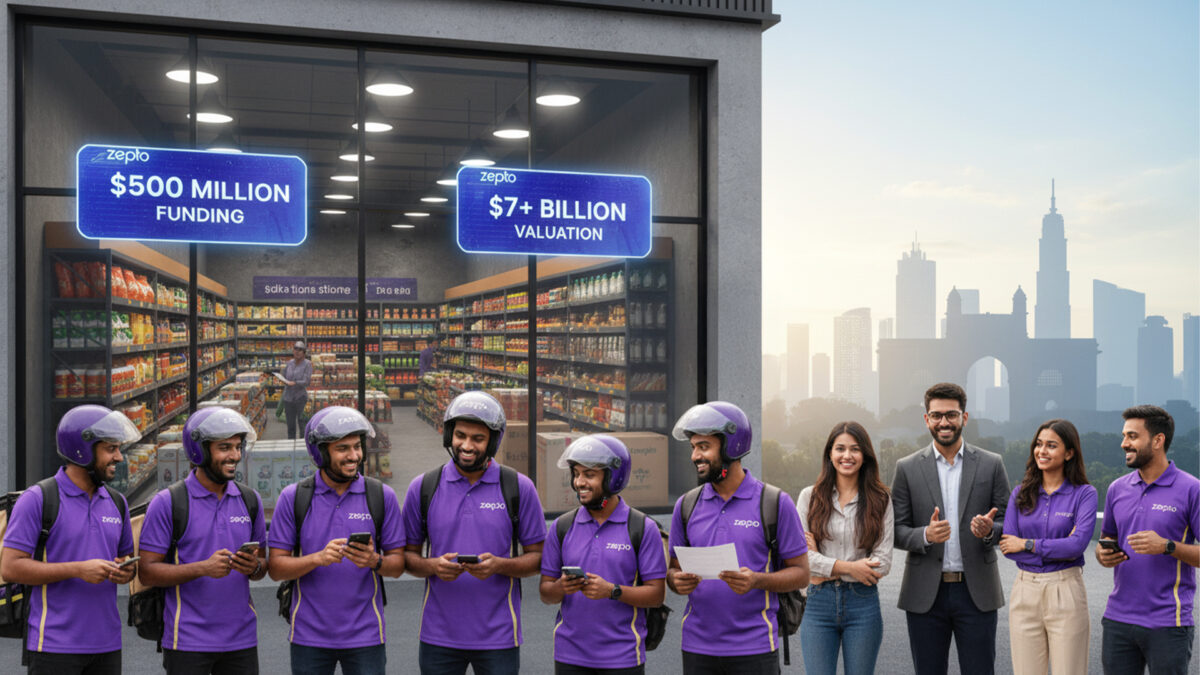
Mumbai‑based quick commerce firm Zepto is poised to close a fresh funding round by the third week of October, according to Business Today. The round is expected to be worth about US$500 million, and would drive Zepto’s valuation beyond US$7 billion —nearly double its last known valuation.

This fundraising is unfolding at a pivotal moment for the company. Zepto shifted its base back to India earlier this year via a reverse flip, and had initially aimed to file its Draft Red Herring Prospectus (DRHP) in early 2025.

However, the startup deferred its IPO plans to focus on achieving sustainable profitability first.

With this new capital infusion, insiders suggest Zepto may revisit its IPO ambitions shortly after the round closes.

Earlier this year, Motilal Oswal Financial Services committed about US$48 million to Zepto.

In 2024, the company raised US$665 million, which valued it at US$3.6 billion, followed by a further US$340 million round that elevated its valuation to US$5 billion.

The broader quick commerce sector continues to attract investor attention, driven by rising consumer demand and seasonal shopping surges.

Independent estimates suggest the category could generate around US$1.6 billion in sales during the upcoming festive season—about 12 percent of total online commerce. The net order value (NOV) is projected to expand by 25–30 percent quarter‑on‑quarter during the period, pointing to robust demand momentum.

Zepto, founded in 2021 by Aadit Palicha and Kaivalya Vohra, has emerged as one of India’s fast‑rising players in the hypercompetitive quick commerce space, facing rivals such as Blinkit and Swiggy Instamart.

With its new capital, the company plans to scale its dark store network, improve logistics efficiencies, and place renewed emphasis on profitability metrics—efforts intended to strengthen its case ahead of an eventual listing.

While Zepto has not formally responded to media queries concerning the planned fundraise, public filings and reports suggest that investors remain confident in the company’s trajectory.

If the round concludes as expected, Zepto will enter the next phase of its growth journey with enhanced financial flexibility and renewed momentum toward its long‑term goals.

Also Read: Microsoft, AWS, and Google to Shift Production Out of China?

Categories
Corporate

Microsoft, AWS, and Google to Shift Production Out of China?

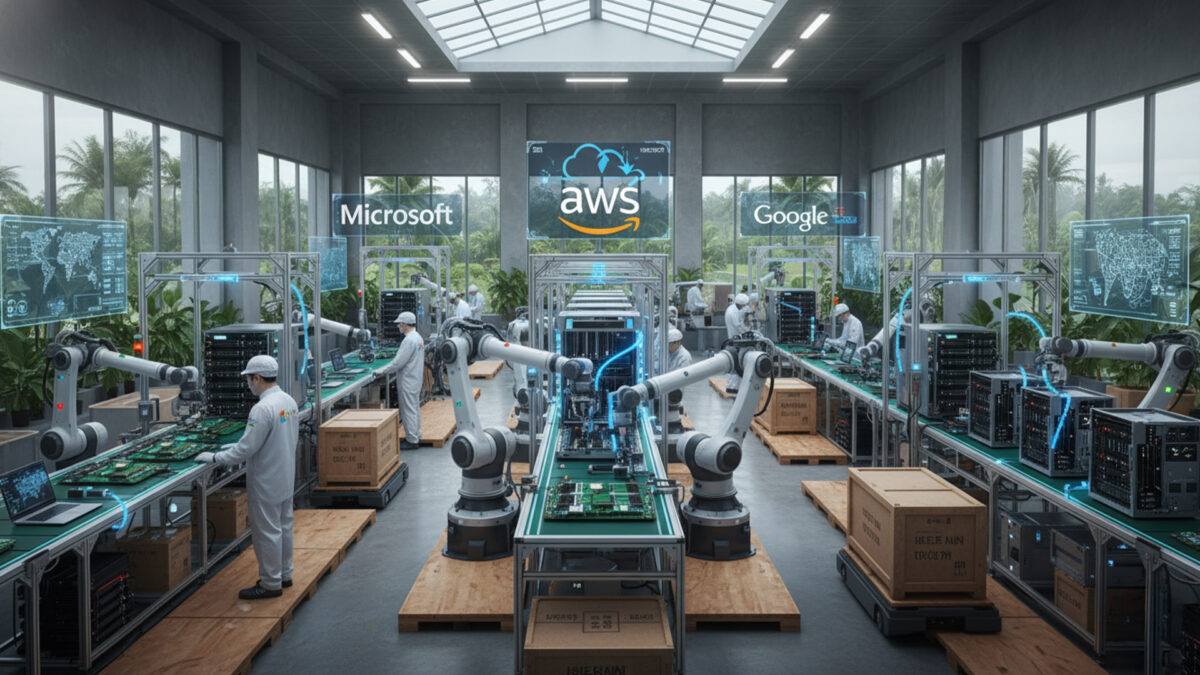
Major U.S. technology companies — Microsoft, Amazon Web Services (AWS), and Google — are planning to relocate significant parts of their production and component manufacturing out of China by 2026, as they look to reduce reliance on Chinese supply chains amid escalating U.S.-China trade and geopolitical tensions, according to a report by Nikkei Asia.

Microsoft has reportedly asked several suppliers to explore moving production of new products, including Surface laptops and data-center servers, outside China beginning in 2026.

The company is also targeting a shift in sourcing, with as much as 80 percent of materials for certain server components expected to come from non-Chinese suppliers.

AWS, the cloud computing arm of Amazon, is also accelerating efforts to diversify its supply base away from China.

The company is said to be focusing particularly on relocating production of components used in artificial intelligence (AI) servers, a key growth area that has been affected by export controls and supply-chain pressures.

Industry executives familiar with the matter have acknowledged that this shift poses challenges, given China’s long-established expertise in the manufacture of printed circuit boards and other critical parts.

Google, meanwhile, has begun expanding its server production capacity in Thailand. The company has reportedly instructed suppliers to carry out full-scale manufacturing — from component sourcing to assembly — in the Southeast Asian nation, in order to build greater resilience into its global hardware operations.

The move by these three U.S. tech giants comes amid rising strategic competition between Washington and Beijing, which has led to export restrictions, technology bans, and heightened scrutiny of supply-chain dependencies.

For multinational corporations, particularly those in the technology sector, the effort to “de-risk” and diversify supply chains has become a central strategy in response to these geopolitical uncertainties.

Analysts note that while shifting final assembly out of China can be done relatively quickly, relocating production of core components is far more complex.

Many of these parts rely on specialized supply networks, deep technical know-how, and cost structures that have developed in China over decades. Nonetheless, Microsoft, AWS, and Google appear committed to a gradual but significant reconfiguration of their manufacturing footprints.

If fully implemented, the moves could signal one of the most extensive supply-chain realignments by major U.S. technology firms in recent years.

Industry experts expect this to spur new investment across Southeast Asia, particularly in Thailand, Vietnam, and Malaysia, as companies seek alternatives to China while maintaining access to skilled labor and manufacturing infrastructure.

The transition marks a strategic turning point for the global tech industry, as firms balance cost efficiency with geopolitical risk management in an increasingly fragmented world economy.

Also Read: Air India in Fresh Talks to Acquire up to 300 Aircraft Amid Global Expansion Drive

Categories
Corporate

Air India in Fresh Talks to Acquire up to 300 Aircraft Amid Global Expansion Drive

Air India is in renewed negotiations with Airbus and Boeing to acquire up to 300 aircraft as part of its ongoing expansion and fleet modernisation under Tata Group ownership, according to sources cited by Reuters.

The discussions reportedly include as many as 80 to 100 wide-body aircraft, in addition to about 200 narrow-body jets and 25–30 other wide-body planes that were already under consideration.

The exact composition of the order—covering the mix between narrow-body and wide-body aircraft and the ratio of firm orders to purchase options—has not yet been finalised, Reuters reported.

These talks build on Air India’s earlier efforts to expand its fleet. In June 2025, Reuters reported that the airline was exploring a deal for approximately 200 additional single-aisle jets from Airbus and Boeing. Earlier in the year, discussions were also underway to acquire 30 to 40 wide-body aircraft to increase long-haul capacity.

If the new plan materialises, it would add significantly to Air India’s record 2023 order of 470 aircraft from both manufacturers.

The proposed deal underscores the airline’s ambition to rapidly strengthen its fleet, improve reliability, and expand its international route network.

The renewed negotiations come as Air India faces heightened scrutiny following the June 2025 crash of a Boeing 787 aircraft in Ahmedabad that killed 260 people.

The incident has intensified the airline’s efforts to modernise its fleet and enhance operational safety standards.

Air India’s expansion push coincides with a sharp rebound in global air travel. With international passenger volumes recovering strongly, the carrier is positioning itself to compete more aggressively with established global airlines on long-haul routes connecting India with North America, Europe, and Asia-Pacific.

According to Reuters, details regarding the financial structure, delivery timelines, and division of firm orders versus options remain under discussion.

However, industry sources noted that the magnitude of the order reflects Air India’s intent to accelerate its global transformation and re-establish its position as a leading full-service international carrier.

If concluded, the agreement could rank among the largest aircraft acquisitions by an Indian airline and would reinforce the Tata Group’s multi-year strategy to revitalise Air India.

The plan aligns with the carrier’s goal of integrating its subsidiaries, including Air India Express and Vistara, into a unified full-service and low-cost operation serving both domestic and international markets.

Also Read: Standard Chartered, BoI Seal $215 Million Loan for Air India’s Fleet Expansion

Categories
Corporate

BlackRock, Nvidia Lead $40 Billion Acquisition of Aligned Data Centers

A consortium including BlackRock, Nvidia, Microsoft, and other major investors has agreed to purchase Aligned Data Centers in a transaction valued at approximately US$40 billion, marking one of the largest-ever deals in the data center and artificial intelligence infrastructure sector.

The consortium operates under the Artificial Intelligence Infrastructure Partnership (AIP), which includes BlackRock’s Global Infrastructure Partners (GIP), MGX, Microsoft, and Nvidia as founding members.

Additional backers include sovereign wealth and institutional investors such as the Kuwait Investment Authority and Singapore’s Temasek.

Under the terms of the agreement, the consortium will acquire 100 percent of Aligned’s equity from private infrastructure funds managed by Macquarie Asset Management and its co-investors.

The transaction is expected to close in the first half of 2026, subject to regulatory approvals and customary closing conditions.

Company Profile and Scale

Aligned Data Centers, based in Dallas, Texas, operates and develops 50 campuses across the United States and Latin America, with more than 5 gigawatts of current and planned capacity.

The company serves hyperscalers, cloud service providers, and large enterprises, and has undertaken a series of expansions in North and South America in recent years. Earlier in 2025, Aligned raised more than US$12 billion in equity and debt financing to support this growth.

Following the acquisition, Aligned’s current management team, including Chief Executive Officer Andrew Schaap, will remain in place, and the company will continue to be headquartered in Dallas.

Strategic Context and Outlook

The transaction represents the first major investment by AIP, which plans to deploy about US$30 billion in initial equity capital, with the potential to expand to US$100 billion when debt financing is included.

The consortium views the acquisition as a cornerstone investment to meet accelerating global demand for high-performance infrastructure supporting AI, cloud computing, and other data-intensive applications.

BlackRock Chief Executive Larry Fink, who also chairs AIP, said the deal advances the consortium’s goal of delivering the infrastructure needed for the next generation of artificial intelligence.

The transaction comes amid a surge in AI-related capital expenditure globally, with industry analysts projecting that total infrastructure investments could reach several hundred billion dollars in 2025.

Aligned’s acquisition reflects a growing consolidation trend in the data center industry as technology and investment firms seek to secure strategic assets that underpin AI compute growth.

The deal provides the consortium with direct control over large-scale data center capacity, positioning it to serve hyperscale clients and AI developers amid soaring demand for energy-efficient, high-performance computing infrastructure.

If completed on schedule, the transaction will significantly reshape the competitive landscape for AI infrastructure, strengthening the role of major investment and technology firms in the ownership and operation of critical data assets.

It also reinforces the increasing convergence between global finance and technology sectors in the race to build and control next-generation digital infrastructure.

Also Read: Amazon Plans to Cut 15% of HR Staff Amid AI-Driven Restructuring

Categories
Corporate

Standard Chartered, BoI Seal US$215 Million Loan for Air India’s Fleet Expansion

Standard Chartered and the Bank of India have jointly extended a US$215 million term loan to AI Fleet Services IFSC Ltd (AIFS), the aircraft-leasing subsidiary of Air India, to finance six Boeing 777-300ER aircraft.

The deal is structured as a seven-year amortising facility, and the aircraft will subsequently be leased by AIFS to Air India.

AIFS is based in Gujarat International Finance Tec-City (GIFT City), Ahmedabad, and this transaction marks the first commercial aircraft financing arranged through a GIFT City–based borrower, setting a precedent for aviation finance via the international financial services centre.

In the transaction, Standard Chartered acted as the structuring bank, while both Standard Chartered and Bank of India jointly underwrote the deal as mandated lead arrangers and bookrunners.

Strategic Rationale and Context

The loan aligns with Air India’s ongoing fleet renewal and expansion strategy, under which the airline has placed orders for 570 new aircraft across Airbus and Boeing to modernize and scale up its operations.

Sanjay Sharma, Chairman of AIFS and Chief Financial Officer of Air India, said the company intends to leverage the financial infrastructure of GIFT City for funding future aircraft acquisitions.

From the lenders’ side, Abhishek Pandey, Global Head of Transportation Finance at Standard Chartered, said the deal demonstrates the bank’s ability to design jurisdiction-aligned aviation finance solutions and underscores its commitment to India’s aviation sector.

P. D. Singh, CEO of Standard Chartered, India and South Asia, described the transaction as a historic milestone in positioning GIFT City as a major aviation finance hub, reinforcing its potential to host aircraft leasing and financing deals on a global scale.

GIFT City is being promoted by the Gujarat and Indian governments as India’s flagship international financial services center.

The transaction reflects growing confidence in the emerging role of GIFT City in global finance, particularly for aviation.

Officials from Bank of India said the partnership reinforces GIFT City’s growing importance in the global aircraft financing ecosystem and highlights the role of aviation finance in supporting India’s broader growth trajectory.

Ashutosh Sharma, Chief General Manager at the International Financial Services Centres Authority (IFSCA), noted that the successful closure of this transaction marks a significant step for GIFT IFSC, signalling its development as a competitive ecosystem for aviation finance.

Implications and Outlook

The US$215 million loan for six Boeing 777 aircraft represents a milestone for domestically structured aviation finance in India.

It underscores the increasing ambition of Indian carriers to internalize aircraft funding, reduce dependence on foreign lessors, and leverage emerging financial hubs such as GIFT City.

By facilitating such a deal, GIFT City’s profile as an aviation finance destination is expected to be strengthened, potentially attracting further aircraft-leasing and financing activity within India.

For Air India, the infusion of capital will support its fleet growth plans, replace older aircraft, and expand its network in line with its long-term transformation agenda.

Also Read: Godrej Properties Acquires Land in Bengaluru for ₹1,100 Crore Residential Project

Categories
Corporate

Amazon Plans to Cut 15% of HR Staff Amid AI-Driven Restructuring

Amazon is preparing to eliminate up to 15 percent of its human resources workforce as part of a broader restructuring focused on artificial intelligence and operational efficiency, according to multiple reports citing internal company sources.

The layoffs will primarily affect the company’s People eXperience and Technology (PXT) division, which oversees human resources, recruiting, and related support systems. The PXT unit employs more than 10,000 people globally.

As of mid-October, Amazon has not issued an official statement confirming the layoffs, and the exact number of affected employees or the timing of the reductions remains unclear.

The move comes as Amazon intensifies its investment in AI, automation, and cloud infrastructure.

Earlier this year, CEO Andy Jassy told employees that AI-driven productivity improvements would likely reduce the need for certain corporate and administrative roles over time.

Sources familiar with the matter indicated that the HR department is among the most heavily impacted divisions in this round of restructuring, though additional roles in Amazon’s consumer and operations teams could also be affected.

This development follows a series of workforce reductions at Amazon over the past two years. The company has already implemented job cuts across multiple units, including its consumer devices business, its Books division, and Amazon Web Services (AWS).

The ongoing changes are part of a multi-year cost optimization effort aimed at improving efficiency and maintaining profitability amid slowing revenue growth in some business segments.

Earlier in 2025, reports suggested that Amazon was considering eliminating around 14,000 managerial roles—roughly 13 percent of its management workforce—as part of a company-wide “flattening” initiative intended to streamline decision-making and reduce layers of bureaucracy.

While Amazon later clarified that the final number of job cuts would likely be lower than initially reported, the company confirmed that restructuring efforts were ongoing across corporate functions.

Within the company, reactions to the AI-driven workforce reshaping have been mixed.

Some employees have expressed concern about potential overreliance on automation and the long-term impact on job stability, while leadership has emphasized the need to adapt to technological change to remain competitive.

Amazon continues to invest heavily in artificial intelligence capabilities and related infrastructure.

Capital expenditures for AI and data center expansion are expected to reach tens of billions of dollars in 2025, underscoring the company’s commitment to integrating machine learning and automation into core business operations.

As of now, Amazon has not provided a detailed timeline or region-specific breakdown for the HR layoffs, but sources expect the reductions to occur in phases over the coming months.

Also Read: JSW Paints Launches ₹2,997 Crore Open Offer to Acquire Stake in Akzo

Categories
Corporate

Godrej Properties Acquires Land in Bengaluru for ₹1,100 Crore Residential Project

Godrej Properties has acquired a 26-acre land parcel near Sarjapur Road in South Bengaluru, aiming to develop a premium residential project with an estimated revenue potential of ₹1,100 crore.

The announcement of the land acquisition has positively impacted Godrej Properties’ stock performance.

Shares of the company surged 3.75% to reach a day’s high of ₹2,141.10 on October 15, 2025, reflecting investor optimism about the potential of the new project. As of 2:04 pm, the stock was trading at ₹2,136.

This acquisition underscores the company’s strategic focus on the Sarjapur Road corridor, a rapidly growing residential hub in the city.

The Sarjapur Road area offers excellent connectivity to major employment hubs such as Whitefield, Outer Ring Road, and Electronic City, making it an attractive location for residential developments.

The region has consistently demonstrated strong market fundamentals and healthy absorption rates, reflecting sustained demand and growth potential.

Godrej Properties already has a presence in South Bengaluru through projects like Godrej Park Retreat and Godrej Lakeside Orchards.

Gaurav Pandey, Managing Director and CEO of Godrej Properties, expressed confidence in Bengaluru’s real estate market, stating that the Sarjapur Road corridor stands out as a key growth hub within the city’s evolving urban fabric.

He highlighted that the strong performance of recent projects in this micro-market reflects the depth of demand and the trust customers have in the brand.

This acquisition is part of Godrej Properties’ broader strategy to expand its footprint in key urban markets across India.

In the 2024-25 fiscal year, the company acquired 14 land parcels across major cities, including Bengaluru, with a combined development potential estimated at approximately ₹26,500 crore.

As Bengaluru continues to consolidate its position as one of India’s most dynamic real estate markets, Godrej Properties’ strategic investments in the city’s growth corridors position the company to capitalize on the evolving demand for quality residential developments.

Also Read: Coinbase Strengthens India Presence with Fresh Investment in CoinDCX