Categories
Corporate

Hindustan Zinc rises 3%, hits 52-week high

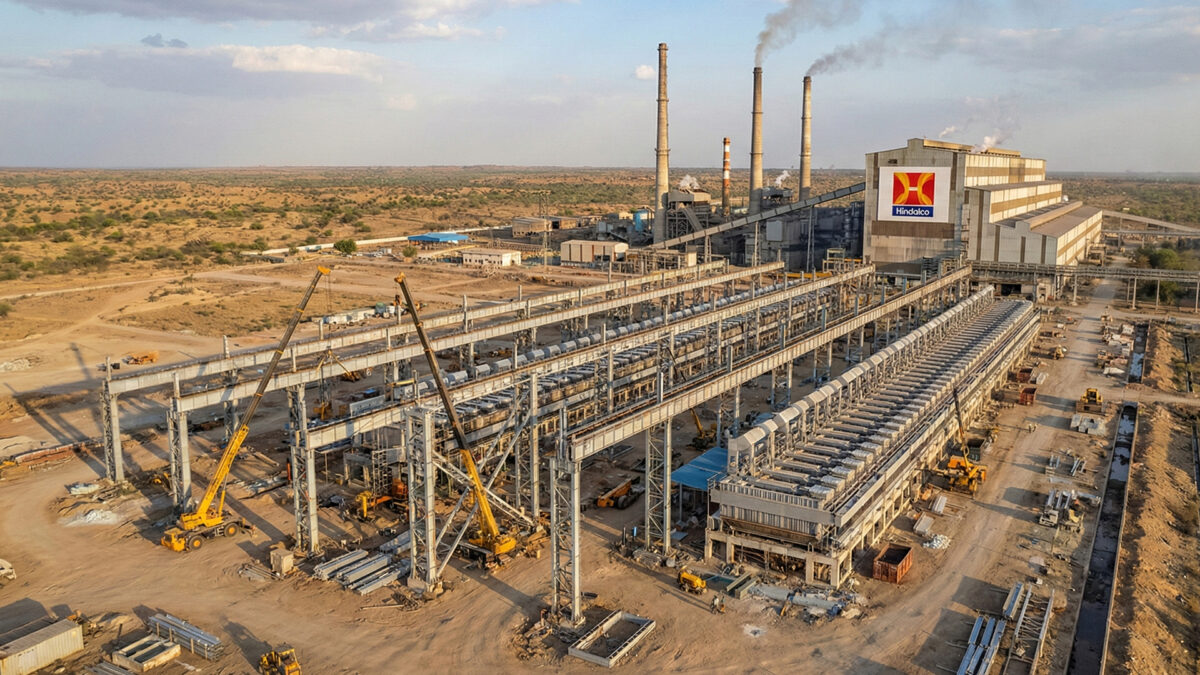
Shares of Hindustan Zinc rose sharply on Wednesday, gaining over 3 percent to touch a new 52-week high. The stock climbed to around Rs 587 on the BSE, driven by a strong rally in silver prices in both domestic and global markets. With this rise, the stock has gained nearly 30 percent in the last one month and has ended higher in six of the last seven trading sessions.

The main reason for the surge in Hindustan Zinc’s share price is the historic jump in silver futures. On the Multi Commodity Exchange (MCX), silver futures for March delivery crossed Rs 2.05 lakh per kilogram for the first time ever. Other contracts for May and July also touched record highs, crossing Rs 2.08 lakh and Rs 2.12 lakh per kg respectively. In the international market, spot silver prices moved above $66 an ounce, reflecting strong global demand.

Experts say silver prices are rising due to a mix of factors. These include growing industrial demand, increased investor interest in precious metals, and overall strength in commodity markets. Unlike gold, silver is widely used in industries such as electronics, solar energy and electric vehicles, which adds to its demand during periods of economic expansion.

Hindustan Zinc, part of the Vedanta Group, is India’s largest producer of refined silver with 99.9 percent purity. Higher silver prices directly improve the company’s revenue potential and profit outlook, making the stock more attractive to investors. The company is also a leading producer of zinc and lead, which further supports its long-term business prospects.

With silver trading at record levels, Hindustan Zinc is expected to remain in focus, especially if commodity prices stay firm in the coming weeks.

Also Read: Amazon in $10 billion investment talks with OpenAI

Categories
Corporate

Sensex falls 120 points, Nifty slips below 25,850

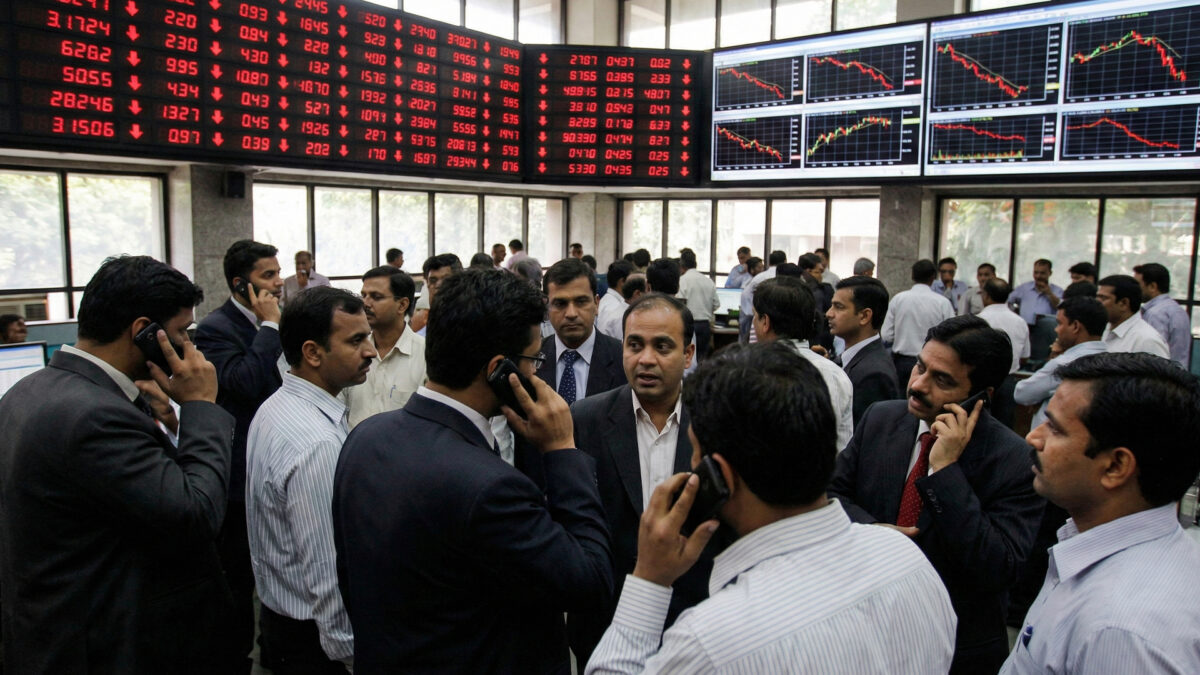
The market ended lower on Wednesday, with both major indices closing in the red amid cautious investor sentiment. The BSE Sensex fell 120 points to close at 84,559, while the NSE Nifty 50 slipped below 25,850, settling at 25,818.

Leading the losses were key banking stocks, with HDFC Bank and ICICI Bank dragging the market down. Other prominent losers included Trent, Adani Ports, and Bajaj Finserv, which fell between 1% and 2% during the session. These declines outweighed gains in some segments, keeping the benchmarks under pressure.

On the positive side, public sector banks performed well, with the PSU Bank index rising around 1.2%. This was a rare bright spot amid a broad selloff. However, other sectors such as media, private banks, real estate, consumer durables, FMCG, and healthcare ended lower, reflecting a cautious mood among investors.

The weakness also extended to broader market indices. Mid-cap stocks fell approximately 0.5%, while small-cap stocks lost around 0.7%, indicating that the market pressure was not limited to the largest companies alone.

Market analysts attributed the decline to subdued global cues and ongoing concerns in the domestic financial sector. With major banking counters under pressure, investors appeared cautious, and buying momentum remained muted throughout the trading day.

Overall, the market showed a defensive tone, with losses concentrated in financial and consumer sectors, while select public sector banks provided limited support. Investors are expected to monitor upcoming earnings reports and global developments closely for market direction.

Also Read: Sensex slips 100 points, Nifty below 25,850

Categories
Corporate

Amazon in $10 billion investment talks with OpenAI

Amazon is in early discussions to invest more than $10 billion in OpenAI, the company behind the popular AI chatbot ChatGPT. If the deal goes through, OpenAI’s valuation could exceed $500 billion, reflecting the growing competition among tech giants to lead the fast-expanding artificial intelligence sector.

The potential investment would allow OpenAI to use Amazon’s cloud services and AI chips, strengthening its infrastructure for AI development. OpenAI already spends billions on Amazon Web Services (AWS) but also relies on other suppliers such as Nvidia for AI chips.

Despite the investment, Amazon would not gain the right to sell OpenAI’s most advanced AI models through its cloud platform. Microsoft, a major investor in OpenAI, holds exclusive rights to distribute these models via its Azure cloud services, giving it a significant strategic advantage.

Industry analysts say Amazon’s move is part of a broader trend where cloud providers invest directly in AI companies to gain access to cutting-edge technology. Other AI firms, like Anthropic, have also attracted investment from a mix of tech giants, including Google, Microsoft, and Amazon.

OpenAI has recently reshaped its partnership with Microsoft, allowing it to work with multiple infrastructure providers. This flexibility makes it easier for the company to raise funds and expand its AI offerings. Reports suggest OpenAI is preparing for a future initial public offering (IPO), which could value the company at up to $1 trillion.

No formal announcement has been made, and the terms of the investment are still being negotiated. If finalized, this deal would be among the largest in the AI industry, highlighting how cloud and technology companies are positioning themselves to dominate AI development, cloud infrastructure, and chip supply.

It is a known fact that artificial intelligence is reshaping the tech industry’s strategic partnerships and investment flows. Companies are not only competing to develop the most advanced AI but also to control the infrastructure and services that deliver it to businesses and consumers worldwide.

Also Read: World’s smallest robots sense, think and move

Categories
Corporate

Apple explores chip assembly in India

Apple is taking a closer look at India’s semiconductor ecosystem as it explores the possibility of assembling and packaging select iPhone components locally, marking a potential shift in how deeply the company integrates India into its global supply chain.

According to reports, Apple has initiated early-stage discussions with Indian chipmakers, including CG Semi, a Murugappa Group company that is setting up an outsourced semiconductor assembly and test (OSAT) facility in Sanand, Gujarat. The focus of these talks is on backend chip processes such as assembly, testing and packaging — a critical but less complex stage compared to advanced chip fabrication.

If the plans move forward, this would be the first time Apple brings chip-level work for iPhones into India. Currently, India’s role in Apple’s manufacturing network is largely limited to final device assembly through partners like Foxconn, Tata Electronics and Pegatron. Adding semiconductor packaging would significantly raise India’s value contribution in the iPhone production chain.

Industry sources indicate that the discussions are still exploratory. Any partnership would require Indian suppliers to meet Apple’s strict benchmarks on quality, yield, reliability and scale. Neither Apple nor CG Semi has officially confirmed the talks.

From a technology and supply-chain perspective, the move fits squarely into Apple’s broader diversification strategy. The company has been steadily reducing dependence on China by expanding manufacturing in alternative locations, particularly India and Vietnam. Rising geopolitical risks, trade barriers and supply disruptions have accelerated this shift across the global tech industry.

India, meanwhile, is positioning itself as a semiconductor hub under government-backed incentive schemes aimed at attracting chip assembly, testing and fabrication investments. OSAT facilities are seen as a practical entry point, requiring lower capital and shorter timelines compared to full-scale chip fabs.

Apple’s interest could act as a catalyst for India’s semiconductor ambitions. Securing a global technology leader as a customer would not only validate local capabilities but also encourage further investments in chip design, materials and advanced packaging technologies.

While India is still years away from competing with established semiconductor hubs in Taiwan or South Korea, analysts say incremental steps like chip packaging for iPhones could steadily build expertise and confidence.

For Apple, deeper localisation offers greater supply-chain resilience. For India, it represents a meaningful step up the global technology value chain,  from assembling devices to handling core components that power them.

Also Read: US Tech Force set to boost AI and digital services

Categories
Corporate

KSH International IPO subscribed 21% on day 2

KSH International’s initial public offering (IPO) has had a slow start. By the second day, the IPO was subscribed around 21%, indicating cautious investor interest. The grey market premium (GMP), which signals expected listing gains, remains low, suggesting that immediate profits after listing are unlikely.

The company aims to raise about ₹710 crore through the IPO, which includes a fresh issue of ₹420 crore and an offer-for-sale of ₹290 crore. The share price band is set between ₹365 and ₹384 per share. The IPO will remain open until December 18, with allotment expected on December 19. Listing on the BSE and NSE is planned for around December 23.

Despite the slow early response, analysts say KSH International has strong long-term prospects. The company is one of India’s largest manufacturers of magnet winding wires, used in power, automotive, renewable energy, and industrial machinery sectors. These industries are expected to grow steadily, supporting the company’s performance in the coming years.

Brokerages recommend subscribing with a medium- to long-term perspective rather than expecting quick listing gains. KSH International’s presence in key infrastructure and energy sectors provides a stable foundation for future growth.

Early investor response has been modest, but experts see potential in the company’s strong fundamentals. The IPO offers an opportunity for investors seeking steady growth rather than immediate returns.

Overall, while subscription numbers are low, the company’s sector focus and business model make it an attractive option for patient investors. The market will watch closely as the IPO closes and moves toward listing.

Also Read: Vedanta shares jump 4% to ₹405 after NCLT approves demerger

Categories
Corporate

Vedanta shares jump 4% to ₹405 after NCLT approves demerger

Vedanta Ltd has received approval from the National Company Law Tribunal (NCLT) for its long-awaited demerger plan, marking a significant milestone in the company’s corporate restructuring. The Mumbai bench of NCLT sanctioned the scheme under company law, paving the way for Vedanta to split its diversified operations into sector-focused entities.

As per the approved plan, Vedanta will separate its operations into distinct businesses covering aluminium, oil & gas, power, and iron & steel. The parent company will retain its core metals like zinc and silver and act as an incubator for new ventures. The move is expected to help each unit focus on its specific operations and improve overall efficiency and shareholder value.

The demerger proposal had faced scrutiny, including queries from the Ministry of Petroleum and Natural Gas over asset disclosures and financial risks. However, the tribunal concluded that the scheme meets all legal and regulatory requirements, giving the green light to the corporate split.

Following the approval, Vedanta shares surged 4% to ₹405, reaching a 52-week high. Market analysts say the stock rally reflects positive investor sentiment, as the demerger is seen as a step toward unlocking value and improving transparency in the company’s diversified business portfolio.

The company is now set to implement the demerger over the coming months, subject to further regulatory and procedural approvals. Industry experts believe the move will make Vedanta’s operations more agile and competitive, while providing clearer visibility for investors.

Also Read: Rupee slips to ₹91 per dollar, stabilises after RBI action

Categories
Corporate

Sensex slips 100 points, Nifty below 25,850

On Wednesday the markets had a cautious start, as Sensex slipped by over 100 points, while the Nifty dropped below the key 25,850 level. Traders chose to stay careful in the midst of uncertain global cues.

The overall mood on Dalal Street was subdued, with selling pressure seen in several heavyweight stocks. IT and metal stocks emerged as the biggest losers, dragging the market lower. Shares of Infosys, TCS and Wipro declined amid concerns over slowing global tech spending, while Tata Steel and JSW Steel slipped due to weak commodity cues.

In contrast, public sector bank stocks provided some relief to the market. The Nifty PSU Bank index rose nearly 1%, supported by gains in State Bank of India, Bank of Baroda, Punjab National Bank and Canara Bank. Buying interest in these stocks was driven by value buying and expectations of stable earnings.

Other sectors such as FMCG and auto traded mixed, reflecting the market’s cautious tone. Broader indices also stayed under pressure, with mid-cap and small-cap stocks seeing mild losses.

Market experts said investors are adopting a wait-and-watch approach, closely tracking global developments and interest rate signals. While broader markets lacked direction, selective buying in PSU banks showed that investors are still willing to invest in pockets where valuations appear attractive.

Also Read: Sensex drops 533 points, Nifty slips below 25,900

Categories
Corporate

SEBI starts ₹18 cr recovery against finfluencer ‘Baap of Charts’

The Securities and Exchange Board of India (SEBI) has initiated recovery proceedings worth nearly ₹18 crore against stock market influencer Mohammad Nasiruddin Ansari, widely known as ‘Baap of Charts’, along with Rahul Rao Padamati and Golden Syndicate Ventures Pvt. Ltd. The move comes after the entities failed to comply with earlier regulatory orders and did not pay penalties imposed on them.

SEBI had earlier found that Ansari and his associates were offering investment advice and stock trading recommendations without mandatory registration. Through social media platforms, paid courses, and online groups, they allegedly promised high returns to investors, which is a violation of securities market regulations meant to protect retail participants.

According to the regulator, the recovery amount includes penalties, interest, and additional charges arising from earlier enforcement orders. As part of the recovery process, SEBI has directed banks and depositories to freeze accounts and assets linked to the defaulters. The regulator has also restricted them from selling or transferring any movable or immovable property until the full amount is recovered.

SEBI noted that the funds currently available in the bank accounts of the individuals and the company may not be sufficient to cover the total dues. Therefore, it has invoked recovery mechanisms similar to those used for tax arrears, including attachment of assets and possible sale if payments are not made.

This action is part of SEBI’s intensifying crackdown on unregulated finfluencers, who have gained popularity on social media by offering market tips without accountability or oversight. The regulator has repeatedly warned investors to be cautious of online personalities who are not registered investment advisers or research analysts.

Over the past year, SEBI has taken several steps to curb misleading financial content, including issuing advisories, imposing penalties, and tightening disclosure norms for social media influencers promoting financial products.

Market experts say such enforcement actions send a strong signal that regulatory compliance is non-negotiable, regardless of an individual’s online following or popularity. SEBI has reiterated that only registered entities are permitted to provide investment advice and that violations will attract strict action to safeguard investor interests.

The recovery proceedings underline SEBI’s message that financial influencers operating outside the regulatory framework will face serious consequences, especially when investor money and trust are at stake.

Also Read: Meesho shares soar 13%, market cap crosses ₹85,000 cr

Categories
Corporate

Sensex drops 533 points, Nifty slips below 25,900

The markets ended lower on Tuesday where the Sensex fell 533 points, while the Nifty closed below the 25,900 level, as investors remained cautious amid declines in US and Asian markets.

Markets opened on a weak note and continued to trade under pressure throughout the session, with limited buying interest at lower levels. Selling was seen across sectors such as banking, information technology, metals, realty and oil & gas, reflecting concerns over global growth and risk sentiment.

On the positive side, select stocks managed to attract buying interest. InterGlobe Aviation (IndiGo) emerged as one of the top gainers, supported by stock-specific demand. ITC and Tata Consumer Products also ended higher, with FMCG stocks showing relative resilience as investors turned to defensive names amid market volatility. Gains in these stocks, however, were not enough to offset losses in heavyweight sectors.

Among the major losers, ONGC, Mahindra & Mahindra, Cipla, Eicher Motors and JSW Steel declined sharply, weighing on the indices. Axis Bank and Eternal were also among the prominent laggards on the Nifty, contributing to the broader weakness in financial stocks. IT stocks remained under pressure as investors stayed cautious ahead of global economic signals, while metal shares slipped on weak international demand outlook.

Market breadth remained weak, with declining stocks outnumbering advancing ones on the exchanges. Midcap and smallcap indices underperformed the frontline benchmarks, indicating continued risk aversion among investors.

Also Read: Sensex slips over 350 pts at open, Nifty below 25,950

Categories
Corporate

Meesho shares soar 13%, market cap crosses ₹85,000 cr

Shares of Meesho Ltd soared 13.3 percent to ₹193.50 on Tuesday, taking the company’s market capitalization past ₹85,000 crore. The sharp rise comes just weeks after its IPO, where shares had opened 46 percent above the issue price of ₹111.

Since listing, Meesho has delivered around 74 percent gains to early investors, reflecting strong confidence in its growth story. The platform, which connects small entrepreneurs and resellers with customers through social channels, has rapidly expanded in tier‑2 and tier‑3 cities, standing out in India’s competitive e-commerce sector.

The rally has also made co-founder and CEO Vidit Aatrey a billionaire, based on the paper value of his stake in the company. This milestone highlights the enormous wealth-creation potential of India’s tech start-ups and the financial rewards for visionary founders.

Trading in Meesho shares has remained robust, supported by both retail and institutional investors. Analysts say the strong post-IPO momentum underlines optimism about the company’s long-term prospects.

With its growing user base, unique business model, and expansion plans, Meesho is expected to remain a closely watched stock, symbolizing India’s booming digital commerce and entrepreneurial spirit.

Also Read: Meesho founder Vidit Aatrey joins the billionaire club