Categories
Corporate

Air India gets its first custom Boeing 787 Dreamliner since privatisation

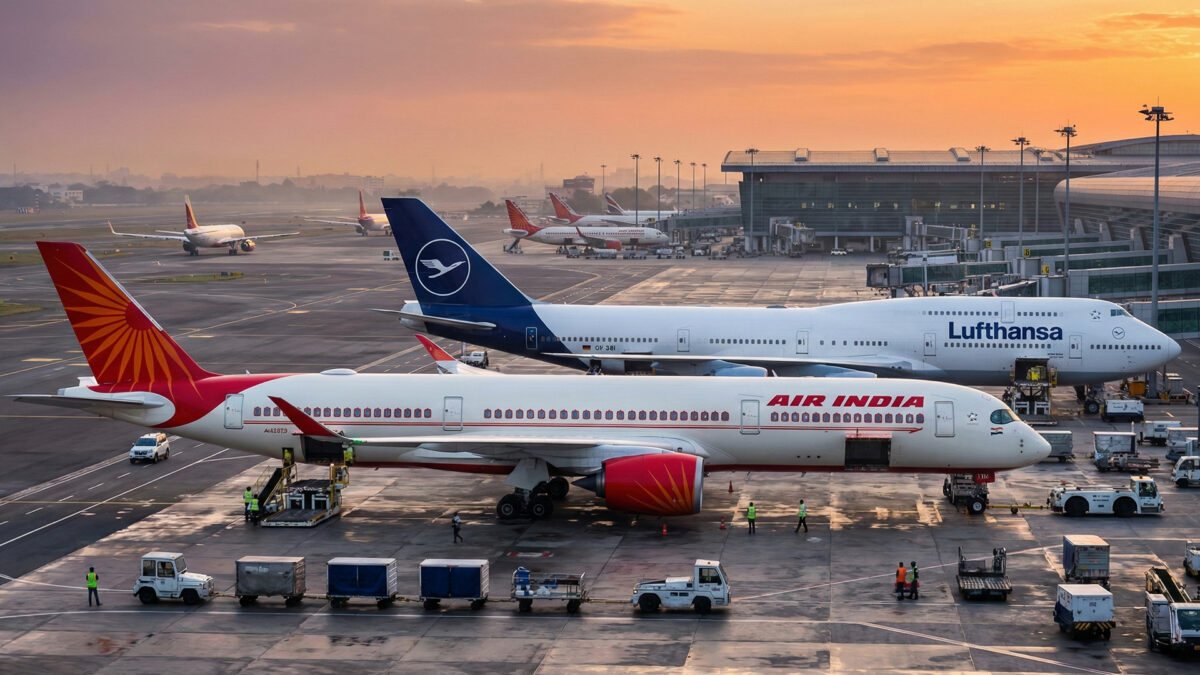
Air India was handed over its first customised Boeing 787 Dreamliner since returning to private ownership, marking a key step in the airline’s long-term transformation under the Tata Group. The aircraft, a Boeing 787-9, is the first wide-body jet built to Air India’s specific requirements after more than eight years.

The handover was completed at Boeing’s Everett facility in the United States, where ownership of the aircraft was formally transferred to the airline. Unlike earlier Dreamliners inducted during government ownership, the newly delivered jet has been manufactured with Air India’s own cabin design, layout and onboard features, reflecting the carrier’s revised product strategy.

Once it receives regulatory clearance from India’s aviation authorities, the aircraft is expected to be deployed on long-haul international routes. The Dreamliner features a three-class configuration comprising business class, premium economy and economy seating, aimed at improving comfort and consistency across Air India’s long-distance network.

The delivery assumes added significance as it represents the airline’s first “line-fit” wide-body aircraft since its privatisation in 2022. Since then, Air India has embarked on an ambitious fleet renewal programme that includes one of the largest aircraft orders in global aviation history, spanning both Boeing and Airbus models.

Industry executives view the induction of the customised Dreamliner as a visible sign of Air India’s shift away from ageing aircraft and legacy interiors. The airline has been working simultaneously on refurbishing older planes, introducing new service standards and expanding its international footprint.

The Boeing 787-9 is expected to play a central role in Air India’s long-haul strategy due to its fuel efficiency, extended range and lower operating costs compared to older wide-body aircraft. The model is well suited for routes connecting India with Europe, North America and parts of East Asia.

Air India’s fleet modernisation push extends beyond wide-body aircraft. Its group airlines have also begun inducting next-generation narrow-body jets to support domestic and regional growth. Together, these additions are intended to support higher frequencies, improved reliability and a more competitive global offering.

As more customised aircraft are scheduled for delivery in the coming months, Air India is positioning itself to rebuild its brand as a full-service international carrier, with the latest Dreamliner marking a symbolic and operational milestone in that journey.

Categories
Corporate

Adani eyes jet manufacturing through Embraer partnership

The Adani Group is preparing to enter aircraft manufacturing through a partnership with Brazilian aerospace company Embraer, marking a significant expansion of its aviation ambitions beyond airports and maintenance services.

Adani Aerospace recently signed a memorandum of understanding with Embraer to set up a final assembly line in India for the manufacturer’s regional jets. These aircraft are typically deployed on short and medium haul routes and can accommodate between 70 and 146 passengers.

An official announcement is expected at the Hyderabad Air Show next month, though the companies have not yet disclosed details.

The initiative aligns with the government’s broader Make in India push, and officials are said to be considering indirect incentives to support the project. These may include fiscal benefits for airlines that place orders from the proposed Indian assembly line, with incentives tapering as order volumes increase.

Embraer already has a meaningful footprint in India, with nearly 50 aircraft across commercial, defence and business aviation segments currently in operation. In commercial aviation, regional carrier Star Air operates Embraer jets and may expand its fleet, while several start-up airlines are evaluating Embraer aircraft amid long delivery timelines from Airbus and Boeing.

India is the world’s fastest-growing aviation market, with airlines having placed over 1,800 aircraft orders, prompting government efforts to attract global aircraft manufacturers to establish local production facilities.

For the Adani Group, the move complements its plan to invest ₹1 lakh crore in airport infrastructure over five years. The group has already expanded into MRO facilities, flight simulation training, and plans to enter engine MRO and passenger-to-freighter conversions, aiming to build a comprehensive aviation services platform.

Categories
Corporate

China asks tech firms to pause Nvidia H200 chip orders

Chinese authorities have asked some local technology firms to temporarily stop placing orders for Nvidia’s H200 AI chips, sources say, as the government moves to encourage the use of domestically developed artificial intelligence processors.

The guidance highlights China’s effort to reduce reliance on foreign semiconductor technology amid growing U.S.-China tensions over advanced chip exports. Nvidia has been navigating a delicate situation, with the US restricting some AI chip exports while Chinese companies look to secure supply for their AI initiatives.

Officials in Beijing are reportedly discouraging stockpiling of US chips until a final policy decision is made regarding access to Nvidia’s high-performance H200.

A spokesperson for the Chinese Embassy in Washington, Liu Pengyu, said the country aims to “develop its own capabilities while cooperating internationally to keep global supply chains stable.”

Nvidia CEO Jensen Huang said that demand from China remains high, but that the company is treating current orders as indications of interest rather than formal approval from Beijing.

The H200 chip, a predecessor to Nvidia’s latest Blackwell processors, continues to be subject to US export licensing rules, including a special revenue-sharing condition imposed last year.

Categories
Corporate

Sensex slides 150 points; Nifty slips below 26,100

Indian equities traded lower on Thursday, extending their losing streak into a fourth consecutive session, as concerns over US tariffs, sustained foreign fund outflows and weak global cues continued to weigh on investor sentiment.

The BSE Sensex was down 218 points, or 0.26 per cent, at 84,743, while the NSE Nifty 50 slipped 84 points, or 0.32 per cent, to 26,057 levels. Selling pressure remained broad-based, particularly among heavyweight stocks.

On Wednesday, benchmarks had closed lower for a third straight session, with the Sensex ending at 84,961.14 and the Nifty at 26,140.75, as geopolitical tensions and persistent institutional selling dampened sentiment.

The top losers were TCS, Tech Mahindra, Asian Paints, Maruti Suzuki, Infosys, UltraTech Cement, HCL Technologies, Tata Steel, Reliance Industries, Sun Pharma, Kotak Mahindra Bank and Power Grid, declining up to 2 per cent. While, only nine Sensex stocks were trading higher, led by ICICI Bank, BEL, Adani Ports, HDFC Bank, HUL, Bajaj Finance, Titan, Axis Bank and Eternal.

Broader markets also remained under pressure, with the Nifty MidCap index down 0.66 per cent and the Nifty SmallCap index slipping 0.38 per cent.

Sectorally, losses were led by metals, with the Nifty Metal index falling 1.75 per cent, followed by IT down 0.85 per cent and pharma lower by 0.6 per cent. Investors remain cautious ahead of earnings announcements and global macro cues.

Categories
Corporate

SEBI plans 30‑day delay for stock data use in education

The Securities and Exchange Board of India (SEBI) has proposed a 30‑day delay for sharing and using stock market price data in educational content. The aim is to prevent misuse of live market prices while still allowing investors to learn from recent market trends.

Currently, exchanges and market intermediaries can share data with a one‑day delay, but educational content often uses data that is three months old. SEBI said this difference creates confusion and could let some use near real-time data improperly, which should normally require registration as investment research or advisory.

The new proposal would standardize the delay to 30 days for both sharing and using data. SEBI said this is enough to protect sensitive market information while keeping educational material meaningful. Existing rules on prohibited activities will still apply, and entities focused only on education must continue to follow them.

The regulator has opened the proposal for public comments until January 27, 2026, before finalizing the rules. SEBI’s move comes after concerns that some online platforms and educators were misusing live market data under the guise of teaching investors.

By setting a uniform 30‑day delay, SEBI aims to tighten safeguards around stock price data, reduce confusion, and support credible and safe investor education across India.

This proposal is part of SEBI’s broader efforts to balance market transparency with investor protection, making sure educational content is helpful without allowing it to be used as a shortcut to trade on inside or real-time information.

Also Read: Rekha Jhunjhunwala’s Titan stake hits ₹20,000 crore

Categories
Corporate

Sensex rests 102 points lower, Nifty below 26,150

Indian equity markets closed lower on Wednesday, January 7, 2026, as profit-taking and selective sector weakness weighed on investor sentiment. The BSE Sensex dropped 102 points to settle at 87,654, while the Nifty 50 declined below 26,150, marking the third consecutive session of losses.

Selling pressure was concentrated in auto, metal, and financial stocks, while global cues remained cautious. Market participants adopted a wait-and-watch stance ahead of key corporate earnings and macroeconomic data, keeping trading range-bound.

Among top gainers, Titan Company led the rally on robust demand outlook, supported by select IT and pharmaceutical stocks benefiting from defensive buying.

Lagging stocks included Maruti Suzuki and Tata Motors Passenger Vehicles, which dragged the auto sector lower, while Bajaj Finance and Bajaj Finserv faced pressure in the financial segment.

Market breadth was negative, with declining stocks outpacing advancers, reflecting cautious positioning by institutional investors. Sector rotation favored technology, pharmaceuticals, and consumption-led names, as traders balanced risk-off sentiment with selective accumulation.

Analysts noted that short-term volatility is likely to continue, with investor focus remaining on earnings updates, global developments, and domestic macroeconomic cues. They advised monitoring sector-specific movements and global market trends before making fresh commitments.

Also Read:: Sensex down 150, Nifty under 26,150

Categories
Corporate

Meesho shares slide 5% as ₹2,000 cr equity frees up

Shares of Indian e-commerce company Meesho fell sharply on Wednesday, dropping as much as 5% and hitting the lower circuit limit on the BSE. The decline came after the expiry of a one-month IPO lock-in period, which allowed nearly 110 million shares, valued at around ₹2,000 crore, to become freely tradable in the market.

The lock-in period, imposed on certain shareholders following Meesho’s recent public listing, restricts them from selling their shares immediately after the IPO. Once this period ends, these investors are free to sell their holdings, often increasing the supply of shares in the market and putting pressure on the stock price. Analysts say this is a normal market phenomenon after lock-in expiries and does not reflect the company’s long-term performance.

Despite the sharp drop, Meesho’s shares remain well above its IPO price of ₹111 per share. The stock had reached post-listing highs in December 2025, but the current correction has brought it down about 32% from those peaks. Market observers note that while some investors may sell immediately, others could hold onto their shares, meaning the market may stabilize in the coming days.

Financial analysts maintain a cautiously optimistic outlook on Meesho, citing its strong growth potential in India’s expanding e-commerce sector. They suggest that the stock’s short-term volatility due to lock-in expiry is not unusual, and long-term prospects remain positive given the company’s solid business fundamentals and market penetration.

Investors are advised to monitor market trends carefully and consider the stock’s fundamentals rather than making decisions based solely on technical fluctuations. Lock-in expiries often lead to temporary volatility, but Meesho’s growth trajectory and expanding user base continue to make it a promising player in the Indian e-commerce space.

Also Read: Venezuela to send 30–50 mn barrels of oil to US

Categories
Corporate

Mobileye moves into humanoid robotics with $900mn Mentee buy

Mobileye, the autonomous driving technology company backed by Intel, has announced its acquisition of AI robotics startup Mentee Robotics in a deal valued at approximately $900 million. The transaction combines cash with Mobileye stock and is expected to close in the first quarter of 2026.

The acquisition brings together Mentee’s cutting-edge humanoid robot technology with Mobileye’s expertise in autonomous vehicles and artificial intelligence. According to company officials, the collaboration aims to position Mobileye as a global leader in “physical AI” – the application of AI in real-world, autonomous systems, including both robots and vehicles.

Mentee Robotics has developed humanoid robots capable of performing complex tasks in industrial and warehouse environments. These robots use few-shot learning, simulation-based training, and advanced sensors to operate safely and independently. Mobileye plans to leverage its existing AI infrastructure and safety protocols from autonomous vehicles to accelerate Mentee’s commercial deployment. Initial operational deployments are expected later in 2026, with large-scale production slated for 2028.

“By combining Mobileye’s autonomous driving intelligence with Mentee’s humanoid robotics, we are entering a new era of physical AI,” said Amnon Shashua, Mobileye CEO and co-founder. “This acquisition allows us to bring practical, safe, and scalable humanoid robots to real-world applications much faster.”

Mentee Robotics will operate as an independent unit within Mobileye, retaining its leadership team and continuing its research and development initiatives. The integration is expected to enhance innovation while maintaining the agility that has made Mentee a standout in the robotics space.

Industry experts see this move as a strategic step for Mobileye, not just in the autonomous vehicle market but also in the growing humanoid robotics sector. The acquisition reflects a broader trend of convergence between AI-driven software and physical robotics, opening possibilities for industrial automation, logistics, and beyond.

With this deal, Mobileye reinforces its ambition to lead the next wave of AI-powered technologies, expanding from the roads to workplaces around the world.

Also Read: Adani Enterprises’ ₹1,000 cr bond fully subscribed in 45 minutes

Categories
Corporate

Adani Enterprises’ ₹1,000 cr bond fully subscribed in 45 minutes

Adani Enterprises Limited (AEL), the main company of the Adani Group, has raised ₹1,000 crore through a public issue of non‑convertible debentures (NCDs). The bonds were fully subscribed within 45 minutes of the issue opening on January 6, 2026.

The company initially offered a base size of ₹500 crore but had an option to increase it by another ₹500 crore if demand was high. Investors snapped up the base portion in just 10 minutes, showing strong confidence in the company.

The NCDs, which will be listed on BSE and NSE, offer an annual yield of up to 8.90%. Investors could choose from 24‑, 36‑, or 60‑month tenors, with interest paid quarterly, annually, or cumulatively. The bonds have been rated ‘AA‑’ by ICRA and CARE Ratings, indicating good credit quality.

At least 75% of the funds from this issue will be used to repay existing debt, and the remaining amount will support general corporate purposes. The issue was managed by Nuvama Wealth Management, Trust Investment Advisors, and Tipsons Consultancy Services.

This is not the first time AEL’s bonds have seen strong demand. A previous NCD issue of ₹1,000 crore in July 2025 was also fully subscribed on the first day, though it took three hours.

The rapid subscription reflects investors’ confidence in Adani Enterprises’ growth plans. The company is currently involved in major infrastructure projects, including the Navi Mumbai International Airport and other large-scale initiatives.

Also Read: Reliance shares slide over 4%

Categories
Corporate

Reliance shares slide over 4%

Reliance Industries Ltd (RIL) shares fell sharply, losing over 4 per cent in a single session, as investors reacted to concerns around the company’s crude oil sourcing strategy and rising uncertainty in the retail sector. The stock ended near ₹1,507, marking its steepest one-day decline in several months and wiping out close to ₹1 lakh crore from the company’s market capitalisation.

The immediate trigger for the sell-off was Reliance’s confirmation that it has not received Russian crude oil at its Jamnagar refinery for nearly three weeks and does not expect any deliveries in January. Russian oil had become an important source for Indian refiners over the past two years due to discounted prices. The halt has raised questions about future refining margins and supply stability, especially amid tighter Western sanctions and geopolitical pressures.

Market sentiment was further dented by concerns emerging from the retail sector. Weak updates from listed retail players have sparked fears of slowing consumer demand and margin pressure. Investors worry that similar challenges could impact Reliance Retail, which is a key growth engine for the conglomerate and a major driver of its valuation.

Analysts also pointed out that the sharp fall may partly reflect profit-booking. Reliance shares had risen strongly over the past year, outperforming the benchmark indices. With valuations at elevated levels, any negative trigger was likely to prompt investors to lock in gains.

The decline in Reliance shares weighed heavily on the broader market, dragging both the Sensex and Nifty lower due to the stock’s significant index weight. Market participants noted that sentiment turned cautious as uncertainty around global trade, crude prices and domestic consumption trends increased.

Looking ahead, analysts remain divided on the near-term outlook. While some expect continued volatility due to oil sourcing risks, retail sector pressure and global macro concerns, others believe Reliance’s long-term fundamentals remain intact. Potential triggers such as a future listing of Jio Platforms, tariff hikes in telecom services and stable refining margins could support the stock over time.

Also Read: Gold rises ₹1,38,830, Silver up by ₹2,53,100