Categories
Corporate

BHEL to Build Hydrogen-Powered Trains in Landmark Deal with Singapore’s Horizon Tech

BHEL to Build Hydrogen-Powered Trains in Landmark Deal with Singapore’s Horizon Tech

The 10-year deal targets clean hydrogen trains for India, as BHEL also expands into fertilizers and wins new orders

Sreelatha M

In a major step toward clean mobility, Bharat Heavy Electricals Ltd (BHEL) has entered a 10-year exclusive partnership with Singapore-based Horizon Fuel Cell Technologies to co-develop hydrogen-powered trains for India’s railways.

The deal is part of BHEL’s broader push into green transportation technologies, aligning with the Indian government’s hydrogen mission and the Railways’ goal of achieving net-zero carbon emissions by 2030.

Unlike traditional diesel or even electric trains, hydrogen locomotives run on fuel cells that convert hydrogen into electricity, emitting only water vapor. The collaboration will focus on jointly developing and manufacturing this next-generation rolling stock for the Indian market.

“Hydrogen fuel cell trains are not just about clean energy, they’re about reimagining the future of mobility,” a senior BHEL official noted.

Following the announcement, BHEL shares rose by 1.8% to an intraday high of ₹216.30 on the BSE, reflecting investor optimism around the company’s future in clean energy technologies.

However, despite the short-term boost, analysts flagged technical concerns. The stock continues to trade below all key moving averages, while RSI (Relative Strength Index) at 37.3 and MACD at –7.3 suggest bearish momentum remains.

BHEL also revealed a strategic tie-up with Nuovo Pignone International, a Baker Hughes company, to address compressor revamp opportunities in India’s fertilizer sector. This move is expected to improve BHEL’s presence in the Renovation and Modernisation (R&M) business for industrial machinery, an area with growing demand due to aging infrastructure.

On another front, BHEL recently accepted a Letter of Intent (LoI) worth approximately ₹2,600 crore from MB Power (Madhya Pradesh) Ltd. The order covers engineering and supply of boiler, turbine, generator, and auxiliaries for a 1×800 MW thermal power project in Anuppur, with a 58-month execution timeline. Components will be manufactured at BHEL’s Trichy and Haridwar plants.

While these deals signal strategic growth, BHEL’s recent financials underline the challenges it faces. In the June quarter, the company reported a net loss of ₹445.50 crore, widening from ₹211.40 crore a year ago, despite relatively flat revenues at ₹5,486.91 crore.

Still, industry observers see BHEL’s hydrogen train venture as a long-term play, tapping into both domestic policy momentum and global demand for clean mobility solutions.
 

Categories
Corporate

Adani Plans Mega $60 Billion Push Into India’s Energy Future

Adani Plans Mega $60 Billion Push Into India’s Energy Future

India’s fastest-growing electricity market is opening up trillion-dollar opportunities — and the Adani Group plans to seize a big share with a $60 billion push into renewables, transmission, and power generation by 2032.

Bhaskar Narang

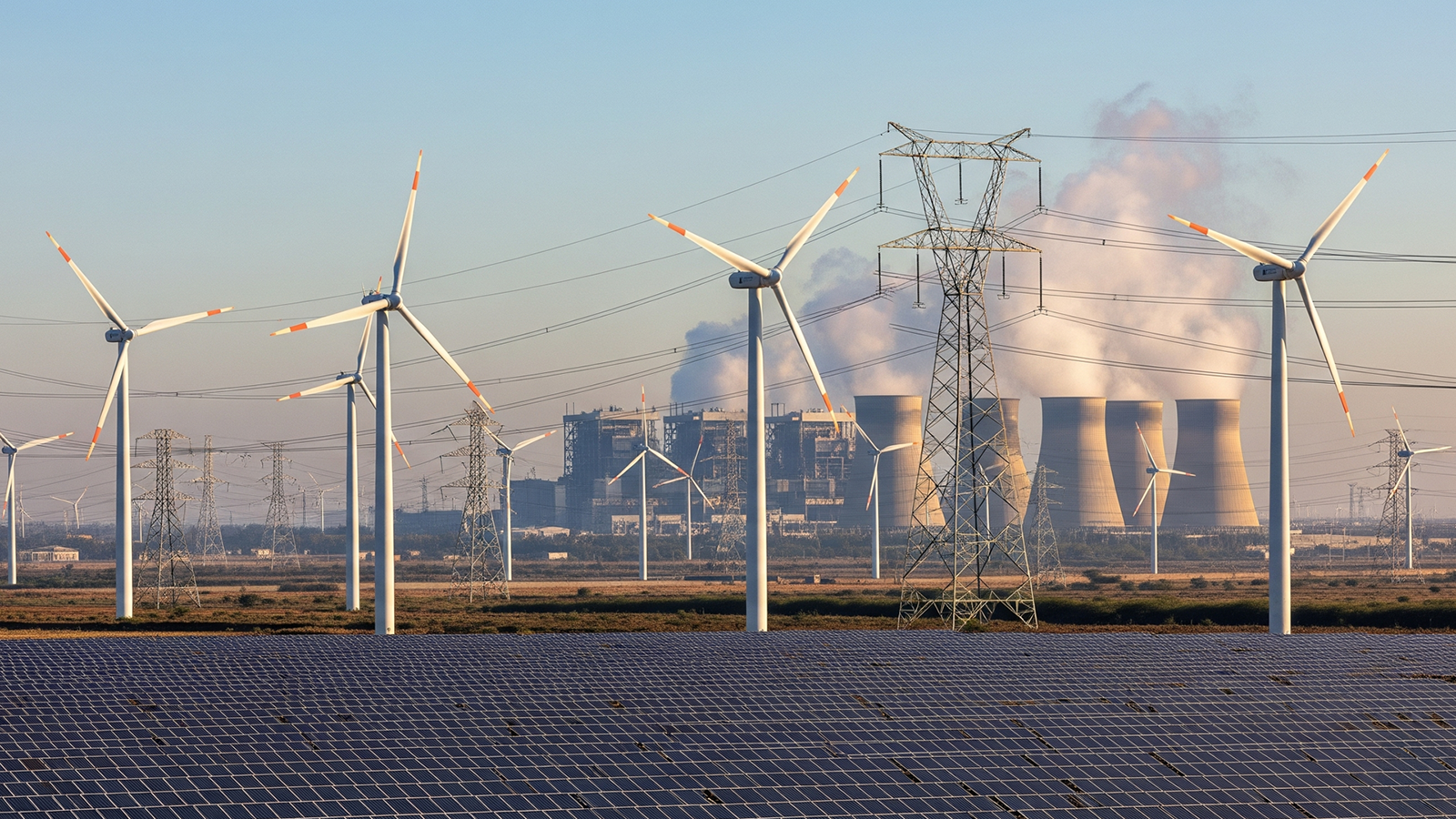
The Adani Group, led by industrialist Gautam Adani, has announced one of its biggest investment plans ever. Over the next seven years, up to the financial year 2031-32, the group intends to put in around USD 60 billion (over ₹5 lakh crore) into India’s power sector. This money will be spread across renewable energy projects like solar and wind, traditional thermal power, and the huge network of transmission lines that carry electricity to homes and businesses.

One of the most ambitious parts of the plan is a massive bet on renewable energy. Today, Adani Green Energy Ltd (AGEL) already runs solar and wind farms with a combined capacity of 14.2 gigawatts (GW). By 2030, the group wants to more than triple that to 50 GW. To achieve this, it will spend USD 21 billion.

To provide some perspective, 1 GW of power can supply electricity to about 750,000 Indian homes. So, scaling up to 50 GW would mean enough clean energy to power tens of millions of homes, schools, hospitals, and factories.

It is not enough to just generate power – the transmission backbone has to be strengthened if that power is to be transported reliably. This is where Adani Energy Solutions Ltd (AESL) comes in. The company, renamed as AESL in 2023 from ATL (Adani Transmission Ltd), already operates nearly 19,200 kilometres of high-voltage transmission lines, which carry electricity across states. By 2030, AESL plans to stretch that to 30,000 kilometres.

The group will invest USD 17 billion in this space, which also covers smart meters for homes and businesses, as well as district cooling solutions to reduce energy waste. Without such investments, India’s fast-growing demand for electricity cannot be met in a stable way.

Even though renewable energy is the future, conventional coal-based power will still play an important role in India. Adani Power Ltd (APL), the country’s largest private thermal power producer, will invest USD 22 billion by FY32. This will raise its generating capacity from 17.6 GW in FY25 to nearly 42 GW by FY32.

APL already has plants spread across Gujarat, Maharashtra, Karnataka, Rajasthan, Chhattisgarh, Madhya Pradesh, Jharkhand, and Tamil Nadu. It also runs a solar project in Gujarat. The company maintains that coal remains the “backbone” of India’s electricity supply, especially for handling peak demand and balancing fluctuations in renewable energy.

Explaining why it is making such a huge investment, the Adani Group points to the big picture: India is the world’s fastest-growing electricity market. The country’s installed power capacity is expected to more than double in just seven years – from 475 GW in FY25 to 1,000 GW in FY32. That growth itself opens up investment opportunities worth over USD 500 billion.

  • Renewables alone will require over USD 300 billion, as capacity expands from 172 GW to 571 GW by FY32.
  • Thermal power will also grow, from 247 GW to 309 GW by FY32, requiring about USD 91 billion of investment.
  • The transmission network will expand from 494,000 km today to 648,000 km by FY32, needing USD 110 billion.

Planners have pointed out that India’s energy transformation is not just about moving to clean power, but also about building an entire ecosystem to keep up with the world’s most rapid demand growth.

For ordinary Indians, this investment means several things:

  • More reliable electricity supply, with fewer outages.
  • Faster expansion of clean energy, reducing dependence on imported fuels.
  • Growth in infrastructure, which will directly create jobs and indirectly support industries.
  • India’s positioning as a global leader in renewable energy deployment.

By committing such a large sum, the Adani Group is essentially betting that India’s energy needs will remain the most attractive investment opportunity of this decade. If these plans materialise, the Group will not just be one of the largest private players in the global power market – it will also be among the biggest contributors to India’s green energy transition.

Categories
Corporate

Court Backs Adani in Defamation Suit, Orders Removal of False Content

Court Backs Adani in Defamation Suit, Orders Removal of False Content

The complaint also noted that defendants often referenced the controversial Hindenburg report of 2023, which alleged stock manipulation and over-leveraging.

Bhaskar Narang

A district court in Delhi has granted interim relief to the Adani Group, ordering the removal of defamatory material from websites and social media platforms in a case that underscores both the risks of unchecked digital misinformation and the balance courts must strike between free expression and reputational rights.

The court’s order, issued on 6 Sep, comes in response to AEL’s suit against journalist Paranjoy Guha Thakurta, several co-authors, and foreign-linked organisations that operate websites repeatedly publishing allegations of corruption, political patronage and cronyism.

Adani argued the publications were “agenda-driven,” intended to malign the Group globally, and had harmed investors, delayed projects and undermined confidence in India’s economy.

Judge Anuj Kumar Singh sided with Adani on the central question of interim relief, finding that the company had shown a prima facie case and that “irreparable injury” would be caused if the defamatory narratives continued circulating.

Adani Enterprises, the flagship company of the heavily diversified Adani Group, employs more than 27,000 people. The Adani Group is involved in ports, power, renewables and logistics. It operates the Haifa Port in Israel, mines in Australia and infrastructure projects across Asia and Africa. The plaint emphasised that Adani’s $15 billion in revenues and its role in securing India’s energy and infrastructure needs make its reputation not just a corporate concern but a matter of national interest.

The company pointed to three websites — paranjoy.inadaniwatch.org, and adanifiles.com.au — that it said existed “solely to defame” the Group and its founder Gautam Adani. Content from these sites was amplified through social media, reaching global audiences and, in Adani’s telling, causing tangible harm: panic in markets, billions in investor value wiped out, and delays in project execution.

The complaint also noted that defendants often referenced the controversial Hindenburg report of 2023, which alleged stock manipulation and over-leveraging. Adani has consistently rejected those claims, and the company stressed in court that it had faced regulatory scrutiny but emerged clean, having rebuilt market confidence through transparency and deleveraging. Moreover, Hindenburg Research, the short-seller firm that published the report, has itself shut down its operations.

The order highlights the judiciary’s effort to balance freedom of the press with protection against malicious defamation. While reaffirming that Article 19(1)(a) of India’s Constitution protects free speech, the court noted that this right is not absolute and must coexist with Article 21, which guarantees dignity and reputation.

Drawing on precedents including Subramanian Swamy v. Union of India and Swami Ramdev v. Juggernaut Books, the court observed that reputation is a fundamental right. It warned that “trial by media” and the spread of unsubstantiated allegations online can cause “irreparable, irreversible and incalculable harm.”

Accordingly, the Court directed that:

  • The defendants must remove unverified and prima facie defamatory articles, tweets, and posts within five days.

  • Intermediaries such as website hosts and registrars must disable access within 36 hours of notice, under the IT Rules of 2021.

  • The defendants are restrained from publishing further defamatory statements until the next hearing.

The judge also clarified that fair, accurate and substantiated reporting on investigations or judicial proceedings remains fully permissible.

For Adani, the injunction is a vindication of its stance that falsehoods circulated under the guise of activism and journalism can inflict material harm. By securing legal relief, the Group has not only protected its own reputation but also reinforced the principle that free speech carries responsibilities.

The case also reflects a broader challenge facing democracies: how to manage the speed and reach of digital narratives that can destabilise markets and erode trust in institutions. By placing obligations on intermediaries to act within 36 hours, the order could set a precedent for more proactive enforcement against defamatory content online.

The matter will next be heard on 9 October, when the defendants will have an opportunity to contest the allegations. But for now, Adani has succeeded in persuading the Court that its reputation — built over decades of infrastructure development in India and abroad — warrants protection from unverified attacks.

Categories
Corporate

Citroën Basalt X SUV Launched in India with AI, Turbo Power, and New Features

Citroën Basalt X SUV Launched in India with AI, Turbo Power, and New Features

A Blend of Style, Safety, and Smart Technology, Starting price of ₹7.95 lakh

Staff Writer

Citroën has launched the Basalt X SUV in India, starting at ₹7.95 lakh (ex-showroom), marking a significant step in the company’s expansion in the compact SUV market. The new model introduces not only design upgrades and premium features but also CARA, India’s first AI-powered in-car assistant.

The Basalt X retains its coupe-inspired silhouette while adding a new ‘X’ badge, LED daytime running lights, and dual-tone 16-inch alloy wheels. A dual-tone roof option is also available for an additional ₹21,000. Inside, the SUV features a tan-and-black interior theme with bronze trim inserts and leatherette finishes. Key features include a 10.25-inch touchscreen with wireless Android Auto and Apple CarPlay, a 7-inch digital instrument cluster, ventilated front seats, ambient lighting, and wireless charging.

The highlight of the Basalt X is CARA, an intelligent in-car voice assistant developed in India. Available exclusively in the Max automatic variant, CARA supports over 50 languages and can perform tasks such as navigation, vehicle diagnostics, music control, call handling, reminders, and emergency alerts.

Commenting on the launch, Shailesh Hazela, CEO & MD, Stellantis India, said, “India is at the heart of Stellantis’ global vision. With the Basalt X, we are proud to introduce CARA, India’s first intelligent in-car companion—conceived, engineered, and launched in India.” He added, “Basalt X Range is a bold step forward, strengthening our portfolio with exclusivity and comfort. These innovations are part of our long-term shift to make mobility more connected, more human, and more aspirational.”

The Basalt X is offered with two engine options: a 1.2L naturally aspirated petrol (82 bhp) with a 5-speed manual and a 1.2L turbocharged petrol (110 bhp) with either a 6-speed manual or automatic transmission. It carries forward a 4-star Bharat NCAP safety rating and includes six airbags, ESP, hill-hold assist, TPMS, and rear parking sensors.

Available in three variants—You, Plus, and Max—the Basalt X’s top-spec variant is priced at ₹12.89 lakh. Bookings are now open, with test drives set to begin later this month and deliveries expected during the festive season.


Categories
Corporate

Tata Motors Aligns with GST Reform, Reduces Prices to Boost Festive Demand

Tata Motors Aligns with GST Reform, Reduces Prices to Boost Festive Demand

Customers to benefit from significant savings as Tata Motors lowers prices following nationwide tax reform, effective September 22

Sreelatha M

 Tata Motors has announced a significant price cut across its passenger vehicle portfolio following the recent reduction in the Goods and Services Tax (GST). In a customer-centric move, the company confirmed it will pass on the full benefit of the GST revision to buyers, making its cars and SUVs more affordable across India.

This development comes in the wake of the government’s sweeping reform of the GST structure, aimed at simplifying tax brackets and stimulating consumer demand. With the implementation of the new GST slabs set to take effect later this month, Tata Motors will adjust ex-showroom prices of its vehicles starting September 22, 2025.

Commenting on the decision, Mr. Shailesh Chandra, Managing Director of Tata Motors Passenger Vehicles and Tata Passenger Electric Mobility, stated, “We welcome the government’s progressive move to rationalize the GST structure. In line with our 'Customer First' philosophy, we are pleased to pass on the entire benefit of the reduced GST to our customers. We believe this will enhance vehicle accessibility, especially for first-time buyers, and help bolster demand during the upcoming festive season.”

The revised prices will result in notable savings for customers, with reductions of up to ₹75,000 on the Tata Tiago, ₹80,000 on the Tigor, and ₹1.1 lakh on the Altroz. Mid-sized SUVs such as the Nexon will see cuts of up to ₹1.55 lakh, while larger models like the Harrier and Safari will be cheaper by up to ₹1.4 lakh and ₹1.45 lakh, respectively. The newly launched Tata Curvv will also benefit, with a price drop of up to ₹65,000.

The move positions Tata Motors competitively in the market while reinforcing its commitment to affordability, value, and customer satisfaction. Industry analysts expect the tax cuts and resulting price reductions to positively impact car sales during the crucial festival months, typically a high point for vehicle purchases in India.

Tata Motors continues to play a leading role in India’s passenger vehicle segment, offering a wide range of internal combustion and electric models designed to meet the evolving needs of Indian consumers.


Categories
Corporate

Adani Power, Bhutan’s DGPC Seal Pact for ₹6,000 Crore Wangchhu Hydropower Project

Adani Power, Bhutan’s DGPC Seal Pact for ₹6,000 Crore Wangchhu Hydropower Project

Adani Power said the ₹6,000 crore peaking run-of-river project will begin construction in the first half of 2026.

Staff Writer

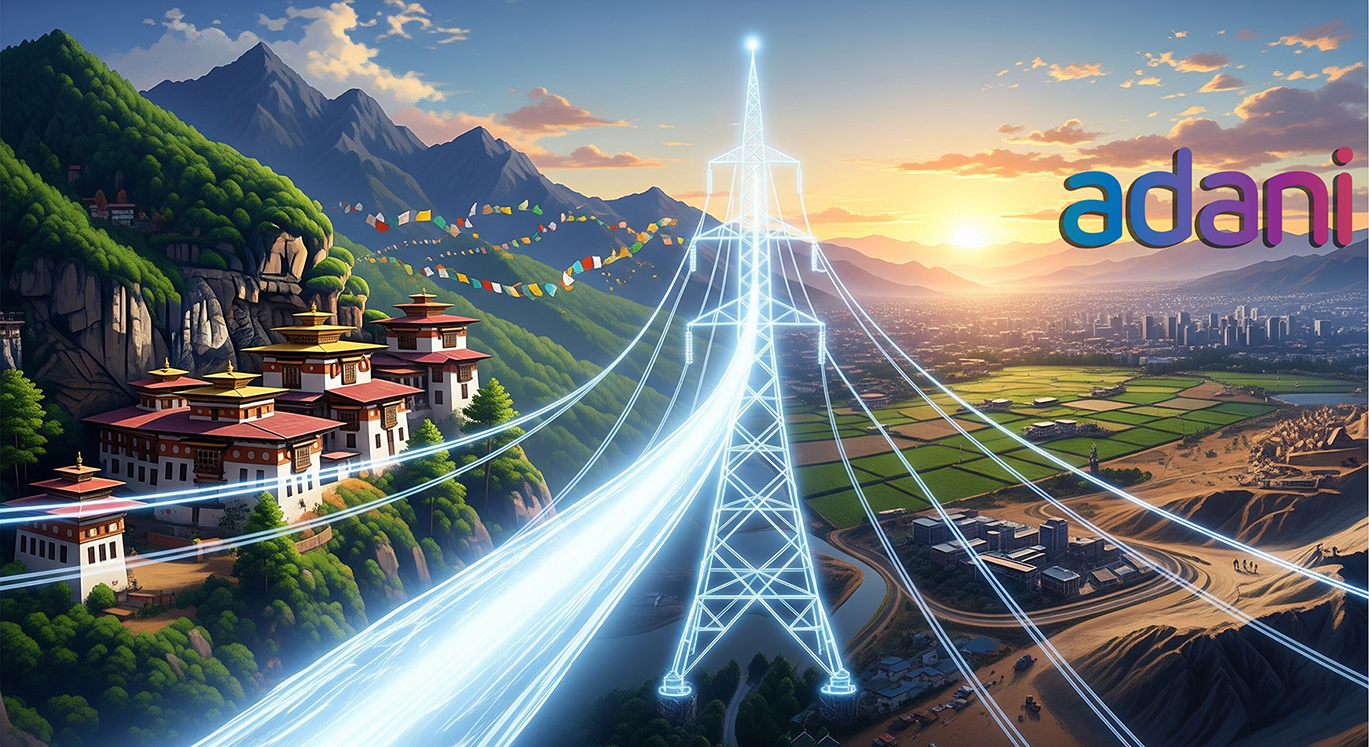
Adani Power Ltd. and Druk Green Power Corp. Ltd. (DGPC), Bhutan’s state-owned utility, have formalized agreements to develop the 570 MW Wangchhu hydroelectric project, marking a significant step in expanding India-Bhutan cooperation in renewable energy.

The two partners signed a Shareholders Agreement (SHA), an in-principle Power Purchase Agreement (PPA), and a Concession Agreement (CA) with the Royal Government of Bhutan. The project will be executed on a Build, Own, Operate, Transfer (BOOT) model, with ownership eventually transferred to Bhutan.

The Wangchhu project represents an estimated investment of about ₹6,000 crore, making it one of the largest private sector-led power projects in Bhutan. The detailed project report has already been completed, and construction is expected to begin in the first half of 2026. Adani Power has set a completion target of five years from groundbreaking.

According to Adani Power CEO SB Khyalia, the project will play a critical role in stabilizing Bhutan’s energy supply. “The Wangchhu hydroelectric project will critically meet Bhutan’s peak winter demand, when hydro power generation is low. During the summer months, it would export power to India,” Khyalia said.

Energy Security and Regional Trade

DGPC Managing Director Dasho Chhewang Rinzin emphasized that Adani’s technical and financial capabilities would accelerate project delivery. “Considering their technical and financial strength and the immense experience and expertise that the Adani Group brings to the table, the project implementation is expected to be fast-tracked and set a benchmark for other such projects. The project, on completion, will not only help ensure Bhutan’s energy security but also help further strengthen grid connectivity between Bhutan and India,” Rinzin noted.

Hydropower is the backbone of Bhutan’s economy, accounting for nearly 30 percent of government revenue and about 70 percent of export earnings, most of which come from sales to India. For India, deeper cooperation with Bhutan supports both its clean energy transition and cross-border electricity trade strategy.

The Wangchhu project is the first initiative under a memorandum of understanding signed in May 2025 between the Adani Group and DGPC to jointly develop 5,000 MW of hydropower capacity in Bhutan. The companies said discussions are ongoing to identify and launch further projects under this partnership.

For the Adani Group, the deal underscores its commitment to expanding its renewable energy portfolio beyond India’s borders. The group has been actively investing in solar, wind, and hybrid energy in India and is now extending its reach into neighboring markets through large-scale hydropower collaborations.

Industry experts note that the Wangchhu project comes at a time when South Asia is seeking greater energy integration. India has been strengthening power grid links with Bhutan, Nepal, and Bangladesh to improve regional energy security and reduce dependence on fossil fuels. Projects like Wangchhu not only support Bhutan’s development but also bolster India’s efforts to position itself as a regional energy hub.

With construction set to begin in 2026, the project is expected to be a landmark in the growing strategic partnership between the Adani Group and Bhutan, potentially paving the way for more cross-border renewable ventures in the region.

Categories
Corporate

Tesla Board Proposes Record $1 Trillion Pay Package for Elon Musk

Tesla Board Proposes Record $1 Trillion Pay Package for Elon Musk

The plan, disclosed in a regulatory filing, would award Musk as much as 12 percent of Tesla’s outstanding stock if the company meets a series of ambitious operational and financial milestones

Staff Writer

Tesla’s board has proposed an unprecedented compensation package for CEO Elon Musk that could be worth up to $1 trillion over the next decade, setting the stage for one of the most consequential shareholder votes in corporate history.

The plan, disclosed in a regulatory filing, would award Musk as much as 12 percent of Tesla’s outstanding stock if the company meets a series of ambitious operational and financial milestones. These include boosting Tesla’s annual production to 20 million vehicles, deploying one million robotaxis and one million humanoid robots, and securing 10 million active Full Self-Driving subscriptions. The company’s market capitalization would need to climb from about $1.1 trillion today to $8.5 trillion within ten years for Musk to realize the full payout.

The package also requires Musk to remain with Tesla for at least seven and a half years, with a succession plan for future leadership tied to the later stages of the award. The board, led by chair Robyn Denholm, argued that the proposal was essential to keep Musk focused on Tesla as it pushes deeper into artificial intelligence, robotics and autonomous driving.

Investors reacted positively to the announcement, sending Tesla shares up more than three percent. The proposal comes as the company continues to navigate intense competition in the electric vehicle market while seeking to expand its business model into new technologies.

The timing of the deal has raised questions. Earlier this year, a Delaware court struck down Musk’s $50 billion compensation plan from 2018, ruling that Tesla’s board lacked independence in approving it. The company has appealed the decision, and only last month granted Musk an interim equity award valued at nearly $24 billion.

Critics have already voiced concerns about governance, dilution of shareholder value and the concentration of power in Musk’s hands. Supporters, however, argue that the scale of the award reflects the scale of the challenge Tesla has set for itself.

Shareholders will vote on the proposal at Tesla’s annual meeting on November 6. If approved, the package would represent the largest executive pay deal in corporate history.

Categories
Corporate

EU Fines Google €2.95 Billion Over Abuse of AdTech Dominance

EU Fines Google €2.95 Billion Over Abuse of AdTech Dominance

The European Commission said Google unfairly promoted its own ad services, including its AdX exchange and DoubleClick for Publishers platform, while disadvantaging rivals.

Staff Writer

The European Union has imposed a €2.95 billion fine on Google after ruling that the tech giant abused its dominant position in the online advertising market. The penalty, announced on September 5, follows a four-year investigation and marks one of the most significant antitrust actions the bloc has taken against a U.S. technology company.

The European Commission said Google unfairly promoted its own ad services, including its AdX exchange and DoubleClick for Publishers platform, while disadvantaging rivals. Regulators concluded that this practice harmed publishers and advertisers by limiting choice and driving up costs, with knock-on effects for consumers.

The case is the latest in a string of multibillion-euro fines against Google. Since 2017, the company has faced penalties for anti-competitive practices related to its search engine, Android operating system, and Google Shopping service. The latest action takes the EU’s total fines against Google to more than €10 billion.

Under the ruling, Google has 60 days to submit a plan addressing the Commission’s concerns. Officials warned that if the company fails to provide a satisfactory remedy, structural measures could be imposed, potentially forcing Google to divest parts of its ad-tech business. EU Competition Chief Teresa Ribera said that breaking up Google’s advertising operations may be the only effective way to end the conflict of interest.

Google has vowed to appeal, calling the ruling “wrong” and claiming that changes demanded by Brussels would harm thousands of European businesses that rely on its platforms. The company argued that its ad services provide valuable tools for publishers and advertisers, and that stricter enforcement would damage the broader digital economy.

The fine has also stirred political tensions. Former U.S. President Donald Trump criticized the decision as “very unfair” and suggested Washington could retaliate with tariffs on European goods. The case adds to growing transatlantic strains over technology regulation and trade policy.

Although the €2.95 billion penalty is substantial, analysts note it represents only a fraction of Google’s revenues, with the company reporting $28.2 billion in earnings in the second quarter alone. Experts suggest the bigger threat to Google lies not in the financial penalty but in the possibility of enforced structural remedies that could reshape its advertising empire.

The EU’s decision comes as regulators in the United States, Canada, and the United Kingdom conduct their own investigations into Google’s dominance in digital advertising. Together, these cases reflect mounting international pressure to curb the influence of Big Tech firms in the online economy

Categories
Corporate

Sequent Scientific and Viyash Life Sciences Secure Shareholder and Regulatory Approvals for ₹8,000-Crore Merger

Sequent Scientific and Viyash Life Sciences Secure Shareholder and Regulatory Approvals for ₹8,000-Crore Merger

Strategic Merger to Create a Global Pharmaceutical and Animal Health Leader

Staff Writer

Sequent Scientific Ltd., a leading global animal health company, and Hyderabad-based Viyash Life Sciences have received overwhelming shareholder approval for their proposed merger valued at around ₹8,000 crore. This strategic union is poised to create a stronger, integrated pharmaceutical and animal health entity with a significant global footprint.

The merger plan was approved by an overwhelming 99.98% of Sequent’s public shareholders on August 30, 2025. In addition to shareholder consent, the companies have received all necessary regulatory clearances from the National Stock Exchange (NSE) and Bombay Stock Exchange (BSE). The firms have now initiated the next step by filing for final approval with the National Company Law Tribunal (NCLT).

Under the merger terms, Viyash shareholders will receive 56 shares of Sequent for every 100 shares held. This will increase Sequent’s total share capital from 240 million to approximately 428 million shares. The promoter and promoter group’s stake in the merged entity will stand at roughly 62.4%.

The merger combines Sequent’s expertise in animal health with Viyash’s strengths in human healthcare, creating a diversified pharmaceutical powerhouse. The consolidated company will operate 15 to 16 manufacturing facilities, including nine approved by the US Food and Drug Administration (USFDA). This expansion is expected to result in a five-fold increase in research and development (R&D) talent and a nine-fold boost in USFDA-approved manufacturing capacity.

Industry experts believe this merger will significantly enhance Sequent’s financial profile, improving profitability and strengthening its competitive position in the global pharmaceutical market. The combined entity plans to leverage synergies across manufacturing, R&D, and market presence to drive innovation and growth.

With this merger, Sequent and Viyash are set to become key players in the global animal health and pharmaceutical sectors, unlocking new opportunities for innovation and expansion.


Categories
Corporate

American Bitcoin Surges in Nasdaq Debut, Backed by Trump Sons

American Bitcoin Surges in Nasdaq Debut, Backed by Trump Sons

Crypto mining firm jumps 110% intraday as Eric and Donald Trump Jr.'s stake tops $1.5 billion

Staff Writer

American Bitcoin Corp., a cryptocurrency mining and treasury firm backed by Eric Trump and Donald Trump Jr., made a high-profile debut on the Nasdaq this week, with its stock surging up to 110% intraday before closing with a strong double-digit gain.

The company went public through a reverse merger with Gryphon Digital Mining, bypassing the traditional IPO route. It now trades under the ticker ABTC.

The listing gives Hut 8 Corp, a Canadian crypto infrastructure firm, 80% control of the combined entity. The Trump brothers collectively own about 20%, bringing their stake’s value to over $1.5 billion at peak trading levels.

“Our strategy offers a stable path to growth in a volatile market,” said Hut 8 CEO Asher Genoot, explaining the choice to merge rather than launch a standalone IPO.

Founded in 2023, American Bitcoin combines Bitcoin mining with a long-term BTC accumulation strategy. The company currently holds around 2,443 Bitcoins, valued at over $160 million.

The model echoes MicroStrategy’s high-profile crypto strategy, blending operational income with treasury growth.

Following its public debut, American Bitcoin plans to raise up to $2.1 billion through an at-the-market (ATM) equity offering. The funds will support mining expansion, Bitcoin purchases, and potential acquisitions in Japan and Hong Kong.

These international moves aim to offer investors in Asia regulated exposure to Bitcoin via local markets.

The Trump family’s growing role in crypto has drawn both investor enthusiasm and regulatory scrutiny. While former President Donald Trump has been skeptical of digital currencies, his sons are betting big on Bitcoin’s future.

Critics have raised concerns about potential conflicts of interest, but the market reaction suggests strong demand for politically connected crypto ventures.

ABTC closed at $8.04 on its first trading day, up roughly 16%, cementing its status as one of the most watched crypto listings of the year.