Categories
Corporate

Midwest IPO Fully Subscribed, Listing Set for October 24

Natural stone exporter Midwest Ltd has finalised share allotments for its ₹451-crore IPO, ahead of its October 24 listing. Grey market trends indicate a premium of about 9% over the issue price, suggesting a firm debut on Dalal Street.

The offer included a fresh issue of ₹250 crore and an Offer for Sale (OFS) of ₹201 crore, priced between ₹1,014 and ₹1,065 per share. Retail investors could bid for a minimum of 14 shares, requiring an investment of roughly ₹14,910.

According to lead manager DAM Capital Advisors, the IPO was fully subscribed within hours, with strong participation from institutional, non-institutional, and retail investors.

Midwest, known for its premium granite brands like Black Galaxy and Absolute Black, reported FY25 revenue of ₹626.18 crore, with natural stone contributing 96% of earnings. Funds raised will be used to expand its quartz plant, purchase electric dump trucks, integrate solar power, and repay borrowings.

Analysts, while optimistic about the company’s growth prospects, flag regulatory dependencies and an old CBI notice (2015) involving a promoter as potential risks.

Allottees can check their status on the KFin Technologies portal or BSE/NSE websites. Refunds for non-allottees will follow soon.

Midwest’s listing is being closely watched as a litmus test for mid-cap IPO sentiment amid buoyant market conditions this festive season.

Also Read: Reliance Jumps 4% on Strong Q2 Results

Categories
Corporate

Reliance Jumps 4% on Strong Q2 Results

Shares of Reliance Industries Ltd (RIL) climbed nearly 4% on Monday following the release of its Q2 FY26 results, which exceeded street expectations and triggered a wave of bullish calls from brokerages. The stock touched an intraday high of ₹1,473.80 before closing around ₹1,467.90 on the NSE, buoyed by gains across all major business verticals.

The conglomerate reported a 10% year-on-year increase in consolidated net profit to ₹18,165 crore. Revenue from operations grew 10% to ₹2.59 lakh crore, while gross revenue stood at ₹2.83 lakh crore. EBITDA rose 15% to ₹50,367 crore, and operating margins improved to 17.8% from 17% in the same quarter last year.

Segment-wise, the oil-to-chemicals (O2C) division posted a recovery, driven by improved refining margins and stronger petrochemical spreads. The retail segment saw continued growth in footfall and sales, while digital services, led by Jio, benefited from an expanding subscriber base and stable ARPU.

Capital expenditure during the quarter reached ₹40,010 crore, with ongoing investments across new energy, telecom infrastructure, and retail expansion. Despite high capex, net debt levels remained largely unchanged, maintaining the company’s balance sheet strength.

Chairman Mukesh Ambani stated that the quarterly performance reflects the resilience of India’s consumer demand and Reliance’s ability to drive structural growth across its diversified businesses.

Brokerages were quick to respond. Nomura reaffirmed its ‘Buy’ rating and raised FY26–27 EBITDA estimates by 4% and 12%, respectively, setting a target price of ₹1,700. Morgan Stanley echoed the positive outlook with a target of ₹1,701, citing strong positioning going into the festive quarter. HDFC Securities, JPMorgan, and Macquarie also maintained bullish views, highlighting key growth triggers including retail outperformance, telecom tariff potential, and the emerging new energy segment.

While analysts see Reliance as a long-term growth story, they advise a staggered investment approach given recent price gains. With festive demand and operational strength aligning, Reliance remains a strong contender in Diwali and year-end portfolios.

Also Read: Avaada Electro Seeks ₹10,000 Crore in Confidential IPO Filing

Categories
Corporate

Avaada Electro Seeks ₹10,000 Crore in Confidential IPO Filing

Avaada Electro Private Ltd, the solar manufacturing arm of the Brookfield-backed Avaada Group, has confidentially submitted a Draft Red Herring Prospectus (DRHP) to the Securities and Exchange Board of India (SEBI), aiming to raise between ₹9,000 crore and ₹10,000 crore through an initial public offering (IPO).

This step marks a significant move for Avaada Electro as it looks to raise capital from public markets to expand operations and strengthen its presence in India’s renewable energy sector.

The IPO is expected to include both a fresh issue of shares and an offer-for-sale component from existing shareholders.

Proceeds from the fresh issue are planned for capacity expansion in solar cell and module manufacturing, including the development of a 5.1 GW integrated facility in Uttar Pradesh and a capacity scale-up at the Butibori plant in Maharashtra.

Avaada Electro is among the largest solar photovoltaic (PV) module manufacturers in India by operational capacity as of September 30, 2025.

It is part of the Avaada Group, a diversified clean-energy conglomerate with operations spanning solar PV manufacturing, renewable power generation, green hydrogen and derivatives, pumped hydro storage, battery storage, and green data centres.

The group, backed by Brookfield Renewable Partners and Thailand’s Global Power Synergy Public Co, raised over $1.3 billion in 2023 to fund expansion across solar, hydrogen, battery storage, and green ammonia verticals.

The company currently operates 8.5 GW of solar module capacity across its Uttar Pradesh and Maharashtra facilities and plans to scale up to 13.6 GW of module capacity and 12 GW of cell capacity over the next two fiscal years.

Its operational capacity has grown rapidly from 1.5 GW in September 2024 to 8.5 GW by September 2025, following the commissioning of its Nagpur plant and the start of commercial production at the Dadri facility.

Avaada Electro is also developing a fully integrated solar manufacturing hub at Nagpur, with plans to achieve 6 GW of TOPCon solar-cell capacity by FY26 and 12 GW by FY27.

The company intends to add 3 GW of ingot and wafer capacity by FY27, completing the value chain from raw materials to finished modules.

Industry projections suggest that annual solar PV demand in India could more than double between FY26 and FY30, surpassing 40 GW per year, while domestic capacity for high-efficiency TOPCon cells remains relatively limited.

Analysts view Avaada Electro’s IPO as a strategic move to capture the country’s expanding renewable energy market and meet growing domestic and international demand for solar modules.

The IPO filing highlights increased foreign and institutional investment interest in India’s clean energy sector, reflecting confidence in the country’s renewable energy growth potential.

If successfully executed, the IPO will provide Avaada Electro with the resources to scale operations, enhance manufacturing efficiency, and solidify its position as a leading player in India’s solar energy landscape.

Also Read: Embraer Opens India Office, Partners with Mahindra on C-390 Aircraft

Categories
Corporate

Sensex and Nifty Surge Amid Strong Earnings, Global Optimism

Indian equity markets opened the holiday-truncated trading week on a robust note on Monday, October 20, 2025, with the Sensex climbing over 700 points and the Nifty surpassing the 25,900 mark.

This surge was propelled by strong quarterly earnings from major companies like Reliance Industries and HDFC Bank, along with positive global cues.

The 30-share BSE Sensex surged 704.37 points, or 0.83%, to an intraday high of 84,656.56, while the 50-share NSE Nifty advanced 216.35 points, or 0.84%, to 25,926.20.

Both indices reached new 52-week highs, reflecting investor optimism.

As of 11:40 pm, Sensex was at 84,409.22, up 457 points while Nifty stood at 25, 843.90, up 143 points.

Reliance Industries led the rally, with its shares rising over 3% after reporting a 14.3% year-on-year increase in consolidated net profit to ₹22,092 crore for the September quarter.

The company’s gross revenue also saw a 10% rise, driven by strong performances in its Jio and retail segments.

HDFC Bank also contributed to the market’s upward movement, gaining 1.54% after posting a 10% rise in consolidated net profit to ₹19,610.67 crore for the same period.

The bank’s performance was bolstered by higher other income and steady core operations.

Positive global trends further supported the rally. Asian markets, including South Korea’s Kospi, Japan’s Nikkei 225, Shanghai’s SSE Composite, and Hong Kong’s Hang Seng index, were all trading higher amid easing US-China trade tensions.

Additionally, US stocks had closed on a positive note on Friday, providing further support to investor sentiment.

Foreign Institutional Investors (FIIs) were net buyers on Friday, purchasing equities worth ₹308.98 crore, while Domestic Institutional Investors (DIIs) also remained net buyers, investing ₹1,526.61 crore. This influx of funds added to the positive momentum in the market.

Crude oil prices declined, with Brent crude falling 0.36% to $61.07 per barrel.

Lower crude prices typically ease inflationary pressures and improve India’s trade balance, supporting market confidence.

The Indian rupee appreciated 14 paise to a month’s high of 87.88 against the US dollar in early trade, aided by foreign fund inflows, softer crude prices, and firm domestic equities.

Technical analysts observed that the Nifty’s firm close on Friday set the stage for further gains on Monday.

Eyes were on the 25,875–25,900 levels, with a fair possibility for an extension if the Nifty managed to sustain above 26,018. Failure to hold those levels could trigger volatility, with immediate support seen around 25,630.

As the trading session progressed, the market maintained its upward trajectory, reflecting investor confidence and positive economic indicators.

Also Read: Embraer Opens India Office, Partners with Mahindra on C-390 Aircraft

Categories
Corporate

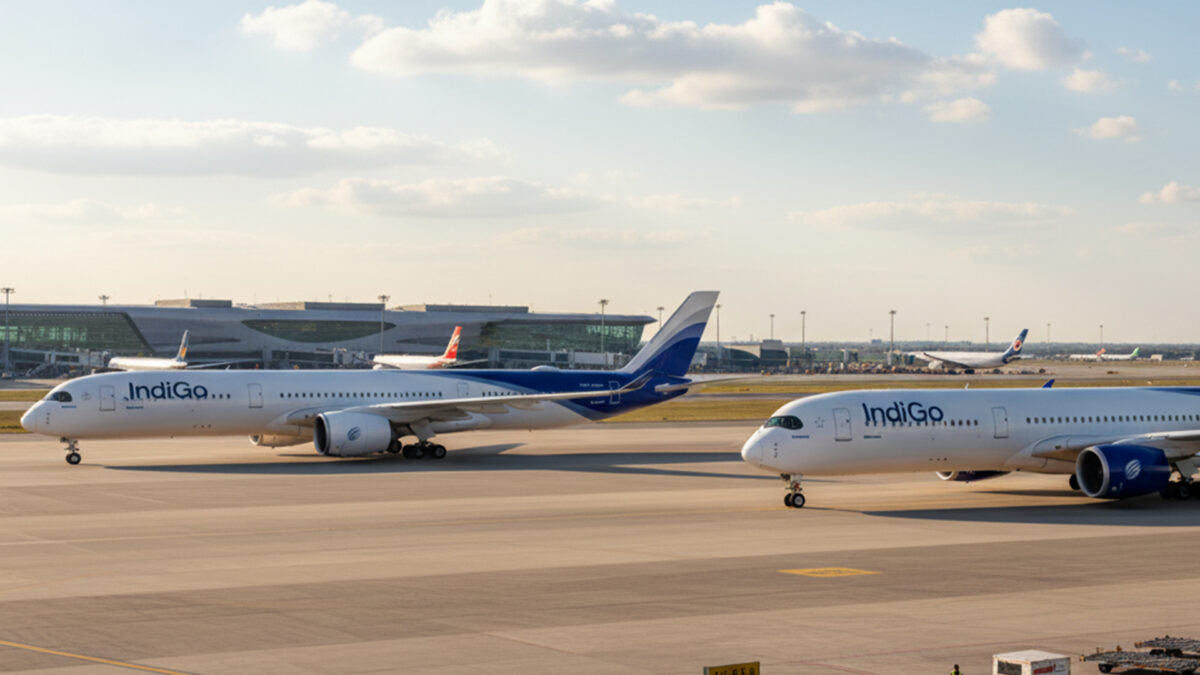
IndiGo Doubles Airbus A350-900 Order to 60 Jets

India’s largest airline, IndiGo (InterGlobe Aviation), has confirmed a firm order for 30 additional Airbus A350-900 wide-body aircraft, doubling its total confirmed commitment for the type to 60 jets.

The carrier had previously placed a firm order for 30 A350-900s in April 2024, with purchase rights for an additional 70 aircraft.

The 30 additional firm aircraft confirm the conversion of part of its existing option book into firm orders, increasing its wide-body aircraft order book from 30 to 60 A350-900s.

IndiGo’s original wide-body order in 2024 represented a historic milestone for the airline, which until then had operated exclusively narrow-body aircraft.

The A350-900 fleet will be powered by Rolls-Royce Trent XWB engines, under a long-term technical partnership designed to support the airline’s future long-haul operations. IndiGo expects to begin taking delivery of the A350-900 aircraft from 2027 onwards.

According to industry sources, the decision underlines IndiGo’s intent to expand beyond its strong domestic and regional footprint to long-haul destinations in Europe, East Asia, and potentially North America.

The airline views the A350-900 platform as the ideal vehicle for this expansion, offering the range, efficiency, and passenger comfort required for non-stop intercontinental operations.

IndiGo’s business model has historically centred around the Airbus A320 family, which has enabled it to dominate the domestic market with high-frequency, low-cost operations.

With the A350 order expansion, IndiGo is signalling its transition from a primarily regional low-cost carrier into a global airline with a strong presence in international markets.

The move is also consistent with India’s evolving aviation landscape, where international travel demand has risen sharply amid growing disposable incomes and the country’s emergence as one of the world’s fastest-growing aviation markets.

Analysts have noted that IndiGo’s investment in wide-body aircraft positions it to capture a larger share of outbound and inbound traffic, competing more directly with Gulf and Southeast Asian carriers that currently dominate long-haul routes to and from India.

While delivery of the A350-900s will begin in 2027, IndiGo’s expansion will require parallel investments in crew training, long-haul operations infrastructure, and international partnerships.

Industry observers say the carrier’s evolving fleet composition suggests it is preparing for a hybrid operational model that balances its low-cost core with a new premium long-haul offering.

The confirmation of 30 additional A350-900s also leaves IndiGo with the option to further expand its wide-body fleet in the future, as the airline retains purchase rights on additional aircraft under its existing agreement with Airbus.

The move reinforces IndiGo’s ambition to become a truly global airline by the end of the decade.

With a total of 60 A350-900s now on order, the carrier is positioning itself to lead India’s next phase of international aviation growth and redefine its role on long-haul routes connecting major global markets.

Also Read: Embraer Opens India Office, Partners with Mahindra on C-390 Aircraft

Categories
Corporate

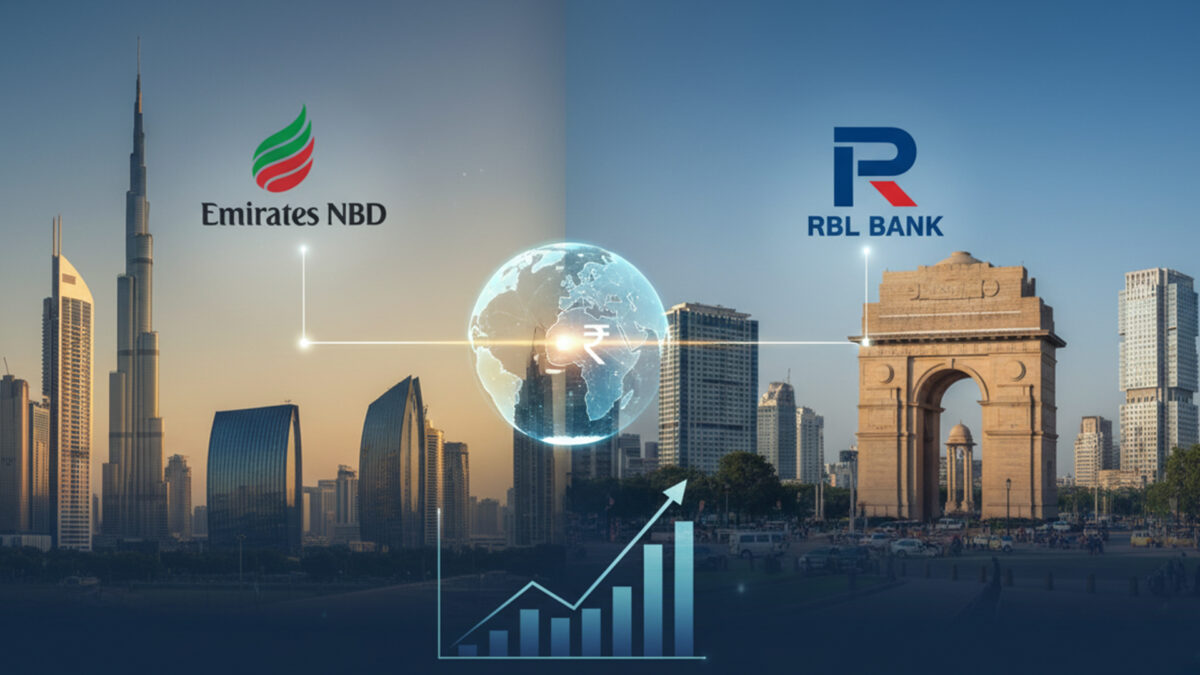
Emirates NBD’s Takeover of RBL Bank Marks Largest FDI in Indian Banking

In a landmark move for India’s financial sector, Emirates NBD Bank (ENBD) and RBL Bank announced simultaneous board approvals on October 18, agreeing to definitive documentation under which ENBD will acquire a controlling stake of up to 60 percent in RBL Bank via a preferential share infusion of about USD 3 billion (about INR 26,850 crore).

The deal will also trigger a mandatory open offer for up to 26 percent of public shareholdings under the norms of the Securities and Exchange Board of India (SEBI) takeover regime.

The agreement is described in the joint announcement as the largest-ever foreign direct investment (FDI) in India’s financial services sector, the largest equity raise in the Indian banking realm, and—via preferential issuance by a listed company—the largest such capital raise of its kind.

It also marks the first time a foreign bank has committed to acquiring a majority interest in a profitable Indian private sector bank.

Against this backdrop, the transaction underscores ENBD’s long-term strategic commitment to the Indian market and signals a new era of cross-border banking partnerships in South Asia.

For ENBD, a major Middle East banking group with assets of approximately USD 296 billion as of June 30, 2025, the deal aligns with its international expansion agenda.

The bank already operates in India through three branches in Mumbai, Gurugram, and Chennai, and had secured an in-principle approval from the Reserve Bank of India (RBI) earlier in the year to convert to a wholly owned subsidiary in India.

RBL Bank brings to the table pan-India retail, wholesale, and digital capabilities with roughly 15 million customers served through 564 branches and 1,347 business-correspondent locations as of September 30, 2025, and has seen steady growth in advances, deposits, and its balance sheet over recent years.

From RBL Bank’s perspective, the infusion will significantly bolster its capital base, provide long-term growth funds, and enable it to scale its retail deposit franchise, expand its branch network, and deepen product offerings.

The plan also calls for the amalgamation of ENBD’s Indian branch operations into RBL Bank following the preferential issuance, in line with RBI guidelines under Section 44A of the Banking Regulation Act.

Regulatory mechanics remain critical. The structure envisages a preferential allotment of new shares to ENBD at ₹280 each, thereby constituting the 60 percent stake in the enlarged equity.

A mandatory open offer will follow; should the combined stake exceed the prescribed limits under foreign investment norms.

India allows up to 74 percent foreign ownership in private banks, with any single foreign entity typically subject to a 15 percent cap unless exempted.

Strategically, this transaction marks a pivot for the Indian banking landscape.

Market analysts suggest that the ENBD-RBL deal could open the floodgates for further foreign capital inflows and strategic partnerships in the mid-sized and growing Indian banking sector.

For ENBD, the investment reinforces its role in the India–Middle East–Europe Economic Corridor (IMEC) and amplifies its capabilities in trade finance, treasury, payments, and cross-border flows, leveraging RBL’s domestic presence.

For RBL Bank, the combined franchise offers access to global banking expertise, digital capabilities, and higher-rated corporate flows.

For investors and analysts, key takeaways include the enhanced capitalisation of RBL, with its net worth expected to rise toward INR 42,000 crore per brokerage estimates, and improved growth opportunities across retail, SME, corporate, and wealth segments.

However, execution will depend on obtaining regulatory approvals from the RBI, SEBI, the Department for Promotion of Industry and Internal Trade (DPIIT), and the Competition Commission of India (CCI), among others, with deal completion expected within five to eight months.

In sum, this landmark investment by Emirates NBD into RBL Bank is more than a capital infusion—it signals India’s growing openness to large foreign-bank participation and sets the stage for a new phase of consolidation and global banking alliances in India’s financial services sector.

Also Read: Embraer Opens India Office, Partners with Mahindra on C-390 Aircraft

Categories
Corporate

Hindustan Zinc Q2 Profit Climbs 14% to ₹2,649 Crore

Hindustan Zinc showed a rise in the second quarter of FY26 with a solid financial showing, reporting a 14% jump in net profit to ₹2,649 crore compared to ₹2,327 crore a year earlier. While revenue growth was more modest, ticking up by 3.5-4% to between ₹8,282 crore and ₹8,549 crore, it signals steady business momentum amid ongoing market challenges.

The company’s focus on controlling costs paid off, keeping expenses around ₹5,245 crore and lifting profit margins to a healthy 31%, up from 29% last year. Operational efficiency clearly took centre stage, supporting sustained earnings growth.

Production hit a record 258,000 tonnes of mined metal in the quarter, a slight 1% rise year-on-year. Earnings before interest, tax, depreciation, and amortisation (EBITDA) grew 7% to ₹4,467 crore, with the EBITDA margin steady at an impressive 52%, underlining strong operational discipline.

Silver was a shining star this quarter, contributing nearly 40% of total profits and reinforcing its role as a key earnings pillar. Meanwhile, zinc production costs fell to a five-year low of USD 994 per tonne, down 7%, further cushioning margins and creating a competitive edge.

Management credits this success to ongoing investments in technology, operational upgrades, and a growing emphasis on sustainability practices. Looking forward, the company is exploring exciting new avenues such as waste-to-value projects, enhanced circular resource use, and the emerging sector of energy-transition metals.

Despite the upbeat earnings, the stock experienced a mild dip post-results, a light pause amid its generally strong trend, buoyed in part by rising silver prices lately.

Also Read: Jio, Retail Drive 14% Profit Growth for Reliance in Q2

Categories
Corporate

Jio, Retail Drive 14% Profit Growth for Reliance in Q2

Reliance Industries Ltd (RIL) delivered a strong performance in the second quarter of FY26, with consolidated net profit rising about 14% year-on-year to ₹22,140 crore. Growth was powered by continued strength across its oil-to-chemicals (O2C), telecom, and retail divisions.

Gross revenue rose 10% to ₹2.83 lakh crore, while operating profit (EBITDA) climbed nearly 15% to ₹50,367 crore, supported by improved margins from operational efficiencies and a favourable business mix.

Jio Platforms Ltd maintained its growth momentum, posting a 12.8% jump in net profit to ₹7,379 crore. Average revenue per user (ARPU) increased to ₹211.4, reflecting rising 5G adoption and new subscriber additions. More than 234 million users are now on its 5G network, accounting for half of all wireless data traffic.

Reliance Retail continued to expand aggressively, with revenue up nearly 19% and profit rising 21.9% year-on-year. The division added 412 new stores during the quarter, taking its footprint to 77.8 million sq ft across 19,821 outlets, boosted by demand in grocery, fashion, and electronics.

Chairman Mukesh Ambani said Reliance’s “resilient and broad-based performance” underscores its readiness for the next phase of growth across new energy, AI, media, and consumer technology. “Our businesses have delivered sustained momentum with strong domestic orientation,” he said.

The O2C segment posted modest revenue growth of 3.2% but saw a sharp 20.9% rise in EBITDA, thanks to firmer fuel margins and higher retail volumes. Downstream chemicals, however, remained under pressure from global oversupply.

Reliance’s oil and gas exploration business underperformed, with revenue slipping 2.6% due to lower production and softer condensate prices, though realized gas prices from the KG-D6 basin improved slightly.

Meanwhile, its digital and media arm JioStar saw profits more than double to ₹1,322 crore, reaching over 830 million users across platforms, a reflection of the group’s expanding digital ecosystem.

Capital expenditure rose to ₹40,010 crore, focused on telecom infrastructure, retail expansion, and renewable energy projects. Net debt stood at ₹1.18 lakh crore, while cash reserves increased to ₹2.3 lakh crore.

Also Read: Embraer Opens India Office, Partners with Mahindra on C-390 Aircraft

Categories
Corporate

Embraer Opens India Office, Partners with Mahindra on C-390 Aircraft

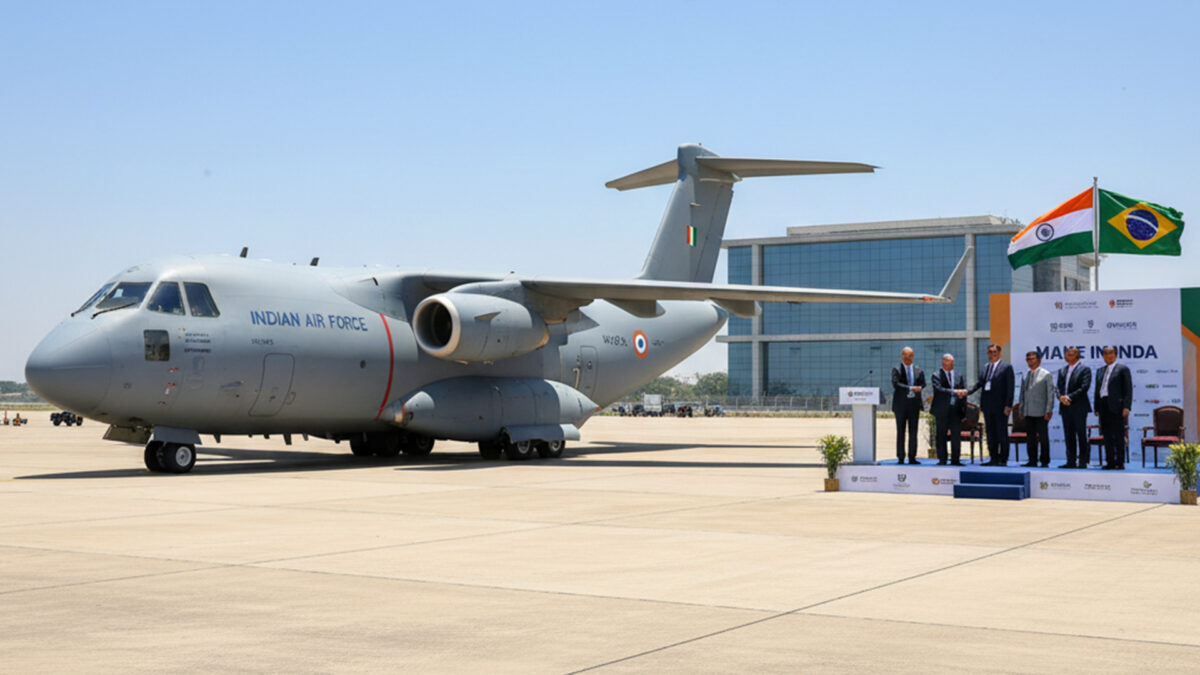
Brazilian aerospace company Embraer has officially opened its new office in New Delhi, marking a significant step in its commitment to the Indian market. Embraer also signed a strategic cooperation agreement with India’s Mahindra Group to jointly develop and promote the C-390 Millennium military transport aircraft for the Indian Air Force’s Medium Transport Aircraft program.

Building on their previous partnership, the two companies aim to make India a regional hub for the C-390, focusing on local manufacturing, assembly, and maintenance. This move aligns closely with India’s ‘Make in India’ initiative and efforts to strengthen domestic defense production capabilities.

The C-390 Millennium is a versatile aircraft designed for a range of missions, including cargo transport, troop movement, medical evacuation, and firefighting. Known for its robust performance and ability to operate on short or unpaved runways, the C-390 is well-suited to meet India’s diverse defense needs.

This collaboration highlights growing international cooperation in defense and aerospace sectors, with Embraer emphasizing India’s central role in its global strategy.

Also Read: Cochin Shipyard Introduces 3 Vessels, Showcasing India’s Maritime Prowess

Categories
Corporate

Cochin Shipyard Introduces 3 Vessels, Showcasing India’s Maritime Prowess

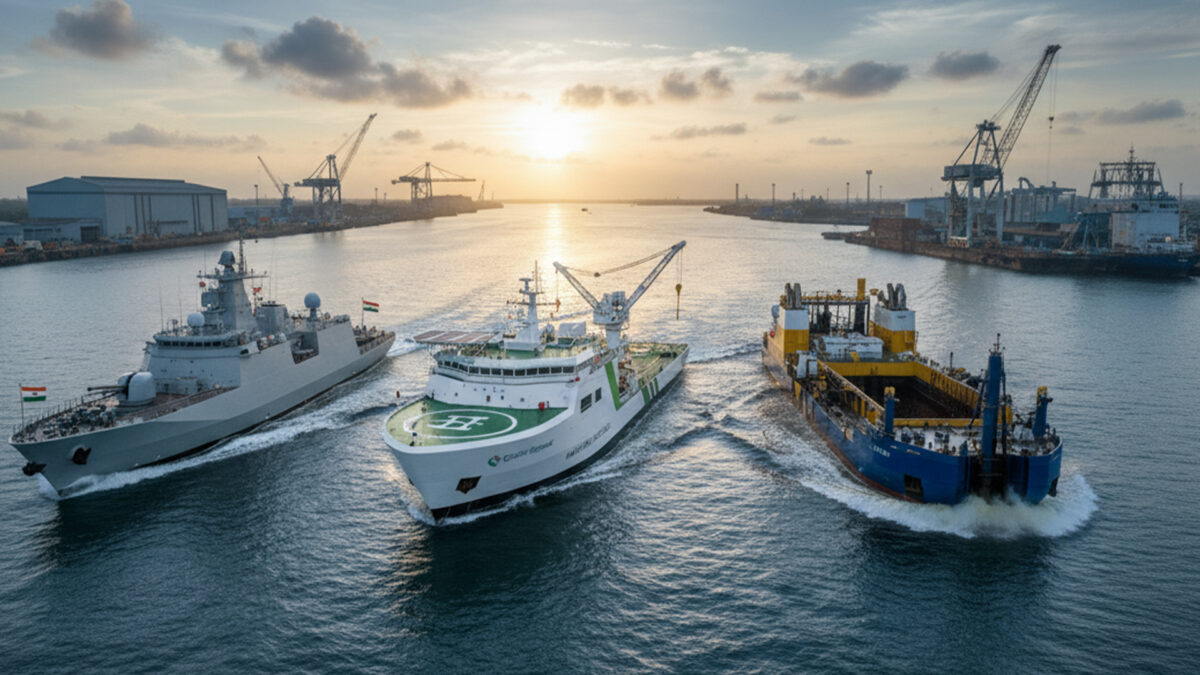
India’s shipbuilding story has entered a new era of ambition and innovation. At Cochin Shipyard, three remarkable vessels have taken to the water, each one a striking symbol of the nation’s evolving maritime strength and technological maturity.

From safeguarding coastlines to harnessing green energy and deepening ports, these ships embody how India is reshaping its future at sea with homegrown expertise and vision.

Leading the trio is a formidable anti-submarine warfare craft for the Indian Navy. Fast, manoeuvrable, and outfitted with advanced sonar, torpedoes, and rockets, it fortifies India’s coastal defence capabilities with cutting-edge precision.

The second vessel is a hybrid-electric support ship built for offshore wind farms, a milestone in India’s clean energy drive. Featuring methanol-compatible engines and high-capacity battery packs, it merges sustainability with comfort, providing a quiet, efficient base for marine technicians.

Completing the lineup is the nation’s largest dredger, engineered to keep trade flowing through deepened ports and clear waterways. With enormous hopper capacity and powerful dredging systems, it strengthens India’s maritime infrastructure and economic resilience.

Together, these launches signal more than new additions to India’s fleet as they represent a confident nation steering its own maritime destiny, powered by innovation, sustainability, and strategic purpose.

Also Read: Adani’s Godda Plant Gets Grid Nod; Shares Surge 7%