
Categories
Beyond

India’s Telecom Sector Set to Boost GDP Share, BSNL 4G Rollout Marks Milestone

India’s telecommunications sector is expected to expand its contribution to the national GDP from the current 12-14 percent to around 20 percent over the next decade, Communications Minister Jyotiraditya Scindia said on October 9.

Speaking at a press conference on the second day of India Mobile Congress 2025, Scindia emphasized that the government’s role in the sector is more about facilitation than regulation, highlighting the highly competitive and largely deregulated nature of the industry.

A significant achievement in India’s telecom journey, Scindia noted, is the development of an indigenous 4G technology stack.

Collaborating with multiple ministries and private-sector partners, India became the fifth country globally to achieve a fully functional 4G stack, completing the feat in just 20 months from concept to deployment.

The minister stated that BSNL will scale up its 4G infrastructure and eventually transition to 5G as the network expands.

Prime Minister Narendra Modi, in his address at the congress a day earlier, called BSNL’s 4G stack a “major milestone” capable of providing seamless connectivity in remote regions and noted that the technology is now “export ready.”

Addressing questions on the Centre’s stake in struggling telecom companies, Scindia said the government currently holds a 49 percent stake in Vodafone Idea and has no immediate plans to increase its share.

Regarding MTNL, he clarified that BSNL has already taken over the operations in Delhi and Mumbai since January 1, though the transfer of assets has not yet occurred.

BSNL reported an operating profit of Rs 2,300 crore in FY24, which rose to Rs 5,100 crore in FY25. Despite this, the state-owned operator has not yet turned net profitable, primarily due to a record capital expenditure of Rs 25,000 crore last year.

The investment supported the installation of 100,000 towers to facilitate BSNL’s 4G rollout.

Scindia also spoke on the Production-Linked Incentive (PLI) scheme for telecom manufacturing, acknowledging that only half of the eligible companies have received benefits so far.

However, he maintained an optimistic outlook, noting that 21 out of 42 manufacturers exceeded their incentive targets.

He stressed that the scheme remains inclusive and that support would be extended to those who have not yet met their goals.

The minister’s remarks underline the government’s continued focus on strengthening India’s digital infrastructure, promoting domestic technology development, and expanding connectivity across urban and rural areas.

With indigenous technology development and large-scale network rollouts, the sector is poised to become a more significant contributor to the country’s economic growth in the coming years.

Also Read: MakeMyTrip Partners with Google Cloud to Enhance AI Travel Assistant
Categories
Beyond

DGCA Seeks Autonomy to Cope With Rapid Aviation Expansion

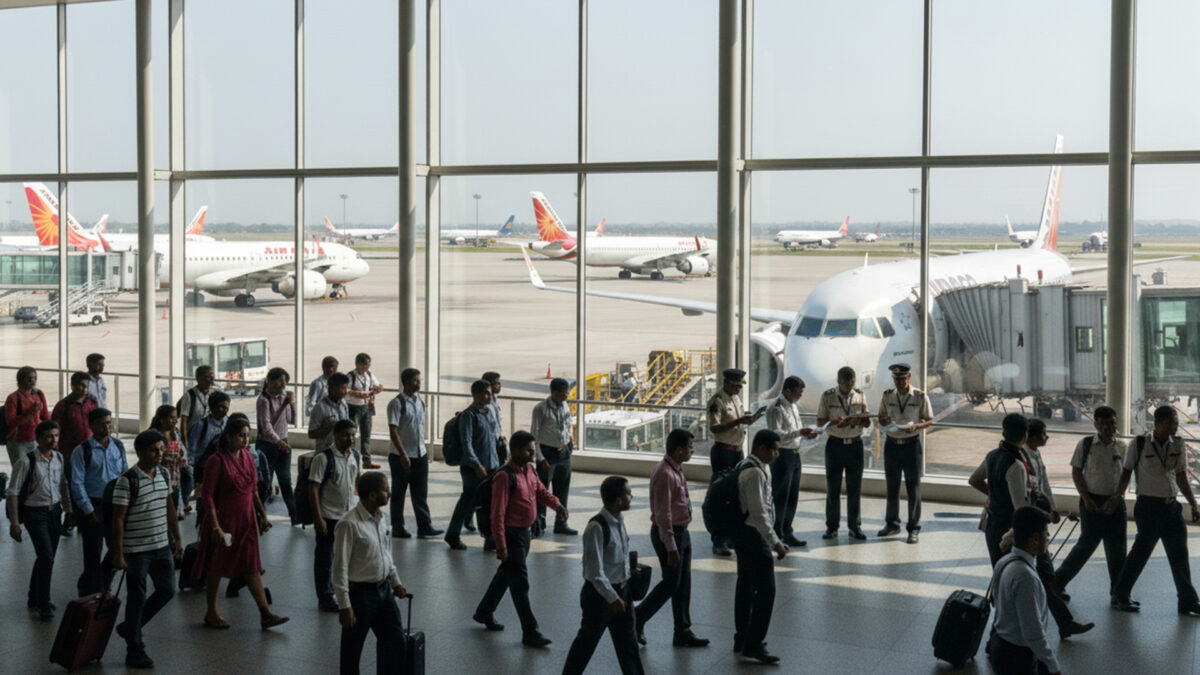
India’s aviation regulator, the Directorate General of Civil Aviation (DGCA), is pressing the government for greater financial and administrative freedom to tackle serious resource constraints that threaten its ability to regulate a rapidly growing sector.

With key demands such as independent recruitment, competitive salaries, and enhanced training budgets, the DGCA argues that only autonomy can allow it to attract and retain the calibre of talent required for rigorous oversight.

At present, the DGCA has just 553 of its 1,063 technical positions filled — a vacancy rate approaching 50 percent. A parliamentary standing committee report has highlighted that this staffing shortfall is not merely a bureaucratic issue but an “existential threat” to aviation safety in India.

The committee has recommended a time-bound plan to grant the DGCA full administrative and financial autonomy.

The root of the problem lies in DGCA’s lack of control over recruitment and compensation. The report flagged the recruitment model — in which outside agencies hire on behalf of DGCA — as inefficient and slow, curbing the regulator’s ability to respond flexibly to workforce needs.

It also noted that deputation-based hiring, especially from services such as the Indian Air Force, has failed to attract qualified candidates because joining DGCA often comes with reduced benefits or allowances compared to their parent services.

Meanwhile, India’s aviation market continues to soar. Passenger traffic has more than doubled in recent years, reaching over 234 million annually, and the operational aircraft fleet has expanded over 100 percent to around 841 aircraft.

With more than 1,300 new firm aircraft orders in the pipeline, the regulatory burden is expected to intensify drastically. In this environment, the demand for more field-level inspections, certifications, safety audits, and oversight activities escalates sharply.

The parliamentary report urged that the DGCA be empowered to bypass bottlenecks in the Ministry of Civil Aviation’s oversight chain, allowing it to set salaries and hire specialists in aviation safety, airworthiness, operations, air traffic management, and related domains.

It also called for a national staffing audit, stronger enforcement mechanisms, a fatigue-risk management system for air traffic controllers (ATCs), and tighter timelines to rectify safety deficiencies.

Critics in Parliament and the civil aviation industry have warned that without reforms, the DGCA may increasingly struggle to keep pace with both growth and global standards. The committee’s recommendations arrived in the aftermath of the June 2025 crash of Air India flight AI‑171, which claimed 260 lives and revived concerns over systemic oversight inadequacies.

Supporters of the autonomy proposal argue that only by being able to recruit directly and set market‑competitive compensation can the DGCA become a modern, agile regulator. They also warn that further delay in granting autonomy may compound the backlog of inspections, safety audits, and infrastructure oversight tasks as air traffic and fleet size continue growing.

Nevertheless, the Civil Aviation Ministry has reportedly been cautious in embracing full autonomy for DGCA.

While it has indicated willingness to fill 190 vacancies by October, it has yet to agree to long-term structural reform that would vest DGCA with full recruitment powers.

In the weeks ahead, the challenge will be translating parliamentary recommendations into actionable legislation or administrative orders.

If autonomy is granted in a timely and meaningful manner, it could mark a turning point in India’s regulatory architecture — enabling more robust safety oversight and strengthening public confidence, even as aviation grows to unprecedented scale.

On the other hand, failure to act may expose the system to escalating risk, especially when regulatory demands are only going to intensify.

Categories
Beyond

RBI Unveils Unified Markets Interface: Here’s What It Means

The Reserve Bank of India (RBI) has unveiled plans for a Unified Markets Interface (UMI), a next-generation financial market infrastructure that will allow tokenisation of financial assets and settlements using the wholesale Central Bank Digital Currency (CBDC).

Governor Sanjay Malhotra announced the initiative at the Global Fintech Fest 2025, describing it as a step toward building the digital backbone of India’s future financial ecosystem.

What is the Unified Markets Interface?

According to Malhotra, the Unified Markets Interface will serve as a digital platform that connects various segments of the financial markets — including bonds, securities, and other capital market instruments — into a single interoperable system.

The UMI will enable the conversion, or “tokenisation,” of traditional financial assets into digital tokens that can be securely traded and settled in real time.

This means that instruments such as government securities or corporate bonds could eventually exist in a tokenised form on distributed digital ledgers, allowing instantaneous transfer of ownership and settlement.

The RBI envisions this infrastructure as the foundation for more transparent, efficient, and programmable market operations in India.

How tokenisation and CBDC will transform settlements

A key feature of the proposed UMI is its integration with the RBI’s wholesale CBDC. By leveraging the digital rupee for settlement, the system will eliminate delays and reduce settlement risk in large-value transactions.

Tokenised assets, combined with programmable smart contracts, can automate compliance checks, margin requirements, and payment triggers—functions traditionally performed by multiple intermediaries.

In simple terms, the use of CBDC within UMI will allow “instant finality” in settlements, replacing current multi-step clearing systems.

The move also aligns India with emerging global trends, where central banks are exploring digital currency frameworks to enhance the security and resilience of financial infrastructure.

A step toward a unified digital financial architecture

The RBI’s new initiative reflects a broader vision to unify India’s digital finance infrastructure. Alongside UMI, Malhotra said the central bank is working on a Unified Lending Interface (ULI), which aims to do for credit markets what the Unified Payments Interface (UPI) did for retail payments.

The ULI will help lenders use richer datasets to improve credit risk assessment and lending efficiency.

Malhotra also emphasised the importance of inclusivity, urging India’s fintech industry — which now includes over 10,000 firms — to build products that are accessible to all, including the elderly, people with disabilities, and those with limited digital literacy. “Innovation must walk hand in hand with inclusion,” he said.

Why this matters for India’s financial markets

The introduction of the UMI marks a potential turning point in how India’s financial system is structured and operated.

If implemented successfully, it could reduce transaction costs, enhance market transparency, and open doors for programmable financial products.

Moreover, it signals the RBI’s strategic move to position India at the forefront of global financial innovation. While the central bank continues to proceed cautiously with a nationwide CBDC rollout, the UMI underscores its intent to gradually modernise market infrastructure without disrupting stability.

Deputy Governor T. Rabi Shankar recently reiterated that the RBI is “not in a hurry” to expand CBDC use across sectors, preferring to build the ecosystem carefully.

Still, the conceptualisation of the Unified Markets Interface reveals how the RBI is reimagining the architecture of financial markets — one that could ultimately make India a leader in digital-era finance.

Also Read: Why Did OpenAI Ban China-Linked Accounts?

Categories
Beyond

World Bank Ups India FY26 GDP Forecast, Flags Risks from U.S. Tariffs

The World Bank on Tuesday raised its forecast for India’s economic growth in fiscal year 2025–26 (FY26) to 6.5 percent, up from its June projection of 6.3 percent, while trimming the growth outlook for FY27 to 6.3 percent, citing adverse effects from new U.S. tariffs, according to its South Asia Development Update.

The upgrade for FY26 reflects stronger-than-expected domestic demand, a resilient rural recovery, improved agricultural output, rising rural wages, and support from recent tax reforms including changes in India’s Goods and Services Tax (GST) regime.

In its update, the Bank stated that India is expected to remain the world’s fastest-growing major economy, supported by continued strength in consumption growth.

However, the Bank’s revision downward for FY27 is driven by concerns that significantly higher tariffs imposed by U.S. President Donald Trump on Indian exports will weigh on growth, particularly in export-intensive and labour-intensive sectors.

The U.S. tariffs, which reach up to 50 percent, affect a broad swath of Indian goods exports, including textiles, gems and jewellery, and seafood, according to the World Bank report.

The Bank noted that nearly one-fifth of Indian goods exports in 2024 went to the U.S., equivalent to roughly 2 percent of India’s GDP, making the country vulnerable to U.S. trade actions. It further observed that while India had been expected to face lower U.S. tariffs relative to competitors earlier in the year, by August its tariff exposure had become “considerably higher.”

At the regional level, the World Bank projects that growth in South Asia will slow sharply: from 6.6 percent in 2025 to 5.8 percent in 2026.

The Bank flagged multiple downside risks to the region’s outlook, including global economic uncertainty, shifts in trade policy (especially on intermediate goods), socio-political tensions, and labour market disruptions due to artificial intelligence (AI) advancements.

The World Bank also argued that further reforms—particularly lowering tariffs, improving trade openness, and encouraging technology adoption—could help India and the region mitigate these headwinds and sustain inclusive growth.

In response to these global pressures, Indian policymakers have signalled continued support for the economy. In recent comments, Finance Minister Nirmala Sitharaman reaffirmed the government’s commitment to boosting capital investment to offset external headwinds.

The Reserve Bank of India has also maintained its policy rate, holding it steady at 5.5 percent, while raising its own FY26 growth outlook.

Overall, while the World Bank has raised its near-term optimism for India’s growth trajectory, it tempers that with caution about U.S. tariffs and broader trade pressures that could dampen momentum starting in FY27.

Also Read: Adani Defence Unit Under Probe for $9 Million Import Tax Evasion?

Categories
Beyond

Indian Markets Extend Gains for Fourth Consecutive Session

Indian equity benchmarks continued their upward trajectory on Tuesday, October 7, with the Sensex advancing by 179 points to 81,969.32 as of 11:52 AM and the Nifty rising 43 points to 25,121.70.

In early trade, Sensex had risen as much as 400 points to 81,974.09 after gaining 183.97 points, while the Nifty climbed as much as 62.05 points to hit 25,139.70.

This marks the fourth consecutive day of gains, driven by robust buying in energy, metal, and financial stocks, alongside favorable global cues and expectations of a U.S. Federal Reserve rate cut.

The energy sector saw significant gains, with oil marketing companies benefiting from declining international crude oil prices and anticipations of government compensation for LPG losses.

Siemens Energy India and Petronet LNG were among the prominent gainers in this segment. Similarly, the metal sector experienced a boost, with the Nifty Metal index jumping 1.82% to 10,277.10, reflecting optimism over anticipated Fed rate cuts and a softer dollar index.

Investor sentiment was further uplifted by expectations of a Federal Reserve rate cut later this month. Such a move is anticipated to enhance global liquidity, making emerging markets like India more attractive to foreign investors.

This optimism was mirrored in global markets, with Asian indices trading higher and U.S. markets ending the previous session on a positive note.

In the financial sector, Bajaj Finance reported strong second-quarter results, with a 24% year-on-year increase in assets under management (AUM) to ₹4.62 lakh crore. The company also saw a 26% rise in new loans booked, totaling 12.17 million, and a 20% growth in its customer base to 110.64 million.

These figures underscore the resilience and growth potential of the financial services sector, contributing to the overall market rally.

Additionally, the Indian rupee strengthened slightly to 88.7375 against the U.S. dollar, supported by expected capital inflows. However, analysts caution that ongoing trade concerns with the U.S. could temper further gains.

Overall, the continued upward momentum in the markets reflects a combination of sectoral strength, favorable global conditions, and positive corporate earnings, positioning Indian equities for sustained growth in the near term.

Also Read: Adani Energy Raises $250 Million Loan From International Lenders

Categories
Beyond

Festive Delight: Gold Hits Record Rs 1.19 Lakh, Silver Surges

Gold prices in India surged to an all-time high on Monday, with domestic rates reaching Rs 1.19 lakh per 10 grams as investors increased allocations to bullion amid seasonal buying and mounting global uncertainty.

Silver traded in tandem, touching multi-year highs as demand from both retail and investment channels rose ahead of the festival season and amid safe-haven flows.

Market reports said the single-day move reflected a confluence of firm festive demand, technical buying and broader international cues that pushed both spot and futures contracts to fresh peaks.

Global markets showed parallel strength, with spot gold surpassing the $3,900-per-ounce mark as investors sought refuge from geopolitical and economic instability, and expectations grew for further interest-rate reductions by the U.S. Federal Reserve.

Spot gold climbed close to $3,958.57 an ounce on October 6, reflecting heightened safe-haven buying amid conflicts overseas, concerns about the U.S. political landscape and renewed central-bank purchases.

Reports noted that robust inflows into physical gold exchange-traded funds and central-bank buying had supported the international rally.

On India’s domestic platforms, futures and spot markets advanced with similar momentum. Multi Commodity Exchange contracts and local spot quotations moved to record levels as traders priced in sustained demand through October and the approaching Diwali festival, while a softer rupee amplified rupee-denominated gains.

Market snapshots showed sharp intraday moves, with trade reports pointing to single-day increases of several thousand rupees in benchmark quotes as liquidity and appetite for physical metal firmed, and as participants adjusted positions in response to global cues and domestic buying.

Analysts noted central bank purchases and ETF inflows of nearly 588 tonnes through September had underpinned the rally. Forecasts suggested continued upside into Diwali, with some estimates placing gold near Rs 1.20–1.22 lakh and silver around Rs 1.5 lakh in the coming weeks if current trends continue, driven by a combination of seasonal purchases and ongoing safe-haven demand.

Observers pointed out that the prospect of lower U.S. interest rates weakens the opportunity cost of holding non-yielding bullion, a dynamic that has encouraged both institutional and retail allocations.

Silver’s rally was particularly notable in regional trading centres, where prices were reported to have reached around Rs 1.50 lakh per kilogram in some domestic markets and about Rs 1.48 lakh per kg in other spot quotations.

In U.S. dollar terms, silver approached levels not seen in decades, driven by a mix of retail buying for jewellery and gifts, industrial demand, and speculative flows.

Commodity dealers in key hubs reported brisk activity in both wholesale and grey-market channels, and analysts pointed to constrained supplies together with renewed investor interest as contributors to the sharp move.

Intermediaries and trade bodies signalled mixed expectations for consumption through the season. Several industry reports suggested record-high prices might curb discretionary purchases of jewellery, yet historically strong cultural and ceremonial demand around Diwali and the wedding season could sustain baseline volumes.

Analysts monitoring futures and spot flows said volatility was likely to remain elevated in the near term as markets balance profit-taking, fresh buying and reactions to macroeconomic developments.

For consumers and small buyers, the rapid rise in benchmark prices translated into higher retail rates across cities, with local premiums and taxes further affecting final jewellery costs.

Market participants said that while investment demand — including coins, bars and ETFs — was a major driver of the recent leg up, consumer purchases for festivals continued to play an important role in supporting physical demand in India.

Traders advised caution as liquidity conditions and geopolitical developments remained notably fluid.

Also Read: Adani Energy Raises $250 Million Loan From International Lenders

Categories
Beyond

Sensex, Nifty Trade Higher as Banks and IT Shares Drive Momentum

Indian equity markets continued their upward trajectory on Monday, buoyed by robust buying in banking and IT stocks, alongside supportive global cues.

By 12:59 IST, the Sensex had climbed 483.50 points, or 0.60 percent, 81,691.16, while the broader Nifty rose 142.20 points, or 0.50 percent, to 25,037.45. The rally reflected investor optimism ahead of the ongoing Q2 earnings season and in anticipation of major IPOs.

Among the top performers were Max Healthcare, Shriram Finance, Apollo Hospitals Enterprise, Axis Bank, and Bajaj Finance, all gaining up to 5 percent intraday. Strong buying interest in both financial services and healthcare sectors underscored investor preference for companies with solid quarterly performance and resilient business models.

The Bank Nifty index extended its gains for a fifth consecutive session, buoyed by encouraging second-quarter results from major private lenders, particularly HDFC Bank and Kotak Mahindra Bank.

All twelve constituents of the Bank Nifty were trading in positive territory, with the index surging around 460 points, or 0.82 percent, reclaiming the 56,000 level.

Analysts highlighted that robust performance from public sector banks and non-banking financial companies, combined with largely in-line private bank results, provided strong support to market sentiment.

Technology stocks also contributed significantly to the positive momentum. All ten constituents of the Nifty IT index were trading higher, lifting the sectoral index by 1.6 percent.

Analysts pointed out that investor confidence in IT firms remains strong due to continued digital transformation initiatives and enterprise technology spending across global markets.

Global market trends offered further support to domestic equities.

Major Asian indices, including Japan’s Nikkei 225, traded higher, while U.S. futures indicated a positive start for Wall Street. Market participants suggested that firm global cues reinforced domestic investor confidence, encouraging risk-on trades in equities.

The rupee also strengthened slightly, appreciating by five paise to 88.74 against the U.S. dollar. Observers noted that the firming currency reflected improving risk sentiment, aided by anticipated inflows from upcoming IPOs. The currency’s stability added to investor confidence, particularly for foreign institutional investors monitoring the market for short-term opportunities.

From a technical perspective, market strategists observed that the Nifty was approaching the 24,970–25,050 range targeted last week, with technical indicators suggesting scope for further upside in the near term.

However, they cautioned that momentum might be limited beyond 25,200 in the immediate term, with key support levels near 24,835 and 24,700 providing potential downside buffers.

Overall, Monday’s trading session highlighted strong domestic investor sentiment, led by financials and IT shares, and supported by favorable global market trends and currency stability.

With the Q2 earnings season underway and several high-profile IPOs scheduled in the coming weeks, analysts expect market activity to remain robust, with sector-specific performance continuing to influence the broader indices.

Investors are likely to monitor quarterly results closely, balancing opportunities in outperforming sectors against potential volatility in underperforming ones.

Also Read: Canara Robeco AMC IPO Targets ₹5,305 Crore Valuation

Categories
Beyond

DGCA puts Diwali fares under the microscope as carriers add 1,762 flights

India’s aviation regulator has stepped in to monitor a sharp rise in festival-season airfares after domestic carriers announced the deployment of 1,762 additional flights to meet Diwali demand. The Directorate General of Civil Aviation (DGCA) has asked airlines to expand capacity and keep fares “reasonable” as millions of passengers plan travel around the festival, a move officials say is aimed at preventing exploitative pricing during one of the busiest travel periods of the year.

Airlines including IndiGo, Air India, Air India Express and SpiceJet have been urged to boost seat supply across key domestic routes, with the regulator coordinating closely with carriers to ensure the additional schedules are timed to ease peak-date congestion rather than simply capitalise on demand spikes.

The DGCA’s direction follows widespread reporting of double-digit percentage increases in fares on popular city pairs as travellers book return trips for family reunions and holiday breaks.

Industry officials said the extra 1,762 flights are intended to provide immediate relief on chokepoint routes where inventory shortages were pushing the lowest available fares far above typical levels.

While airlines argue that dynamic pricing reflects market realities — higher demand, seasonal aircraft utilisation and rising operating costs — regulators and consumer advocates have warned that unchecked surges can place an unfair burden on middle-class families who travel for festivals.

The DGCA has also highlighted non-price measures intended to improve traveller outcomes, including better management of airport slot use and monitoring of how carriers allocate seats across fare bands.

Officials say they will maintain an online monitoring mechanism that allows passengers to track fares and flag suspected instances of unreasonable pricing, though they stopped short of imposing direct caps, noting that India has not regulated airline fares since the mid-1990s.

Market watchers caution that adding flights is only a partial remedy: capacity increases must match route-level demand and be sustained through the peak window. If airlines concentrate the bulk of extra flights on a handful of busy sectors, relief will be uneven and some regional travellers could still face steep tickets.

Travel agents say early-bird windows have already closed on many routes, and last-minute booking pressure typically magnifies price volatility.

Passengers planning Diwali travel are being advised to compare itineraries, consider alternate airports and flexible travel dates, and watch for last-minute seat releases as carriers adjust schedules.

The DGCA’s intervention, while measured, signals growing regulatory sensitivity to festival-time pricing and reflects lessons from earlier events such as the Mahakumbh and other mass gatherings, when targeted capacity additions helped moderate fare spikes.

As the peak travel days approach, the regulator said it will continue to engage airlines to ensure the announced 1,762 flights translate into accessible, affordable seats for as many travellers as possible.

Also Read: Perplexity’s Comet AI Browser Now Free for All Users


Categories
Beyond

India’s Foreign Exchange Reserves Decline to $700.2 Billion

India’s foreign exchange reserves fell by $2.334 billion to $700.236 billion for the week ending September 26, 2025, according to data released by the Reserve Bank of India (RBI) on October 3.

This follows a previous week’s decline of $396 million, bringing the total reserves down from $702.57 billion.

The decrease was primarily due to a significant drop in foreign currency assets, which decreased by $4.393 billion to $581.757 billion.

These assets, expressed in dollar terms, include the effect of appreciation or depreciation of non-U.S. currencies such as the euro, pound, and yen held in the foreign exchange reserves.

The decline in foreign currency assets is attributed to the depreciation of these currencies against the U.S. dollar, impacting the overall value of India’s reserves.

In contrast, India’s gold reserves increased by $2.238 billion to $95.017 billion during the same period. This rise in gold holdings reflects a strategic move by the RBI to diversify its reserve assets amid global economic uncertainties.

Gold is considered a safe-haven asset, and its inclusion in the reserves provides a hedge against currency fluctuations and geopolitical risks.

Additionally, Special Drawing Rights (SDRs) declined by $90 million to $18.789 billion, and India’s reserve position with the International Monetary Fund (IMF) decreased by $89 million to $4.673 billion.

These reductions are part of the overall decline in the reserve components, indicating a tightening of liquidity in the international financial system.

Despite the recent declines, India’s foreign exchange reserves remain substantial.

As of September 26, the reserves are sufficient to cover approximately 11 months of merchandise imports and can cover about 95.4% of India’s outstanding external debt as of the end of March 2025. This indicates strong external sector resilience and a healthy buffer against global financial uncertainties.

The recent depreciation of the Indian rupee, trading near its all-time low, has been influenced by regional weakness across Asian currencies and ongoing trade tensions with the United States.

The rupee opened at around 88.74-88.78 per dollar on September 30, close to last week’s record low. These pressures have led to significant equity outflows, with foreign investors pulling out $1.8 billion last week, over $300 million of which occurred on Monday alone.

The RBI has been actively intervening in the currency markets to curb the rupee’s decline and maintain market stability.

Also Read: RBI Proposes Easier Rules for External Commercial Borrowings

Categories
Beyond

India Launches Anti-Dumping Probe into Steel Imports

India has initiated an anti-dumping investigation into imports of cold-rolled flat stainless steel products from China, Indonesia, and Vietnam.

The Directorate General of Trade Remedies (DGTR), operating under the Ministry of Commerce and Industry, commenced the probe following a complaint filed by the Indian Stainless Steel Development Association (ISSDA) on behalf of domestic producers.

The ISSDA alleges that these imports are being sold at unfairly low prices, a practice known as dumping, which has caused material injury to the domestic industry.

The investigation focuses on cold-rolled flat products of the 300 and 400 series, including coils, sheets, plates, strips, rounds, and other forms in all grades, finishes, and thicknesses.

The period under investigation is from April 2024 to March 2025, with the injury assessment covering the fiscal year 2022–23. The DGTR has found prima facie evidence suggesting that these imports have adversely affected Indian manufacturers by undercutting domestic prices and causing financial harm.

If the investigation confirms the allegations, the DGTR may recommend the imposition of anti-dumping duties to protect the domestic industry from unfair trade practices. The final decision on the imposition of such duties will rest with the Ministry of Finance.

This move is part of India’s broader strategy to safeguard its domestic industries from unfair competition and to ensure a level playing field in international trade.

The outcome of this investigation could have significant implications for trade relations between India and the affected countries, as well as for the global steel market.

Also Read: RBI Proposes Easier Rules for External Commercial Borrowings