Categories
Beyond

New Income Tax law from April to ease compliance

Income Tax Act, 2025, a comprehensive rewrite of the country’s six-decade-old tax law, will come into force on April 1, 2026, Finance Minister Nirmala Sitharaman announced in the Union Budget 2026–27. This legislation replaces the Income Tax Act, 1961, marking one of the most significant updates to India’s direct tax system in decades.

The new law is designed to simplify the tax system and reduce confusion for taxpayers, rather than alter existing tax rates. Individuals and businesses will continue under the same tax slabs and rates as before. The government says the overhaul will cut complexity, reduce litigation, and make tax compliance more intuitive. The Act uses clearer language, fewer provisions, and simpler processes to reduce ambiguity and make it easier for taxpayers to understand their obligations.

As part of the reforms, authorities will introduce updated tax forms and clear guidance ahead of implementation, allowing taxpayers to adjust to the changes smoothly. One major administrative change is the extension of deadlines for filing or revising Income Tax Returns (ITRs). The revision deadline has been moved from December 31 to March 31, with a small fee for late revisions, and different types of returns will have staggered filing timelines to ease the compliance burden.

Other taxpayer-friendly measures include lower Tax Collected at Source (TCS) rates for overseas education and travel-related payments, as well as simplified Tax Deducted at Source (TDS) procedures, particularly for smaller taxpayers and non-resident property transactions.

Also Read: Union Budget has growth, health, defence priorities

Categories
Beyond

Union Budget has growth, health, defence priorities

Finance Minister Nirmala Sitharaman presented the Union Budget 2026–27 in Parliament on 1 February 2026, laying out a roadmap for economic growth, job creation, healthcare improvement, defence self-reliance, and tax simplification. The Budget seeks to maintain fiscal discipline while supporting investment-led development across key sectors of the economy.

At the macroeconomic level, the government has set the fiscal deficit target at 4.3% of GDP, reflecting its commitment to gradual fiscal consolidation. Total expenditure has been increased, with a strong focus on capital spending, which has been raised to a record ₹12.2 lakh crore, signalling a continued emphasis on infrastructure development and long-term productivity.

Infrastructure remains a central pillar of the Budget. The government announced the creation of seven high-speed rail corridors connecting major urban and industrial hubs to improve connectivity and reduce travel time. A new Dedicated Freight Corridor from Dankuni to Surat is expected to enhance cargo movement, making trade faster and more cost-efficient. The development of 20 National Waterways aims to expand inland shipping and reduce the environmental impact of transport, while urban metro networks, road projects, and multimodal transport hubs will enhance last-mile connectivity. These investments are expected to generate employment and boost the efficiency of supply chains across the country.

The Union Budget also places strong emphasis on manufacturing and strategic industries. The India Semiconductor Mission 2.0 was announced to expand domestic chip manufacturing, research, and design capabilities, supporting India’s push for technological self-reliance. To reduce dependence on imports, Rare Earth Corridors will be developed in mineral-rich states, supporting clean energy, electronics, and defence industries. Additionally, the ₹10,000 crore Biopharma Shakti initiative seeks to position India as a global hub for biopharmaceuticals, with investments in vaccine production, biologics, and essential medicines. Measures to modernize textiles, container manufacturing, industrial parks, and promote startups are expected to generate employment and enhance exports.

Healthcare and social development received significant attention in the Budget. Expansion of cancer care infrastructure and early detection programmes was announced to improve access to treatment. Mental health services will be strengthened through district-level facilities, integration into primary healthcare, and expanded counselling and emergency support. The Budget also proposes the establishment of three new All India Institutes of Ayurveda to promote research, education, and the global outreach of AYUSH. Additional support has been allocated to public hospitals, life-saving medicines, and emergency care facilities, reflecting a comprehensive approach to health and wellness.

Defence and national security continue to be priorities. The Budget allocates higher funding for domestic defence manufacturing, research and exports under the ‘Make in India’ framework. Development of defence corridors and public-private partnerships is expected to reduce import dependence and strengthen India’s strategic autonomy.

The government has also taken measures to support farmers, rural communities, and MSMEs. Initiatives to improve productivity, promote high-value crops, strengthen fisheries, and enhance irrigation have been outlined, along with the use of digital platforms to improve access to markets and credit for farmers. MSMEs and startups are set to benefit from a proposed ₹10,000 crore Growth Fund, simplified compliance processes, and easier access to credit.

On the taxation front, the Budget introduces relief and simplification. A new Income Tax Act, effective from April 2026, will streamline forms and filing processes. Deadlines for revised returns have been extended, and penalties for minor defaults reduced. TCS rates on overseas education, medical treatment, and foreign travel have been lowered to 2%, while the Minimum Alternate Tax for companies has been cut to 14%. Tax incentives have also been provided to foreign cloud service providers operating from Indian data centres to attract investment in the digital economy.

The Union Budget 2026–27 seeks to balance fiscal prudence with growth-oriented reforms, focusing on infrastructure, manufacturing, healthcare, defence, rural development, and tax simplification.

Also Read: Sensex up over 100 points, Nifty above 24,800

Categories
Beyond

Gold at ₹1,60,570, Silver slides to ₹3,49,900

Gold and silver prices remained weak on 2 February 2026, extending losses after a sharp correction from recent record levels amid volatile market conditions.

On the Multi Commodity Exchange (MCX), gold traded lower at ₹1,60,570 per 10 grams, slipping further as investors continued to book profits. Silver prices also declined to ₹3,49,900 per kilogram, reflecting sustained selling pressure following last week’s steep rally.

The decline comes after both metals touched historic highs, driven by strong global cues and safe-haven demand. However, the rapid rise was followed by an equally sharp pullback as traders chose to lock in gains, triggering heavy volatility across commodity markets.

The sell-off spilled over into the equity segment as well. Gold and silver exchange-traded funds (ETFs) extended their losses, with silver ETFs bearing the brunt of the fall. Some silver-linked funds dropped close to 20 per cent, while gold ETFs fell by up to 10–11 per cent, mirroring the sharp correction in underlying prices.

Market analysts attributed the weakness to profit-taking, global uncertainty and movements in the US dollar, which tends to influence prices of dollar-denominated commodities. They noted that prices had risen sharply in a short period, making a correction unavoidable.

Also Read: Sensex up over 100 points, Nifty above 24,800

Categories
Beyond

US offers Venezuelan oil as India cuts Russia

The United States has approached India with a proposal to explore crude oil imports from Venezuela as New Delhi steadily cuts back on purchases from Russia, sources said. The move comes amid changing global energy flows, rising geopolitical pressures and India’s ongoing efforts to diversify its oil supply basket.

India significantly increased Russian oil imports after the Ukraine war in 2022, taking advantage of lower prices. At one point, Russian crude accounted for nearly 40% of India’s total oil imports, with volumes touching around 1.2 million barrels per day (bpd). However, this trend is now reversing. Imports from Russia are expected to decline to about 1 million bpd in February and further to nearly 800,000 bpd by March 2026. Officials indicate that volumes could fall even further in the coming months.

The U.S. outreach is closely linked to trade and tariff concerns. Washington has imposed higher tariffs on countries importing Venezuelan oil, while also tightening trade measures on nations continuing large purchases of Russian crude. India has been among the countries affected by these tariff actions. By proposing Venezuelan oil as an alternative, the U.S. is seeking to reduce India’s reliance on Russian supplies while reshaping energy partnerships.

The offer also reflects a shift in Washington’s approach towards Venezuela following recent political developments there. The U.S. has indicated that Indian refiners could resume buying Venezuelan crude, which had largely stopped in recent years due to sanctions and payment challenges. Venezuelan oil, known for its heavy grade, is suitable for several Indian refineries configured to process such crude.

It is still unclear whether supplies would come directly from Venezuela’s state-run oil company PDVSA or through global commodity traders. Indian refiners are evaluating options based on pricing, logistics and long-term supply stability.

Meanwhile, India has already begun broadening its crude sourcing strategy. As Russian imports decline, refiners have increased purchases from the Middle East, Africa and South America. Recent data show Russian oil shipments to India have dropped to their lowest level in nearly two years, while the share of OPEC crude in India’s overall imports has risen sharply.

The petroleum ministry has reiterated that India’s primary focus remains energy security and affordability. Officials stress that sourcing decisions are driven by commercial considerations and global market conditions.

Also Read: Google India profit ₹1,437 cr as revenue falls 3.2%

Categories
Beyond

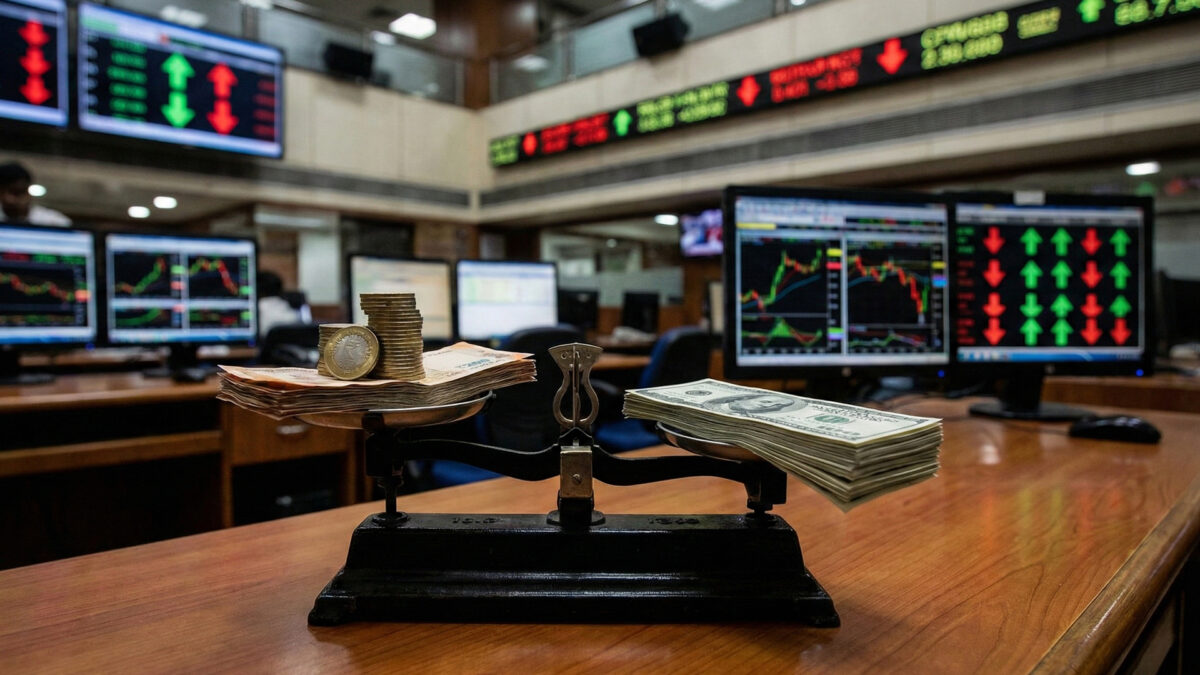
Rupee up 9 paise after record low ₹92

The Indian rupee recovered slightly on Friday after falling to its weakest level in history against the US dollar. It gained 9 paise to trade around ₹91.90 per dollar, supported by a decline in global crude oil prices, which eased some pressure on India’s import bill.

Earlier in the session, the rupee touched an all-time low of ₹92.02 per dollar. Traders said the intraday rebound was due to lower crude and commodity prices, which reduced immediate demand for dollars from importers. By the close of the day, the rupee settled near ₹91.97–₹91.93, showing a modest recovery.

Despite the short-term gains, the currency remains under pressure. The US dollar remains strong, and foreign portfolio investors (FPIs) continue to withdraw money from Indian equities, keeping overall market sentiment cautious. Analysts said sustained capital outflows and corporate demand for dollars are key reasons behind the rupee’s weakness.

January has been particularly challenging for the currency, with the rupee falling more than 2%, marking its worst monthly performance in over three years. The Reserve Bank of India (RBI) has intervened at times to prevent further sharp declines and curb volatility.

Market watchers are now looking ahead to the upcoming Union Budget, which could influence investor sentiment and currency trends. While falling oil prices provide some relief, experts say the rupee’s trajectory will largely depend on foreign investment flows and the global dollar trend in the coming weeks.

Also Read: Dixon Technologies rallies 5% after Q3 profit jump

Categories
Beyond

Economic Survey 2026 flags skill gaps, structural risks

The Economic Survey 2026, presented in Parliament ahead of the Union Budget 2026–27, offers a detailed assessment of India’s economic performance over the past year and outlines key challenges for the period ahead. The Survey indicates that the economy remains resilient, supported by strong domestic demand, steady investment, and controlled inflation, even as global uncertainties continue.

India has maintained growth faster than most major economies, driven largely by consumer spending and sustained investment across sectors. Economists note that the economy has stayed on a stable path despite geopolitical tensions, weaker global trade, and financial volatility in several regions.

A major highlight of the Survey is the sharp fall in inflation, which has declined to very low levels. Lower price pressures have helped improve household purchasing power and supported consumption. This positions India favourably at a time when many economies are still grappling with high inflation.

Prime Minister Narendra Modi said the Survey reflects India’s economic progress despite a challenging global environment. He highlighted strong fundamentals such as infrastructure development, innovation, and entrepreneurship as key drivers of long-term growth.

The Survey also draws attention to structural challenges, particularly in the labour market. The Chief Economic Adviser (CEA) has flagged significant skill gaps and structural risks emerging in the AI-driven economy. Limited access to formal vocational training and slow skill adaptation could constrain job creation and productivity if not addressed in time. The Survey stresses the need to align education and skilling systems with evolving industry and technology requirements.

Manufacturing growth and the creation of skilled employment are identified as crucial for sustaining high growth rates alongside the expanding services sector. Strengthening industrial capacity and improving workforce readiness are seen as essential policy priorities.

Overall, the Economic Survey paints a picture of a stable and resilient economy, underpinned by low inflation, strong domestic demand, and investment momentum. At the same time, it underlines the urgency of tackling skills shortages and preparing the workforce for technological change.

The Survey sets the analytical backdrop for the Finance Minister’s Budget 2026–27, helping policymakers, businesses, and investors evaluate both economic strengths and emerging risks before new policy measures and spending proposals are announced.

Also Read: Venezuela opens oil sector to foreign firms

Categories
Beyond

Venezuela opens oil sector to foreign firms

Venezuela’s government has approved a major overhaul of its oil sector, aiming to attract foreign investment and revive the country’s struggling energy industry. The law, signed by acting President Delcy Rodríguez, represents a significant shift from decades of strict state control under Petróleos de Venezuela (PDVSA).

Under the new framework, private and foreign companies can operate oil projects at their own cost and risk, while the state retains ownership of crude reserves. The law also allows independent arbitration for disputes, reducing legal uncertainties that have historically deterred foreign investors. Companies will now have greater operational autonomy, including decisions on production levels and investments, signaling a major policy pivot from the nationalisation policies introduced by Hugo Chávez in 2007.

Financial incentives have also been introduced to make Venezuela more competitive. The law caps royalties at 30% but allows authorities to set rates on a project-by-project basis. This flexibility is intended to attract large-scale international operators and encourage investment in technologically advanced extraction projects.

The legislative reform coincides with a partial easing of U.S. sanctions on Venezuela’s oil sector. Washington issued a general license permitting certain U.S. companies to engage in trade and transport of Venezuelan crude, providing a potential boost to foreign capital inflows. Analysts say the dual move, domestic reform and international sanction relief — is designed to restore investor confidence and reverse years of declining production.

Venezuela’s oil output has fallen sharply in recent years due to mismanagement, underinvestment, and economic sanctions, despite the country holding the world’s largest proven oil reserves. Industry experts believe the new law could jump-start production, create jobs, and increase government revenue, although political instability and past economic mismanagement remain key risks for investors.

Also Read: Microsoft sees Copilot AI boom, costs worry investors

Categories
Beyond

Gold at ₹1.78 lakh, Silver above ₹4.10 lakh

Gold and silver prices recorded marginal gains on Friday, reflecting steady demand for precious metals amid ongoing global uncertainties. According to market data, the price of 24-carat gold increased by ₹10 per 10 grams, taking it to ₹1,78,860 in major cities such as Mumbai and Kolkata. In the national capital, Delhi, 24-carat gold was quoted slightly higher at ₹1,79,010 per 10 grams.

Prices of 22-carat gold, which is commonly used for jewellery, also moved up by ₹10 per 10 grams. The yellow metal was priced at ₹1,63,960 per 10 grams in Mumbai, Kolkata, Bengaluru and Hyderabad. In Delhi, 22-carat gold was selling at ₹1,64,110 per 10 grams, while Chennai continued to command a premium, with prices hovering around ₹1,68,010 per 10 grams.

Silver prices followed a similar trend, rising by ₹100 per kilogram during early trade. One kilogram of silver was priced at ₹4,10,100 in key markets including Delhi, Mumbai and Kolkata. Chennai once again saw higher rates, with silver trading at around ₹4,25,100 per kilogram, reflecting regional demand patterns.

Market participants attribute the firm trend in bullion prices to sustained investor interest in safe-haven assets. Precious metals have remained in focus globally as investors seek protection against economic uncertainty, inflation concerns and geopolitical tensions. Recent movements in international gold and silver prices, along with fluctuations in the rupee against the US dollar, have also influenced domestic rates.

Despite the modest daily increase, gold and silver prices remain at elevated levels compared to historical averages. Analysts note that short-term price movements are likely to stay volatile, driven by global cues such as interest rate expectations, central bank policies and developments in international markets.

Also Read: Sensex slides 350 points, Nifty slips below 25,300

Categories
Beyond

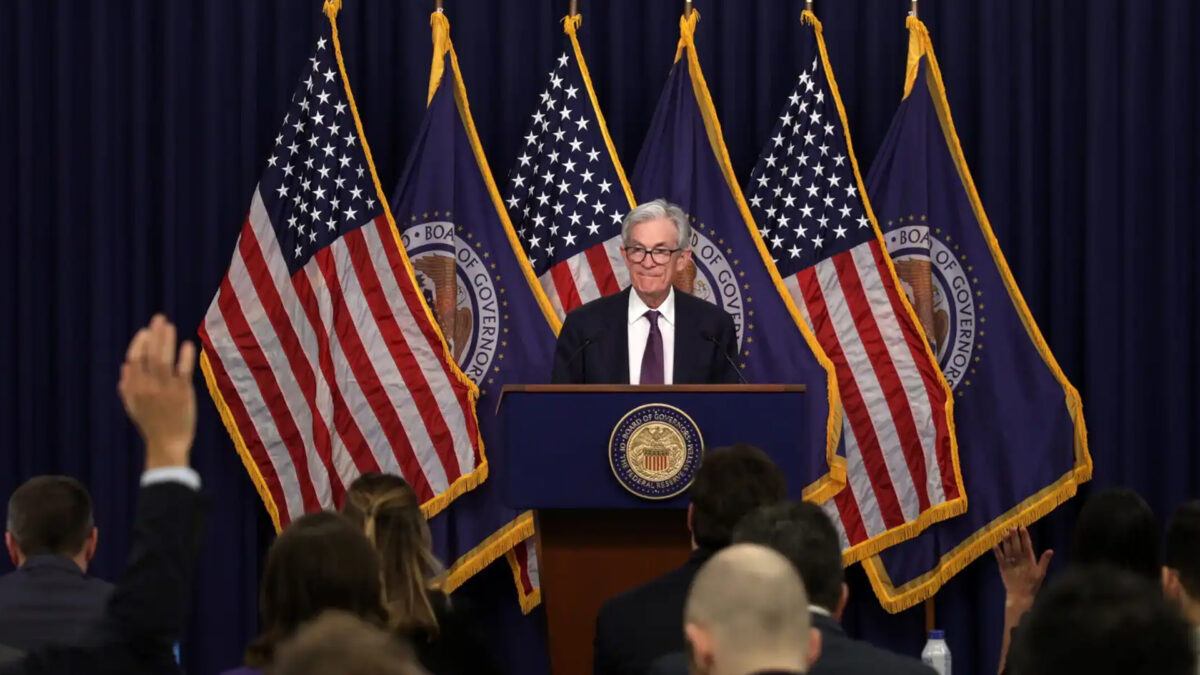
Fed holds rates steady despite Trump pressure

The Federal Reserve has decided to keep interest rates unchanged, even as President Donald Trump urges rate cuts. The move shows the Fed is focused on controlling inflation while supporting economic growth.

The Fed’s main policy group, the Federal Open Market Committee, voted to keep rates at their current level after months of increases meant to slow rising prices. Officials said inflation has eased but is still above the Fed’s 2 percent target and cutting rates too soon could make prices rise again.

“Keeping rates steady gives us time to watch the economy and keep inflation under control,” a Fed spokesperson said Economists say the decision helps prevent market surprises and shows the central bank is acting based on data, not politics.

Trump has repeatedly called for lower rates, arguing that high borrowing costs hurt businesses and consumers. His comments have sparked debate about the Fed’s independence but officials insist decisions are guided by economic conditions rather than political pressure.

Some investors welcomed the steady rates while others hoped for cuts to boost growth. Stock prices moved slightly after the announcement as traders weighed the Fed’s outlook.

By keeping rates steady, the Federal Reserve signals caution and a focus on long-term stability. The central bank also said it will keep watching economic trends and adjust policy if needed to support growth and protect financial stability.

Economists say the decision balances the need to keep the economy growing with the need to control inflation. Consumer spending and jobs are holding up, but global market changes and political tensions could create challenges.

Also Read: India’s industrial growth rockets 7.8% in December

Categories
Beyond

Gold at ₹1,67,090, Silver trades at ₹3,80,100

Gold and silver prices in India registered marginal gains in early trade, reflecting stable demand and firm trends in global markets. According to market data, the price of 24-carat gold rose by ₹10 to trade at ₹1,67,090 per 10 grams. 22-carat gold also saw a similar increase and was priced at ₹1,53,160 per 10 grams.

Silver prices moved up slightly as well. The metal gained ₹100, taking the rate to ₹3,80,100 per kilogram in major Indian markets. The modest rise comes after recent volatility in precious metal prices, driven by global economic concerns and fluctuations in currency markets.

Market experts say gold and silver continue to attract investor interest as safe-haven assets amid uncertainty around global growth, interest rate outlooks, and geopolitical developments. Internationally, gold prices have remained near elevated levels, supported by steady demand from investors and central banks, while silver has also benefited from industrial demand alongside its role as a hedge asset.

Despite the gains, analysts note that price movements remain cautious, with traders closely tracking cues from global markets, including US economic data and movements in the dollar. Any sharp changes in interest rate expectations or global risk sentiment could influence prices in the near term.

In India, gold prices also factor in import duties, taxes, and local demand, which can cause variations across cities. Silver prices similarly vary based on industrial demand and global supply conditions.

Also Read: Sensex down 400 points, Nifty under 25,250