Categories
Corporate

Air India Launches First Non-Stop Flight to Philippines

Air India has inaugurated its inaugural non-stop flight between India and the Philippines, enhancing connectivity between the two nations. The inaugural flight departed from Delhi’s Indira Gandhi International Airport on October 1, 2025, marking a significant milestone in bilateral air travel.

The launch ceremony was attended by H.E. Josel F. Ignacio, Ambassador of the Philippines to India, and Maria Cynthia P. Pelayo, Minister and Consul General, Embassy of the Philippines in India, alongside senior officials from Air India.

The new service offers direct connectivity between Delhi and Manila, operating five days a week—Monday, Wednesday, Friday, Saturday, and Sunday. Flight AI2362 departs Delhi at 13:20 local time and arrives in Manila at 22:40, while the return flight, AI2361, departs Manila at 23:40 and arrives in Delhi at 03:50 the following day.

Air India’s Delhi-Manila flights are operated using Airbus A321LR aircraft, featuring a three-class cabin configuration that includes Business Class, Premium Economy, and Economy Class. The airline is among the few in Southeast Asia to offer fully flat beds in Business Class on a single-aisle aircraft.

This new route strengthens Air India’s presence in Southeast Asia, expanding its network to eight destinations across seven countries in the region. It also provides Filipino travelers with convenient connections to Air India’s extensive network across Europe and North America via Delhi.

The launch of the non-stop Delhi-Manila flight is expected to boost tourism, trade, and cultural exchanges between India and the Philippines, offering travelers greater convenience and enhanced connectivity between the two countries.

Also Read: Adani Green Energy Reaches 16,598.6 MW Operational Capacity

Categories
Corporate

Oil Bounces Back as Russia Sanction Threats Stir Market

When oil prices go slightly uphill, there is always a reason for a short respite. As the prices rose a little higher on Thursday, it was a sign of recovering a fraction of their steep recent losses for traders. For quite some time, they had been bearing the losses due to the risk of fresh disruptions to Russian crude supplies against signs of weakening demand.

Among the top names, Brent crude futures edged up 0.2% to $65.49 a barrel, while U.S. West Texas Intermediate (WTI) climbed 0.2% to $61.92. The lift was modest, with analysts attributing it to the effect of geopolitics.

Sources at Nissan Securities noted that WTI’s dip toward $60 a barrel, a key support zone, sparked some bargain buying. That uptick, they say, was further fuelled by speculation that the U.S. and its G7 allies may tighten sanctions. An oil analyst at UBS said that markets are jittery and that Russian oil could face new disruptions, but without actual sanctions bites or export blockages, the price increase is limited.

The G7 finance ministers this week pledged to crack down harder on nations still importing Russian crude or enabling backdoor flows, while Washington is reported to be aiding Ukraine with intelligence to help strike Russian oil infrastructure. Both shifts, if realized, could hit Russian supply lines directly.

But the bullish sentiment ran into headwinds. OPEC+ is said to be mulling a sharp production hike in November that could go up to 500,000 barrels a day, three times its October increase, as Saudi Arabia seeks to claw back lost market share. Adding to that, U.S. government stock data showed oil product inventories rising by 1.8 million barrels last week to 416.5 million, a clear sign of soft demand and weak refinery runs.

The result is a market trapped in two stories at once. While the fears over Russian supply squeezes are pushing prices up, the weight of oversupply and sluggish demand is holding them back. For now, the tug of war has left oil in a fragile balance, with traders watching closely which side tips first.

Also Read: TCS Adds Outplacement, Mental Health Support to Layoffs


Categories
Corporate

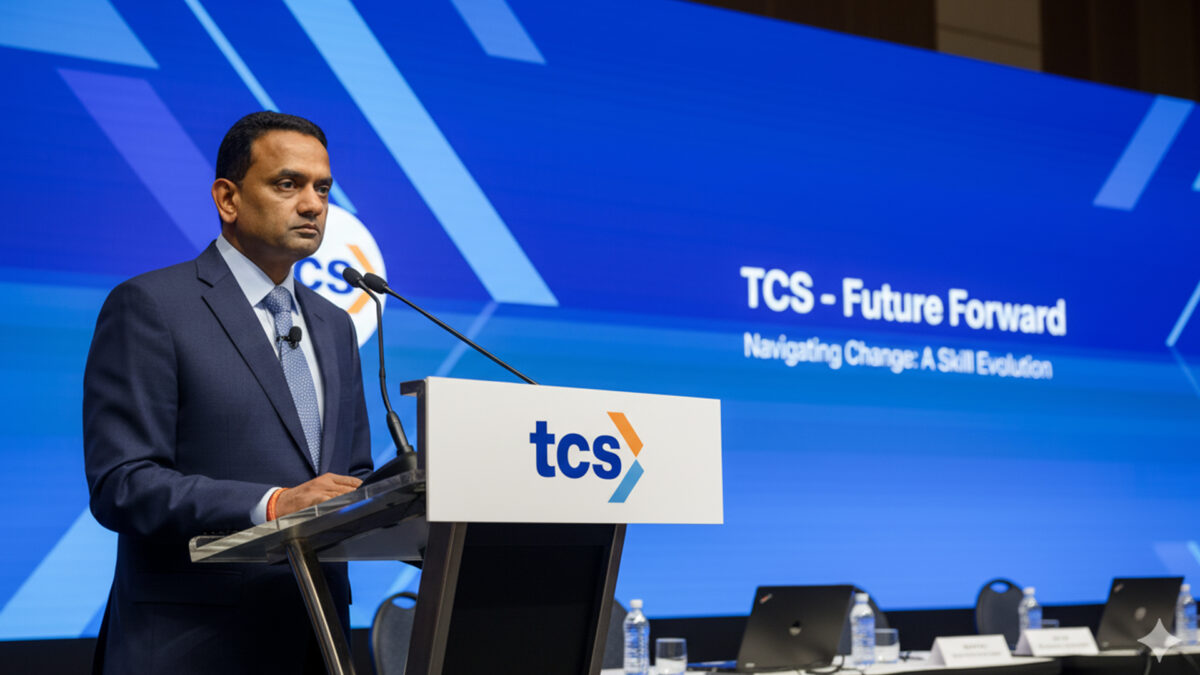
TCS Adds Outplacement, Mental Health Support to Layoffs

Tata Consultancy Services (TCS), India’s largest IT services company, has rolled out severance packages of up to two years’ salary as part of a sweeping workforce restructuring, according to media reports.

The exercise is aimed at streamlining operations and realigning talent with evolving business priorities. Severance pay will vary by tenure: six months’ salary for shorter stints, around 1.5 years’ pay for employees with 10–15 years of service, and up to two years’ salary for those with over 15 years at the company. All affected employees are assured a minimum of three months’ notice pay.

However, staff who have remained “on the bench,” or unassigned, for more than eight months may receive only standard notice pay without additional benefits.

Beyond financial compensation, TCS has also rolled out outplacement services, mental health support under its “TCS Cares” initiative, and voluntary early retirement options with full benefits.

CEO K Krithivasan described the decision as “one of the toughest” in the company’s history, noting that mid- and senior-level employees have been most impacted. The bulk of role adjustments were carried out in August and September, with a few cases still under review.

For many employees, the packages bring both certainty and closure in a period of change. For TCS, the move represents a difficult balancing act involving letting go of long-serving staff while trying to safeguard the company’s future.

Also Read: Google Cloud Shrinks Headcount as AI Takes Center Stage

Categories
Corporate

India Eyes $8B IPO Boom, LG Leads the Charge

India is swiftly heading for a blockbuster IPO season in late 2025, with companies expected to raise nearly $8 billion in the final quarter alone. At the forefront is LG Electronics, which has revived plans to list its Indian arm by selling a 15% stake. The offering could fetch up to ₹116 billion, which is around $1.3 billion, valuing the unit at approximately ₹774 billion, which is close to $8.7 billion.

LG’s public listing aligns with a wider strategy to cement India’s place as a global manufacturing hub. Alongside the IPO, the company is investing $600 million in a new factory at Sri City, Andhra Pradesh, its third in the country, to boost production for both local demand and exports, particularly targeting European markets.

The upcoming IPO wave extends beyond LG. Heavyweights like Tata Capital are also preparing to tap the markets, with individual issues expected to range between $600 million and $1.8 billion. Strong participation from retail and institutional investors, coupled with buoyant valuations and government-backed policies, is fueling this fundraising rush.

So far in 2025, more than 240 companies have collectively raised $10.5 billion, making India one of the top three destinations globally for IPO proceeds. With the latest surge, the country’s capital markets are reflecting firm investor confidence and a growing role in global finance and manufacturing.

Also Read: India-EFTA Trade Pact Takes Effect, Promises $100 Billion Investment

Categories
Technology

Amazon Unveils Four New Echo Devices Built For Alexa+

Amazon said all four products will begin shipping in the U.S. later this year

Amazon on Tuesday announced the launch of four new Echo devices designed specifically for its next-generation AI assistant, Alexa+. The new lineup includes the Echo Dot Max, Echo Studio, Echo Show 8, and Echo Show 11.

“These new Echo products are the best way to experience Alexa+, and Early Access is now available out of the box with the purchase of an all-new Echo,” Amazon said in its announcement.

Custom chips and sensor platform

The company said the new devices are powered by two custom-designed silicon chips — AZ3 and AZ3 Pro — featuring a new AI accelerator “designed to run AI edge models of the future.” According to Amazon, the Echo Dot Max uses the AZ3 chip to improve conversation detection, while the AZ3 Pro, found in the Echo Studio and Echo Show models, supports “state-of-the-art language models and vision transformers.”

Built on top of this hardware is Omnisense, Amazon’s new sensor platform for ambient AI. It combines signals from cameras, audio, ultrasound, Wi-Fi radar, and other sensors to allow Alexa+ to respond more intelligently to events at home, including delivering reminders when specific people enter a room or sending alerts about unlocked doors at night.

Device features and pricing

The Echo Dot Max is described as “the best Echo Dot we’ve ever built,” offering nearly three times the bass of its predecessor and featuring a new two-way speaker system. It will be available for $99.99.

The new Echo Studio, priced at $219.99, is 40% smaller than the original and supports spatial audio and Dolby Atmos. It includes a woofer and three full-range drivers for immersive sound, along with a new spherical design.

The Echo Show 8 and Echo Show 11 feature upgraded displays with improved clarity, a 13-megapixel camera, and new front-facing stereo speakers. They are priced at $179.99 and $219.99 respectively.

Amazon said all four products will begin shipping in the U.S. later this year, with the Echo Dot Max and Echo Studio available from October 29 and the Echo Show 8 and Echo Show 11 from November 12.

According to the company, customers purchasing these new Echo devices “will get access to Alexa+ out of the box,” with Early Access continuing to expand.

Categories
Beyond

Gold and Silver Soar as US Shutdown Sparks Safe-Haven Demand

Gold futures in India surged to record levels on Wednesday, driven by a combination of global market trends and heightened investor demand for safe-haven assets following the U.S. government shutdown.

Domestic December gold contracts on the Multi Commodity Exchange (MCX) rose ₹535, or 0.45%, to reach an unprecedented ₹1,17,800 per 10 grams.

February futures extended gains for a fifth consecutive session, climbing ₹617, or 0.52%, to a lifetime high of ₹1,19,055 per 10 grams.

Silver futures also posted notable gains. The December contract jumped ₹2,699, or 1.89%, to a fresh peak of ₹1,44,844 per kilogram, while the March 2026 contract surged ₹3,980, or 2.77%, touching a record ₹1,47,784 per kilogram.

Analysts pointed to the shutdown in Washington, coupled with weak U.S. labour data, as the primary triggers for the sharp rally in precious metals.

According to experts in the Indian commodities market, the government closure has intensified concerns over delays in key economic indicators, including the upcoming nonfarm payrolls report.

This uncertainty has strengthened expectations that the U.S. Federal Reserve may cut interest rates in its forthcoming policy meetings, further supporting bullion prices.

Global markets mirrored the domestic trend, with Comex December gold futures crossing the $3,900 per ounce mark for the first time, reaching $3,903.45. Silver prices also climbed, hitting a peak of $47.81 per ounce for December contracts.

Market observers noted that the dollar index, which measures the strength of the greenback against a basket of six major currencies, remained subdued at 97.62, down 0.16%. A weaker dollar makes gold and silver relatively cheaper for investors using other currencies, reinforcing demand.

Traders and analysts emphasized that the duration of the U.S. government shutdown will be a key factor influencing the bullion market in the near term.

They also highlighted that market participants are increasingly pricing in the likelihood of a Fed rate reduction, with some projecting additional cuts later this year.

The latest gains in precious metals reflect a combination of geopolitical uncertainty, expectations of monetary easing in the United States, and robust demand for hedging instruments amid global economic volatility.

With both domestic and international markets reacting sharply to U.S. developments, gold and silver have emerged as preferred investment options for risk-averse investors seeking stability.

Also Read: Apple, Google, and Meta Face Legal Challenges Over Gambling Apps

Categories
Corporate

Apple, Google, and Meta Face Legal Challenges Over Gambling Apps

The lawsuits, filed in 2021, allege that the companies facilitated access to gambling apps that were addictive and harmful to users.

Apple, Google, and Meta Platforms are facing lawsuits in the United States over their roles in hosting and promoting gambling applications on their platforms. The lawsuits allege that these tech companies have facilitated access to illegal gambling services, leading to financial harm for users.

The cases are currently under legal review, with discussions focusing on the extent of the companies’ responsibilities and potential liabilities in relation to the content available through their app stores and platforms.

A federal judge in San Jose, California, has ruled that the lawsuits against Apple, Google, and Meta can proceed. The plaintiffs claim that the companies promoted illegal gambling by hosting and accepting commissions from casino-style apps that allegedly led to user addiction. The tech giants had argued for immunity under Section 230 of the Communications Decency Act, which protects online platforms from liability over third-party content. However, the judge rejected this defense, stating that the companies’ role in processing payments and collecting commissions made them potentially liable.

The lawsuits, filed in 2021, allege that the companies facilitated access to gambling apps that were addictive and harmful to users. The plaintiffs claim that the companies participated in a racketeering scheme by brokering transactions and taking up to 30% in commissions, totaling an estimated $2 billion. While some claims were dismissed, most consumer protection claims (outside of California) were allowed to proceed. The judge permitted an immediate appeal due to the significance of the Section 230 interpretation.

The cases are being litigated in the U.S. District Court for the Northern District of California. The outcome of these lawsuits could have significant implications for the tech industry, particularly regarding the extent of platform responsibility for third-party content and activities conducted through their services.

As of now, Apple, Google, and Meta have not publicly commented on the ruling. The legal proceedings are ongoing, and further developments are anticipated as the cases progress through the courts.

Also Read: LG Electronics India to Launch ₹11,607 Crore IPO on October 7

Categories
Beyond

India-EFTA Trade Pact Takes Effect, Promises $100 Billion Investment

The agreement aims to promote long-term capital for productive capacity building, explicitly excluding foreign portfolio investment.

The India-European Free Trade Association (EFTA) Trade and Economic Partnership Agreement (TEPA) officially came into effect on October 1, 2025.

Signed on March 10, 2024, this agreement marks India’s first free trade agreement with four developed European nations: Switzerland, Norway, Iceland, and Liechtenstein.

TEPA is a comprehensive 14-chapter agreement covering various aspects of trade and economic cooperation. It includes provisions on market access for goods, rules of origin, trade facilitation, trade remedies, sanitary and phytosanitary measures, technical barriers to trade, investment promotion, market access for services, intellectual property rights, and trade and sustainable development.

Notably, it incorporates binding commitments for investment and job creation, a first in any free trade agreement signed by India.

Under TEPA, EFTA countries have committed to increasing foreign direct investment (FDI) in India by $100 billion over the next 15 years.

This investment is expected to generate 1 million direct jobs in India, focusing on sectors such as manufacturing, renewable energy, life sciences, and digital transformation.

The agreement aims to promote long-term capital for productive capacity building, explicitly excluding foreign portfolio investment.

In terms of market access, EFTA has offered India access to 92.2% of its tariff lines, covering 99.6% of India’s exports. This includes 100% of non-agricultural products and tariff concessions on processed agricultural products.

India’s offer to EFTA covers 82.7% of its tariff lines, accounting for 95.3% of EFTA’s exports. Sensitive sectors such as pharmaceuticals, medical devices, processed food, dairy, soy, coal, and certain agricultural products have been protected under the agreement.

TEPA also provides enhanced opportunities for India’s services sector. India has offered commitments in 105 sub-sectors, while EFTA countries have made commitments in 128 sub-sectors (Switzerland), 114 (Norway), 107 (Liechtenstein), and 110 (Iceland).

The agreement facilitates mutual recognition agreements (MRAs) in professional services such as nursing, chartered accountancy, and architecture, enabling Indian professionals to access EFTA markets more easily.

It also improves access through digital delivery of services, commercial presence, and greater certainty for entry and temporary stay of key personnel.

Intellectual property rights (IPR) are another significant aspect of TEPA. The agreement ensures IPR commitments at the World Trade Organization’s Trade-Related Aspects of Intellectual Property Rights (TRIPS) level.

The IPR chapter with Switzerland sets high standards, addressing India’s interests in generic medicines and concerns related to patent evergreening.

TEPA emphasizes sustainable and inclusive development, aiming to foster transparency, efficiency, simplification, harmonization, and consistency in trade procedures.

It also focuses on employment, skills, and technology collaboration, accelerating the creation of direct jobs for India’s young workforce and facilitating access to world-leading technologies in precision engineering, health sciences, renewable energy, innovation, and research and development.

The agreement is expected to unlock opportunities across a wide range of industries.

With EFTA’s offer covering 92% of tariff lines, Indian exporters in sectors like machinery, organic chemicals, textiles, and processed foods will enjoy significantly improved access to EFTA markets. This will enhance competitiveness, reduce compliance costs, and accelerate access to EFTA markets.

In the agriculture and allied goods sector, India’s exports to EFTA are concentrated, with guar gum accounting for over 70% of the export basket in 2024-25.

Other exports include processed vegetables, basmati rice, pulses, fresh fruits, cereal preparations, and grapes. Norway and Switzerland together account for over 99% of India’s agri-exports to EFTA. The agreement is expected to reduce tariff barriers and expand India’s share in key commodities.

In the services sector, TEPA is expected to boost India’s services exports in areas of core strength such as IT and business services, cultural and recreational services, education, and audio-visual services.

EFTA’s services offers better access through digital delivery of services, commercial presence, and improved commitments and certainty for entry and temporary stay of key personnel.

The agreement also includes provisions for mutual recognition agreements (MRAs) in professional services such as nursing, chartered accountancy, and architecture, creating new avenues for Indian professionals in EFTA markets.

The India-EFTA Trade and Economic Partnership Agreement (TEPA) is a significant milestone in India’s trade relations with Europe.

It enhances market access for goods and services, strengthens intellectual property rights, and fosters sustainable, inclusive development, while supporting initiatives like “Make in India” and “Atmanirbhar Bharat.”

The agreement is expected to have a positive impact on India’s economy by attracting investment, creating jobs, and expanding trade opportunities.

Also Read: Apple, Google, and Meta Face Legal Challenges Over Gambling Apps

Categories
Corporate

Tata Motors Completes Demerger, Creates Two Companies

Tata Motors officially completed its demerger on Wednesday, marking the creation of two separate publicly listed entities. The restructuring separates the company’s commercial vehicle operations from its passenger vehicle segment, which includes electric vehicles (EVs) and the Jaguar Land Rover (JLR) brand. The move is part of Tata Motors’ strategy to provide operational clarity and allow each business to focus on its core areas, while potentially unlocking shareholder value.

Corporate Structure and Shareholder Details

Under the new structure, Tata Motors Limited will continue as the passenger vehicle company, overseeing its EV initiatives and managing the JLR portfolio. The commercial vehicle operations have been shifted to a newly formed company, Tata Motors Commercial Vehicles Limited (TMLCV), which will handle trucks, buses, and other commercial transport solutions.

Shareholders of Tata Motors will receive one share of TMLCV for every share they hold in the parent company, maintaining proportional ownership in both entities. This 1:1 share swap ensures that existing investors retain an equal stake across the two companies. The demerger is effective immediately, with the record date for share allocation set later this month.

Alongside the demerger, key leadership appointments have been announced. Shailesh Chandra has been appointed Managing Director and CEO of Tata Motors Passenger Vehicles Ltd., while Girish Wagh assumes the role of Managing Director and CEO of TMLCV. Both executives are tasked with steering their respective companies through the next phase of growth, including product launches, market expansion, and operational efficiency improvements.

Market Outlook and Strategic Implications

Industry analysts note that separating the commercial and passenger vehicle businesses could enhance focus and allow more targeted growth strategies. TMLCV is expected to concentrate on strengthening its commercial vehicle portfolio, leveraging its expertise in trucks and buses to capture market share across India and other key markets. Meanwhile, the passenger vehicle company will focus on capitalizing on growing demand for EVs and premium vehicles through the JLR brand.

The JLR business, acquired by Tata Motors in 2008, has faced challenges in recent years due to global economic fluctuations and supply chain disruptions. However, Tata Motors’ EV push and ongoing investments in technology and product development are expected to strengthen the passenger vehicle entity’s prospects. The separation is also seen as a move to make the JLR brand more agile and responsive to market dynamics.

Experts suggest that the demerger could unlock shareholder value by enabling investors to evaluate each company on its standalone performance. Analysts also anticipate that the move may attract strategic investment interest, particularly in the EV segment, as the market for electric mobility continues to expand in India and globally.

The split comes at a time when Tata Motors is focusing on scaling up production of electric models domestically, while JLR continues to push luxury and hybrid vehicle offerings in international markets. By creating distinct entities, Tata Motors aims to streamline operations, improve decision-making, and position both companies for long-term growth.

The completion of the demerger is being viewed as a significant milestone in Tata Motors’ strategic evolution, marking the beginning of a new chapter for the company’s commercial and passenger vehicle businesses. Both companies are expected to pursue focused strategies that leverage their respective strengths, ensuring competitiveness and operational efficiency in their markets.

Also Read: Apple, Google, and Meta Face Legal Challenges Over Gambling Apps

Categories
Corporate

LG Electronics India to Launch ₹11,607 Crore IPO on October 7

At the upper end of the price band, the IPO values LG Electronics India at approximately ₹77,400 crore (around $8.7 billion).

LG Electronics India is set to launch its Initial Public Offering (IPO) on October 7, 2025, aiming to raise ₹11,607 crore (approximately $1.38 billion).

The IPO will close on October 9, 2025, and is expected to list on the Bombay Stock Exchange (BSE) and National Stock Exchange (NSE) on October 14, 2025.

The company has fixed the price band for the offering at ₹1,080 to ₹1,140 per equity share, each with a face value of ₹10. The issue comprises an offer for sale (OFS) of 10,18,15,859 equity shares by LG Electronics Inc., the South Korean parent company, representing a 15% stake in the Indian subsidiary.

No fresh capital will be raised by LG Electronics India through this IPO. The proceeds from the sale will go entirely to the selling shareholder, LG Electronics Inc.

At the upper end of the price band, the IPO values LG Electronics India at approximately ₹77,400 crore (around $8.7 billion).

This valuation positions the company as one of India’s leading consumer electronics firms. The IPO is expected to be among the largest in India in 2025, following Tata Capital’s ₹15,500 crore issue and HDB Financial Services’ ₹12,500 crore offering. 

The company has reported a net profit of ₹513.26 crore and a revenue of ₹6,337.36 crore for the three months ended June 30, 2025. For the fiscal year ending March 31, 2025, LG Electronics India posted a net profit of ₹2,203.25 crore and revenue of ₹24,630.63 crore.

The IPO will be managed by a consortium of book-running lead managers, including Axis Capital, Citigroup Global Markets, Morgan Stanley India, JPMorgan, and BofA Securities. The registrar for the issue is Kfin Technologies Ltd.

Investors can apply for a minimum of 13 equity shares, with subsequent bids in multiples of 13. The allocation of shares will be as follows: 50% for Qualified Institutional Buyers (QIBs), 35% for Retail Individual Investors (RIIs), and 15% for Non-Institutional Investors (NIIs).

The finalization of share allotment is expected on October 10, 2025, with refunds initiated on October 13, 2025, and shares credited to demat accounts on the same day. 

This IPO follows LG Electronics India’s announcement in May 2025 of a ₹600 million investment in a new manufacturing plant in Sri City, Andhra Pradesh. The facility, located near Chennai, is expected to create direct employment for 1,495 people and indirectly support 10,000 jobs. The plant is part of the company’s expansion plans in India as it prepares for the IPO. 

With the IPO, LG Electronics India aims to enhance its presence in the Indian market and provide investors with an opportunity to participate in the growth of one of the country’s prominent consumer electronics companies.

Also Read: Trump Grants Pfizer Three-Year Tariff Relief in Drug Pricing Deal