Categories
Corporate

Vedanta Secures CCI Approval for Acquisition of Jaiprakash Associates

The Competition Commission of India (CCI) has granted in-principle approval to Vedanta Limited’s proposal to acquire Jaiprakash Associates Limited (JAL), marking a significant development in the ongoing insolvency proceedings under the Insolvency and Bankruptcy Code (IBC).

JAL, once a major player in India’s infrastructure and real estate sectors, had faced severe financial distress, leading to insolvency proceedings initiated in June 2024.

This approval comes after a competitive bidding process in which Vedanta emerged as the highest bidder, offering ₹17,000 crore for JAL’s assets, surpassing other contenders, including the Adani Group.

The company reportedly owes around ₹57,185 crore to its creditors, with the National Asset Reconstruction Company Ltd (NARCL) being the largest claimant. Vedanta’s acquisition is seen as a strategic step to revitalize JAL’s operations and assets, which include cement plants, real estate developments such as Jaypee Greens in Greater Noida and Noida, power ventures, and hotel properties in Delhi-NCR, Mussoorie, and Agra.

The CCI’s approval is a critical milestone, allowing Vedanta to proceed with its resolution plan, subject to the approval of the Committee of Creditors (CoC).

The CoC is expected to review and vote on the plan in the coming weeks, with a final decision anticipated shortly thereafter. Vedanta’s bid is structured with an upfront payment of approximately ₹3,800 crore, followed by annual installments over the next five years, totaling ₹17,000 crore.

The acquisition underscores Vedanta’s intent to expand its footprint in India’s infrastructure and industrial sectors, diversifying beyond its core mining and metals operations.

Analysts note that securing JAL’s substantial real estate and industrial assets could provide Vedanta with significant leverage in the construction, cement, and power markets.

The outcome of the CoC’s vote will ultimately determine the future of JAL and its portfolio of assets, with broader implications for creditors, investors, and the Indian economy.

A successful acquisition would position Vedanta as a major player in multiple sectors beyond its traditional stronghold, reflecting a trend of consolidation and strategic acquisitions in India’s distressed corporate asset market.

Also Read: Vodafone Idea Shares Decline as Supreme Court Defers AGR Case
Categories
Corporate

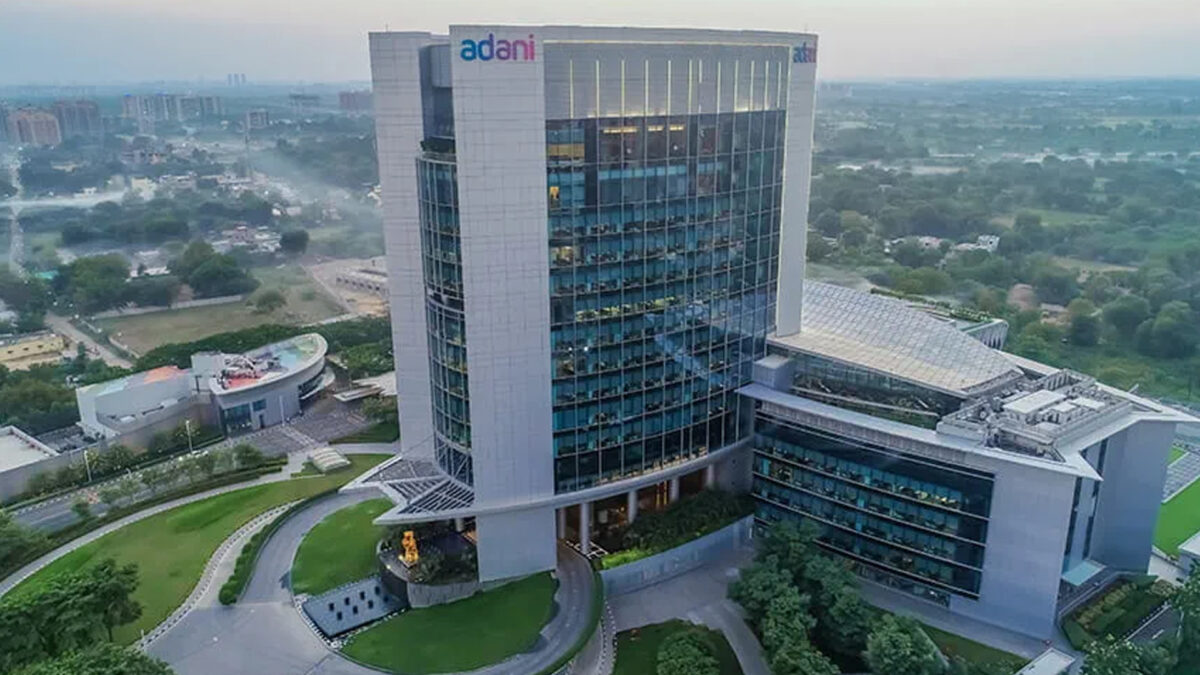
Adani Group Seeks Court Approval to Acquire 87 Sahara Properties

Indian billionaire Gautam Adani’s property arm is seeking court approval to acquire 87 properties from the financially distressed Sahara Group, according to a report by Reuters.

The assets include hotels, malls, and land parcels, with notable properties such as the 9,000-acre luxury township Aamby Valley and the Sahara Star hotel in Mumbai.

This move is aimed at bolstering Adani’s relatively small real estate portfolio and expanding its presence in the hospitality sector.

Sahara Group, once a dominant player in India’s real estate market, is under pressure to sell these assets to raise funds for repaying approximately $2.82 billion to investors who had invested in a bond scheme later ruled illegal.

The Supreme Court of India is overseeing the repayment process and has sought inputs from government agencies regarding Adani’s proposal. The next hearing is scheduled for November.

Adani Properties, the unlisted arm of the Adani Group, has been involved in multiple infrastructure projects, including the redevelopment of Dharavi, Asia’s densest slum, in Mumbai.

The acquisition of Sahara’s assets would give Adani access to a substantial land bank and premium hospitality and real estate assets, strengthening its footprint in high-value urban developments.

Analysts say the deal could also serve as a stepping stone for Adani to consolidate its real estate ambitions in Mumbai and other major cities.

The proposed acquisition underscores the challenges facing Sahara Group, which has struggled with legal and financial pressures for years.

Sahara’s founder, Subrata Roy, has faced multiple legal battles, and the group has been gradually liquidating assets to meet its obligations.

For Adani, the move represents an opportunity to acquire high-value properties at potentially discounted rates, while also diversifying its portfolio beyond energy and infrastructure projects.

The Supreme Court’s decision on the matter could have far-reaching implications for both conglomerates and the Indian real estate market at large.

If approved, the acquisition would significantly increase Adani’s land holdings and its influence in the real estate and hospitality sectors.

Observers note that the deal could mark a significant turning point in India’s property market, signaling a shift in ownership from legacy real estate players to emerging corporate giants.

According to industry experts, the Adani-Saharaz transaction, if executed, would be among the largest property acquisitions in India in recent years, reflecting the growing consolidation trend within the sector and the strategic importance of land banks in urban development.

Also Read: OpenAI and Broadcom to Deploy 10 Gigawatts of Custom AI Accelerators

Categories
Corporate

Infosys Wins £1.2 Billion NHS Contract to Modernise UK Workforce

Infosys has clinched a landmark 15-year contract worth £1.2 billion (approximately ₹14,000 crore) from the UK’s National Health Service Business Services Authority (NHSBSA) to modernise its workforce management and payroll operations.

Under the deal, Infosys will develop a new, data-driven platform to replace the NHS’s existing Electronic Staff Record (ESR) system, serving 1.9 million NHS employees in England and Wales and processing over £55 billion in annual payroll.

The contract, named the Future NHS Workforce Solution, was awarded after a rigorous procurement process.

According to a press release from Infosys, the new system will support the full employee lifecycle — from recruitment and onboarding to payroll, career progression, and retirement — with advanced analytics and AI-driven tools to enable data-driven decision making and operational efficiencies.

Michael Brodie, Chief Executive of NHSBSA, noted that the solution is intended not merely to replace ESR but to act as a strategic enabler for creating a workforce better aligned to the NHS’s long-term ambitions.

Salil Parekh, CEO and MD of Infosys, said the company was honoured to be selected for a project of this scale, and emphasised its intention to combine digital transformation expertise with its AI offerings, notably the Infosys Topaz platform, to deliver a robust, future-proof system for NHS staff and administrators.

Reports in Indian business media described the agreement as one of Infosys’s “mega deals,” noting that it comes at a time when global headwinds are putting pressure on the IT services sector.

The new platform will replace ESR and handle payroll for 1.9 million employees, aligning with the UK health system’s broader digital transformation agenda. Some reports also noted that Infosys shares closed slightly lower after the announcement, reflecting the market’s cautious response to large, long-term public-sector commitments.

In the wider context, the deal stands out as one of the biggest public-sector contracts ever awarded to Infosys, particularly within Europe.

Industry analysts view it as a strong vote of confidence in the company’s capacity to manage large-scale transformation projects involving critical infrastructure and regulatory oversight.

The new contract is expected to bring incremental revenue to Infosys over its 15-year tenure. However, as with many major IT projects of this nature, analysts say execution, compliance, and margin management will remain key to its success.

The announcement also comes just ahead of Infosys’s earnings report for the July–September quarter and is likely to shift investor focus toward the company’s global deal pipeline and performance in public-sector verticals.

Also Read: Citi India Appoints Srini Kannan to Lead Key Sectors at Commercial Bank

Categories
Leaders

Tarun Garg to Succeed Unsoo Kim as Hyundai India’s First Indian MD & CEO

Hyundai Motor India Limited (HMIL) has announced that Tarun Garg will take over as Managing Director and Chief Executive Officer effective 1 January 2026, following the decision by incumbent Unsoo Kim to step down and return to a strategic role in South Korea.

The board of HMIL approved Garg’s appointment at a meeting held on 14 October 2025, according to regulatory disclosures.

Until that date, Garg will serve as MD & CEO‐designate while shadowing Kim in the transition. The successor appointment remains subject to shareholder approval.

Unsoo Kim, who has helmed Hyundai India since 2022, will formally relinquish his position on 31 December 2025 and assume a strategic assignment at Hyundai Motor Company in South Korea.

During his tenure in India, Kim oversaw landmark developments including Hyundai India’s initial public offering in 2024 — India’s biggest IPO to date.

Tarun Garg becomes the first Indian national to lead Hyundai’s Indian operations.

A mechanical engineer by training and an MBA from IIM Lucknow, Garg joined Hyundai India in December 2019 as Director (Sales, Marketing & Service) and was elevated to Chief Operating Officer in January 2023.

Before Hyundai, Garg spent over two decades at Maruti Suzuki India, rising to the role of Executive Director (Marketing). Within Hyundai, his contributions include the rollout of Advanced Driver Assistance Systems (ADAS) across multiple models and efforts to improve sales quality, control incentives, and expand margins.

Alongside the leadership change, Hyundai India also disclosed a major investment plan of ₹450 billion (about US$5.07 billion) by fiscal 2030 to expand capacity and strengthen research and development efforts.

Around 60 percent of the allocation is planned for R&D, with the balance directed at product upgrades and capacity enhancement.

The company is targeting EBITDA (core earnings) margins of 11 to 14 percent and a compounded annual domestic sales growth rate of approximately 7 percent over the next five years.

Also Read: Citi India Appoints Srini Kannan to Lead Key Sectors at Commercial Bank

Categories
Technology

Google Expands Nano Banana AI Image Editor: See Details Here

Google has rolled out its AI image editing tool, Nano Banana, to Google Search and NotebookLM, with plans to extend it to Google Photos in the near future.

Nano Banana, powered by the Gemini 2.5 Flash model, was first introduced in August 2025 and quickly gained popularity, with more than 5 billion images generated since its launch.

The expansion aims to bring advanced AI-driven image editing to platforms where users are already exploring, learning, and creating with visuals.

In Google Search, users can access Nano Banana through the Google Lens app on Android and iOS devices. By opening Lens, they can capture a new photo or select one from their gallery, then tap the new ‘Create’ mode, identified by a banana icon.

This opens a prompt interface where users can describe the edits they want applied to the image. The feature allows for a wide range of creative transformations, enabling users to experiment with visual ideas directly within Search.

Meanwhile, in NotebookLM, Nano Banana enhances the platform’s functionality for generating illustrations and visual content. Users can now choose from several artistic styles, including watercolor and anime, while the default remains the ‘Classic’ style.

The tool also introduces a new ‘Brief’ format in addition to the existing ‘Explainer,’ allowing users to generate concise edits and visual summaries.

These updates complement previous NotebookLM features introduced in July, such as Video Overviews and the ability to create mind maps and study guides, further positioning the platform as a robust tool for visual learning and content creation.

The integration of Nano Banana into these platforms demonstrates Google’s strategy to make advanced AI tools accessible across its ecosystem.

By embedding these capabilities directly into Search and NotebookLM, Google aims to simplify the creative process and provide users with seamless ways to manipulate and enhance images without requiring standalone apps.

Although Google has not yet specified when Nano Banana will be available in Google Photos, the company has indicated that the rollout is imminent.

This step will extend the tool’s reach to the widely used Photos app, offering AI-powered image editing to a larger audience. With its expansion, Nano Banana positions itself as a versatile and intuitive AI editor, capable of enhancing creativity for users across multiple Google products.

The rollout highlights Google’s continued investment in AI-driven visual tools, reflecting growing interest in generative AI for both personal and professional applications.

Users can now look forward to experimenting with Nano Banana across Search, NotebookLM, and eventually Photos, exploring new ways to edit, illustrate, and reimagine their images.

Also Read: Hero MotoCorp Enters Italy with Premium Two-Wheeler Lineup

Categories
Corporate

Vodafone Idea Shares Decline as Supreme Court Defers AGR Case Hearing Again

Vodafone Idea Limited (VIL) shares continued their downward trajectory on October 14, 2025, following the Supreme Court’s decision to defer the hearing of the company’s plea concerning the government’s additional Adjusted Gross Revenue (AGR) demand.

The hearing has been rescheduled to October 27, prolonging the uncertainty surrounding the company’s significant financial obligations.

The Supreme Court’s decision marks the fourth time the hearing has been postponed. The latest deferment came after the Solicitor General of India, representing the Centre, requested more time to address the matter.

This delay has intensified concerns among investors regarding the company’s ability to resolve its AGR dues, which amount to approximately ₹5,606 crore.

In response to the deferment, Vodafone Idea’s shares fell by 3.43% on October 13, closing at ₹8.73 on the Bombay Stock Exchange (BSE).

The stock’s performance on October 14, 2025, as of 1:00 PM IST, showed no signs of improvement, down 3.21%, trading at ₹8.45 as of 13:20 pm IST.

The market capitalization of the company stands at ₹459.99 billion.

The prolonged uncertainty surrounding the AGR dues has raised concerns about Vodafone Idea’s financial stability and its ability to compete effectively in the highly competitive Indian telecom market.

Investors are closely monitoring the developments, awaiting clarity on the company’s obligations and potential resolutions.

Despite the challenges, there are indications from the government that a settlement may be possible, offering a potential resolution pathway in the future.

However, the lack of immediate progress has led to cautious sentiment among market participants.

Analysts suggest that the company’s ability to navigate the AGR issue and achieve a favorable outcome will be crucial in determining its future performance and investor confidence.

The upcoming hearing on October 27 will be a critical juncture for Vodafone Idea, as it seeks to address its financial obligations and stabilize its position in the market.

In summary, Vodafone Idea’s stock has experienced a decline following the Supreme Court’s decision to defer the AGR case hearing once again.

The prolonged uncertainty continues to weigh on investor sentiment, with the company’s financial obligations remaining a significant concern. The upcoming hearing on October 27 will be pivotal in determining the company’s path forward.

Also Read: OpenAI and Broadcom to Deploy 10 Gigawatts of Custom AI Accelerators

Categories
Beyond

India, United States Set to Resume Trade Talks Amid Energy Import Discussions

India and the United States have resumed high-level trade negotiations this week, with energy imports and bilateral trade expansion taking center stage.

The discussions come amid efforts to resolve longstanding trade disputes and strengthen economic ties between the two nations.

The talks follow a temporary suspension in August 2025, when the United States imposed tariffs of up to 50% on a range of Indian goods.

Washington cited concerns that India’s continued imports of Russian oil were indirectly supporting Russia’s military actions in Ukraine, despite ongoing international sanctions.

Diplomatic engagement between Prime Minister Narendra Modi and U.S. President Donald Trump helped ease tensions, leading to the current round of negotiations in Washington.

India is seeking to increase its imports of U.S. energy, including crude oil and liquefied natural gas (LNG), as part of a broader strategy to diversify its energy sources.

Commerce Minister Piyush Goyal confirmed that New Delhi is keen on expanding its purchases of American energy products to address U.S. concerns and to ensure a more balanced trade relationship.

Indian officials view increased U.S. energy imports as critical not only for geopolitical reasons but also for supporting India’s domestic energy security and growing industrial needs.

The Indian delegation is being led by Commerce Secretary Rajesh Agrawal and includes senior officials from the Ministry of Commerce and Industry.

Their agenda covers tariffs, energy imports, and measures to encourage U.S. investment in India’s renewable and nuclear energy sectors. New Delhi has emphasized that energy cooperation with the United States could help accelerate its transition to cleaner energy sources while meeting rising domestic demand.

Bilateral trade between India and the United States has been growing steadily, and both sides have expressed a shared goal of doubling trade to $500 billion by 2030.

This ambitious target was first outlined during Prime Minister Modi’s visit to Washington earlier this year and underscores the strategic importance of the U.S.-India economic partnership. The current talks are seen as a key step toward realizing this goal, as both nations explore opportunities to expand collaboration in technology, manufacturing, and energy.

Experts note that U.S. energy companies stand to benefit from increased exports to India, particularly in the LNG sector, while India gains access to stable and diversified energy supplies.

In addition to fossil fuels, the negotiations also cover participation of American firms in India’s renewable energy projects, including solar and wind power, which are central to India’s long-term climate and energy policy objectives.

Analysts say the resumption of trade talks reflects a broader warming in U.S.-India economic relations and signals a willingness on both sides to address contentious trade issues.

With energy imports at the forefront of discussions, India and the United States are aiming to create a framework for sustainable trade and investment that strengthens energy security and supports industrial growth.

The talks are expected to continue over the coming days, with both governments indicating optimism about reaching a mutually beneficial agreement.

Officials from both sides have emphasized that the discussions are part of a long-term strategy to deepen economic engagement, resolve outstanding trade disputes, and support broader bilateral cooperation.

Also Read: OpenAI and Broadcom to Deploy 10 Gigawatts of Custom AI Accelerators

Categories
Corporate

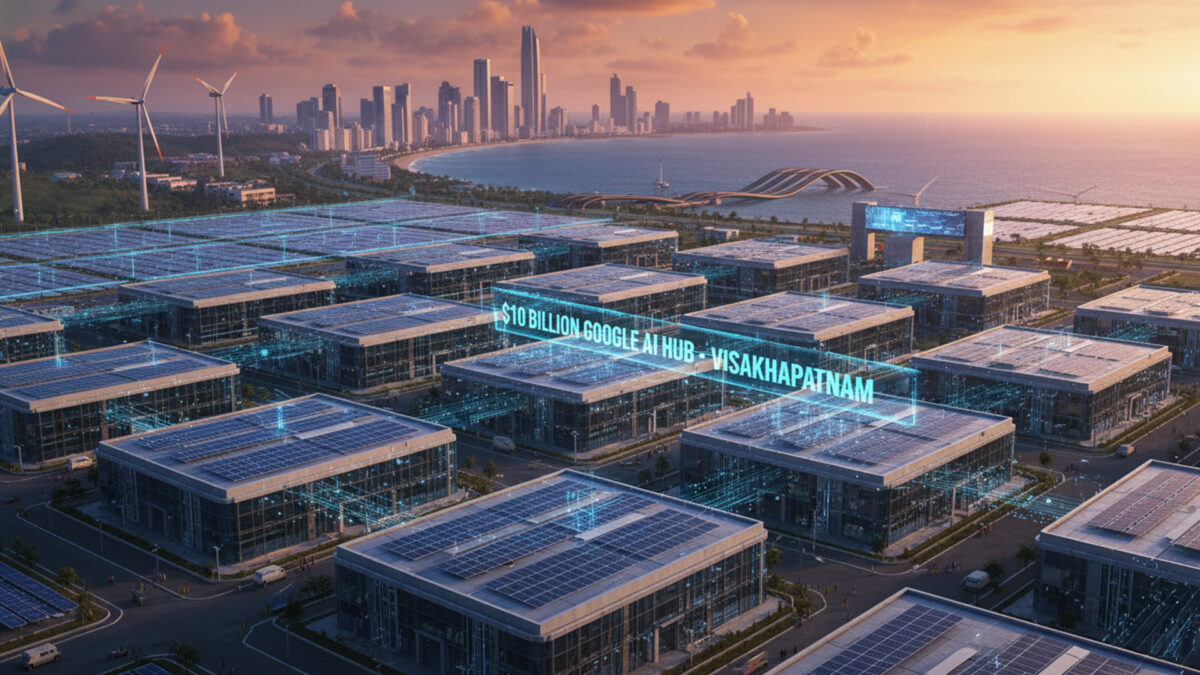
Google’s $10 Billion Bet Puts Visakhapatnam on Global Tech Map

Google will invest in a major data centre and artificial intelligence hub in Andhra Pradesh, marking one of the largest technology commitments in the state’s history.

The project, announced through a memorandum of understanding between the state government and Alphabet Inc., will see the establishment of a 1-gigawatt (GW) data-centre campus in Visakhapatnam.

The facility is expected to anchor large-scale AI computing infrastructure powered by renewable energy.

The initiative forms the core of a larger plan to develop Visakhapatnam as an “AI city.” The blueprint includes expanded fibre-optic networks, upgraded power transmission systems, and new subsea cable landing stations to enhance international connectivity.

State IT Minister Nara Lokesh said the partnership would transform Visakhapatnam into a digital gateway for South and Southeast Asia, while also building a strong local ecosystem for data and AI-related services.

Reports initially placed Google’s investment at around $6 billion, including $2 billion dedicated to renewable energy capacity for the project.

However, later official statements raised the figure to nearly $10 billion as the full scope of associated infrastructure, training, and ancillary developments became clearer.

Neither the company nor the state government has yet issued a comprehensive public document detailing the exact financial structure of the deal.

Andhra Pradesh, meanwhile, is targeting a total of 6GW in data-centre capacity over the next few years, using the Google investment as a catalyst. Lokesh has said that around 1.6GW worth of commitments are already in place and could come online within two years.

Analysts note that this would represent one of the fastest expansions of hyperscale infrastructure in India, which so far has been concentrated around Mumbai, Chennai, and Hyderabad.

The state government expects the project to generate large-scale employment and economic growth. Preliminary estimates suggest up to 188,000 direct and indirect jobs could be created through construction, operations, and related services.

Officials have also highlighted the introduction of tax incentives and simplified clearances to attract global data-centre investors to the region.

The deal aligns with Google’s broader global strategy to expand AI compute capacity and cloud services. With demand for high-performance computing soaring due to generative AI and data-heavy applications, India has become a key strategic location.

For Andhra Pradesh, the move is an opportunity to diversify its industrial base and strengthen its claim as a national technology hub.

However, experts caution that large data-centre projects bring significant challenges. They require vast amounts of power, water, and land—raising concerns about sustainability and environmental management.

Ensuring a balance between rapid industrialisation and ecological responsibility will be critical as construction begins.

A formal signing ceremony involving the Andhra Pradesh Chief Minister and central government officials is expected soon, after which detailed plans for land allocation, energy procurement, and regulatory approvals will be finalised.

Google representatives have confirmed the project is subject to standard clearances but reaffirmed the company’s commitment to long-term investment in India’s digital infrastructure.

As hyperscale and AI infrastructure becomes central to the global tech economy, Visakhapatnam’s transformation could mark a pivotal shift in how and where India hosts the next wave of data innovation.

Also Read: TCS Reduces H-1B Usage, Aligns with U.S. Push for Local and High-Skilled Hiring

Categories
Corporate

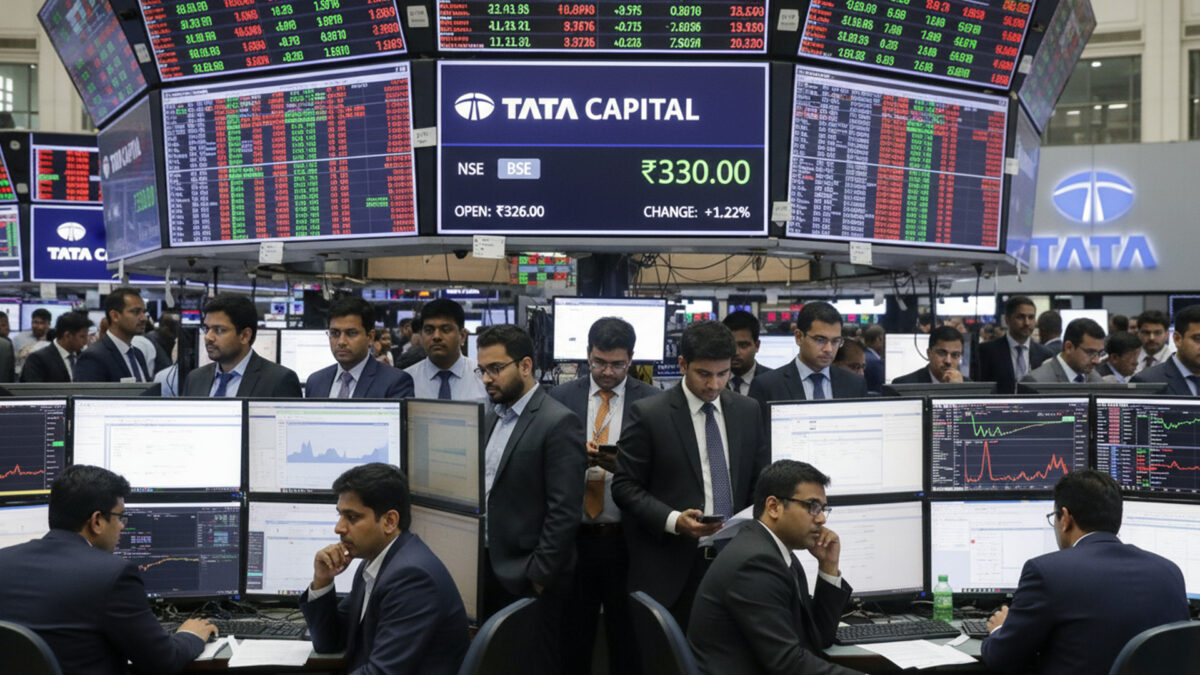
Tata Capital Makes Tepid Market Debut Despite Strong IPO Demand

Tata Capital made a muted entry to India’s equity markets on Monday, with its shares listing only marginally above the offer price and failing to match the strong investor interest seen during the bookbuild.

The non-bank lender’s shares were quoted at ₹330 on both the National Stock Exchange and the Bombay Stock Exchange against an issue price of ₹326, implying a listing premium of about 1.2–1.3%.

The opening translated into a market capitalisation in the region of $15.7–15.8 billion. 

The ₹15,512 crore public offering — one of the largest in India this year — had been fully subscribed at the close of the bidding period, with overall subscription reported at roughly 1.95 times.

Qualified institutional buyers accounted for the bulk of demand, while retail participation was more modest. The issue combined a fresh equity tranche and an offer-for-sale by existing shareholders; early anchor allocations included large institutional names.

Market commentators and analysts pointed to several factors behind the restrained debut.

Observers noted that, despite the IPO’s scale and the Tata brand, the company’s listing did not offer a significant valuation gap relative to listed peers in the financial-services and non-bank lending space — a dynamic that can dampen immediate aftermarket enthusiasm.

In addition, the timing of the listing coincided with other large issuances that captured investor attention, limiting incremental demand on listing day. 

Brokerage notes published after the listing offered measured assessments of the stock’s near-term outlook.

Some houses suggested that, while the initial market response was tepid, the company’s underlying fundamentals and Tata affiliation could support upside over a longer horizon — with a small number of brokerages issuing 12-month target gains in double-digit percentage points.

These views were framed as forecasts rather than recommendations, and brokerage estimates varied. The outcome on listing day drew attention because it contrasted with earlier instances in which major private-equity and strategic investments in Indian retail and consumer-facing businesses attracted brisk secondary-market interest.

For context, General Atlantic’s investment in Reliance Retail in 2020 — which involved a multibillion-dollar stake purchase and helped establish a high benchmark valuation for large retail deals — is often cited as an example of the strong appetite that such marquee transactions can generate among global investors.

Analysts contrasted that level of demand with the more measured price action in Tata Capital’s debut. 

Market participants will watch subsequent trading days for signs that the stock can build momentum beyond the opening session. Key metrics cited by analysts include Tata Capital’s earnings trajectory, asset quality and credit costs in the non-bank lending business, and how the company’s valuation compares with established peers over coming quarters.

Meanwhile, the issuance will remain a reference point in discussions about investor appetite for large-ticket IPOs in the current cycle and the premium, if any, investors are willing to pay for group-affiliated financial-services listings. 

Also Read: TCS Reduces H-1B Usage, Aligns with U.S. Push for Local and High-Skilled Hiring


Categories
Corporate

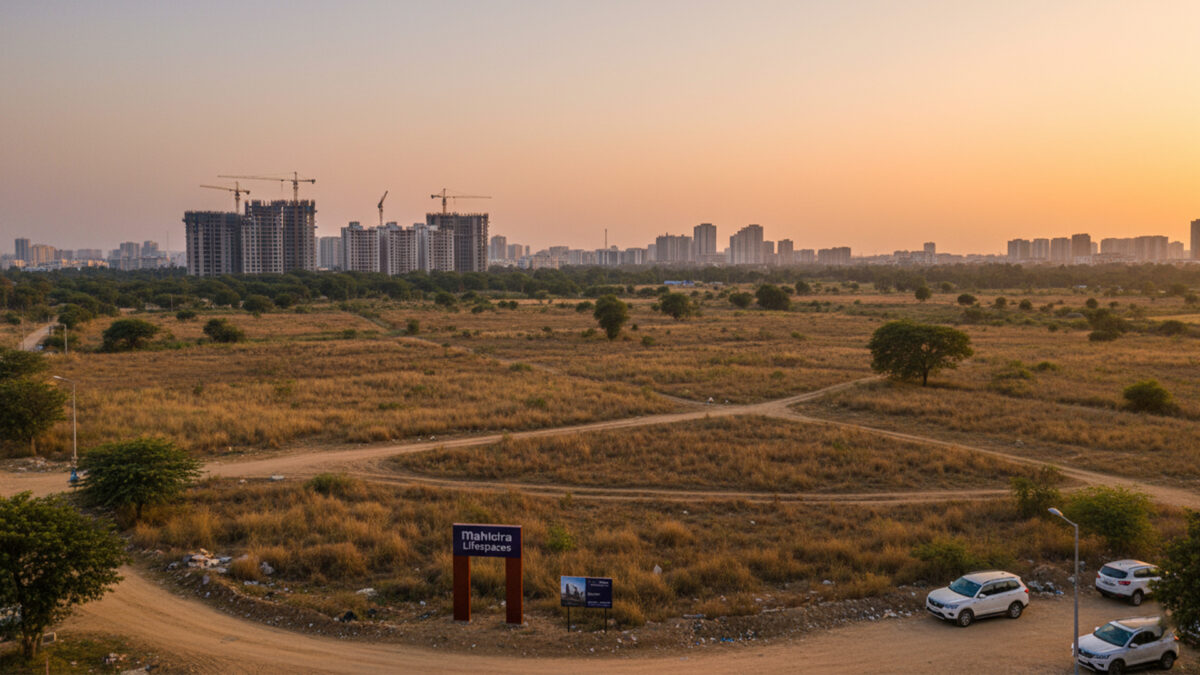
Mahindra Lifespace Acquires Land in Pune for ₹3,500 Crore Housing Project

Mahindra Lifespace Developers Ltd, a prominent real estate arm of the Mahindra Group, has acquired a 13.46-acre land parcel in Pune’s Nande-Mahalunge area.

The company estimates the development potential of this project to be approximately ₹3,500 crore. This acquisition aligns with Mahindra Lifespace’s strategy to expand its residential footprint in key growth corridors across India.

The Nande-Mahalunge area is strategically located, offering excellent connectivity to Pune’s IT and business hubs, including Hinjewadi and Baner-Balewadi.

The site is also in proximity to well-established social infrastructure, such as educational institutions and healthcare facilities.

The development is expected to cater to the growing demand for high-quality, modern residential spaces in this rapidly developing region.

Vimalendra Singh, Chief Business Officer – Residential at Mahindra Lifespace Developers, emphasized the strategic importance of the Nande-Mahalunge micro-market.

He noted that the area has witnessed strong absorption over the past few years, indicating a clear and growing demand for future-ready homes with modern amenities.

Singh further highlighted that the project’s location within the well-planned Mahalunge micro-market offers excellent connectivity through the proposed PMRDA Town Planning Scheme and the upcoming Inner Ring Road, next to Hinjewadi.

This acquisition reinforces Mahindra Lifespace’s commitment to Pune and aligns with its strategy to strengthen its presence across the city’s key growth corridors.

In addition to the Pune project, Mahindra Lifespace has been selected as the preferred partner for the redevelopment of four residential societies in the Malad (West) area of Mumbai.

The company anticipates a development potential of ₹800 crore from this project, which spans approximately 1.65 acres.

The Malad redevelopment project is situated 2.6 km from the Western Express Highway and provides connectivity to key areas of Mumbai via multiple transportation modes, including the Malad West Metro Station and Malad Railway Station.

Mahindra Lifespace’s development footprint now spans 49.26 million square feet of completed, ongoing, and forthcoming residential projects across seven Indian cities.

The company has over 5,000 acres of ongoing and forthcoming projects under development or management at its integrated developments and industrial clusters across four locations.

The acquisition of the Nande-Mahalunge land and the redevelopment projects in Mumbai signify Mahindra Lifespace’s continued commitment to expanding its presence in India’s key real estate markets.

These initiatives are expected to contribute to the company’s growth and reinforce its position as a leading developer of sustainable and customer-centric residential communities.

Also Read: Enforcement Directorate Offers Flipkart Settlement in FEMA Violation Case