Categories
1 Minute-Read

Boeing to slash 300 defence division jobs

Boeing plans to cut around 300 jobs in its defence division, primarily affecting supply-chain positions across multiple U.S. sites. Employees will be notified this week.

The move is part of broader workforce adjustments as the company aligns staffing with business needs. Boeing emphasized it continues to recruit in other areas, with over 1,300 open positions available, and some laid-off employees may be offered alternative roles within the company.

The job reductions coincide with Boeing shifting some commercial aircraft engineering work to different locations.

Categories
Corporate

Trent Q3 profit rises to ₹217 cr, revenue up 15%

Trent Ltd, the Tata Group retailer behind Westside, Zudio, and other brands, reported higher profit and revenue for the third quarter of the 2025‑26 financial year, though analysts cautioned that growth at existing stores could remain under pressure.

For the quarter ending December 31, 2025, Trent’s consolidated revenue rose about 15% to ₹5,345 crore, up from ₹4,657 crore a year ago. Net profit increased nearly 3% to ₹513 crore, compared with ₹497 crore in the same period last year. On a standalone basis, profit grew 36% to ₹640 crore, while revenue rose about 16%, reflecting stronger performance in the company’s core operations.

The company continued expanding its store network, adding 17 Westside and 48 Zudio outlets during the quarter, including its first Zudio store in the UAE. By December 2025, Trent operated over 1,100 stores across 274 cities, with Westside accounting for 278 stores and Zudio for 854, covering more than 15 million square feet of retail space.

Management said gross margins remained stable across both chains, and customer spending improved following economic measures such as tax cuts. Some one-time costs related to labour code changes slightly reduced overall profit.

Investor response was mixed. Trent’s shares rose modestly after the results, but brokerages highlighted that same-store sales,  sales at existing outlets,  may face pressure, creating uncertainty about future growth. While some analysts pointed to operational efficiencies and margin gains as positives, others urged caution due to slower growth compared with earlier quarters.

Also Read: Novo Nordisk sheds $50 bn as 2026 sales weak outlook

Categories
Corporate

Novo Nordisk sheds $50 bn as 2026 sales weak outlook

Novo Nordisk, the Danish pharmaceutical major behind popular weight-loss and diabetes drugs Wegovy and Ozempic, saw its market value drop by nearly $50 billion after it issued a weaker-than-expected outlook for 2026. The guidance raised concerns about slowing growth and led to a sharp sell-off in the company’s shares.

The company said it expects sales to fall between 5% and 13% in 2026, marking a significant slowdown after years of strong growth driven by global demand for obesity and diabetes treatments. The forecast came in well below market expectations and highlighted growing challenges in key markets, especially the United States.

Following the announcement, Novo Nordisk’s shares plunged about 16% on the Copenhagen exchange, while its US-listed stock fell more than 14%. The decline erased tens of billions of dollars in market capitalisation and marked one of the company’s steepest single-day losses in recent years.

Novo Nordisk attributed the weaker outlook mainly to pricing pressure in the US, where policy measures aimed at lowering drug costs are expected to impact revenues. The company is also facing intensifying competition, particularly from rival drugmaker Eli Lilly, which has gained momentum with its own obesity and diabetes medicines.

Another concern is the approaching patent expiries of some products in select international markets, which could open the door to cheaper alternatives and weigh on future sales. Together, these factors are expected to offset continued demand growth for GLP-1 drugs.

In its latest quarterly results, Novo Nordisk reported moderate performance. Sales of Wegovy rose by around 17% year-on-year, while Ozempic sales remained largely flat. Although the results broadly met expectations, investor focus remained firmly on the weaker forward guidance.

Company executives acknowledged that 2026 will be challenging but stressed confidence in the long-term outlook for obesity and diabetes care. Novo Nordisk said it will continue to invest in innovation, manage costs tightly and strengthen its product pipeline to protect growth over time.

Also Read: Washington Post in limelight after massive newsroom layoffs

Categories
Corporate

Washington Post in limelight after massive newsroom layoffs

The Washington Post has come into the global spotlight after carrying out one of the largest newsroom layoffs in its history, affecting more than 300 journalists. The job cuts have drawn widespread attention as they include well-known reporters and international correspondents, raising concerns about the future of global journalism.

Among those laid off is Ishaan Tharoor, a senior international affairs columnist and son of Indian MP Shashi Tharoor. Ishaan had spent 12 years at the newspaper and was known for his widely read column WorldView, which explained complex global issues in simple terms for readers around the world.

Following the layoffs, Ishaan described the moment as heartbreaking and said he was deeply saddened for his colleagues, many of whom had worked together for years. Several other journalists also took to social media to share their shock and disappointment, calling the cuts a major blow to international reporting.

Reports suggest that the restructuring has hit the international desk the hardest, with multiple foreign bureaus being closed. The newspaper has also reduced or shut down coverage of sports and books, signalling a sharp shift in editorial priorities.

Owned by Amazon founder Jeff Bezos, The Washington Post said the layoffs were part of efforts to adapt to a rapidly changing media environment. Like many legacy media organisations, the paper is facing challenges such as declining advertising revenue, digital competition and changing reader habits.

The developments have triggered a strong reaction from media professionals and readers alike, with many expressing concern that such deep cuts could weaken independent journalism and reduce in-depth global coverage. As an institution known for investigative reporting and democratic values, The Washington Post now finds itself at the centre of a wider debate about the future of quality journalism in the digital age.

Also Read: Nintendo stock slides 11% on Q3 profit miss

Categories
Technology

Nintendo switch tops sales record

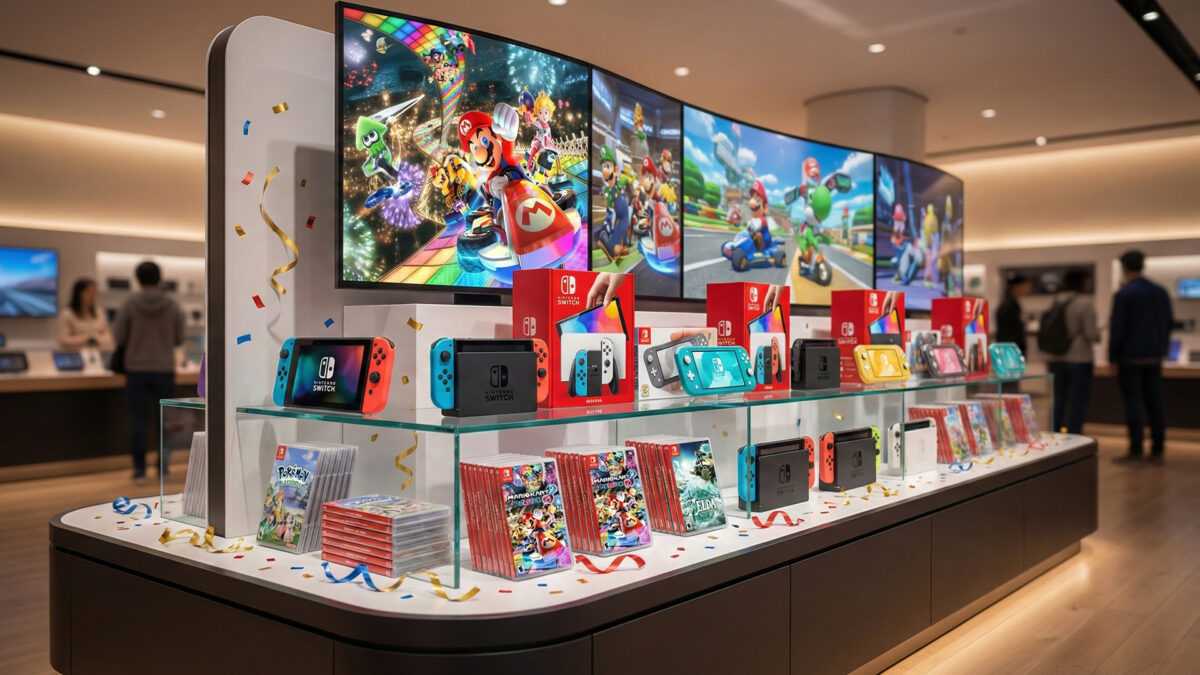
What began as an unusual idea to mix home and handheld gaming has turned into a historic success. Nintendo’s Switch console has now become the best-selling device in the company’s long history, crossing 155 million units sold worldwide.

Launched in 2017, the Switch stood out by allowing players to game on a television or carry the same console on the go. That flexibility struck a chord with families, casual players and long-time fans alike. During the COVID-19 lockdowns, when people were spending more time indoors, the Switch became a source of comfort and connection for millions.

Its success was powered by games that felt familiar yet fresh. Titles from iconic franchises such as Mario, The Legend of Zelda, Pokémon and Mario Kart kept players coming back year after year. Parents played alongside children, and seasoned gamers rediscovered the joy of simple, fun gameplay.

With this milestone, the Switch has overtaken the Nintendo DS, which previously held the company’s sales record. However, it still trails Sony’s PlayStation 2, which remains the world’s best-selling console overall.

Nintendo is now looking to the future. Its newer console, the Switch 2, launched in 2025 and has already seen strong early demand, selling around 17 million units in just a few months. While matching the original Switch’s success may be challenging, the early response has been encouraging.

Industry experts say Nintendo’s story shows how innovation, nostalgia and timing can come together to create something lasting, not just a console, but a shared experience enjoyed across generations.

Also Read: Rupee strengthens to 90.40 against dollar

Categories
Corporate

Nintendo stock slides 11% on Q3 profit miss

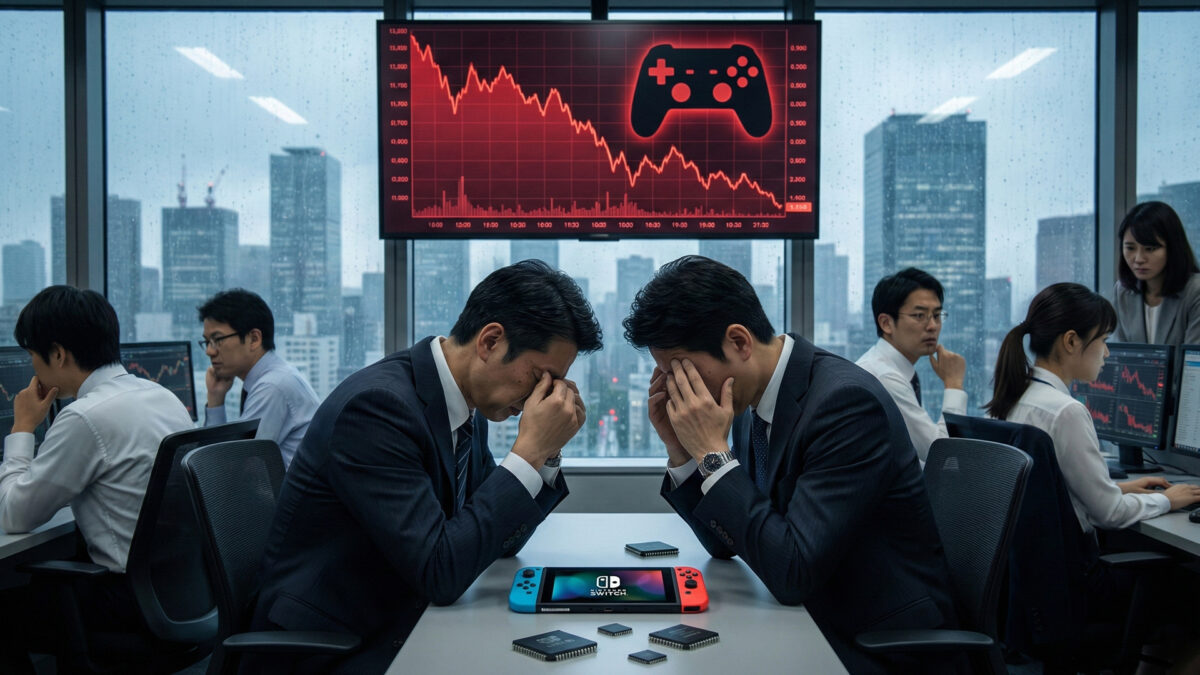
Nintendo’s shares fell sharply by around 11% after the Japanese gaming giant reported disappointing third-quarter earnings, triggering concerns about shrinking profit margins despite strong hardware sales.

For the quarter ended December 31, 2025, Nintendo’s operating profit came in below market expectations, even as revenue rose sharply year-on-year. The company benefited from robust demand for its newly launched Switch 2 console, which has already sold more than 17 million units, making it Nintendo’s fastest-selling console to date. However, higher production costs reduced overall profitability.

Investors were particularly worried about rising component costs, especially memory chips, which are squeezing margins on hardware sales. Analysts noted that while Nintendo has priced the Switch 2 competitively to drive volumes, this strategy has limited its ability to generate higher profits from console sales.

Concerns were also raised about the software pipeline, with fewer blockbuster game launches expected in the near term. Strong game releases are critical for improving margins, as software typically delivers higher profits than hardware. Without a steady flow of major titles, analysts fear Nintendo may struggle to maintain earnings momentum.

Adding to investor disappointment, Nintendo maintained its full-year profit forecast, which remains below market estimates. The lack of an upgrade signalled management caution about the months ahead, even after a strong holiday sales season.

The sharp fall in Nintendo’s stock pushed it to its lowest level since April 2025 and weighed on broader market sentiment. Analysts said the reaction reflects growing scepticism over whether Nintendo can balance volume growth with profitability in a competitive and cost-inflationary environment.

Despite the sell-off, some market watchers remain positive on Nintendo’s long-term prospects, citing its strong brand, loyal customer base and successful console launch.

Also Read: Nintendo switch tops sales record

Categories
Beyond

Rupee strengthens to 90.40 against dollar

Indian rupee strengthened slightly against the US dollar in early trade on Thursday, rising by 7 paise to 90.40 at the interbank foreign exchange market.

The rupee opened the session at 90.52 against the dollar and gradually moved higher as the morning progressed. Forex dealers said the modest rise was supported by a slightly positive tone in domestic equity markets and easing pressure from the US currency in early Asian trade.

However, market participants remained cautious, limiting sharp gains in the rupee. Traders said investors are closely watching developments related to the India–US trade talks, with optimism tempered by the absence of detailed announcements or formal agreements so far. While statements from both sides have raised hopes of progress, markets are waiting for concrete clarity before taking stronger positions.

The rupee’s movement is also being influenced by expectations around the Reserve Bank of India’s monetary policy stance. Any signals from the central bank on interest rates, inflation outlook, or intervention in the foreign exchange market are likely to play a key role in determining the currency’s near-term direction.

Global factors continue to weigh on sentiment. The US dollar index, which measures the greenback’s strength against a basket of major currencies, remained firm, while crude oil prices stayed elevated. Higher oil prices are a concern for India, as the country depends heavily on imports to meet its energy needs. Rising crude prices tend to increase the country’s import bill and can put pressure on the rupee.

Forex experts said that while the rupee’s early gain is a positive sign, volatility is expected to continue in the coming days due to global economic uncertainty, geopolitical developments, and shifting expectations around interest rates in major economies.

Overall, the rupee’s rise to 90.40 reflects cautious optimism in the market, supported by domestic factors but restrained by global risks.

Also Read: Gold at ₹1,59,450, Silver trades above ₹3.20 lakh

Categories
Corporate

Walmart strikes $1 trillion market value

Walmart Inc., the world’s largest retailer, has reached a $1 trillion market capitalization, becoming the first traditional retailer to join the exclusive club of U.S. companies valued at a trillion dollars. The milestone puts Walmart alongside tech giants like Apple, Microsoft, Amazon, and Alphabet.

The company’s shares have risen roughly 26% over the past year, reflecting investor confidence in its digital transformation and growth strategies. Analysts say Walmart’s success shows that a combination of technology investments and strong retail fundamentals can create significant shareholder value.

Walmart has invested heavily in artificial intelligence (AI) to improve supply-chain efficiency, inventory management, and customer experience. The retailer has also expanded its online marketplace, offering over half a billion items, and introduced services like one-hour delivery and the Walmart+ membership program, aiming to compete with Amazon Prime.

In addition, Walmart has built a digital advertising business, generating higher-margin revenue and strengthening its competitive edge. The company’s focus on value pricing and convenience has attracted a broad customer base, appealing to both traditional bargain shoppers and digitally savvy consumers.

Walmart is only the second non-tech company to reach the trillion-dollar mark after Berkshire Hathaway, highlighting its transformation from a conventional retail chain into a tech-powered omnichannel retailer.

Walmart’s leadership is also evolving, with new initiatives aimed at innovation and technology-driven growth to stay ahead of competitors such as Amazon, Target, and other discount retailers.

The milestone is seen as a signal that traditional companies can thrive in the digital era without losing their core business strengths.

Also Read: Fitbit founders launch Luffu AI app for family health

Categories
1 Minute-Read

SC orders SIT probe in Anil Ambani bank fraud

The Supreme Court directed a Special Investigation Team (SIT) to probe alleged bank loan fraud involving Anil Dhirubhai Ambani Group (ADAG), reportedly worth around ₹40,000 crore.

The bench criticised the CBI and ED for delays and limited FIR filings despite multiple bank complaints, noting each complaint warrants separate action. The court emphasised the probe must be fair, thorough, and timely.

Anil Ambani’s counsel submitted an undertaking that he will not leave India without the Court’s permission. The SC stressed accountability and transparency in investigating alleged collusion by company and bank officials.

Categories
Beyond

SEBI rules out immediate futures and options curbs

The Securities and Exchange Board of India (SEBI) has said it will not make any immediate changes to the futures and options (F&O) market, despite the recent increase in Securities Transaction Tax (STT) on derivatives. SEBI Chairman Tuhin Kanta Pandey clarified that the regulator is not planning any new restrictions or banning weekly F&O contracts at this time.

The 2026 Union Budget had raised the STT on futures from 0.02% to 0.05% and increased the tax on options premiums to 0.15%. The move was aimed at reducing speculative trading and protecting small investors. Some in the market had expected SEBI to take further action following the hike.

Pandey reassured investors that SEBI prefers a careful and data-driven approach. He specifically said there is no plan to ban weekly expiry F&O contracts, and the current rules will remain in place for now.

Following SEBI’s statement, market sentiment improved. The Nifty Capital Markets index and shares of firms like MCX and Angel One went up, while the broader market also recovered from earlier losses.

SEBI’s position shows its focus on market stability. Instead of acting immediately, the regulator plans to study market trends and consult stakeholders before considering any changes. This approach is aimed at protecting investors while maintaining a healthy derivatives market.

Investors welcomed SEBI’s cautious stance, as it ensures no sudden restrictions will disrupt trading. The regulator appears committed to balancing investor protection with market growth, taking decisions only after thorough review.

Also Read: Aditya Birla housing finance raises ₹2,750 cr from Advent International