Categories
Corporate

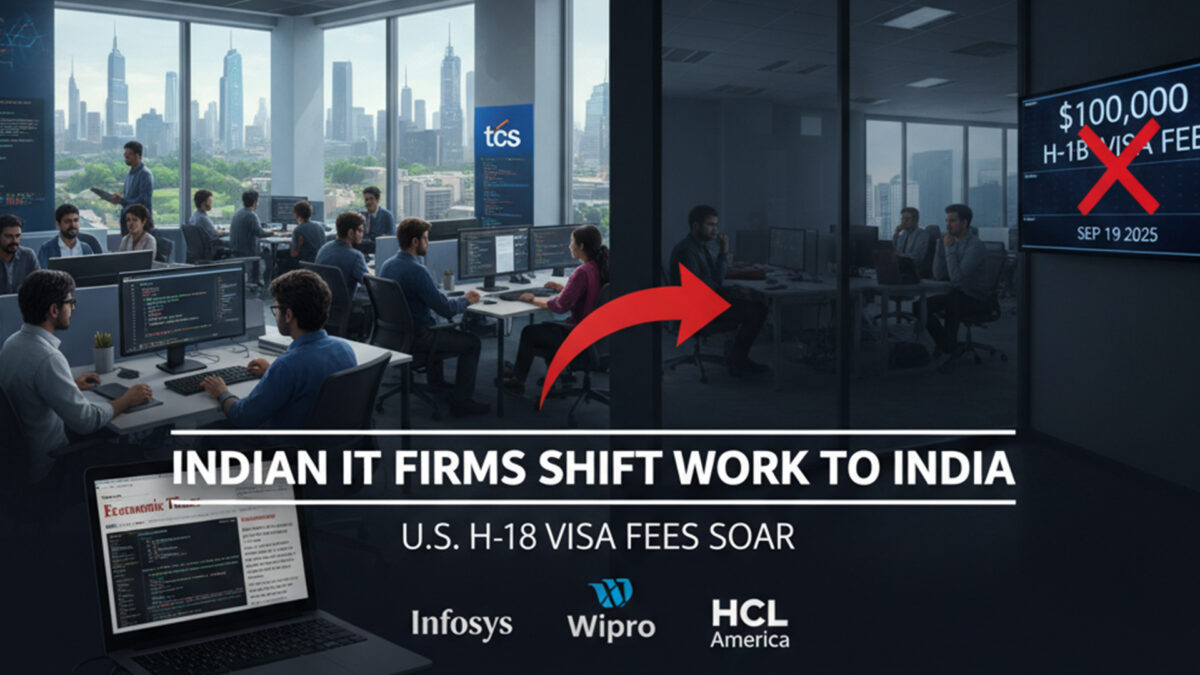
Indian IT Firms Shift Work to India as U.S. H-1B Visa Fees Soar to $100,000

Leading Indian IT services companies are signaling a major shift in their operations following the U.S. administration’s announcement of a steep hike in H-1B visa fees to $100,000.

According to a report by the Economic Times (ET), several top Indian firms have told the government they plan to reduce their reliance on H-1B visas and move more work to India for U.S. clients.

The fee increase, announced on September 19, 2025, has raised concerns among Indian IT companies about exposure to uncertainties in U.S. immigration policy that could disrupt long-term business planning. India has historically been the largest beneficiary of the H-1B program, with nearly 71 percent of the visas issued to Indian nationals.

Citing officials, ET reported that firms including Tata Consultancy Services (TCS), Infosys, LTI Mindtree, HCL America, Wipro, Tech Mahindra, and L&T Technology Services are re-evaluating the scale of their on-site presence in the U.S. Data from the U.S. government shows that TCS ranked second among the top 100 H-1B recipients with 5,505 visas, while Infosys received 2,004, and LTI Mindtree 1,044. Together, the top seven Indian firms among the 100 largest H-1B beneficiaries account for 14,565 visas.

An official familiar with the matter told ET that larger U.S. tech firms such as Amazon, Microsoft, Apple, Meta, and Walmart would also face the biggest challenges, as they hold far more H-1B visas. “It’s a bigger problem for big tech companies like Amazon, Microsoft, Apple, Meta, and Walmart to tackle as they have substantially more such visas,” the official said.

The visa fee increase is expected to have an immediate impact on staffing decisions and cost structures. Several Indian IT executives have indicated that while some work can continue in the U.S., a larger share will be handled from Indian delivery centers. This strategic pivot aligns with Prime Minister Narendra Modi’s push for greater self-reliance across sectors, including technology.

The ET report noted that startup AI firms, many of which had considered relocating teams to the U.S. to leverage the global innovation ecosystem, may now prefer to keep operations in India. This could influence the growing AI sector, as companies weigh cost, talent availability, and regulatory risks in making expansion decisions.

Analysts say the move may accelerate India’s position as a global IT hub, with more projects being executed from domestic delivery centers rather than offshore locations. “The visa policy change may encourage firms to invest in India-based talent and technology infrastructure,” said a senior IT analyst.

Despite the fee hike, major Indian IT companies continue to emphasize their commitment to U.S. clients. TCS, Infosys, and Wipro executives are reportedly engaging with clients to ensure project continuity while adjusting staffing plans. At the same time, the companies are seeking ways to manage visa-dependent costs without affecting delivery timelines or contractual obligations.

Market reaction has been mixed. While some IT stocks fell marginally due to concerns over higher costs, investors see potential long-term benefits from increased operational control and reduced dependence on U.S. immigration policies.

The shift away from H-1B dependency comes amid broader global concerns over talent mobility and rising costs in the U.S., especially in sectors such as AI and advanced technology services where specialized talent is critical. Indian IT firms appear to be responding proactively, signaling a structural recalibration in how cross-border services are delivered.

With the H-1B fee hike now in effect, India’s IT industry is set to reassess not only U.S.-bound staffing but also global delivery strategies. ET’s reporting suggests that the move could reshape outsourcing patterns, with a stronger emphasis on India as the backbone of IT service delivery for major American clients.

Also Read: Alkem launches Pertuza biosimilar to make breast cancer treatment more accessible

Categories
Beyond

Auto stocks zoom as Navratri demand and GST reforms power up vehicle sales

Strong signs of demand in both the two‑wheeler and four‑wheeler segments have lifted shares of automotive companies, with the Nifty Auto index gaining nearly 1.8 percent on September 23. Trimmed by weakness elsewhere in the market, the auto rally was led by names like Maruti, Tata Motors, Mahindra & Mahindra, Hero MotoCorp, Eicher, along with Ashok Leyland, Bajaj Auto, TVS Motor, and Bharat Forge. The popular NBFC Bajaj Finance also got buoyed as auto financing looks set to gain from the surge in vehicle purchases.

Channel checks and early festive‑season data indicate that the first day of Navratri has seen healthy customer activity. Maruti reported close to 30,000 bookings and around 80,000 enquiries on Day 1, while enquiries for small cars have surged nearly 50 percent over normal levels. Hyundai Motor India recorded around 11,000 dealer billings on September 22, marking its best single‑day performance in the past five years. Analysts believe that the combination of reduced GST rates (under GST 2.0 reforms), festival sentiment, and better price affordability have unlocked pent‑up demand that was held back during the Shraddh period.

Brokerages have turned quite optimistic. Goldman Sachs upgraded Maruti Suzuki’s rating from Neutral to Buy, setting a target price of Rs 18,900 per share. The upgrade helped push Maruti shares to a 52‑week high. Other firms, such as Nuvama, expect the demand upcycle for passenger vehicles (PVs) to continue through FY29, supported by favorable tax policies, upcoming government pay‑commission recommendations, new model launches, and expectations of further rate cuts by the RBI. Experts at Nuvama note that historically the upcycle in autos lasts about six to eight years, suggesting there is room for the current momentum to extend further.

Despite the positives, some challenges persist. Supply constraints for certain popular variants could test the ability of manufacturers to meet demand. Price sagas in electric two‑wheelers have narrowed, yet consumers are showing willingness to pay more for differentiated or premium features. Heavy vehicles are seeing stronger value growth rather than volume growth, as fleet operators prefer shifting to higher tonnage trucks to improve margins and utilization.

From a policy perspective, the recent GST reforms (GST 2.0) appear to be delivering early results. The downward reconstructions in tax rates on passenger vehicles and two‑wheelers have made entry‑level models more affordable. Analysts suggest these reforms may be key in sustaining demand through the festival season and beyond.

Looking forward, industry experts believe that if domestic demand remains strong, OEMs that manage costs effectively and maintain supply will benefit most. Dealers anticipate volume growth of over 20 percent during the core festive period from October to December. Auto companies are adjusting strategy to ensure small car and affordable EV segments are well stocked, as growth in those areas could define winners in the near term.

Also Read: Government refuses to extend Vedanta’s contract for Cambay basin oil & gas block

Categories
Beyond

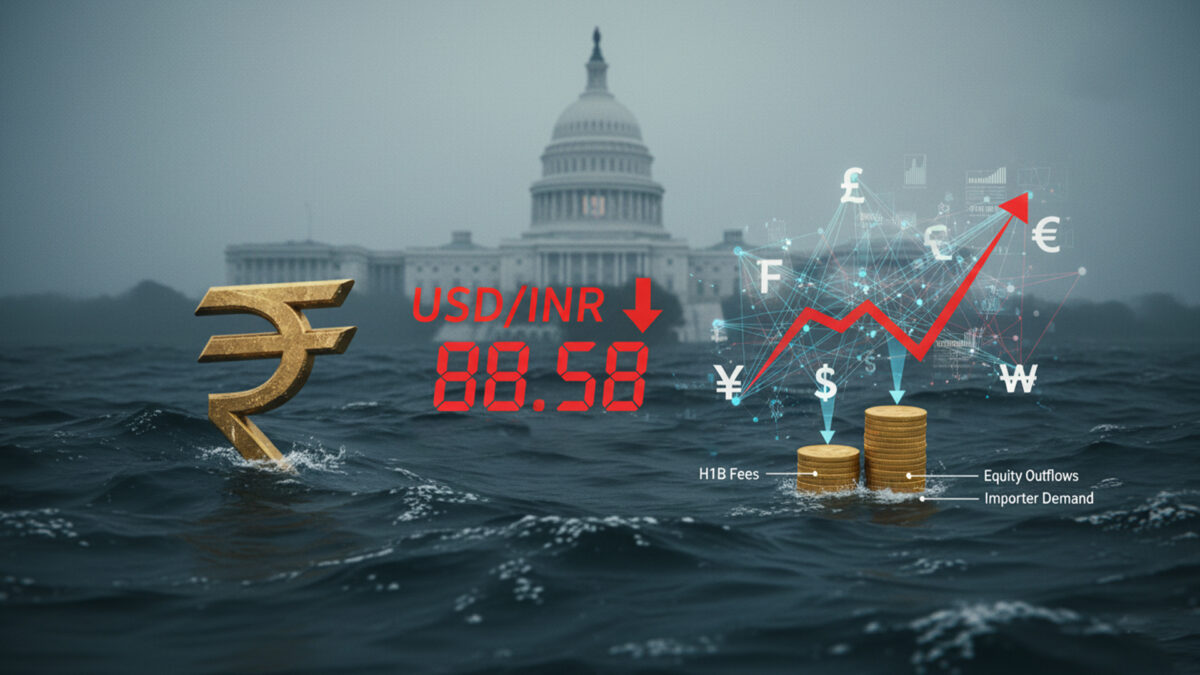
Rupee dips to fresh all-time low amid US policy headwinds and weak capital flows

The Indian rupee hit a record low of ₹88.58 against the US dollar in early trade on September 23, following a weak opening and pressure from both domestic and international fronts. The currency had opened at ₹88.4137 against the greenback, compared with ₹88.3163 at the previous close.

Asian currencies broadly were under strain, with the South Korean won down about 0.22 percent, the Thai baht 0.16 percent, the Indonesian rupiah 0.08 percent and the Singapore dollar, Japanese yen and Hong Kong dollar each about 0.05 percent weaker. Analysts say these wider currency trends have exacerbated the rupee’s fall.

Experts point out multiple factors weighing on the rupee, including enhanced US tariffs on Indian goods and a steep hike in H1B visa fees. The move on visa fees—raised to US$100,000 for certain categories—has stirred anxiety among India’s IT and outsourcing sectors. Concerns are rising about reduced remittances and the risk of equity outflows as foreign investors reassess exposure in view of these policy changes. Foreign inflows into Indian equities have already been weak this year.

In commentary on the outlook, currency specialists suggest that despite current pressure, there may be limited room for further sharp depreciation if certain support levels hold. One such expert believes that “the rupee is likely to appreciate from current levels, with support around ₹87.90–88.00,” arguing that if these zones are maintained, the currency could avoid sliding further in the near term.

In addition to policy-induced risks, importers’ demand for the dollar to hedge against rising costs has added to demand pressure. Weak domestic equity markets, and subdued foreign portfolio inflows, further reduce support for the rupee. Traders and analysts are also watching US interest-rate policy closely: higher US yields tend to strengthen the dollar, making it costlier for other currencies, including the rupee.

While the drop to the all-time low underscores the intensity of current pressure, there are signals of possible intervention from the Reserve Bank of India if the rupee weakens significantly further. Such intervention has in past episodes helped stem sharp slides. Ultimately, whether the rupee stabilizes will depend on whether external pressures ease, foreign capital revives, and trade-policy frictions are addressed.

Also Read: Internal Strife Erupts at Tata Trusts Over Nominee Director Appointment

Categories
Corporate

Alkem launches Pertuza biosimilar to make breast cancer treatment more accessible
Alkem Laboratories has introduced Pertuza (420 mg/14 mL), an indigenously developed pertuzumab biosimilar, in India for treating HER2-positive breast cancer. The drug is intended to provide a more affordable alternative to the innovator product while maintaining its clinical benefits.

Clinical trials conducted by Alkem’s biosimilars arm, Enzene Biosciences, showed that the biosimilar matched the reference pertuzumab product in efficacy, safety, and immunogenicity. This means that in head-to-head comparisons, Pertuza performed similarly in slowing tumour growth, had comparable side effects, and triggered immune responses similar to the original drug.

Affordability and access are central to Alkem’s strategy. Experts say that even though pertuzumab (sold globally under the brand name Perjeta by Roche) has improved outcomes for many patients, its high cost has put it out of reach for large segments of the Indian population. The launch of Pertuza is seen as a step toward reducing that gap.

Dr Vikas Gupta, Chief Executive Officer of Alkem, expressed that oncology is a priority area for the company. He said that Alkem is committed to combining scientific excellence with wider access. He added that Pertuza aims to bring this critical therapy to thousands of women each year who would otherwise be excluded from treatment because of cost barriers.

Experts believe that the launch of Pertuza could help in several ways. It could ease pressure on patients’ finances, potentially improve the adoption of HER2-targeted therapy across private and public hospitals, and reduce dependence on imports of expensive biologics. Since patent and pricing issues have often delayed entry of biosimilars in India, Pertuza’s approval shows progress in regulatory pathways and domestic manufacturing capabilities.

There is some competition: earlier, Zydus Lifesciences had won conditional approval for a pertuzumab biosimilar called “Sigrima”, but its launch was delayed because of legal challenges from Roche concerning patent protection. That case underscored both the regulatory and intellectual property hurdles that biosimilars face.

In the broader context of cancer care, India has a large and growing burden of breast cancer, and particularly of HER2-positive cases, which are more aggressive and require costly targeted therapy. Making treatments like pertuzumab more affordable could lead to earlier treatment, improved survival rates, and better quality of life for patients who otherwise might skip or delay therapy. Experts believe that innovation in biosimilars is key to scaling up access in oncology in India.

Overall, Pertuza’s launch is being viewed as a positive development — both from a medical standpoint and a policy perspective — in terms of driving down costs, enhancing local R&D and production, and widening access to vital cancer therapies.

Categories
Corporate

KEC International secures ₹3,243 crore in major international T&D orders

KEC International, a leading global EPC (Engineering, Procurement and Construction) company in power transmission and distribution, has won new orders worth ₹3,243 crore.

The contracts include its largest-ever EPC order in the international T&D segment, strengthening its global order book and boosting its presence in high growth regions.

The fresh orders cover the construction of 400 kV transmission lines in the United Arab Emirates (UAE), along with supply of towers, hardware and poles in the Americas. According to the company, the Middle East is playing an increasingly important role in its international business and this deal further cements its strength in that region.

Vimal Kejriwal, Managing Director & CEO of KEC International, said the order wins are particularly special because this is their largest EPC order to date in the international T&D business. He noted that the contracts will play a key role in driving the company’s targeted growth moving ahead. With these orders, the company’s year-to-date order intake has now reached approximately ₹11,700 crore.

KEC International’s recent performance has also shown improvement in Q1 FY26. The firm reported a rise of about 42.3% in its consolidated net profit to ₹124.60 crore, compared to the same quarter last year. Revenue from operations also rose by over 11% year-on-year. The EBITDA (earnings before interest, taxes, depreciation and amortisation) margin expanded as well, helping support investor confidence.

Markets reacted positively to the announcement. Shares of KEC International rose sharply, gaining around 6 to 6.5% in early trading after the order news, reflecting optimism around the company’s prospects.

The new orders are expected to help KEC in multiple ways. They will deepen its international footprint, especially in the Middle East and Americas, and improve its order book strength in the transmission & distribution sector. They may also help buffer against domestic market slowdowns, as international contracts often bring scale and longer execution windows. The company has been focusing on diversifying both geographically and in its business verticals.

While challenges remain in managing supply chain, raw material costs, and timely execution of large projects, KEC’s ability to win such large orders is seen as evidence of its operational strength and competitiveness. The contracts’ size and international nature suggest confidence from clients in KEC’s execution capabilities. Overall, this development marks a strong moment for the company as it navigates a shifting landscape in global infrastructure development.

Also Read: JSW Energy Acquires Tidong Hydro Project for ₹1,728 Crore, Boosting Hydro Portfolio

Categories
Corporate

Nvidia to invest $100 billion in OpenAI in vast AI infrastructure pact

Nvidia and OpenAI have announced a major strategic partnership in which Nvidia will invest up to $100 billion in OpenAI to help build and deploy a new wave of AI infrastructure. The aim is to deploy at least 10 gigawatts of Nvidia computing systems to power OpenAI’s future models and services.

Under the agreement, the first gigawatt of these systems will be deployed in the second half of 2026, using Nvidia’s upcoming Vera Rubin platform. The investment by Nvidia is planned to be made progressively as each part of the infrastructure — each gigawatt of systems — is deployed.

OpenAI will purchase Nvidia’s data-centre chips, paying in cash, while Nvidia will also acquire a non-controlling stake in OpenAI. Neither company has yet disclosed every detail; they plan to finalize the exact terms in the coming weeks.

OpenAI’s CEO Sam Altman said the move reflects how vital computing power is for AI breakthroughs, now and in the future. Nvidia CEO Jensen Huang described the deal as “the next leap forward,” calling this deployment of massive-scale AI compute essential for the next era of intelligence.

The partnership comes amid intense competition among technology companies to build more AI data centres, to deliver faster, more powerful AI models. Demand for GPUs and other hardware to train and run large AI systems is rising steeply.

Market reaction was immediate: Nvidia’s shares rose by about 4% after the announcement, reflecting investor confidence in its growing role as a supplier of AI infrastructure.

Some analysts see the deal as raising regulatory questions, given the scale of Nvidia’s influence and OpenAI’s prominence in AI. But supporters argue that without this kind of investment, advances in AI could slow due to lack of sufficient infrastructure.

Also Read: JSW Energy Acquires Tidong Hydro Project for ₹1,728 Crore, Boosting Hydro Portfolio

Categories
Corporate

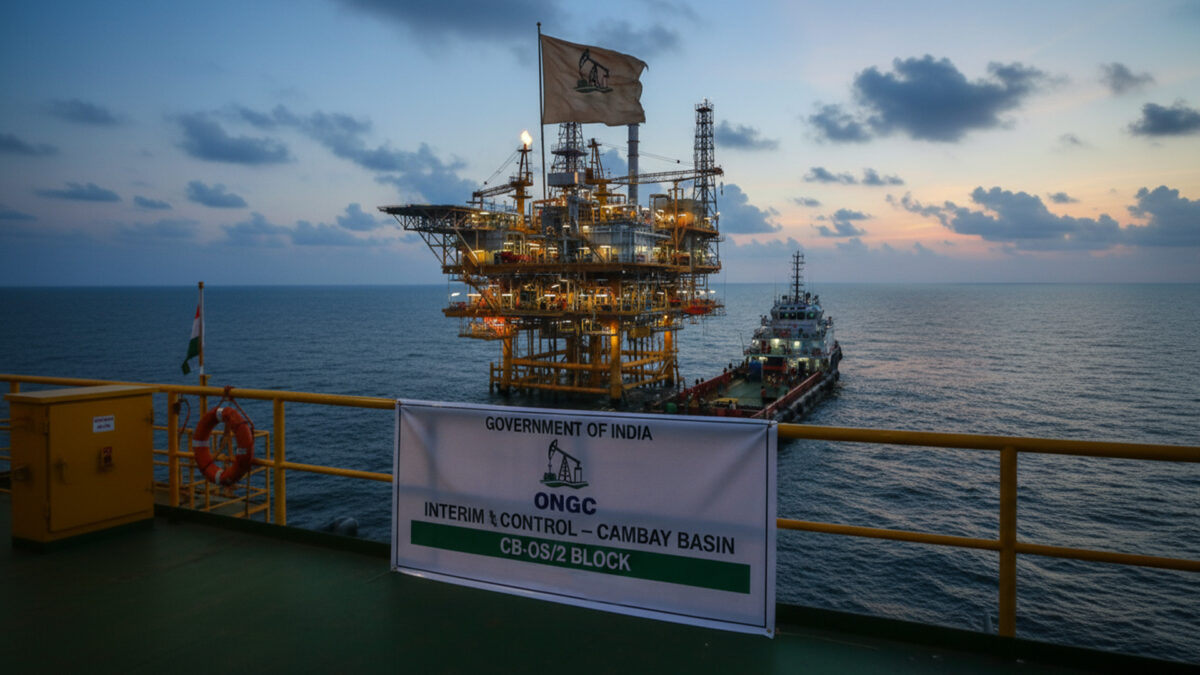
Government refuses to extend Vedanta’s contract for Cambay basin oil & gas block

The Government of India has rejected the request from Vedanta’s unit, Vedanta Cairn Oil & Gas, to extend its Production Sharing Contract (PSC) for the offshore CB-OS/2 block in the Cambay basin, Gujarat. Instead, it has directed the state-owned Oil and Natural Gas Corporation (ONGC), which holds a 50 per cent stake, to take interim control of operations, assets, data, and ongoing management.

The CB-OS/2 block had been operated under Vedanta Cairn with a 40 per cent share, while Invenire Energy holds the remaining 10 per cent. The PSC for the block was originally signed on August 30, 1998, and expired on June 30, 2023. Vedanta and its partners had continued conducting operations while awaiting the government’s decision on the renewal of the contract.

The CB-OS/2 block includes the Lakshmi and Gauri fields. It currently produces around 3,400 barrels of oil per day and about 3.4 lakh standard cubic metres of gas daily. Reserves in the block, according to a 2019 report by DeGolyer & MacNaughton, are estimated at about 13.6 million barrels of oil and oil-equivalent gas.

In its filing, ONGC said the takeover is “purely interim,” intended to maintain continuity of petroleum operations in public interest and to safeguard reserves, until the block is re-awarded. Vedanta has contested some of the government’s positions, including objections raised by the Ministry of Petroleum & Natural Gas regarding its demerger plans, and disputes over how profit petroleum is computed in other blocks, especially Rajasthan.

Although this decision marks a setback for Vedanta, analysts believe the financial impact on the group will be limited. The CB-OS/2 block contributes less than 0.3 per cent to Vedanta’s overall EBITDA. Moreover, other key Vedanta blocks have already been granted extensions: the Rajasthan block RJ-ON-90/1 has been extended to May 14, 2030, and the Ravva field (PKGM-1) has been extended to October 27, 2029.

The refusal to renew the CB-OS/2 PSC and the transfer of interim control to ONGC follows a letter from the Ministry dated September 19 informing partners that the extension application “has not been accepted.” No specific reason was cited in the notification. Vedanta Cairn has denied allegations made by the ministry related to liabilities disclosure.

This development will have implications for Vedanta’s operations in the Cambay basin going forward, as ownership under the government nominee shifts in the short term, while the longer term future of the block remains to be decided.

Also Read: JSW Energy Acquires Tidong Hydro Project for ₹1,728 Crore, Boosting Hydro Portfolio

Categories
Corporate

JSW Energy Acquires Tidong Hydro Project for ₹1,728 Crore, Boosting Hydro Portfolio

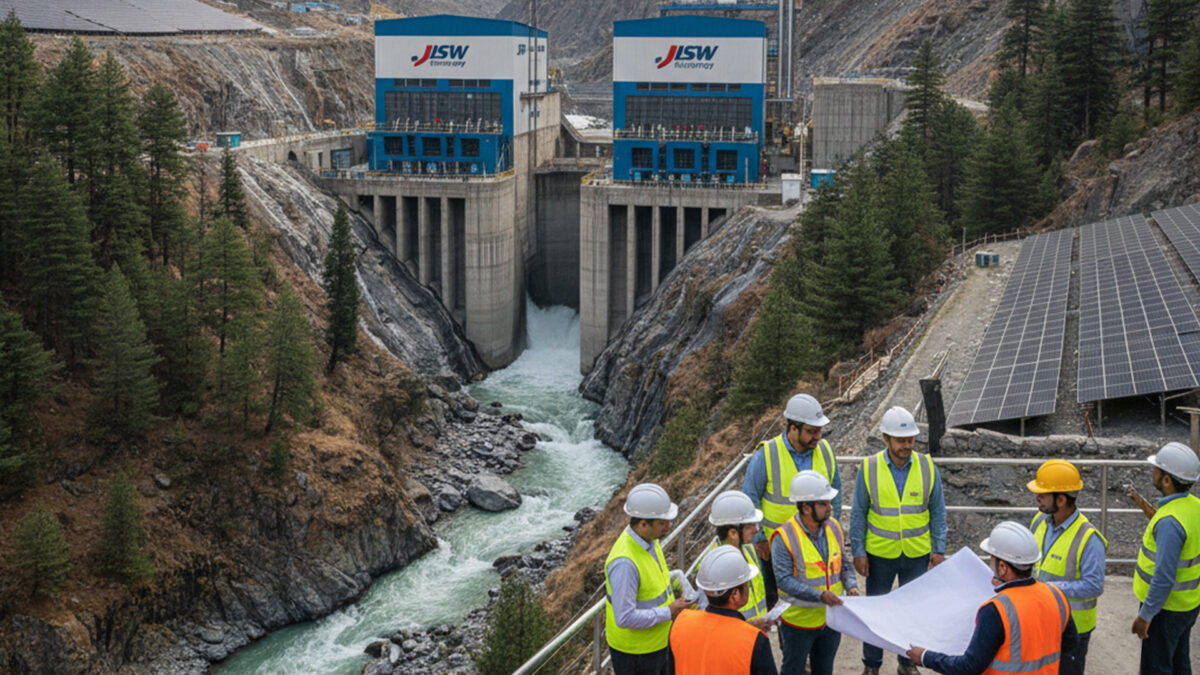
JSW Energy, through its renewable arm JSW Neo Energy, has entered into a definitive agreement to acquire Tidong Power Generation Private Limited from Norway’s Statkraft IH Holding AS for an enterprise value of ₹1,728 crore. The deal was formalised via regulatory filings in mid-September.

Tidong is developing a 150 megawatt (MW) run-of-river hydropower plant in the Tidong Valley of Kinnaur district, Himachal Pradesh. The acquisition involves a 100 percent share purchase, with JSW Neo Energy taking full equity and making Tidong a subsidiary, which in turn becomes a step-down subsidiary of JSW Energy once the transaction closes.

Under the project’s existing obligations, 75 MW of the capacity is tied up under a 22-year power purchase agreement (PPA) with Uttar Pradesh Power Corporation Limited. The PPA covers power supply during May through October — the peak load months — at a tariff of ₹5.57 per unit. The remaining 75 MW is untied, allowing JSW to sell that portion in the merchant market after commissioning.

The plant is expected to be commissioned in October 2026, subject to regulatory, environmental, state government, and lender approvals. Consent from the Himachal Pradesh government for change in controlling shareholding is among the required clearances.

With this acquisition, JSW Energy strengthens its position in hydropower. The company said its locked-in generation capacity — including operational, under-construction, and acquired assets with PPAs in effect — will rise to 30.5 gigawatts (GW), of which about 1.8 GW will be hydropower. JSW is also expanding its energy storage capacity, currently targeting 40 gigawatt-hours by fiscal year 2030. Renewables are expected to make up around 70 percent of its overall generation portfolio under its strategy.

Sharad Mahendra, Joint Managing Director and CEO of JSW Energy, described the Tidong acquisition as a “significant addition” to the company’s hydro portfolio and said the transaction brings additional skilled manpower and operational synergies, particularly given their prior experience in similar projects such as Kutehr and Karcham-Wangtoo.

For Statkraft, the sale is part of its strategy to rationalise its India portfolio. The company expressed confidence that JSW will continue developing and operating the Tidong project with competence and commitment, highlighting its potential contribution to India’s clean energy transition.

Markets reacted positively to the development, with shares of JSW Energy climbing after the announcement. Investors viewed the acquisition as reinforcing the company’s renewable credentials and strengthening its roadmap toward meeting clean energy and storage targets.

Also Read: Trump’s India Strategy Could Backfire on US Giants: Here’s how

Categories
Corporate

Amazon and Flipkart Launch Festive Sales Amid Record Demand

India’s leading e-commerce platforms, Amazon and Flipkart, have kicked off their flagship festive season sales — the Great Indian Festival and Big Billion Days — setting the stage for what could be the largest shopping season in the country’s online retail history.

These sales mark the beginning of the year’s most crucial period, traditionally accounting for nearly a quarter of annual revenues for both platforms.

Members of Flipkart Black and Amazon Prime, the respective subscription programs, were given early access starting September 22. The timing of the sales coincides with the implementation of a new goods and services tax (GST) regime, which reduced rates on big-ticket appliances such as air-conditioners, televisions, and dishwashers from 28 percent to 18 percent. This adjustment is expected to boost affordability and fuel demand in key festive categories.

Flipkart launched the 12th edition of the Big Billion Days with events at its Bengaluru campus. The company expects 250–300 million unique visitors during the sale itself, and over 350 million across the entire festival period. Supported by a workforce of 400,000 across warehouses, fulfilment centres, and delivery networks, Flipkart will serve 19,500 pin codes from 4,500 locations. The platform has also scaled up its operations with more than 100 fulfilment centres and nearly 400 micro-fulfilment hubs in 19 cities, offering express delivery through Flipkart Minutes and seasonal hiring of over 2.2 lakh workers.

Amazon has bolstered its network with 12 new fulfilment centres, six sortation hubs, and 1.5 lakh seasonal work opportunities across 400 cities. The company has also expanded checkout financing options, including Amazon Pay Later, to encourage spending across categories.

According to a report by Datum Intelligence, India’s festive season sales in 2025 are expected to rise by as much as 27 percent to ₹1.2 lakh crore, up from nearly ₹1 lakh crore in 2024 and ₹81,000 crore in 2023. The surge in demand is being driven by pent-up consumer interest from August, the GST rate cuts, and early access for subscription members.

Both Amazon and Flipkart are leveraging live commerce, influencer-led showcases, and short-form video content to engage shoppers, particularly in Tier-2 and Tier-3 cities and among Gen Z consumers. With logistics networks strengthened, festive hiring completed, and GST cuts incentivizing high-value purchases, the stage is set for what analysts expect could be the strongest festive season yet in India’s $1.2 lakh crore e-commerce market.

Also Read: GRSE Secures $62.44 Million Contract with German Firm for Hybrid Vessels

Categories
Beyond

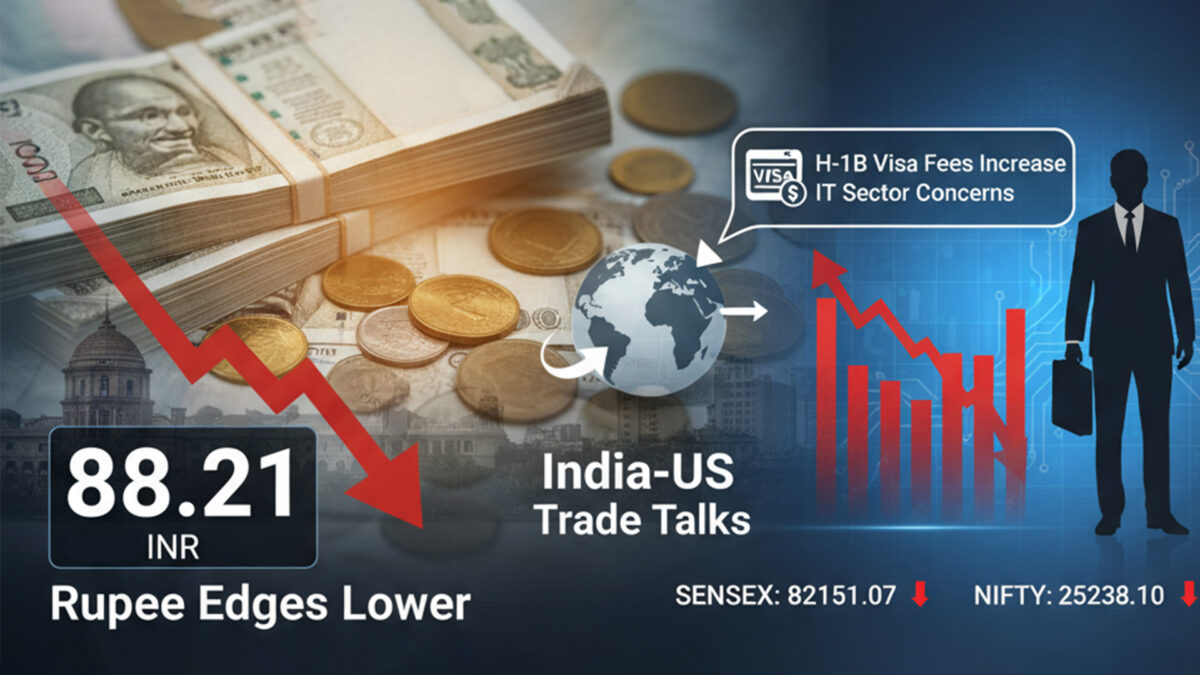
Rupee Edges Lower to 88.21 Amid Strong Dollar, IT Sector Concerns

Mumbai: The Indian rupee traded in a narrow range on Monday, September 22, 2025, and depreciated by 5 paise to 88.21 against the U.S. dollar. Strength in the American currency in overseas markets, coupled with a negative trend in domestic equities, weighed on investor sentiment.

Forex market participants noted that the recent increase in H-1B visa fees in the U.S. could impact the IT sector, potentially affecting company margins and reducing remittances due to slower employee deployments.

At the interbank foreign exchange market, the rupee opened at 88.20 before easing to 88.21. In the previous session on Friday, September 19, the currency had strengthened by 4 paise to close at 88.16.

The dollar index, which measures the greenback against a basket of six major currencies, gained 0.13% to 97.77. Global oil benchmark Brent crude was trading 0.66% higher at $67.12 per barrel in futures trade.

Domestic equities opened lower on Monday, with the Sensex down 475.16 points to 82,151.07 and the Nifty slipping 88.95 points to 25,238.10. Despite the early weakness, foreign institutional investors had net purchases worth ₹390.74 crore on Friday.

India’s foreign exchange reserves rose by $4.698 billion to $702.966 billion for the week ended September 12, following a $4.038 billion increase in the prior week, according to Reserve Bank of India data.

Meanwhile, Commerce and Industry Minister Piyush Goyal is scheduled to lead an official delegation to the U.S. on Monday for trade talks aimed at advancing negotiations for a mutually beneficial agreement. The delegation will visit New York and engage with U.S. officials to push for an early conclusion of the trade discussions.

Also Read: GRSE Secures $62.44 Million Contract with German Firm for Hybrid Vessels