Categories
Uncategorized

NTPC to Appoint Consultant for Overseas Uranium Mine Identification

State-owned NTPC Ltd is set to appoint a consultant to identify uranium mines abroad, following a formal agreement with Uranium Corporation of India Ltd (UCIL). This strategic move aims to secure a reliable fuel supply for NTPC’s future nuclear power projects, which are planned to be developed independently across various locations in India.

As part of its diversification into clean energy, NTPC is exploring the acquisition of uranium assets overseas. The company has already approved a draft memorandum of understanding (MoU) with UCIL to conduct joint techno-commercial due diligence of potential uranium assets. The appointed consultant will assess factors such as reserve quantity, logistics, transportation costs, and commercial viability to determine the feasibility of acquiring these assets.

NTPC’s expansion into nuclear energy is aligned with India’s ambitious goal of achieving 100 gigawatts (GW) of nuclear power capacity by 2047. The company is actively pursuing nuclear projects through joint ventures and independent initiatives. Notably, NTPC is collaborating with the Nuclear Power Corporation of India Ltd (NPCIL) on the Mahi Banswara Nuclear Power Project in Rajasthan, which has a planned capacity of 2,800 megawatts (MW).

To support its nuclear energy ambitions, NTPC is also seeking government approval for the bulk procurement of nuclear reactors. This initiative is part of a national plan to expand India’s atomic energy capacity and reduce reliance on fossil fuels. NTPC aims to install a significant portion of the country’s nuclear capacity, contributing to the broader goal of achieving 100 GW of nuclear power by 2047.

The appointment of a consultant to identify overseas uranium mines is a critical step in NTPC’s strategy to ensure a steady and cost-effective supply of fuel for its nuclear power projects. The outcome of this due diligence process will inform decisions regarding the acquisition of uranium assets abroad, supporting NTPC’s commitment to expanding India’s nuclear energy capacity.

Also Read:HUL Warns of Flat-to-Low Sales Growth Amid GST Impact
Categories
Corporate

TKIL Industries, SoHHytec to Establish Green Hydrogen Plant in India

TKIL Industries, formerly known as Thyssenkrupp Industries India, has partnered with Swiss company SoHHytec to establish a green hydrogen production facility in India.

The plant, expected to commence operations within the next 12 months, will utilize SoHHytec’s proprietary artificial photosynthesis (photo-electrolysis) technology to produce green hydrogen from renewable energy sources such as solar and wind.

This collaboration aims to support India’s National Hydrogen Mission, which targets the production of 5 million tonnes of green hydrogen annually by 2030.

The partnership designates TKIL Industries as SoHHytec’s exclusive partner in India. TKIL will be responsible for manufacturing and supplying specific equipment and machinery, as well as installing green hydrogen projects across the country.

The green hydrogen produced is intended for use in various industrial applications, including steel manufacturing, oil refining, and chemical production.

Vivek Bhatia, Managing Director and CEO of TKIL Industries, expressed optimism about the project, stating that the company is in discussions with potential clients in sectors such as steel and oil marketing companies to set up green hydrogen plants. He emphasized that TKIL’s role as an engineering, procurement, and construction (EPC) player positions the company to build and hand over these plants to clients upon completion.

SoHHytec’s artificial photosynthesis technology is recognized for its cost efficiency in producing green hydrogen. The process involves using renewable energy to split water molecules into hydrogen and oxygen, a method that is both scalable and adaptable to various industrial needs. This technology aligns with India’s objectives to reduce dependence on fossil fuels and enhance renewable energy capacity.

The establishment of this green hydrogen plant is seen as a significant step in India’s efforts to transition towards cleaner energy sources and achieve its climate targets. The collaboration between TKIL Industries and SoHHytec underscores the growing emphasis on sustainable energy solutions and the role of international partnerships in advancing green technologies.

As the project progresses, further details regarding the location of the plant, investment figures, and specific timelines for each phase of development are expected to be announced. The success of this initiative could serve as a model for future green hydrogen projects in India and contribute to the country’s leadership in the global clean energy transition.

Categories
Corporate

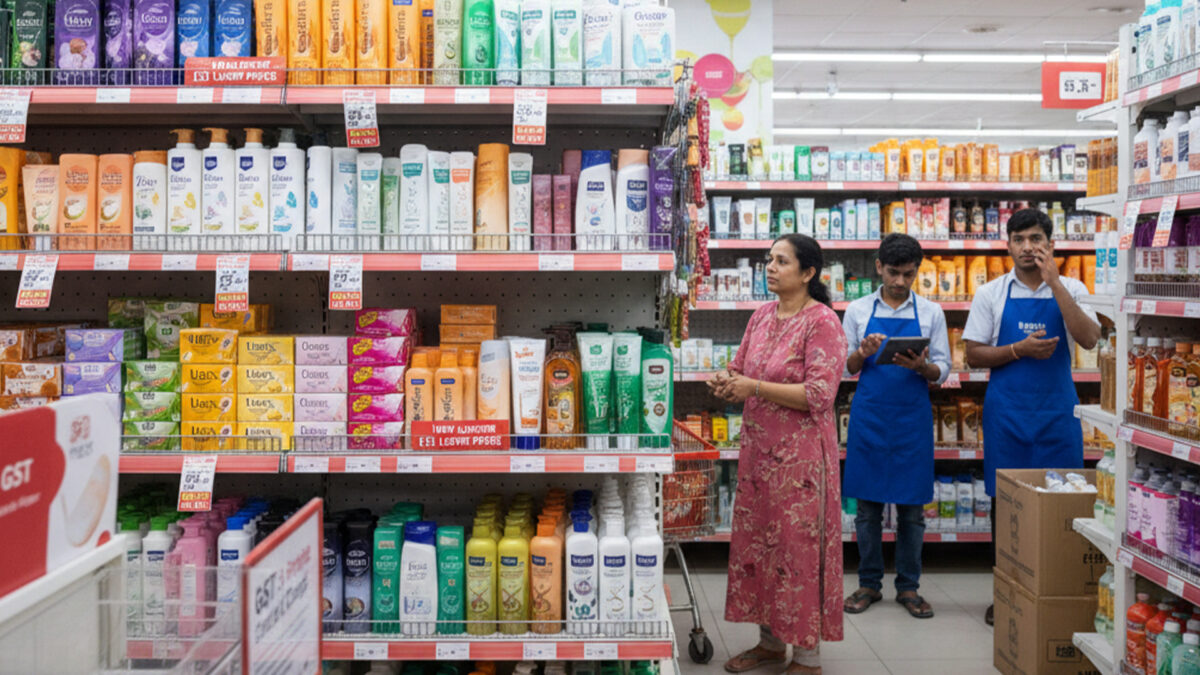
HUL Warns of Flat-to-Low Sales Growth Amid GST Impact

Hindustan Unilever Ltd (HUL) has projected nearly flat to low single-digit consolidated business growth for the quarter ending September 30, 2025, attributing the subdued performance to the recent Goods and Services Tax (GST) rate revisions.

The company noted that approximately 40% of its product portfolio, including items such as toilet soap, toothpaste, shampoo, and hair oil, now benefit from a reduced GST rate of 5%, down from the previous rates of 12% or 18%.

The GST adjustments, effective from September 22, 2025, have led to temporary disruptions in the sales and distribution channels. HUL reported that distributors and retailers have delayed new orders to clear existing inventory priced under the previous tax regime, resulting in postponed consumer purchases.

This transition has caused a short-term impact on sales, with the company expecting the effects to persist into October. HUL anticipates a recovery starting in November as prices stabilize and consumer demand normalizes.

In response to the GST changes, HUL has passed on the tax benefits to consumers through competitive pricing across a wide range of products. The company remains committed to supporting the government’s efforts to stimulate consumption and expects the reforms to increase disposable income and drive long-term demand across key categories.

Despite the short-term challenges, HUL views the GST reforms as a positive step for the consumer goods sector. The company expects that the transitional impact will be temporary and anticipates a rebound in growth as the market adjusts to the new pricing structure.

Analysts have expressed cautious optimism regarding HUL’s outlook. Jefferies maintained a ‘Buy’ rating on the stock with a target price of ₹3,000, citing the long-term benefits of the GST cuts despite the short-term sales slowdown. Similarly, BofA Securities retained a ‘Neutral’ rating with an unchanged target price of ₹2,840, highlighting the temporary nature of the disruptions. However, Morgan Stanley reiterated an ‘Equal-Weight’ rating, noting that the company’s recent update fell below market expectations.

On September 29, 2025, HUL’s shares experienced a decline, falling by up to 2.5% in early trading. The stock’s performance reflects investor concerns over the immediate impact of the GST reforms on the company’s sales growth. However, the broader market sentiment remains positive, with expectations of a recovery in the coming months as the effects of the tax changes dissipate.

In conclusion, while HUL faces short-term challenges due to the GST rate adjustments, the company remains optimistic about the long-term prospects. The anticipated recovery in consumer demand, coupled with the benefits of the tax reforms, positions HUL for sustained growth in the future.

Also Read: Sensex rises 200 pts, Nifty above 24,700 after 6-day slide

Categories
Beyond

Consumers Can Soon Switch LPG Suppliers Like Mobile Numbers

In a significant consumer-centric reform, the Petroleum and Natural Gas Regulatory Board (PNGRB) has unveiled a proposal for an LPG Interoperability Framework, enabling households to switch between cooking gas suppliers—such as Indane, Bharat Gas, and HP Gas—without changing their existing connections.

This move mirrors the mobile number portability system in the telecom sector, aiming to enhance consumer choice and service reliability.

India has achieved near-universal LPG coverage, with over 32 crore active connections as of FY25. However, persistent consumer grievances—exceeding 17 lakh annually—highlight issues like delayed deliveries and supply disruptions.

These challenges are particularly acute in areas where local distributors face operational constraints, leaving consumers with limited alternatives.

PNGRB emphasizes that consumers should have the freedom to choose their LPG supplier, especially when cylinder prices are standardized across companies.

Historically, a pilot LPG portability scheme was introduced in 2013, allowing consumers to switch dealers within the same oil marketing company. This system was expanded nationwide in 2014.

However, it did not permit inter-company portability, meaning a consumer could not switch from Indane to Bharat Gas or HP Gas. The proposed framework seeks to eliminate this restriction, enabling consumers to receive refills from the nearest available distributor, irrespective of the company, particularly during service disruptions or peak demand periods.

PNGRB has invited public comments on the proposed framework, with a rollout expected after finalizing the rules. The initiative aims to address service failures and ensure uninterrupted access to LPG, thereby safeguarding consumer trust.

This development marks a significant step toward enhancing consumer autonomy and service quality in India’s LPG sector.

Also Read: HAL’s Order Book Soars to ₹2.7 Lakh Crore Following Tejas Deal

Categories
Corporate

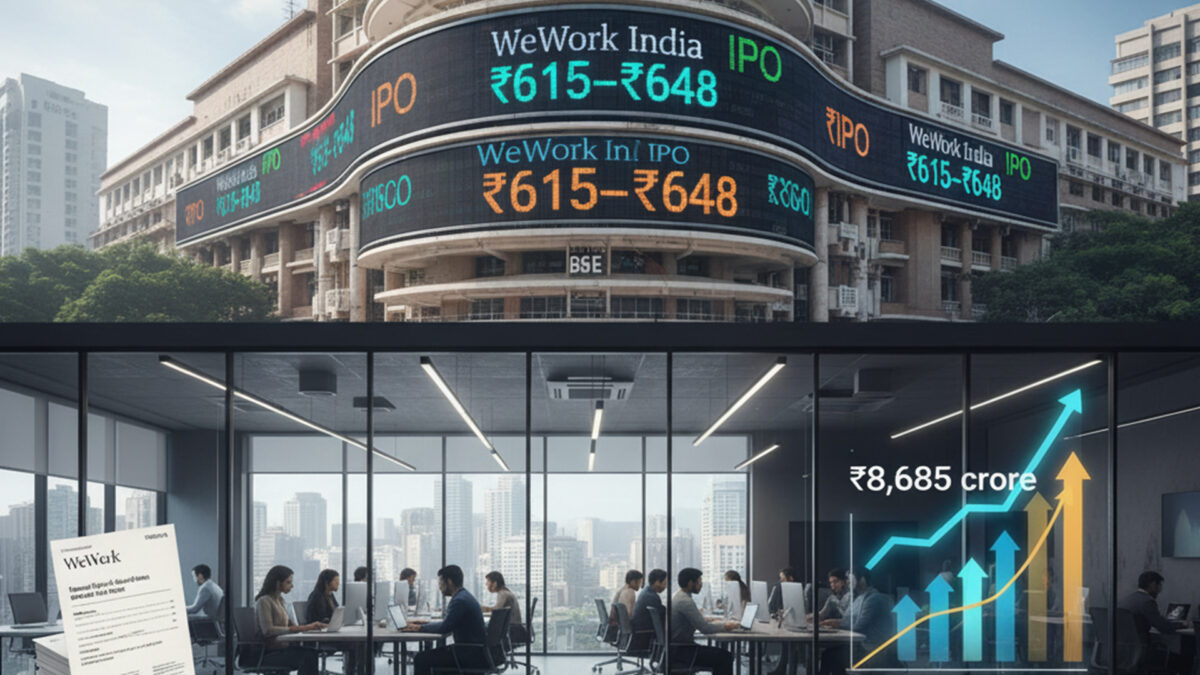
WeWork India Fixes ₹615–₹648 Price Band for ₹3,000 Crore IPO

WeWork India Management has announced a price band of ₹615 to ₹648 per equity share (face value ₹10) for its upcoming initial public offering (IPO), targeting a total issue size of up to ₹3,000 crore.

The IPO will open for bidding on October 3, 2025, and close on October 7, 2025, while bids from anchor investors will be accepted on October 1, 2025. The shares are expected to list on stock exchanges on October 10, 2025.

The entire IPO is structured as an Offer for Sale (OFS), meaning that WeWork India will not receive any proceeds directly from the issue; instead, the selling shareholders will get the funds. The OFS comprises up to 4.63 crore equity shares being offloaded by promoter and investor entities.

Promoter group entity Embassy Buildcon LLP plans to sell around 3.5 crore shares and raise ₹2,294 crore, while Ariel Way Tenant Ltd (a WeWork Global affiliate) will divest about 1 crore shares for ₹706 crore.

The existing shareholding structure has Embassy Group holding approximately 76.21%, and WeWork Global about 23.45% in WeWork India.

As of now, WeWork India operates under an exclusive licensing model in India, promoted by Bengaluru-based real estate firm Embassy Group.

The company’s portfolio spans major Tier-1 cities including Bengaluru, Mumbai, Pune, Hyderabad, Gurugram, Noida, Delhi, and Chennai. It manages around 77 lakh sq ft of space, of which approximately 70 lakh sq ft is operational, with a desk capacity of 1.03 lakh, and employs over 500 staff.

At the upper end of the IPO price band, the company is being valued at about ₹8,685 crore.

The IPO’s allocation mix earmarks 75% for Qualified Institutional Buyers (QIBs), 15% for non-institutional investors, and 10% for retail investors. Bids can be placed in lots of 23 shares, and in multiples thereof.

The allotment date is tentatively set for October 8, with crediting of shares expected on October 9, followed by listing on October 10.

The book-running lead managers for the issue include JM Financial Ltd., ICICI Securities Ltd., Jefferies India, Kotak Mahindra Capital, and 360 ONE WAM Ltd.

Once listed, WeWork India will compete with other coworking and real estate service firms such as Awfis Space Solutions, IndiQube Spaces, and Smartworks Coworking Spaces.

Investor attention will focus on demand dynamics, subscription levels, and post-listing trading, with the performance of this IPO likely to serve as a benchmark for other flexible workspace firms.

Also Read: Adobe Integrates Google’s Nano Banana AI into Photoshop

Categories
Corporate

HAL’s Order Book Soars to ₹2.7 Lakh Crore Following Tejas Deal

Hindustan Aeronautics Limited (HAL) has secured a landmark ₹62,370 crore contract from the Ministry of Defence to supply 97 Tejas Mk-1A fighter aircraft to the Indian Air Force (IAF), taking its total order book to an unprecedented ₹2.7 lakh crore. The agreement, finalized on September 25, 2025, underscores the Indian government’s focus on bolstering indigenous defense production and achieving self-reliance in military aviation.

The latest contract includes 68 single-seat fighters and 29 twin-seat trainer aircraft, with deliveries expected to commence in 2027 and continue over the next six years. The Tejas Mk-1A is an indigenously developed, fourth-generation, multi-role combat aircraft featuring advanced technologies such as the UTTAM Active Electronically Scanned Array (AESA) radar, the Swayam Raksha Kavach electronic warfare suite, and a high degree of modularity for future upgrades. More than 64% of the aircraft’s components are sourced from domestic suppliers, aligning with the government’s ‘Atmanirbhar Bharat’ initiative.

The Tejas programme, initiated in the 1980s, has long been considered India’s flagship effort in developing a homegrown fighter aircraft. HAL, as the nodal agency for design, production, and assembly, has overcome decades of developmental challenges to deliver a platform capable of complementing India’s modern air force. The Mk-1A variant, in particular, has been designed to incorporate improved avionics, radar systems, and weapons integration, making it a vital asset for India’s defense capabilities.

This order adds to a previous 2021 contract for 83 Tejas Mk-1A aircraft, highlighting the IAF’s commitment to phasing out older aircraft and modernizing its fleet with domestically produced platforms. Officials estimate that the new contract will generate around 11,750 jobs annually over the next six years, enhancing India’s defense manufacturing ecosystem and supporting ancillary industries.

HAL’s stock responded positively to the announcement, reflecting market confidence in the company’s expanded order book and long-term production prospects. The company, a key public sector enterprise under the Ministry of Defence, plays a central role in India’s strategic push to reduce reliance on foreign defense imports while maintaining operational readiness for its armed forces.

Defense analysts note that the Tejas Mk-1A deal not only strengthens the IAF’s capabilities but also has wider implications for India’s position in the global defense sector. By demonstrating the ability to design, manufacture, and deliver a modern fighter aircraft at scale, India can enhance its credibility as a defense exporter and attract international partnerships.

Beyond military strategy, the deal is expected to have substantial economic benefits. The production of Tejas jets involves collaboration with numerous domestic vendors, boosting local industries, promoting technology transfers, and supporting skill development in aerospace engineering. The contract also aligns with the government’s vision of establishing India as a global hub for advanced defense manufacturing.

HAL’s ₹62,370 crore Tejas Mk-1A order reinforces HAL’s role as the backbone of indigenous fighter production, strengthens the operational capacity of the IAF, and signals a decisive step toward self-reliance in defense technology.

Also Read: India Negotiates U.S. Corn Purchase for Ethanol Amid Trade Talks

Categories
Beyond

India Negotiates U.S. Corn Purchase for Ethanol Amid Trade Talks

India is in negotiations with the United States to purchase corn for ethanol production, according to an Economic Times Report, aiming to bolster its biofuel sector and strengthen bilateral trade relations.

This move is part of broader discussions to finalize a comprehensive trade agreement by autumn 2025.

The U.S. has imposed a 25% punitive tariff on Indian imports, citing India’s continued purchase of Russian oil, which Washington argues indirectly funds the war in Ukraine.

In response, India is seeking the removal of these tariffs and offering to increase energy imports from the U.S., including the purchase of American corn for ethanol production.

Ethanol blending is a key component of India’s strategy to reduce crude oil dependence and lower emissions.

However, India faces challenges in accepting U.S. corn imports due to concerns over genetically modified (GM) crops.

The Indian government is cautious about opening its markets to GM products, which could impact domestic agriculture and public acceptance.

To address these concerns, India is considering a self-certification mechanism, where U.S. exporters would provide documentation confirming that their corn is GM-free.

Agriculture remains a sensitive issue in trade negotiations, with India emphasizing the protection of its farmers and food security.

While India has agreed to import certain U.S. agricultural products for animal feed, it remains cautious about broader market access for GM crops.

The U.S. is seeking greater market access for American agricultural products, including corn, soybeans, and ethanol, as part of the trade discussions.

The negotiations are ongoing, with both countries aiming to reach a mutually beneficial agreement that addresses economic and geopolitical interests.

The outcome of these discussions will have significant implications for U.S.-India trade relations and the global agricultural market.

Also Read: IndusInd Bank: Ex-CFO Alleges ₹2,000 Crore Accounting Fraud

Categories
Corporate

Nothing Spins Off CMF as Independent Subsidiary

London-based tech company Nothing has announced a significant strategic shift by spinning off its budget-focused sub-brand, CMF, into an independent subsidiary headquartered in India.

This move is aimed at establishing CMF as India’s first truly global consumer tech brand, with a strong emphasis on operations, research and development, and manufacturing within the country.

As part of this transition, Nothing has partnered with Indian electronics manufacturer Optiemus Infracom to form a joint venture. The collaboration involves an investment exceeding $100 million over the next three years and is expected to create more than 1,800 jobs in India.

This initiative underscores Nothing’s commitment to strengthening its presence in one of the world’s largest and fastest-growing smartphone markets.

The decision to base CMF’s global headquarters in India reflects the country’s growing importance in the global tech ecosystem. Nothing CEO Carl Pei emphasized that India will play a key role in shaping the future of the global smartphone industry.

He expressed confidence that CMF, with its end-to-end capabilities, is uniquely positioned to become India’s first truly global smartphone brand.

Optiemus Infracom brings world-class engineering and production capabilities to the partnership.

Their proven expertise in supporting global brands and establishing robust manufacturing and export opportunities further strengthens India’s position as a global hub for electronics manufacturing.

The collaboration aims to transform India into a global production and export base for both Nothing and CMF products.

This move aligns with the Government of India’s ‘Make in India’ initiative and is expected to bolster the country’s position in the global electronics manufacturing landscape.

Nothing’s investment in India now exceeds $200 million, reflecting the company’s confidence in the Indian market and its potential for growth.

The establishment of CMF as an independent subsidiary is a testament to Nothing’s long-term commitment to India and its ambition to build a sustainable and scalable business in the country.

As CMF embarks on this new chapter, the brand is poised to introduce a range of innovative products to the market. The upcoming launch of CMF’s first pair of over-ear headphones on September 29 is anticipated to further solidify the brand’s position in the affordable tech segment.

With a focus on design, quality, and affordability, CMF aims to cater to the growing demand for consumer electronics in India and beyond. This move is expected to create substantial economic opportunities, enhance India’s position in the global tech ecosystem, and pave the way for the growth of CMF as a leading global consumer tech brand.

Categories
Beyond

India’s Forex Reserves Slip to $702.57 Billion Amid Currency Volatility

India’s foreign exchange reserves fell by $396 million to $702.57 billion for the week ending September 19, 2025, according to the Reserve Bank of India (RBI).

The decline comes after a previous week’s rise of $4.7 billion, highlighting ongoing fluctuations in global financial markets that continue to influence the country’s external assets.

The drop was primarily driven by a decrease in foreign currency assets, the largest component of India’s reserves, which fell by $864 million to $586.15 billion.

Analysts attribute this decline to the depreciation of major non-US currencies, including the euro, pound, and yen, against the US dollar.

Such currency movements reduce the dollar value of India’s holdings denominated in these currencies, contributing to overall reserve fluctuations.

In contrast, India’s gold reserves strengthened during the week, rising by $360 million to $92.779 billion. Gold continues to serve as a hedge against global economic uncertainties, reflecting the RBI’s strategy of maintaining a diversified portfolio of reserve assets.

Special Drawing Rights (SDRs), issued by the International Monetary Fund, increased modestly by $105 million to $18.879 billion, while India’s reserve position with the IMF rose by just $2 million to $4.762 billion.

Despite the marginal decline, India’s forex reserves remain among the highest in the world, providing a significant buffer against external shocks and supporting the stability of the Indian rupee.

Analysts note that the RBI’s management of reserves — including strategic allocation between foreign currency assets, gold, and SDRs — continues to be a key tool in mitigating the impact of global volatility on the domestic economy.

The fall in reserves also reflects broader trends in international markets, including fluctuations in commodity prices, changes in interest rate expectations, and periodic movements in major currencies.

These factors can cause short-term swings in reserve levels, but experts emphasise that the overall strength of India’s external position remains intact.

With ongoing uncertainties in global financial markets, the RBI is expected to continue monitoring and adjusting its reserve holdings to safeguard economic stability.

India’s robust reserve position not only helps maintain confidence in the rupee but also reinforces the country’s ability to manage trade imbalances, fund imports, and meet external obligations without undue strain.

While weekly movements in reserves often attract attention, economists stress that they are part of the normal ebb and flow of international finance.

The current dip is relatively minor and does not signal any immediate economic concern. Instead, it underscores the importance of prudent reserve management in maintaining financial resilience amid an increasingly interconnected and volatile global economy.

Also Read: Amit Shah Urges Indian Banks to Scale Up and Prioritize MSME Funding

Categories
Corporate

Starbucks Announces $1 Billion Restructuring Plan

Starbucks has announced a major $1 billion restructuring plan aimed at reshaping its North American operations, which includes closing around 400 underperforming stores across the U.S. and Canada and cutting approximately 900 corporate positions.

The company expects the changes to reduce its North American store count by roughly 1% by the end of fiscal year 2025.

CEO Brian Niccol said the closures are focused on locations that have struggled to deliver the desired customer experience or achieve financial targets.

“We are making these changes to ensure Starbucks continues to provide an exceptional customer experience and remains sustainable in a competitive market,” Niccol said. Affected employees will receive notice this week, with options for transfers to nearby stores where feasible and severance packages designed to ease the transition.

The restructuring also includes a substantial investment in renovating more than 1,000 existing locations.

Starbucks plans to enhance store designs with improved textures, lighting, and layout to create warmer, more inviting environments for customers. Niccol emphasized that the renovations are part of a broader strategy to modernize stores and reinforce brand loyalty.

On the corporate side, around 900 non-retail positions will be eliminated, including the departure of Chief Technology Officer Deb Hall Lefevre. Ningyu Chen, formerly Senior Vice President of Global Experience Technology, has been appointed interim CTO.

Starbucks is increasingly leveraging Tata Consultancy Services for IT and operational support, reflecting a shift toward outsourcing certain functions to streamline efficiency.

The restructuring follows several quarters of declining sales in North America, with the company reporting six consecutive quarters of soft performance in its core markets. Rising costs, competitive pressures from specialty coffee chains, and changing consumer habits have contributed to the need for strategic realignment. Analysts note that Starbucks’ moves are aimed at improving long-term profitability while maintaining the quality and consistency of its customer experience.

Investors reacted cautiously to the announcement, with shares dipping slightly in after-hours trading.

Despite market concerns, Starbucks maintains that the changes are part of a deliberate, forward-looking plan. Financial analysts have highlighted that while the near-term impact may include reduced revenue from closed stores and severance costs, the focus on efficiency and store modernization could strengthen the company’s competitive position over time.

Industry observers point out that Starbucks’ strategy reflects broader trends in retail and food service, where companies are optimizing footprints, focusing on high-performing locations, and leveraging technology to enhance customer engagement. Starbucks’ decision to invest in renovations while reducing corporate overhead signals an attempt to balance operational efficiency with customer-centric improvements.

As Starbucks moves forward with its restructuring, the company has pledged to support impacted employees and ensure minimal disruption to customers. The combination of store closures, corporate reductions, and targeted renovations underscores a commitment to long-term growth, operational resilience, and sustained market leadership in the North American coffee sector.

Also Read: Trump Demands Microsoft Dismiss Lisa Monaco, Citing National Security Risks