Categories
Beyond

India’s Foreign Exchange Reserves Decline to $700.2 Billion

India’s foreign exchange reserves fell by $2.334 billion to $700.236 billion for the week ending September 26, 2025, according to data released by the Reserve Bank of India (RBI) on October 3.

This follows a previous week’s decline of $396 million, bringing the total reserves down from $702.57 billion.

The decrease was primarily due to a significant drop in foreign currency assets, which decreased by $4.393 billion to $581.757 billion.

These assets, expressed in dollar terms, include the effect of appreciation or depreciation of non-U.S. currencies such as the euro, pound, and yen held in the foreign exchange reserves.

The decline in foreign currency assets is attributed to the depreciation of these currencies against the U.S. dollar, impacting the overall value of India’s reserves.

In contrast, India’s gold reserves increased by $2.238 billion to $95.017 billion during the same period. This rise in gold holdings reflects a strategic move by the RBI to diversify its reserve assets amid global economic uncertainties.

Gold is considered a safe-haven asset, and its inclusion in the reserves provides a hedge against currency fluctuations and geopolitical risks.

Additionally, Special Drawing Rights (SDRs) declined by $90 million to $18.789 billion, and India’s reserve position with the International Monetary Fund (IMF) decreased by $89 million to $4.673 billion.

These reductions are part of the overall decline in the reserve components, indicating a tightening of liquidity in the international financial system.

Despite the recent declines, India’s foreign exchange reserves remain substantial.

As of September 26, the reserves are sufficient to cover approximately 11 months of merchandise imports and can cover about 95.4% of India’s outstanding external debt as of the end of March 2025. This indicates strong external sector resilience and a healthy buffer against global financial uncertainties.

The recent depreciation of the Indian rupee, trading near its all-time low, has been influenced by regional weakness across Asian currencies and ongoing trade tensions with the United States.

The rupee opened at around 88.74-88.78 per dollar on September 30, close to last week’s record low. These pressures have led to significant equity outflows, with foreign investors pulling out $1.8 billion last week, over $300 million of which occurred on Monday alone.

The RBI has been actively intervening in the currency markets to curb the rupee’s decline and maintain market stability.

Also Read: RBI Proposes Easier Rules for External Commercial Borrowings
Categories
Beyond

India Launches Anti-Dumping Probe into Steel Imports

India has initiated an anti-dumping investigation into imports of cold-rolled flat stainless steel products from China, Indonesia, and Vietnam.

The Directorate General of Trade Remedies (DGTR), operating under the Ministry of Commerce and Industry, commenced the probe following a complaint filed by the Indian Stainless Steel Development Association (ISSDA) on behalf of domestic producers.

The ISSDA alleges that these imports are being sold at unfairly low prices, a practice known as dumping, which has caused material injury to the domestic industry.

The investigation focuses on cold-rolled flat products of the 300 and 400 series, including coils, sheets, plates, strips, rounds, and other forms in all grades, finishes, and thicknesses.

The period under investigation is from April 2024 to March 2025, with the injury assessment covering the fiscal year 2022–23. The DGTR has found prima facie evidence suggesting that these imports have adversely affected Indian manufacturers by undercutting domestic prices and causing financial harm.

If the investigation confirms the allegations, the DGTR may recommend the imposition of anti-dumping duties to protect the domestic industry from unfair trade practices. The final decision on the imposition of such duties will rest with the Ministry of Finance.

This move is part of India’s broader strategy to safeguard its domestic industries from unfair competition and to ensure a level playing field in international trade.

The outcome of this investigation could have significant implications for trade relations between India and the affected countries, as well as for the global steel market.

Also Read: RBI Proposes Easier Rules for External Commercial Borrowings
Categories
Corporate

Moody’s Downgrades Tata Motors’ Outlook Amid JLR Cyberattack Fallout

Moody’s Investors Service has revised Tata Motors’ outlook to negative from positive, citing the severe impact of a cyberattack on its British subsidiary, Jaguar Land Rover (JLR).

While affirming the company’s Ba1 corporate family rating, Moody’s anticipates that recovery in Tata Motors’ credit metrics will take several months. The cyber incident, which led to a complete halt in JLR’s production operations, has raised concerns about the company’s financial stability and operational continuity.

The cyberattack, which occurred on August 31, 2025, disrupted manufacturing at JLR’s facilities in the UK, Slovakia, India, and Brazil. The shutdown affected approximately 33,000 employees and halted the production of around 1,000 vehicles daily. The incident has resulted in significant financial losses, with experts estimating up to £1.7 billion in lost revenues and a potential £2.6 billion cash burn over a 30-day period. Despite efforts to resume operations, full production may take weeks or even months to return to normal.

Moody’s projects that JLR’s production halt will reduce Tata Motors’ consolidated earnings before interest, tax, depreciation, and amortisation (EBITDA) to approximately $850 million for the fiscal year ending March 31, 2026, down from earlier forecasts of around $3 billion. Additionally, higher working capital requirements are expected to result in negative cash flow from operations during this period. The company continues to incur weekly cash outflows of around £500 million, driven by ongoing obligations such as supplier payments and employee wages.

In response to the crisis, the UK government has pledged a £1.5 billion loan guarantee to support JLR’s supply chain during the disruption. However, this intervention has sparked debates about “moral hazard,” with critics arguing that such support could reduce companies’ incentives to invest in cybersecurity or purchase cyber insurance.

The cyberattack has also drawn scrutiny towards Tata Consultancy Services (TCS), JLR’s IT service provider, which had a £800 million contract to bolster cybersecurity. Despite prior warnings about security vulnerabilities, protection investments were deprioritized, leading to questions about the adequacy of JLR’s cybersecurity measures.

Moody’s has indicated that an upgrade in Tata Motors’ rating is unlikely in the next 12 to 18 months. However, the outlook could be revised to stable if JLR’s situation improves and operations return to normal. Investors and stakeholders are advised to monitor developments closely, as the company’s recovery from this incident will significantly influence its financial performance in the coming months.

Also Read: US Senators Press TCS Over H-1B Hiring Amid Layoff Allegations

Categories
Corporate

US Senators Press TCS Over H-1B Hiring Amid Layoff Allegations

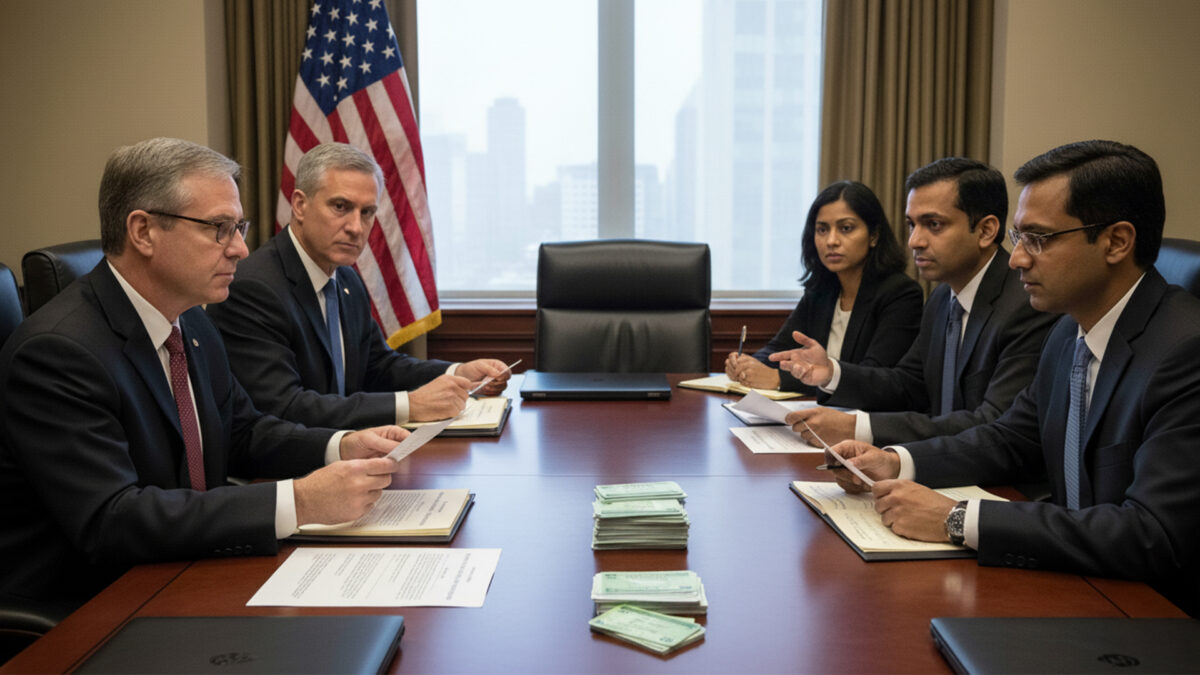
A bipartisan pair of U.S. senators has issued a pointed demand for answers from Tata Consultancy Services (TCS), raising sharp questions about the Indian IT giant’s use of H-1B visa holders while laying off American employees.

In a letter dated September 24, Senate Judiciary Committee Chairman Chuck Grassley and ranking member Dick Durbin asked TCS CEO Krithi Krithivasan to provide details by October 10, 2025, about the company’s hiring and layoff practices, wage parity, and whether any displacement of U.S. workers has occurred.

The senators noted that TCS has reportedly initiated plans to cut over 12,000 jobs globally, with some of those layoffs affecting U.S. staff. In that context, they highlighted that in fiscal 2025 TCS obtained approval to recruit 5,505 new H-1B employees, making it the second-largest corporate recipient of such approvals in the United States. They challenged the company to explain how it justifies continued H-1B petitions even as it trims its American workforce.

The letter raised nine specific queries. Among them: whether TCS has directly replaced American employees with H-1B workers; whether job postings for H-1B roles are segregated from general recruitment ads; and whether foreign hires receive the same compensation, benefits and terms as U.S. staff with comparable credentials.

The senators also asked whether TCS uses subcontractors or staffing firms to place H-1B workers and, more broadly, whether it has demonstrated genuine recruitment efforts in the U.S. labor pool before resorting to visa-based hiring.

The inquiry additionally pointed out that TCS is under an ongoing Equal Employment Opportunity Commission (EEOC) probe over allegations that the company may have dismissed older American employees in favor of younger H-1B visa hires, raising concerns of age discrimination.

The senators suggested that the timing of layoffs coupled with visa filings during the investigation heightened the need for transparency.

Reports noted that TCS is the sole Indian company among a broader group of ten tech and corporate entities that received similar letters from Grassley and Durbin. Those other firms, including Amazon, Apple, Google, Microsoft and Cognizant, were asked to address parallel concerns about mass layoffs and H-1B hiring, according to a report by The Financial Express.

Observers say the senators’ inquiry reflects mounting political pressure on the H-1B system, particularly under an administration that has recently floated a $100,000 fee for new H-1B petitions and vowed tighter oversight of foreign worker programs.

Critics argue that while the H-1B visa is meant to fill genuine skill gaps, its misuse may displace U.S. talent—or at least cast doubt on established hiring practices. As TCS prepares to respond, the outcome could prove consequential not only for its reputation but also for broader debates over immigration, workforce fairness, and corporate accountability.

Also Read: Eyewear Retail Major Lenskart Secures SEBI Approval For IPO

Categories
Beyond

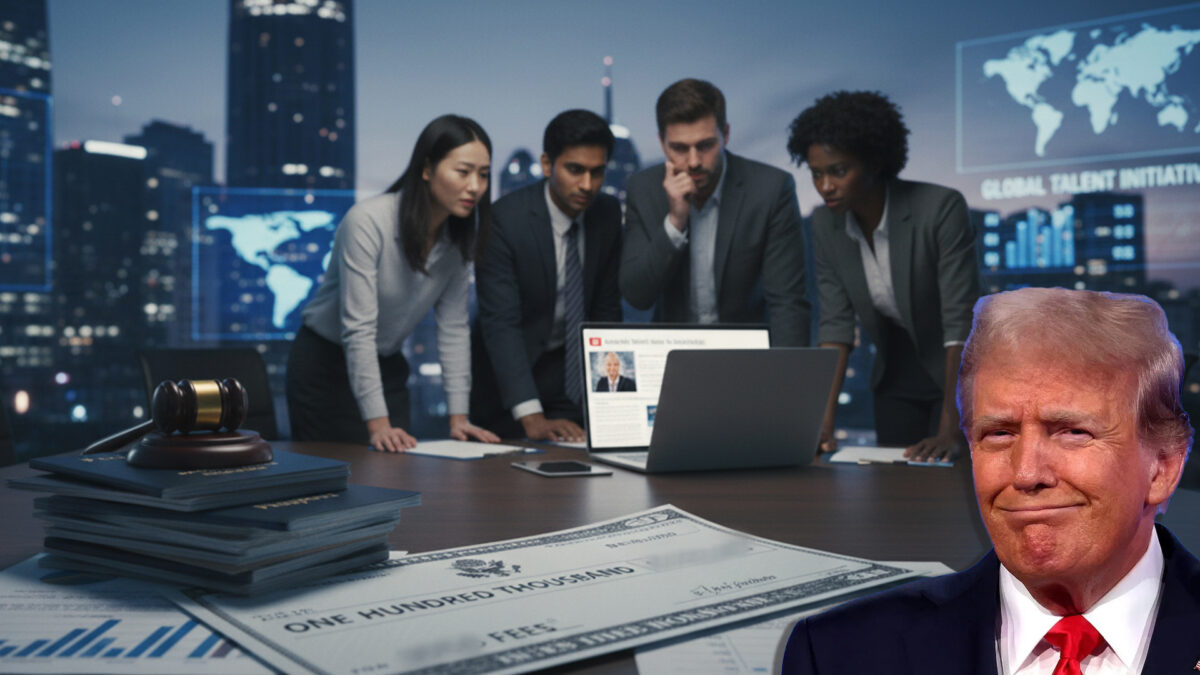
Business Groups Urge Donald Trump to Reconsider $100,000 H-1B Fee

A coalition of industry associations has delivered a rare public rebuke to President Donald Trump’s recent decision to impose a $100,000 fee on new H-1B visa applications, news agency Bloomberg has reported

In the letter, sent two weeks after Trump announced the change, groups representing semiconductor manufacturers, software companies and retailers warned that the fee threatens to “crimp a crucial talent pipeline of foreign skilled workers” and leave key positions across sectors unfilled. 

The document implored the administration to pursue reform of the H-1B system in collaboration with industry, rather than layering on what it described as burdensome costs.

Signatories included prominent organizations such as the Business Software Alliance, SEMI (the semiconductor industry association), the National Retail Federation, the Entertainment Software Association and the Information Technology Industry Council. 

The letter was careful to acknowledge Trump’s broader goals of encouraging U.S. investment, even as it cautioned against unintended consequences of the visa overhaul.

The industry objection comes in response to a White House proclamation unveiled on September 19, which mandates that any new petition for an H-1B visa filed after September 21 must be accompanied by a $100,000 fee. The administration has defended the policy as a tool to curb abuse of the system and protect American workers. 

Immigration attorneys and policy analysts have already flagged significant uncertainty in how the policy will be applied, and whether it may deter companies from sponsoring foreign talent. 

Some legal opinions suggest the fee could have a chilling effect, particularly on small- and mid-size firms that rely on the H-1B program to fill specialized roles. The proclamations and agency memos also appear to exempt existing H-1B holders and pending petitions filed before the deadline, but ambiguity remains over whether extensions or travel by current visa holders might trigger the new fee.

Beyond U.S. trade and technology firms, the change has echoed internationally. India’s IT industry association, NASSCOM, warned that the fee could disrupt operations of Indian firms that send talent to U.S. branches and unsettle the global talent market. Meanwhile, banking and financial firms are evaluating whether they may shift more work offshore, an outcome predicted by Bloomberg in coverage of potential moves by Wall Street firms.

The U.S. Chamber of Commerce has also joined the chorus of concern, urging the administration to rescind the proclamation. In a letter to Cabinet officials, it argued the fee “will impede economic growth,” harm startups and reduce the capacity of U.S.-educated foreign nationals to contribute to the domestic economy. 

Legal challenges to the fee began almost immediately. A federal lawsuit filed in San Francisco by a coalition of unions, educators and healthcare staffing firms argues that Trump overstepped his authority by imposing such a fee without Congressional backing and violated procedural norms. Plaintiffs are seeking a court injunction to block the policy’s implementation. (Reuters)

As the dust settles, the letter from business groups underscores mounting pressure from U.S. corporate America to temper immigration changes.

If the administration continues to defend the $100,000 fee unchanged, it risks alienating key industries that rely on global talent to drive innovation, growth and competitiveness.

Also Read: Eyewear Retail Major Lenskart Secures SEBI Approval For IPO

Categories
Corporate

Tata Capital IPO Gathers Momentum with ₹4,600 Crore Anchor Investment


Tata Capital’s upcoming IPO is making waves, not just for its size, but for the confidence it has inspired among some of the world’s top investors. Ahead of the ₹15,500-crore public issue, Tata Capital lined up an impressive ₹4,642 crore from 135 anchor investors. LIC took the lead as the largest anchor, joined by global financial giants like Morgan Stanley, Goldman Sachs, and Nomura, underscoring the company’s broad appeal across continents.

Eighteen of India’s top mutual funds and several major insurance companies also jumped in, picking up over 5 crore shares between them, a testament to Tata Capital’s standing at home. This surge of institutional investor interest sent a strong signal to the market, just days before the IPO opens for subscription.

For Tata Capital, which started in 2007 and has since blossomed into India’s third-largest NBFC with a ₹2.33 lakh crore loan book, this IPO is a springboard for its next phase of growth. Most of the proceeds will be used to boost the company’s financial cushion, helping it lend more even as it keeps risks in check. Meanwhile, Tata Sons and IFC will partly cash out their stakes.

The response to the anchor book, subscribed to five times over, reflects a vote of confidence in Tata Capital’s focus on retail and SME lending, its robust asset quality, and the backing of the larger Tata brand. Riding a wave of momentum from the anchor round, the IPO will be open from October 6 to 8, with trading set to begin on October 13. The offering has already attracted a premium in the grey market, hinting at the anticipation surrounding one of the year’s most closely watched listings.

Categories
Corporate

Eyewear Retail Major Lenskart Secures SEBI Approval For IPO

India’s leading eyewear retailer, Lenskart, has secured regulatory approval from the Securities and Exchange Board of India (SEBI) to proceed with its initial public offering (IPO).

The approval relates to its draft red herring prospectus, which includes a fresh equity issue of ₹2,150 crore alongside an offer for sale (OFS) by promoters and early investors. According to sources, the OFS is expected to involve the sale of up to 132.3 million shares.

In terms of structuring, co-founder Peyush Bansal intends to offload around 20 million shares, while other founders such as Neha Bansal, Amit Chaudhary, and Sumeet Kapahi will each sell smaller stakes.

Institutional backers including SoftBank, Temasek, Kedaara Capital, Alpha Wave Ventures, Premji Invest, and others have also been named among prospective sellers in the OFS component.

Lenskart’s total IPO size is projected to be in the range of ₹7,500 crore to ₹8,000 crore, taking into account both the fresh issue and the OFS. After gaining SEBI’s nod, the company is expected to file an updated prospectus in the coming weeks and eye a mid-November listing.

The business has shown a strong financial rebound. In FY25, Lenskart turned profitable, posting a net profit of about ₹297.3 crore, compared to a net loss of around ₹10.2 crore in FY24. Its revenues increased by nearly 22–23 percent year-on-year to about ₹6,652.5 crore. The company has attributed margin improvements to operational efficiencies and scaling advantages.

Proceeds from the fresh issue are earmarked across multiple strategic investments. Around ₹272.6 crore will go into setting up new company-owned stores, ₹591.4 crore toward rent, lease, and license expenses for existing outlets, ₹213.4 crore for technology and cloud infrastructure, and ₹320 crore for brand marketing. The remainder will support acquisitions and general corporate needs.

Ahead of going public, founder Peyush Bansal acquired an additional 2.5 percent stake from existing investors for ₹222 crore, valuing the company at over ₹8,700 crore.

With SEBI’s clearance secured and the public debut timeline set, Lenskart joins a growing wave of Indian startup-era companies transitioning to public markets this year.

Also Read: Battle of AI Behemoths: xAI Sues OpenAI Over ‘Employee Poaching’


Categories
Technology

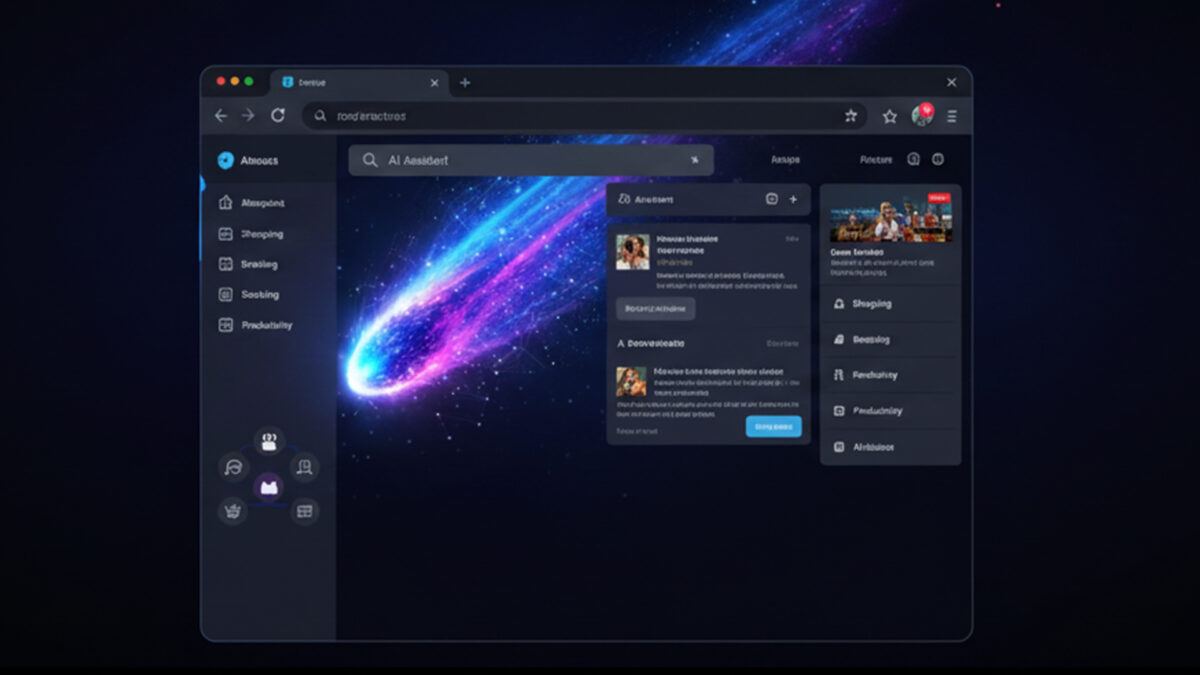
Perplexity’s Comet AI Browser Now Free for All Users

Perplexity AI has announced that its AI-powered browser, Comet, is now available to all users for free. Previously, Comet was accessible only to subscribers of the $200/month Perplexity Max plan.

The company has also introduced a new subscription tier called Comet Plus, which offers curated news content for $5 per month. Comet Plus is included with Pro and Max subscriptions.

Comet is designed to be an alternative to traditional browsers like Google Chrome. It integrates AI deeply into the browsing experience, offering features such as search tools, a personal AI assistant, and tools for tasks like shopping, booking trips, and general productivity.

The browser aims to assist users in navigating the web more efficiently, rather than merely serving as a platform for viewing content.

The introduction of Comet Plus brings curated news content from major publishers, including CNN, Condé Nast, The Washington Post, Los Angeles Times, Fortune, Le Monde, and Le Figaro. This move aims to provide users with high-quality journalism and support publishers in the AI era.

Additionally, Perplexity has launched a new feature called Background Assistant.

This feature allows the AI to access multiple apps and work on tasks while the user is away, enhancing productivity by automating routine tasks.

Comet is built on the Chromium framework and supports popular browser extensions and bookmarks. It is available for download on both Windows and Mac platforms.

While the free version includes essential AI tools, Pro and Max users receive an upgraded experience with additional features like the Background Assistant.

Perplexity’s move to make Comet free for all users reflects the growing trend of integrating AI into everyday tools and services.

With the introduction of Comet Plus, the company aims to offer a balanced approach that benefits both users and content creators in the evolving digital landscape.

Also Read: Battle of AI Behemoths: xAI Sues OpenAI Over ‘Employee Poaching’

Categories
Corporate

Battle of AI Behemoths: xAI Sues OpenAI Over ‘Employee Poaching’

Elon Musk’s artificial intelligence startup xAI has filed a lawsuit against OpenAI, accusing it of orchestrating a systematic campaign to poach employees and steal proprietary technology related to xAI’s chatbot, Grok.

The lawsuit, filed in federal court in California, alleges that OpenAI targeted former xAI employees to gain access to confidential information, including source code and data center strategies.

“This case is clearly designed to generate publicity to bully and threaten those employees who exercised their right to leave and work elsewhere in the AI industry and to try to chill further flight from xAI,” the filing said, reported Bloomberg.

xAI claims that OpenAI used a recruiter, Tifa Chen, to contact former employees and entice them to join OpenAI under the pretext of offering lucrative positions. The lawsuit points to specific incidents involving former xAI engineers Xuechen Li and Jimmy Fraiture, who allegedly transferred confidential files to personal devices before leaving xAI.

The complaint also includes an email exchange suggesting a former employee violated confidentiality agreements, with a blunt response from the employee.

In response, OpenAI has filed a motion to dismiss the lawsuit, calling the claims baseless and part of Musk’s “ongoing harassment” of the company. OpenAI contends that employees have the right to change employers and that it can legally hire talent from competitors. The company further argues that xAI’s claims are a distraction from its own internal struggles, including a loss of personnel, reported news agency Reuters.

This legal dispute is part of a broader feud between Musk and OpenAI, which he co-founded. The rivalry has intensified as competition in the AI sector grows, with both companies vying for dominance in the rapidly evolving field.

The outcome of this lawsuit could have significant implications for the AI industry, particularly concerning the protection of trade secrets and the rights of employees to move between companies.

As of now, the case is ongoing, and a federal judge is expected to review OpenAI’s motion to dismiss in the coming weeks. The legal proceedings will likely continue to unfold, shedding light on the complex dynamics of competition and intellectual property in the artificial intelligence sector.

Also Read: Adani Green Energy Reaches 16,598.6 MW Operational Capacity

Categories
Corporate

Blackstone Nears $12.9 Billion Target for Asia Buyout Fund

Blackstone Inc. has successfully raised $10 billion for its latest Asia-focused private equity fund and is on track to reach its $12.9 billion hard cap by early 2026, according to sources familiar with the matter told news agency Bloomberg.

The New York-based firm is targeting investments in India, Japan, and Australia, while limiting exposure to China due to ongoing economic and regulatory challenges.

The new fund, Blackstone’s third dedicated to Asia, has attracted significant interest from global investors seeking growth opportunities in the region.

The firm is expected to finalize fundraising by the first quarter of next year, with the possibility of exceeding the $12.9 billion cap depending on investor demand.

India remains a primary focus for the fund, with substantial capital allocated to the country. Blackstone has previously expressed confidence in India’s economic prospects, citing its favorable demographics and growth potential.

The firm has also expanded its presence in Southeast Asia, including plans to double its headcount in Singapore.

The success of the fundraising effort comes amid a challenging environment for private equity investments in Asia, particularly in China. Investors have become more cautious due to economic slowdown and regulatory uncertainties.

As a result, Blackstone’s strategy of focusing on markets like India and Japan reflects a shift towards more stable and promising investment destinations in the region.

With the fundraising nearing completion, Blackstone is poised to deploy capital into strategic acquisitions and investments that align with its long-term growth objectives in Asia.

Also Read: Adani Green Energy Reaches 16,598.6 MW Operational Capacity