Categories
1 Minute-Read

ICICI AMC IPO gets 1.5× subscription in 2 days

The ICICI Prudential AMC IPO opened on December 12 with a price band of ₹2,061–₹2,165 per share, raising Rs 10,602 crore through an offer-for-sale by existing shareholders.

By Day 2, the issue was 1.5 times subscribed, led by strong institutional demand, while retail participation remained moderate. The grey market premium stands at around 12%, indicating positive listing sentiment.

Allotment is scheduled for December 17, and the shares are expected to debut on stock exchanges on December 19. Analysts highlight the firm’s market leadership, consistent financial performance, and long-term growth potential despite rich valuations.

Categories
Technology

Tesla Diner opens mini racetrack for kids in Hollywood

Tesla is taking family fun to a new level at its West Hollywood, Tesla diner. Over the holiday weekend, the Tesla Diner transformed its parking and charging area into a playful experience, featuring a miniature racetrack where children could drive scaled-down Cybertruck-style vehicles. Parents and onlookers cheered as kids navigated tire-lined circuits around a prominently displayed red Model Y Performance.

The racetrack event is part of the diner’s holiday celebrations, which also include a pop-up market selling Tesla-themed merchandise. Guests could browse for miniature gift items, festive collectibles, and even take part in an interactive activity that lets them paint on a full-scale Cybertruck display, turning it into a collaborative holiday artwork.

A video of the racetrack went viral online, catching the attention of Tesla CEO Elon Musk, who described the scene as “super cute” on social media. Musk’s comment quickly spread, highlighting the company’s unique blend of innovation and community engagement.

The Tesla Diner itself, launched earlier this year, is designed to be more than just a charging hub or restaurant. Combining dining, EV charging, a drive-in theatre, and merchandise shopping, it is a space where Tesla enthusiasts and casual visitors can gather, explore, and enjoy hands-on experiences.

While the holiday racetrack is currently a limited-time attraction, fans have already expressed hope that Tesla will expand similar family-friendly events to other locations. By turning a charging stop into a destination for fun and creativity, Tesla is redefining how automotive and tech brands can engage with communities during the festive season.

Also Read: Seven launches put ISRO on fast track for March 2026

Categories
Beyond

Seven launches put ISRO on fast track for March 2026

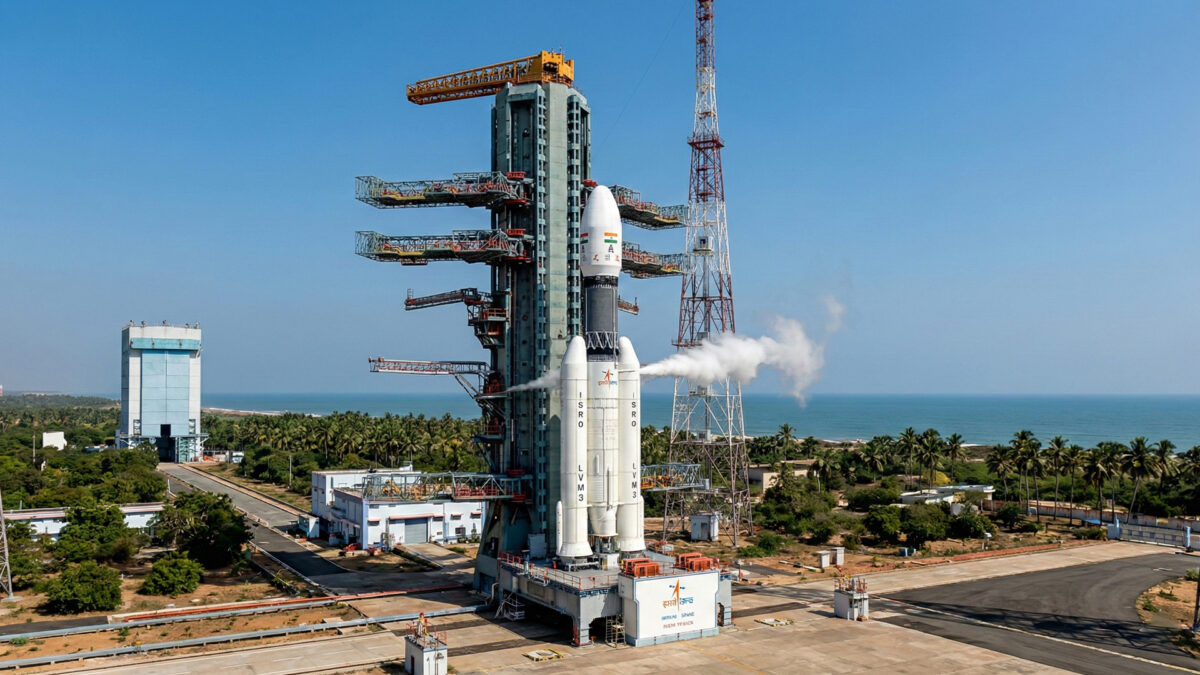
The Indian Space Research Organisation (ISRO) is gearing up for one of its most demanding operational phases in recent years, with seven space missions planned up to March 2026. The ambitious launch schedule reflects India’s expanding role in space science, commercial launches, and advanced technology development.

The campaign is expected to begin shortly with the launch of Bluebird-6, a large communication satellite built for US-based company AST SpaceMobile. The satellite will be carried aboard India’s heavy-lift LVM3 rocket, marking another milestone for ISRO’s commercial arm, New Space India Limited (NSIL), which is managing the international contract.

A key focus during this period will be the Gaganyaan human spaceflight programme. ISRO plans to conduct the first uncrewed Gaganyaan mission early next year. The flight will carry a humanoid robot, Vyommitra, and will test crucial systems such as launch performance, on-orbit operations, and safe re-entry and recovery of the crew module. A second uncrewed test mission is also planned before India aims to send astronauts into space by 2027.

Another major development is the growing role of Indian industry in rocket manufacturing. For the first time, a PSLV built by private industry will be launched. This mission will place Oceansat, an earth observation satellite, into orbit along with the Indo-Mauritius Joint Satellite and LEAP-2, developed by space startup Dhruva Space. The move follows a contract awarded to a consortium led by HAL and Larsen & Toubro to manufacture multiple PSLV rockets.

ISRO will also conduct additional PSLV and GSLV-Mk II missions during this period. These include launching EOS-N1, carrying several small satellites for Indian and foreign customers, and placing EOS-5 (GISAT-1A) into orbit, replacing a satellite lost due to a launch failure in 2021.

Technology demonstration will remain a priority. The PSLV-63 mission will test high-thrust electric propulsion, quantum communication techniques, and indigenous satellite components. ISRO also plans a mission using the Small Satellite Launch Vehicle (SSLV), strengthening India’s ability to serve the growing small-satellite market.

Also Read: Vodafone Idea may get 4–5 years to pay AGR dues

Categories
Corporate

Sensex falls 54 Points, Nifty ends at 26,000

The markets closed marginally lower on Monday, December 15, after posting gains in the previous two trading sessions. The BSE Sensex ended 54 points lower at 85,213, while the NSE Nifty 50 slipped about 20 points to close at 26,027. Despite the mild decline, the Nifty remained above the key 26,000 level, which traders see as an important short-term support.

The market faced selling pressure mainly from auto and financial stocks, as investors chose to book profits at higher levels. Weak global cues and continued selling by foreign institutional investors also kept sentiment subdued throughout the session.

Stock-specific movements were visible across sectors. InterGlobe Aviation (IndiGo) emerged as a key gainer, rising nearly 2%, supported by optimism around travel demand and business growth. On the other hand, Mahindra & Mahindra was among the top losers, falling close to 2%, which weighed on the auto index.

Other sectors showed mixed trends, reflecting uncertainty in the broader market. Banking and auto stocks underperformed, while select stocks from the aviation and consumer segments provided some support.

Global markets offered limited direction. Asian markets ended lower, while European markets traded with mild gains. US stock futures were slightly higher, but concerns over global economic growth, currency volatility, and geopolitical tensions continued to influence investor behaviour.

Foreign investors remained net sellers in Indian equities, adding to the cautious mood on Dalal Street. Market experts said that while India’s long-term growth outlook remains strong, short-term movements are likely to remain volatile.

Analysts believe that Nifty holding above 26,000 is crucial, and a clear breakout above this level could support further gains, while a slip below may trigger short-term weakness.

Also Read: Vodafone Idea may get 4–5 years to pay AGR dues

Categories
1 Minute-Read

Vodafone Idea may get 4–5 years to pay AGR dues

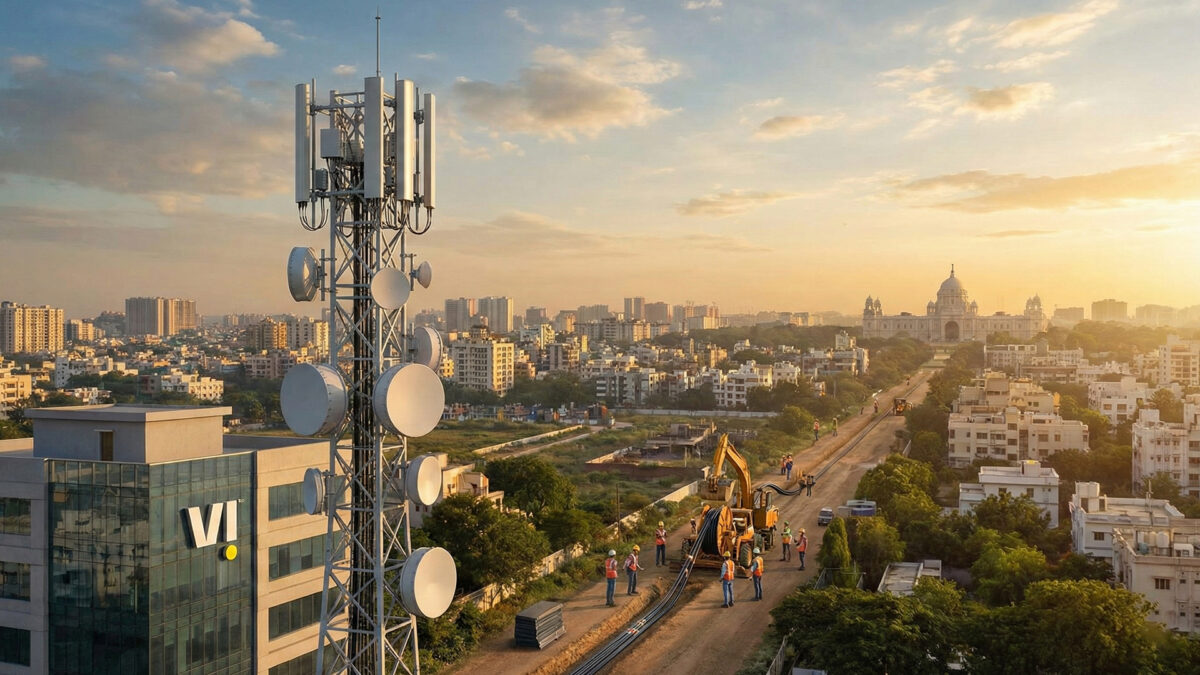
The government is set to offer Vodafone Idea (Vi) a major breather by proposing a four- to five-year moratorium on its ₹83,000 crore AGR dues.

The plan, awaiting Cabinet approval, could see Vi paying around half of the total liabilities after a reassessment, with the balance cleared through structured instalments.

The interest-free window and potential reduction aim to ease the telco’s financial stress and help it remain competitive in India’s tough telecom market. The move signals a strategic effort to support Vi and ensure stability in the sector.

Categories
Technology

AI outperforms human hackers at Stanford

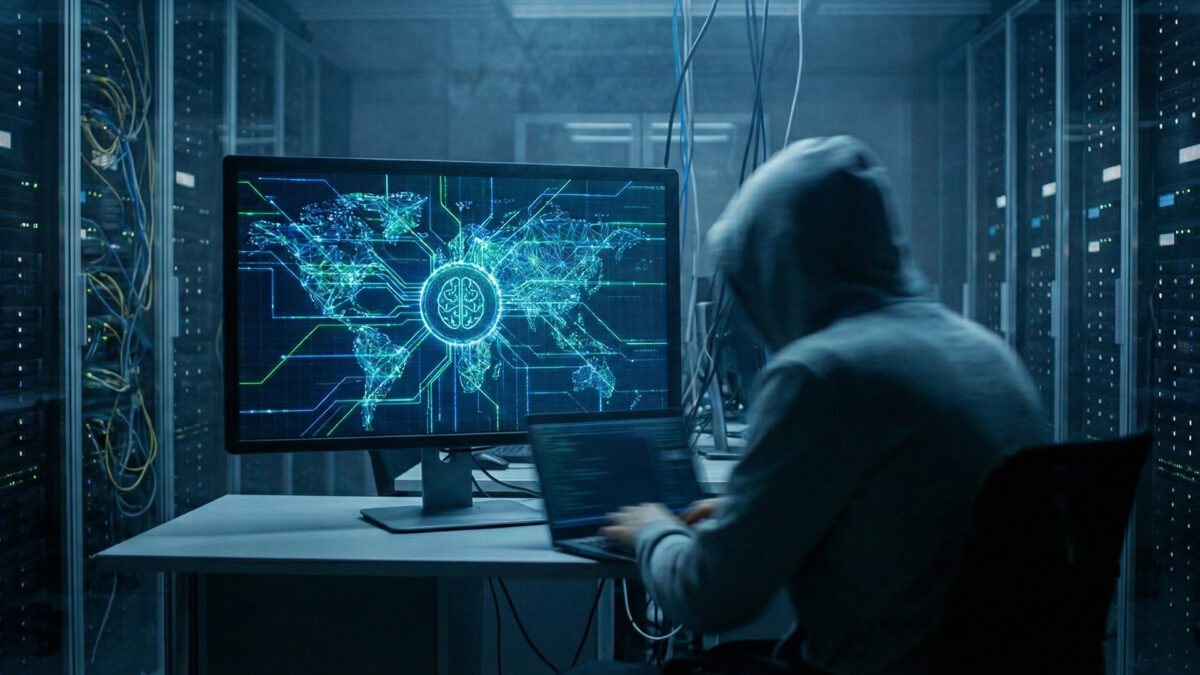
Stanford University researchers have developed an advanced artificial intelligence program named ARTEMIS, designed to test computer networks for security weaknesses. In a recent controlled experiment, ARTEMIS competed with nine professional penetration testers on the university’s computer science network, which includes thousands of devices, servers, computers, and smart systems.

Over a 16-hour testing period, ARTEMIS identified nine real vulnerabilities, outperforming nine out of ten human cybersecurity experts. Its success is largely due to its ability to run multiple automated tasks in parallel, allowing it to scan for weaknesses simultaneously, a process that human testers must perform sequentially. In one notable instance, the AI detected a flaw in an older server that human testers missed, using a command-line approach instead of a web browser.

Cost efficiency is another significant advantage of ARTEMIS. Running the basic AI system cost about $18 per hour, while a more advanced version ran at approximately $59 per hour. This compares favorably to the high salaries of professional penetration testers, which often exceed six figures annually. The findings demonstrate how AI can dramatically reduce both the time and cost of network security testing.

However, ARTEMIS has limitations. It struggles with tasks that require interacting with graphical interfaces and sometimes reports false positives, flagging vulnerabilities that are not real. Despite these challenges, the experiment underscores the growing capabilities of AI in cybersecurity.

The study also raises broader implications. While tools like ARTEMIS can help organizations identify vulnerabilities more efficiently, similar AI technologies could potentially be misused by malicious actors, creating new security challenges. Experts stress the importance of responsible deployment as AI continues to evolve and impact the field of cybersecurity.

Stanford’s experiment marks a significant milestone in demonstrating the potential of AI-driven cybersecurity. The study suggests a future where human and machine collaboration could redefine how quickly, accurately, and cost-effectively organizations detect and respond to digital threats.

Also Read: Indian Navy commissions 2nd MH‑60R squadron

Categories
1 Minute-Read

KV Toys India shares list 34% higher

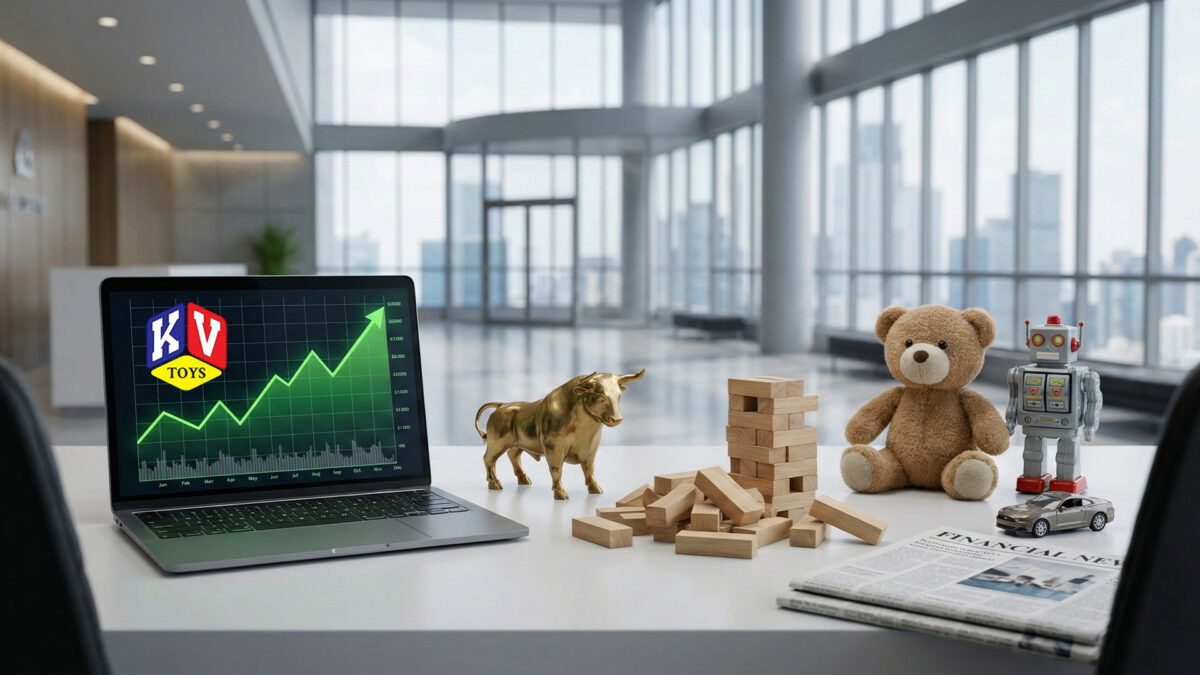
Shares of KV Toys India made a strong debut on the BSE SME platform, listing at Rs 320 per share, a 34 percent premium over its IPO price of Rs 239.

The positive opening gave investors healthy listing gains. However, the stock soon saw some profit-booking and slipped to around Rs 304 in early trade.

At this price, the company’s market capitalisation stood at about Rs 191 crore. While the debut was encouraging, the listing gain was lower than grey market expectations ahead of the IPO.

Categories
Corporate

Prodocs Solutions lists at 4% premium on BSE SME

Prodocs Solutions Limited began trading on the BSE SME platform with a positive start, as its shares were listed at a premium over the IPO issue price. The stock opened at ₹144 per share, compared with the issue price of ₹138, giving investors a gain of a little over 4 percent on listing day.

Buying interest remained strong after the opening. Within a short time, the share price rose further and reached the 5 percent upper circuit, which is the maximum price increase allowed for the day on the SME platform. Once the upper circuit was hit, the stock remained locked at that level, showing continued demand from investors.

The Prodocs Solutions IPO was open for subscription between December 8 and December 10. Shares were offered in a price band of ₹131 to ₹138, and the company raised around ₹27.6 crore through the public issue. The IPO received a good response and was subscribed close to three times, reflecting healthy interest from retail and other investors.

Prodocs Solutions is an IT-enabled services (ITES) and business process outsourcing (BPO) company. It mainly provides non-voice services, which do not involve customer calls. Its services include data processing, indexing, e-publishing, title search work, and support services related to legal and financial processes. The company largely serves overseas clients, especially in the United States and Australia, while its operational work is carried out from India.

The company’s financial performance has shown improvement in recent years. As per its disclosures, Prodocs Solutions reported a net profit of ₹5.11 crore in FY25. While revenue growth has been steady rather than rapid, better control over costs has helped improve profitability and strengthen the balance sheet.

Funds raised through the IPO will be used for several purposes. These include upgrading technology systems, developing software capabilities, meeting working capital needs and repaying some existing borrowings. The company believes these investments will help improve efficiency and support future growth.

Market experts said the positive listing performance indicates that investors continue to show interest in SME IPOs with stable operations and improving financials. Despite mixed conditions in the broader stock market, Prodocs Solutions’ debut highlights sustained confidence in well-managed small and medium-sized companies entering the public markets.

Also Read: IndiGo to pay ₹5 billion after flight cancellations

Categories
Beyond

Rupee slides to ₹90.75 due to market pressure

The Indian rupee fell to a fresh all-time low on Monday, trading above ₹90 against the US dollar, continuing a downward trend that has been building over recent sessions. In early trade, the currency slipped past ₹90.55 and later touched around ₹90.75 per dollar, reflecting persistent pressure from both global and domestic factors.

Market analysts attribute the slide to several key reasons. Uncertainty surrounding trade negotiations with the United States has unsettled investor sentiment, contributing to a cautious approach by both domestic and foreign investors. Foreign capital outflows have accelerated, as investors pull money from Indian equities and bonds, increasing demand for dollars and reducing support for the rupee.

Another factor adding to the rupee’s weakness is the country’s widening trade deficit. India imports more goods than it exports, which increases the need for foreign currency and puts additional downward pressure on the domestic currency. Despite the Reserve Bank of India occasionally intervening to stabilize the rupee, these measures have not been enough to reverse the trend amid sustained selling of the currency in global markets.

The weakness of the rupee also affected domestic equity markets. Key stock indices recorded losses as foreign investors continued to offload holdings, reflecting broader caution in the market. Economic experts note that while India’s macroeconomic fundamentals, including GDP growth, remain relatively strong, the currency market often reacts to short-term factors such as capital flows, trade developments, and global dollar strength.

For the general public and businesses, the falling rupee has practical implications. Imports, including fuel, electronics, and other goods, become more expensive, leading to potential increases in prices for consumers. On the other hand, exporters may benefit as a weaker rupee makes Indian products more competitive in international markets.

Overall, the rupee’s slide underscores the challenges facing India’s currency in a volatile global economic environment. Investors and policymakers will continue to monitor foreign investment flows, trade negotiations, and macroeconomic indicators closely to gauge the currency’s direction in the coming months.

Also Read: China to limit silver exports from Jan 1

Categories
1 Minute-Read

IndiGo to pay ₹5 billion after flight cancellations

India’s IndiGo airline will pay over ₹5 billion ($55 million) to passengers affected by mass flight cancellations earlier this month.

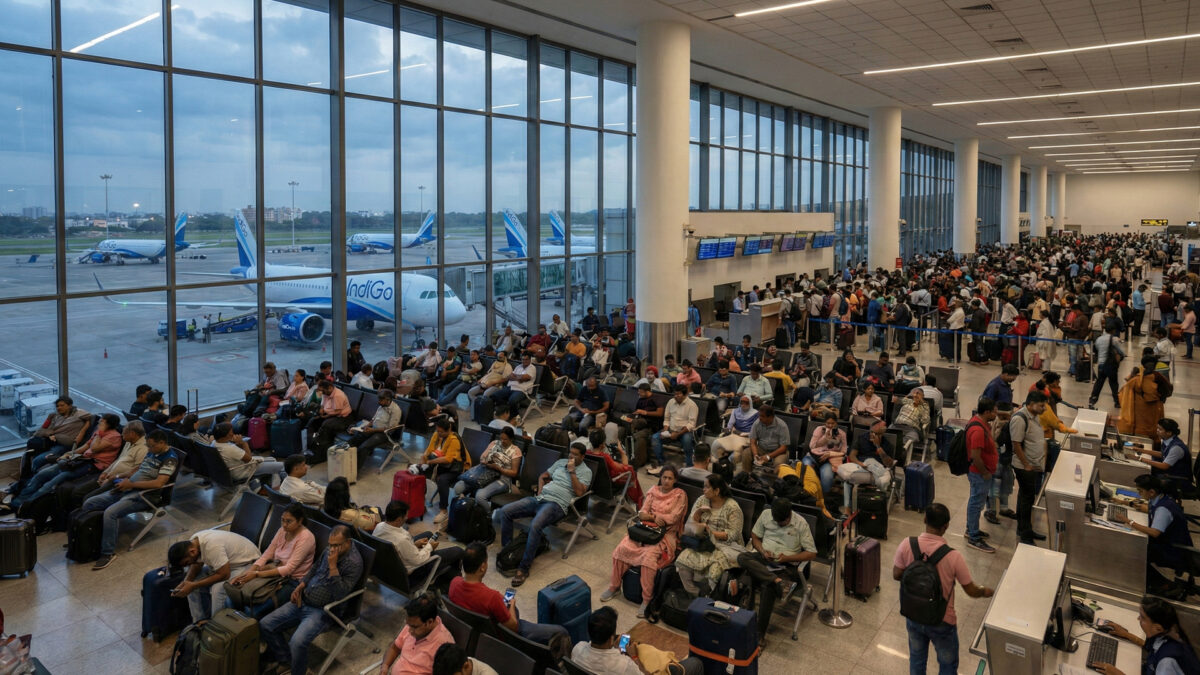
Around 4,500 flights were cancelled between December 3–5 due to staffing shortages and challenges in complying with new pilot duty and rest regulations.

Tens of thousands of travelers faced disruptions, prompting the aviation regulator to cut IndiGo’s domestic winter schedule by 10 per cent. The airline said it will prioritise compensating passengers whose flights were cancelled within 24 hours of departure.

The disruptions have impacted IndiGo’s operational capacity and revenue projections, while it works to stabilise schedules and prevent further cancellations.