
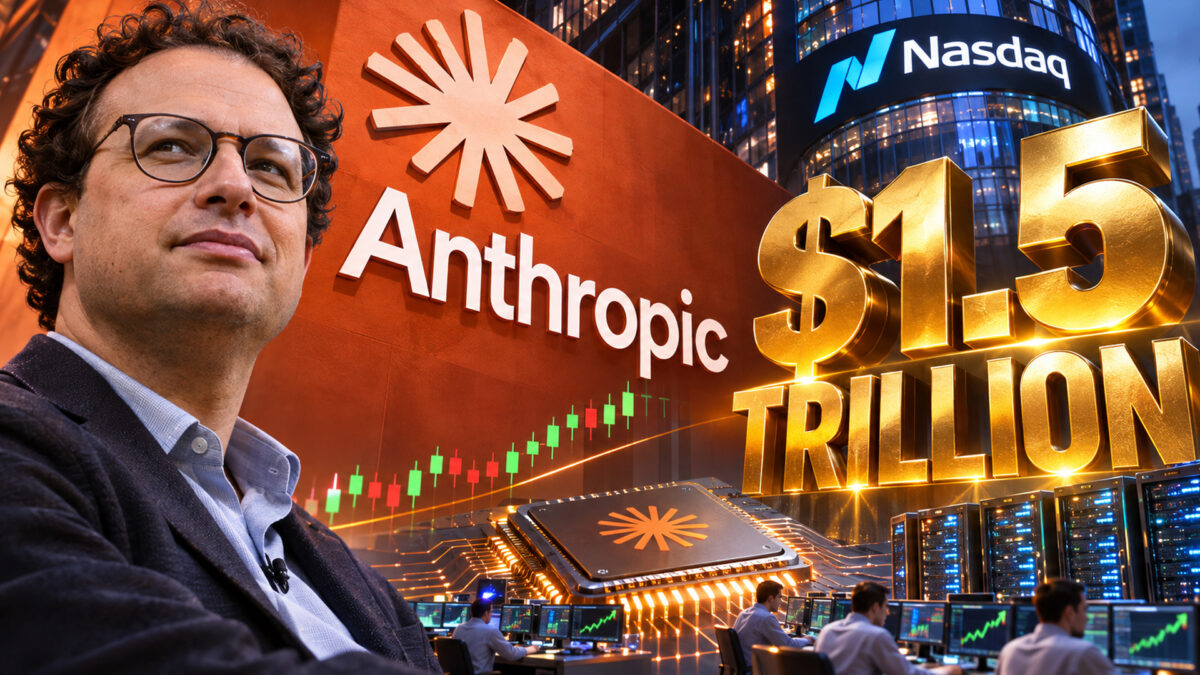
Anthropic’s record-breaking stock market debut has sent a strong signal about the growing value of artificial intelligence, creating enormous wealth for early investors and triggering fresh questions about India’s position in the global technology race. The company behind the Claude AI chatbot raised $81.3 billion through its initial public offering (IPO), achieving an initial valuation of approximately $1.5 trillion.
Anthropic priced its shares at $83 apiece, above the initially indicated price range, reflecting strong investor demand. When trading began on the Nasdaq on November 19, the shares opened at $111.50 before rising further during the session. The stock eventually closed at $97.17, around 17% above its IPO price.
Based on its outstanding shares, Anthropic ended its first trading session with a market capitalisation of approximately $1.3 trillion. On a fully diluted basis, its valuation was estimated at around $1.8 trillion. The listing marks a significant milestone for the global artificial intelligence industry, demonstrating how quickly companies developing advanced AI technologies can attract capital and investor confidence.
The offering was increased to approximately 980 million shares as demand strengthened. Including an additional $26 billion private placement, the company’s total fundraising reached around $107.3 billion. The IPO also surpassed the $75 billion listing by Elon Musk’s SpaceX in June, setting a new benchmark for technology company listings.
Anthropic’s extraordinary valuation has also sparked a debate in India about the country’s corporate competitiveness and the ability of domestic businesses to build globally influential technology companies.
Kotak Mahindra Bank founder and non-executive director Uday Kotak highlighted the contrast between Anthropic’s valuation and the combined market capitalisation of India’s 10 largest listed companies.
In a post on social media platform X, Kotak questioned whether Indian companies were undervalued, whether they needed to catch up with the changing global economy, or whether both factors were responsible. His observation has brought renewed attention to India’s position in the global technology landscape.
The comparison is particularly relevant as artificial intelligence increasingly influences business models, productivity and investment decisions across industries. While Indian companies have established a strong presence in several sectors, the emergence of AI-led businesses with trillion-dollar valuations raises questions about the country’s ability to create and scale technology companies with global reach.
The challenge for India Inc is not merely about market capitalisation. It also involves investing in research and development, developing intellectual property, adopting advanced technologies and creating products that can compete internationally.
Anthropic’s IPO has delivered extraordinary returns to several venture capital firms that backed the company during its early stages.
Menlo Ventures and Spark Capital are among the major beneficiaries. Spark led a $450 million Series C investment in 2023, when Anthropic was valued at approximately $4.5 billion. Menlo Ventures invested more than $1 billion for a stake of nearly 1.5%, which would be worth over $20 billion at the IPO valuation of $1.5 trillion.
Menlo also raised a $750 million special-purpose investment vehicle from its limited partners to increase its exposure to Anthropic. Such investment structures have become increasingly relevant as artificial intelligence companies require substantial funding to develop advanced models and expand computing infrastructure.
Sequoia Capital invested around $3 billion in Anthropic, while Lightspeed Venture Partners committed more than $3 billion and holds over 2% of the company.
Strategic investors have also played an important role in the company’s expansion. Amazon and Google’s parent company Alphabet together hold approximately 28.4% of Anthropic, providing financial support and access to the computing infrastructure required to develop advanced AI systems.
The returns underline how early-stage investments in promising technology companies can generate substantial wealth when those businesses achieve commercial scale and enter public markets.
Anthropic’s growing revenue has been a major factor behind its valuation. Its annualised revenue run rate increased from approximately $1 billion at the beginning of 2025 to around $81 billion by October 2026.
The company’s Claude family of AI models, particularly its coding and enterprise-focused products, has helped it build a growing customer base. Anthropic had 11,900 customers generating at least $100,000 in annual revenue as of September 30, compared with more than 1,500 at the end of 2025.
However, its expansion comes with substantial financial commitments. Anthropic spent nearly $9 billion on computing capacity and infrastructure during the first half of 2026, followed by another $5 billion in computing costs in the third quarter.
Its third-quarter revenue reached $16.96 billion, representing a 47% increase from the previous quarter. However, the company reported an operating loss of $567 million. It has also committed close to $900 billion towards future computing capacity and infrastructure arrangements with technology partners.
These figures highlight the enormous investment required to develop and operate increasingly sophisticated artificial intelligence systems. Competition from other AI developers, rising infrastructure costs and questions about the long-term commercial returns from AI remain significant challenges.
Nevertheless, Anthropic’s market debut represents a turning point for the technology investment landscape. It demonstrates the scale of capital investors are willing to commit to businesses developing the next generation of artificial intelligence.