
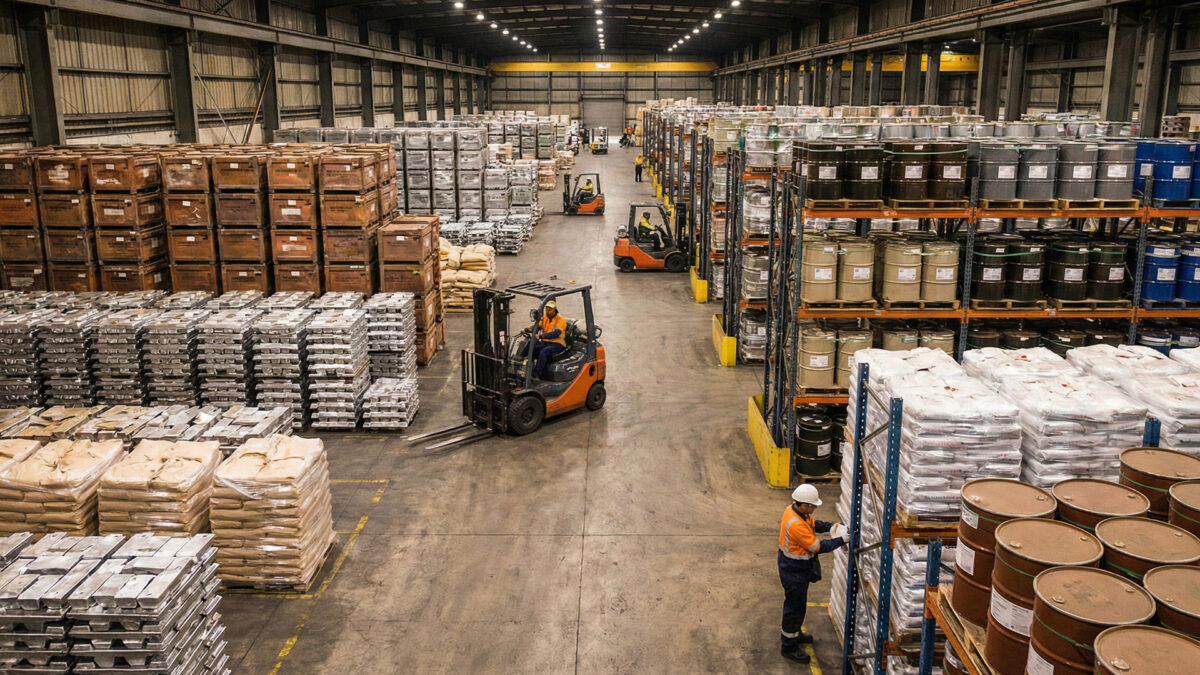
The United States has announced plans to create a $12 billion strategic stockpile of critical minerals, as President Donald Trump moves to reduce the country’s heavy dependence on China for materials essential to modern industry, clean energy, and national security.
The initiative, unveiled on February 2, will function on the lines of the Strategic Petroleum Reserve but will focus on minerals instead of oil. It is designed to protect American companies from supply disruptions, price shocks, and geopolitical risks linked to China’s dominance in the global minerals market.
Under the plan, funding will come from a mix of government-backed financing and private investment. The US Export-Import Bank is expected to provide the bulk of the support, while private companies will participate by committing to buy minerals from the reserve. The stockpile will include materials such as rare earth elements, lithium, nickel, cobalt, gallium, and graphite, all of which are critical for manufacturing electric vehicles, semiconductors, renewable energy equipment, electronics, and defence systems.
China currently controls a large share of the world’s mining and, more importantly, processing capacity for many of these minerals. Recent Chinese export controls and trade tensions have raised concerns in Washington about supply security. US officials say the new reserve is meant to ensure that American manufacturers are not left vulnerable during political disputes or global supply chain disruptions.
Several major US companies, including firms from the automotive, aerospace, technology, and energy sectors, have expressed interest in participating in the programme. Commodities trading firms will help procure, store, and manage the materials, ensuring they are available when needed.
According to officials, the stockpile is expected to hold around two months’ supply of selected critical minerals. While the move is seen as an important step, experts note that stockpiling alone will not solve long-term challenges. Expanding domestic mining, improving processing capacity, and building reliable supply partnerships with allied countries will remain crucial.
Also Read: Elon Musk’s SpaceX buys xAI in $1.25 trillion merger