
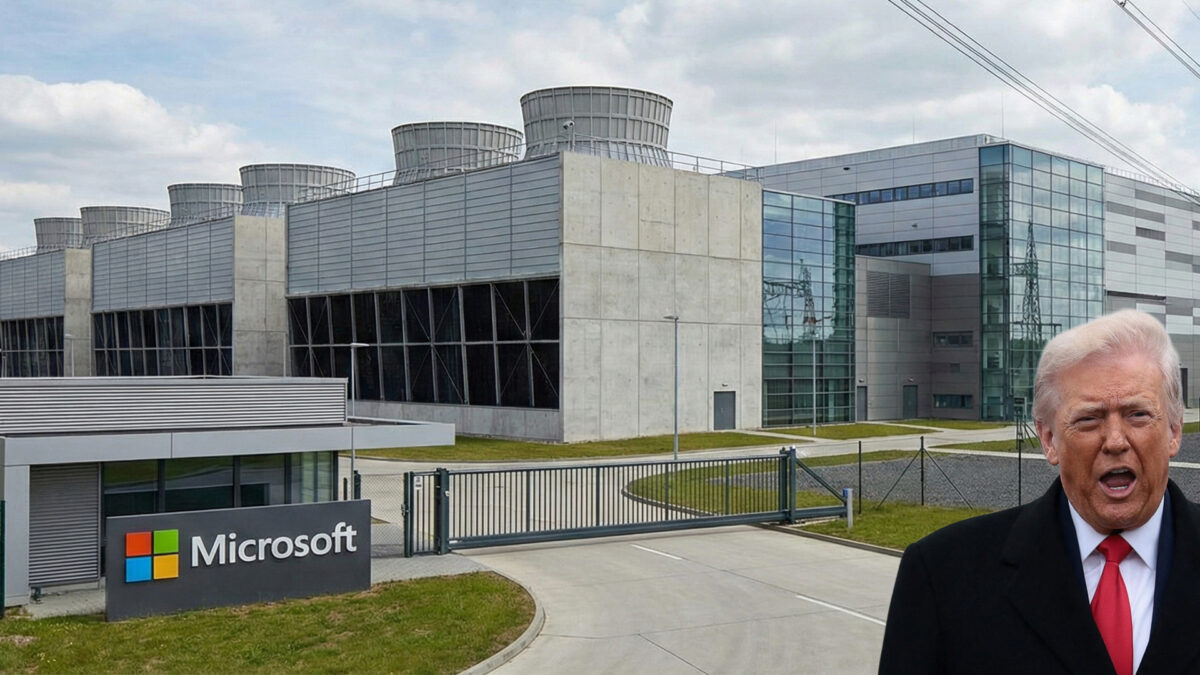
US President Donald Trump has directed Microsoft to ensure its rapidly expanding artificial intelligence (AI) data centres do not raise electricity costs for Americans. Speaking on January 13, 2026, Trump emphasized that large technology companies must bear their own energy expenses instead of passing them onto residential households. He called on Microsoft to take “major steps” to prevent utility price hikes linked to its operations.
In response, Microsoft announced its “Community‑First AI Infrastructure” initiative, designed to address energy, environmental, and community concerns related to its data facilities. The initiative includes several commitments: the company will pay full electricity costs, ensure water usage is minimized and replenished, hire locally for construction and operational jobs, pay full property taxes without seeking incentives, and invest in community AI education and training through schools, colleges, and libraries.
The announcement comes amid growing public and political scrutiny. Residents in several states have criticized data centre projects for driving up utility bills, consuming large amounts of water, and putting pressure on local infrastructure. Some projects, including a planned Microsoft facility in Wisconsin, were paused after local opposition and activist campaigns.
Microsoft also said it will coordinate with utility companies and state regulators to fund necessary grid upgrades through commercial rates, ensuring that residential customers are not affected. Officials stressed that the program is designed to provide economic, educational, and environmental benefits to host communities while supporting the company’s AI expansion.
Analysts say the move reflects broader concerns about balancing AI innovation with community and environmental protection. As data centres grow to meet the increasing demand for AI services, tech companies are under closer scrutiny to ensure they do not negatively impact local residents or ecosystems.
Trump’s intervention marks a rare public instance of a U.S. president directly influencing corporate operations in the tech sector. The announcement is seen as a signal to other tech firms that they may face similar accountability demands, particularly as AI technology expands rapidly and its infrastructure footprint grows.
Also Read: Tata Elxsi Q3 profit falls 45% amid labour code charges