
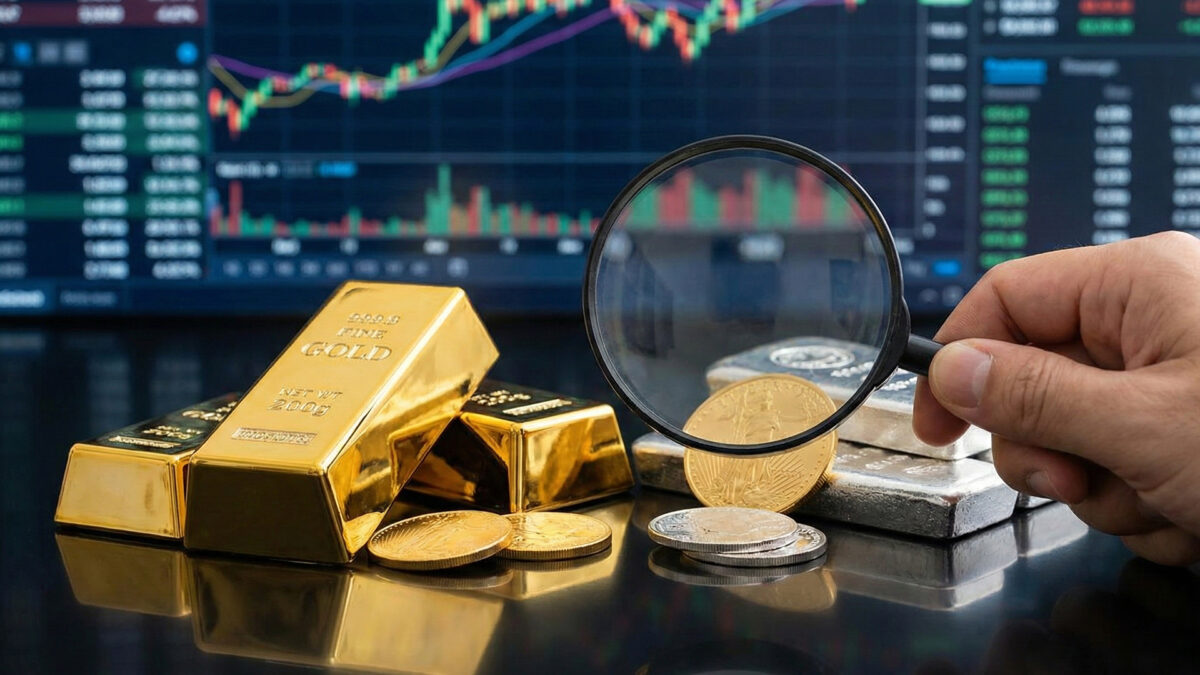
Gold prices eased in domestic markets on Monday after opening higher, while silver continued to hold firm as investors assessed global economic signals, currency movements and geopolitical risks. The precious metals market began the week on a mixed note following a volatile previous week that saw both gold and silver retreat from their recent highs.
The latest retail rates put 24-carat gold at around ₹1,49,540 per 10 grams, while 999-purity silver was priced at about ₹2,26,770 per kilogram. Prices can differ slightly between cities and jewellers because of local taxes, transportation costs and making charges.
Gold initially gained in early trading on the Multi Commodity Exchange before giving up those gains. The December gold contract opened at around ₹1,51,197 per 10 grams, compared with its previous close of ₹1,50,390. Selling pressure later pushed the contract towards ₹1,49,425, putting it nearly ₹965 below the previous close.
Silver showed greater resilience. The December silver contract opened around ₹2,25,900 per kg and subsequently moved higher to nearly ₹2,26,800, gaining about ₹923 from its previous close. The performance highlighted the different dynamics affecting the two precious metals, with silver receiving support from both investment demand and its industrial applications.
The domestic bullion market is also being influenced by movements in international prices. In global markets, gold remained close to the $4,170-per-ounce level, while silver traded around $61.60 an ounce. Both metals have experienced sharp price swings in recent sessions after a powerful rally earlier in the year.
Gold and silver came under pressure last week as investors booked profits following the strong run-up. A stronger US dollar and elevated bond yields also reduced the appeal of non-interest-bearing assets. Gold prices on the international market fell sharply during the week, while silver suffered an even steeper correction.
Despite the recent pullback, the broader outlook for gold remains supported by several factors. Expectations around US monetary policy continue to play a central role. A weaker-than-expected US jobs report has encouraged investors to reassess the possibility of further interest-rate tightening by the Federal Reserve.
Lower expectations for interest-rate increases can support gold because the metal does not generate interest income. When bond yields decline or are expected to remain lower, the opportunity cost of holding gold becomes less significant, potentially encouraging investors to increase their exposure to bullion.
The US dollar remains another important driver. Gold is generally priced in dollars, meaning a stronger American currency can make bullion more expensive for buyers using other currencies. Recent dollar strength has therefore limited the recovery in gold prices even as safe-haven demand remains relatively strong.
Geopolitical developments are also keeping investors alert. Uncertainty surrounding conflicts and tensions in the Middle East can quickly increase demand for traditional safe-haven assets such as gold. Any escalation that affects crude oil supplies could have a wider impact on inflation expectations, bond yields and central-bank policy.
Silver has a slightly different story. Apart from being a precious metal, it is widely used in industrial applications, including electronics, solar technology and other manufacturing segments. That makes silver particularly sensitive to expectations about global economic growth and industrial demand.
The recent strength in silver therefore reflects a combination of investment interest and expectations surrounding industrial consumption. However, its dual role also makes the metal more volatile than gold. Sharp movements in global commodities, currencies or economic data can trigger larger swings in silver prices.
Technical levels are likely to remain important this week. Gold has support around ₹1,49,570 per 10 grams, with a sustained break below this level potentially opening the way towards ₹1,48,750. On the upside, ₹1,50,975 is seen as an important resistance level, followed by ₹1,51,560.
Silver has support near ₹2,24,295 per kg, while ₹2,27,175 remains an important resistance level. A sustained move above that level could strengthen the bullish momentum and take prices towards ₹2,28,475.
Domestic demand could also become an important factor as India enters the festive and wedding season. Gold traditionally sees stronger buying during this period, particularly for jewellery and investment purposes. Any increase in physical demand could provide additional support to retail gold prices.
Investors, meanwhile, are likely to track US economic data, Federal Reserve signals, the dollar index, Treasury yields and crude oil prices closely. Movements in these indicators can quickly influence international bullion prices and, in turn, domestic gold and silver rates.
The near-term picture remains volatile, but the underlying interest in precious metals remains strong. Gold at ₹1,49,540 per 10 grams and silver at ₹2,26,770 per kg underline how elevated bullion prices remain despite the recent correction. The direction of global interest rates, currency movements and geopolitical tensions will determine whether the precious-metals rally regains momentum or enters a longer period of consolidation.