
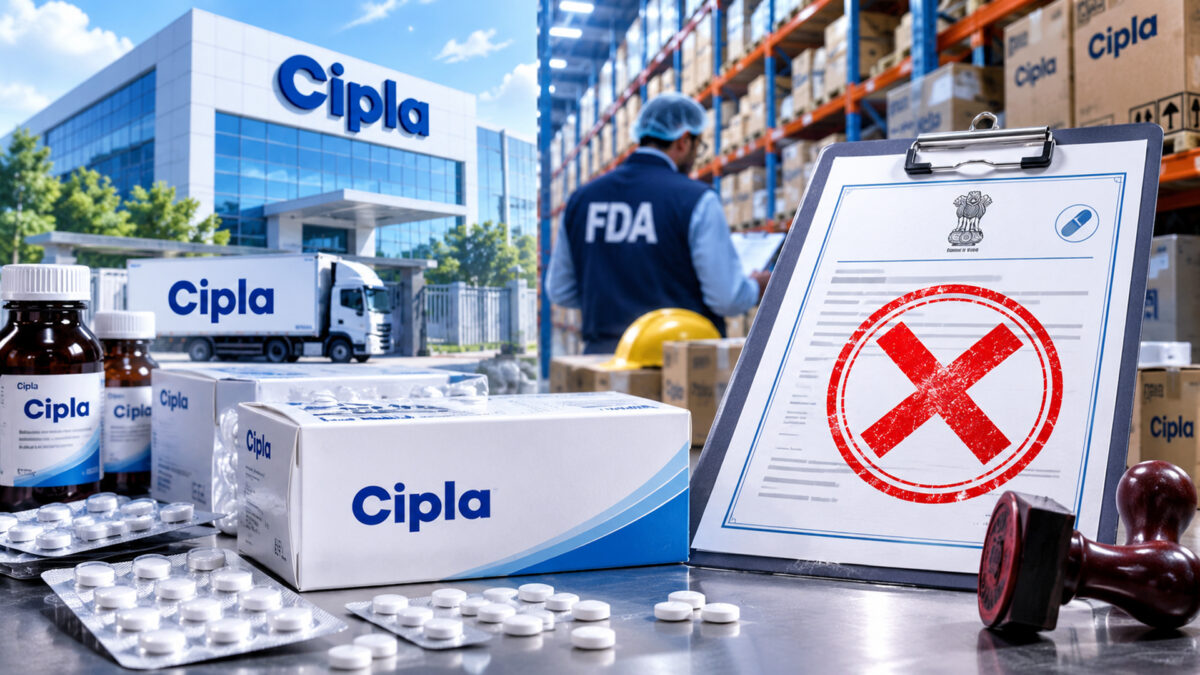
The Maharashtra Food and Drug Administration (FDA) has cancelled the drug sale licences of Cipla Pharma & Life Sciences Ltd’s carrying and forwarding (C&F) facility in Pune, citing multiple regulatory lapses involving the handling and distribution of medicines.
The cancellation took effect on August 27 and relates to the company’s warehouse at Wadki in Pune district. The action followed inspections in which officials found irregularities concerning the packaging of Reactin Plus tablets, storage practices, stock records and compliance with a recall order.
The case came to light during an FDA inspection in June. Officials found that the packaging of Reactin Plus, a Schedule H prescription medicine, carried an unauthorised description referring to it as an “analgesic and antipyretic”. The regulator also objected to promotional material appearing on the packaging, saying it did not comply with provisions of the Drugs and Cosmetics Act, 1940, and the Drugs Rules, 1945.
Reactin Plus is a prescription medicine, meaning its sale and distribution are subject to stricter regulatory requirements. The FDA subsequently seized stock valued at around ₹11.19 lakh and directed that the affected medicine be withdrawn from the market. The regulator later alleged that the recall instructions were not fully followed.
A follow-up inspection brought several additional issues to the regulator’s attention. Officials found discrepancies between physical stock and computerised inventory, as well as differences involving purchase and sales records. The findings raised concerns about whether the facility’s records accurately reflected the movement of medicines through the warehouse.
Storage arrangements were also questioned. According to the FDA, medicines were found stored directly on the floor, while the facility had inadequate arrangements involving pallets and racks. The regulator also flagged shortcomings in records and procedures for dealing with expired medicines.
The concerns were therefore not limited to the labelling of one product. The FDA’s action covered a broader set of issues involving the sale, storage, documentation and recall of medicines at the C&F facility.
After the inspections, the Maharashtra FDA issued a show-cause notice to the licence holder. The company was given an opportunity to explain the findings and the alleged failure to fully comply with the recall directions. After reviewing the response, the regulator proceeded with cancellation of the drug sale licences.
FDA Commissioner Tukaram Mundhe said the department would take a strict approach to violations involving the advertising, sale, storage and distribution of Schedule H medicines. The regulator has emphasised that pharmaceutical companies and distributors are expected to follow prescribed procedures throughout the drug supply chain.
Cipla has challenged the FDA’s decision. Cipla Pharma & Life Sciences said the matter is currently under judicial consideration and therefore declined to comment on the proceedings in detail.
The company also sought to distinguish the regulatory action from any concern over the medicines themselves. Cipla said the FDA order does not allege problems relating to the safety, quality or efficacy of its products and does not involve or indicate a patient safety issue.
This clarification is important because the FDA action concerns the operations of the C&F warehouse and the regulatory compliance issues identified there. It is not, in itself, a declaration that Cipla’s wider product portfolio is unsafe.
The episode nevertheless highlights the importance of compliance at every stage of pharmaceutical distribution. While drug manufacturers face extensive requirements for production and quality control, warehouses and distribution centres must also maintain proper storage conditions, accurate records and effective systems for tracking products.
Recall procedures are particularly important because regulators and companies need to be able to identify affected batches quickly and ensure that they are removed from the market. Any gap between physical inventory and recorded stock can make that process more difficult.
The case also draws attention to the restrictions governing the promotion and labelling of prescription medicines. Claims appearing on drug packaging must comply with regulatory requirements, and companies are expected to ensure that marketing or promotional language does not go beyond approved provisions.
The Maharashtra FDA’s action comes as state drug regulators continue to tighten scrutiny of pharmaceutical operations, including manufacturing, storage and distribution facilities. Such inspections are intended to ensure that medicines moving through the supply chain meet regulatory requirements and that companies maintain proper systems for accountability.
The case for the pharmaceutical industry, serves as a reminder that compliance extends beyond manufacturing. Proper labelling, warehouse conditions, inventory management, documentation and recall execution are all critical components of maintaining a reliable drug supply chain.
The dispute between Cipla and the Maharashtra FDA will therefore be closely watched, particularly for its implications for pharmaceutical compliance and regulatory enforcement. While the company maintains that there is no product safety or patient safety concern, the regulator has made clear that lapses in the distribution and handling of prescription medicines can attract strict action.