
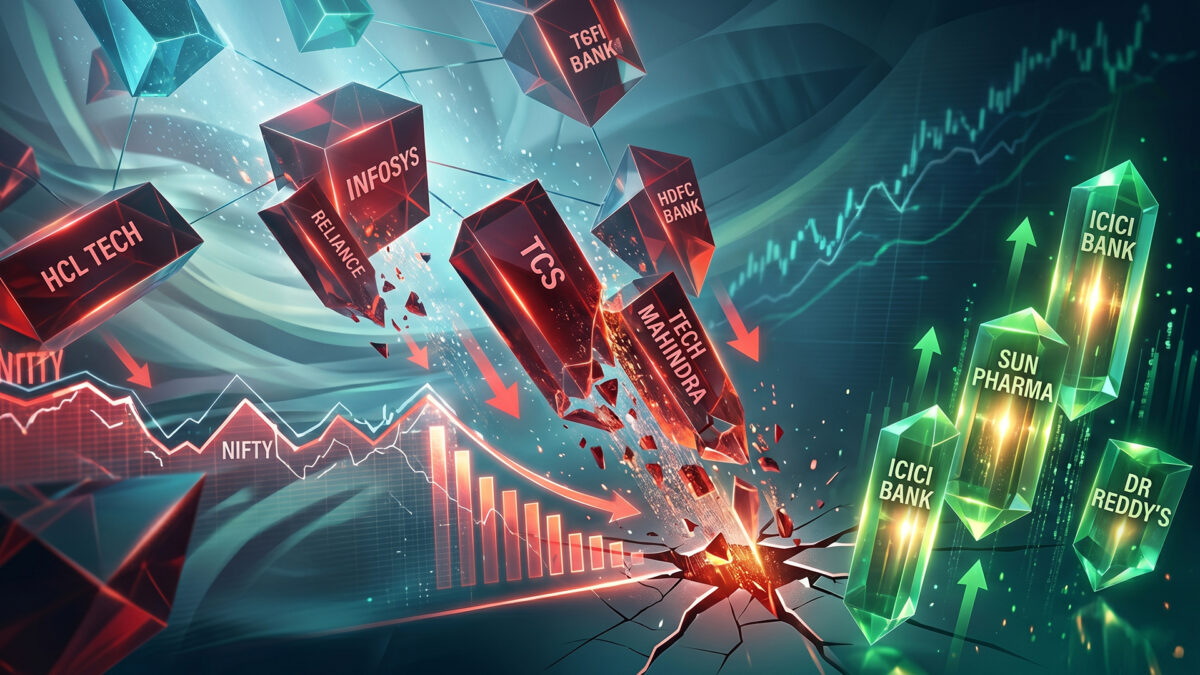
Indian equity markets remained under pressure on Thursday as investors stayed cautious amid elevated crude oil prices, geopolitical uncertainty and selling in heavyweight stocks. The Sensex fell more than 160 points, while the Nifty 50 slipped below 24,350, extending losses for a third consecutive session. The weakness came despite some support from easing oil prices and gains in select stocks, including Tata Motors.
The opening weakness reflected a cautious mood on Dalal Street after the benchmark indices had already closed lower in the previous two sessions. The Nifty had ended Wednesday at 24,435.95, while investors continued to assess the impact of higher crude prices, developments in the Middle East and recent selling across Tata Group stocks.
Crude oil continues to be one of the biggest risks for Indian equities. Oil prices have remained elevated amid uncertainty surrounding the Middle East and unresolved negotiations involving Iran and the United States.
Brent crude was trading close to $88 a barrel, keeping investors concerned about the impact on India’s import bill. India is one of the world’s largest crude oil importers, making the domestic economy particularly sensitive to sharp increases in global energy prices. Higher crude prices can put pressure on inflation, the current account and corporate margins.
The concern is also reflected in the currency market. The rupee slipped 7 paise to ₹95.40 against the US dollar in early trade on Thursday, with foreign fund selling and geopolitical risks weighing on sentiment. A weaker rupee can further increase the domestic cost of imported crude oil.
Among the major stocks, Tata Motors was one of the strongest performers, with shares surging around 4.6% after the company reported strong quarterly results and offered a positive demand outlook. The gain provided some support to the broader auto sector at a time when most major indices were trading in the red.
Tata Motors’ performance also stood out against the broader weakness in Tata Group stocks. The group had faced selling pressure in the previous session following the announcement that N Chandrasekaran would not seek another term as Tata Sons chairman. Tata-related stocks stabilised somewhat on Thursday, although investor attention remained firmly on the group’s leadership transition.
Top gainers included Tata Motors, along with stocks such as Gujarat Fluorochemicals, Somany Ceramics and Sun TV Network, which also saw buying interest during the session.
On the other side, Reliance Industries fell around 1.1%, adding pressure to the benchmark indices. The stock came under pressure after MSCI reduced its weight in its index. Given Reliance’s significant representation in India’s major equity benchmarks, movements in the stock can have a meaningful impact on the Sensex and Nifty.
UltraTech Cement was among the major losers, while Titan and several financial and technology stocks also traded lower. Goodyear India and Shriram Properties were among other stocks that faced selling pressure.
The top losers therefore included Reliance Industries, UltraTech Cement, Titan, Goodyear India and Shriram Properties, while Tata Motors, Gujarat Fluorochemicals, Somany Ceramics and Sun TV Network featured among the notable gainers.
The broader market did not move in one direction. Financials and IT stocks remained under pressure, with both sectors falling around 0.4% during mid-morning trade. However, small-cap stocks gained about 0.3%, suggesting that buying interest remained present in selected pockets of the market. Mid-cap stocks were comparatively weaker.
Investors are also tracking a busy corporate earnings calendar. UltraTech Cement, Tata Motors Passenger Vehicles, Axis Bank, Apollo Hospitals and Ircon are among the stocks in focus as traders assess quarterly results and company-specific developments.
Thursday’s trading session is also taking place against the backdrop of derivatives expiry, which could amplify intraday movements. With the Nifty already below the 24,350 level, traders are watching whether the index can regain key support zones or whether further selling emerges.
Despite the weak domestic market, global cues have been relatively supportive. US equities ended higher, helped by expectations around interest rates and strong earnings from companies linked to artificial intelligence infrastructure. Asian markets were also broadly positive. However, these gains have not been enough to offset concerns over crude oil and geopolitical developments.
As far as investors are concerned, the current market phase is being shaped by a tug-of-war between strong domestic fundamentals and external risks. Corporate earnings and domestic economic activity offer some support, but expensive crude, a weaker rupee, foreign institutional selling and geopolitical uncertainty continue to keep traders cautious.