
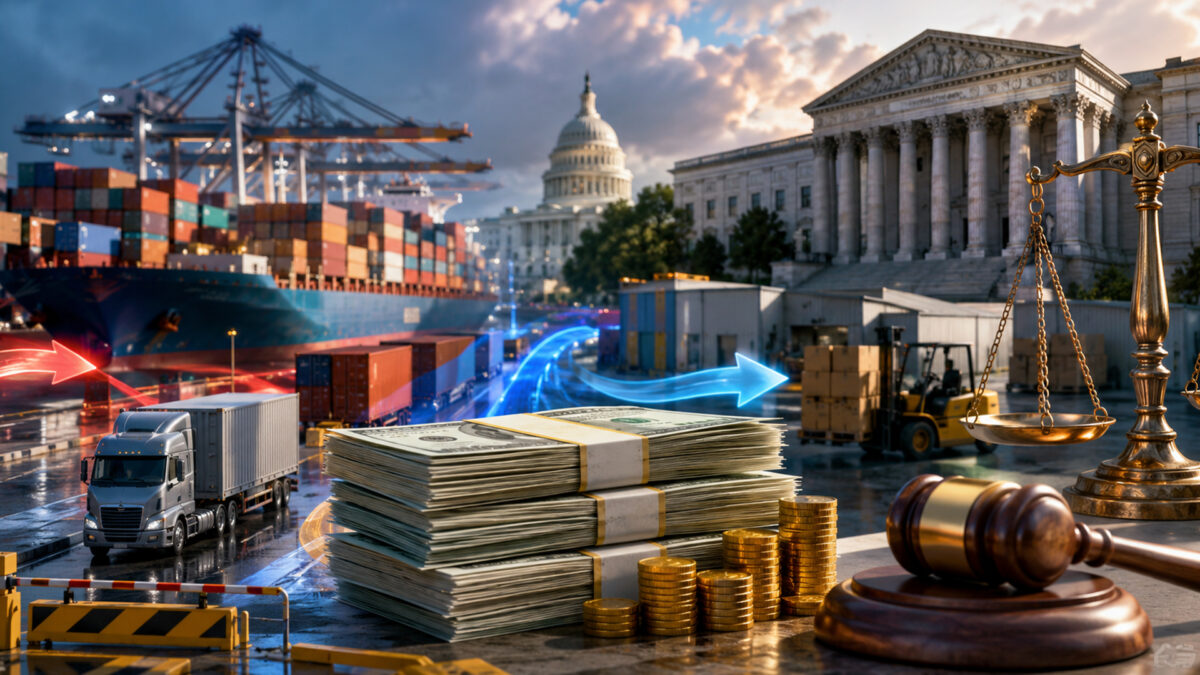
The United States government has refunded about $100 billion in tariffs collected under President Donald Trump’s earlier trade programme, according to a recent court filing. The refunds follow the US Supreme Court’s February 2026 ruling that struck down a broad set of tariffs imposed under the International Emergency Economic Powers Act (IEEPA).
The scale of the repayment is significant. The US government had collected roughly $166 billion from more than 330,000 businesses through the tariffs that were later invalidated. The nearly $100 billion already returned represents about 60% of that amount, according to the latest figures submitted to the US Court of International Trade.
The refunds are being made to US importers and businesses that had paid the duties when bringing goods into the country. For many companies, the money represents a substantial recovery of costs that had earlier been added to imported products.
The latest development brings a new chapter to one of the most contentious parts of Trump’s trade policy. The administration had used emergency economic powers to impose sweeping tariffs on imports, arguing that the measures were necessary to address trade imbalances and other economic concerns.
However, the Supreme Court ruled in February that the IEEPA did not give the president the authority to impose tariffs. The decision effectively invalidated the legal basis for a major portion of Trump’s tariff programme and created an obligation for the government to return the money already collected.
The refund process has been complicated because of the sheer number of transactions involved. Thousands of importers paid tariffs across millions of customs entries, leaving US Customs and Border Protection with the difficult task of identifying eligible payments and processing repayments.
The government has now made substantial progress. About $100 billion has been refunded, while a portion of the remaining amount is still being reviewed or processed. Earlier figures indicated that around $29 billion was still under review, while another amount was delayed because some importers had not provided the banking information required to receive payments.
The refunds also highlight the financial consequences of the Supreme Court decision for the US government. Tariffs had generated substantial revenue for the Treasury while they were in force. Returning that money means the government must absorb a large reversal in tariff collections.
For American businesses, however, the refunds could provide some financial relief. Importers generally paid the tariffs when goods entered the United States. Depending on their individual circumstances, they may have absorbed those costs themselves or passed some of them on through higher prices.
The question of who ultimately benefits from the refunds has therefore become an important issue. The government is returning the money to the businesses that paid the duties, rather than automatically sending payments to consumers who may have faced higher prices because of the tariffs.
That distinction could become increasingly important. Some US consumers have already taken legal action against companies, arguing that they should receive a share of tariff-related refunds because the duties may have contributed to higher prices for imported goods.
The controversy began with Trump’s so-called “Liberation Day” tariffs, announced in April 2025 as part of a major restructuring of US trade policy. The administration used tariffs as a tool to pressure trading partners, reduce trade deficits and encourage more manufacturing activity in the United States.
The policy affected imports from a large number of countries and businesses. Tariffs became a central part of Trump’s economic agenda, but they also generated uncertainty for companies that rely on global supply chains.
The Supreme Court’s ruling did not mean that all tariffs imposed by the Trump administration disappeared. The decision specifically addressed tariffs imposed under IEEPA. The administration subsequently sought other legal routes to maintain tariffs, including measures under different sections of US trade law.
That has kept the broader US tariff policy in flux. Businesses are now dealing with both the refund process for invalidated duties and a changing framework of new tariffs imposed under other legal authorities.
The latest refund figures also offer a sense of how large the original tariff programme was. Returning approximately $100 billion means the government has already reversed a substantial share of the tariff revenue collected under the measures struck down by the court.
For the Trump administration, the episode presents both a financial and political challenge. The refunds demonstrate the practical impact of the Supreme Court’s decision, while the continuing use of tariffs shows that the administration remains committed to using trade duties as an economic policy tool.
The remaining refunds could take additional time because of the large number of importers and customs transactions involved. Once the process is substantially completed, attention is likely to shift toward the future of US trade policy and whether new tariff measures can withstand legal challenges.